

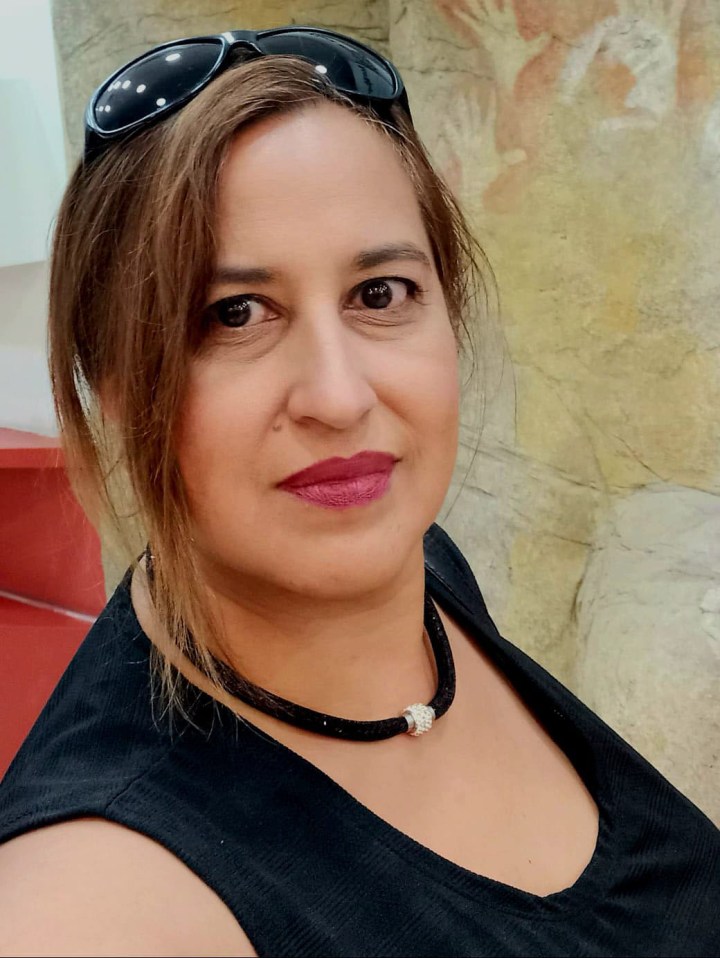
ANDREA V. LUNA Escritora, periodista y profesora en Letras, Directora Gral. La Agencia Mundial de Prensa, Argentina. Directora de Trobairitz Magazine. PRENSA ESPECIALIZADA
Presentación / Presentation
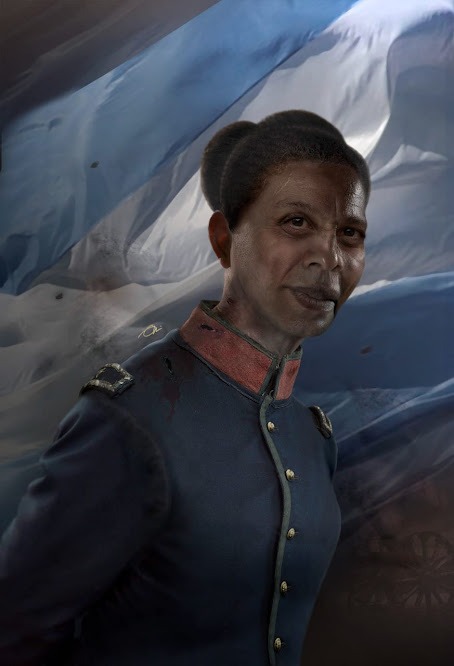
Es un relato histórico que nos adentra al alma de una mujer cuya fortaleza ha trascendido el olvido del tiempo y de la historia. Rescatada de las sombras, María Remedios del Valle, negra, mujer y soldada, se yergue como una luchadora admirable en la Guerra por la Independencia Argentina.
A partir de una prosa rica en imágenes sensoriales y figuras poéticas, el relato reconstruye un momento puntual: la batalla de Tucumán desde la mirada de la protagonista, cuya vida fuera marcada por el sacrificio personal y el honor. Sus actos de valentía fueron inspiradores para los hombres que la rodearon hasta tal punto de que la llamaron tía, madre… y Madre de la Patria.
«La tía María» es un viaje al pasado que invita a reflexionar sobre nuestras propias raíces y a valorar los silencios que esperan ser escuchados.
It is a historical story that takes us into the soul of a woman whose strength has transcended the oblivion of time and history. Rescued from the shadows, María Remedios del Valle, black, woman and soldier, stands as an admirable fighter in the War for Argentine Independence. Based on prose rich in sensory images and poetic figures, the story reconstructs a specific moment: the battle of Tucumán from the perspective of the protagonist, whose life was marked by personal sacrifice and honor. Her acts of bravery were inspiring to the men around her to the point that they called her aunt, mother… and Mother of the Country. «Aunt María» is a trip to the past that invites us to reflect on our own roots and value the silences that wait to be heard.
«La tía María» ha recibido una mención en el concurso Relatos Desobedientes en homenaje a María Elena Walsh, organizado por la Provincia de Buenos Aires, Argentina, en 2023.
«Aunt María» has received a mention in the Relatos Desobedientes contest in tribute to María Elena Walsh, organized by the Province of Buenos Aires, Argentina, in 2023.
La Tía María
«Aunt María»
«Por su arrojo, denuedo y resolución con las armas en la mano, y sin ellas,
ha recibido seis heridas de bala» «For his courage, determination and resolution
with weapons in hand, and without them,
"He has received six gunshot wounds.".
Manuel Rico
Si cerraba bien fuerte los ojos, podía ver el mundo. Sostener los párpados bien apretados implicaba permitirse ser partícipe de una memoria ancestral sobre la que no deseaba tener el control sino todo lo contrario: quería dejarse llevar, sentir su espíritu meciéndose con el viento suave del estío en un viaje que durara siglos.
Más allá de toda circunstancia, amaba cada momento de su vida tal cual como se le presentaba; incluso así, en la oscuridad de la incertidumbre y en el espanto de la muerte que se paseaba jactanciosa, demasiado cerca ya.
En ese preciso momento anheló la libertad plena, en tanto había entendido que solo mirándose bien a sus adentros la aceptación de la causa sería total y liberadora. Lo demás, no importaba nada.
Bien apretados los ojos. Mucho, muy fuerte. Con toda la fuerza que su cuerpo cansado podía brindarle. Mucho… Porque a sus años, ajetreados y dolientes, concentrarse en algo tan nimio también era un pequeño triunfo. Un poco más, un poco más… hasta que los fosfenos comenzaron a danzar regalándole pinturas vivas de tiempos pasados.
If I closed my eyes tightly, I could see the world. Holding his eyelids tightly closed meant allowing himself to be a participant in an ancestral memory over which he did not want to have control, but quite the opposite: he wanted to let himself go, feel his spirit swaying with the soft summer wind on a journey that would last centuries. Beyond all circumstances, he loved every moment of his life as it was presented to him; even so, in the darkness of uncertainty and in the horror of death that walked boastfully, too close now. At that precise moment he longed for full freedom, as he had understood that only by looking deeply into himself would acceptance of the cause be total and liberating. The rest didn’t matter at all. Eyes tightly closed. Very, very strong. With all the strength that his tired body could give him. A lot… Because at his busy and painful years, concentrating on something so minor was also a small triumph. A little more, a little more… until the phosphenes began to dance, giving him living paintings of times past.
* * *
Había en el aire ciertos aromas que no deberían estar allí. Hizo una mueca con los labios en señal de profundo desacuerdo, pero no tardó nada en transformarla en una sonrisa: había muchos allí que la necesitaban… a la sonrisa y a ella. De algún modo había desarrollado una capacidad bastante aceptable para diferenciar la paja del trigo y colocar a cada una en su debido lugar. Prefirió, entonces, cerrar los ojos y creer en las ensoñaciones que le traían las flores del chalchal y la madera inconfundible del lapacho rosado húmedas con el alba recién nacida. Saboreó entre la lengua y el paladar el recuerdo del desayuno por demás frugal de la madrugada, todavía de noche en realidad. El estómago, cerrado y en una madeja de nudo enmarañado, le hizo poner la piel de gallina: acaso se sentía vieja para esos menesteres. Acomodó el cántaro de agua sobre la cabeza una vez más y siguió andando con paso ligero, que el general la esperaba. Tragó saliva y le dijo a las lágrimas que amenazaban con atormentarla, bien para adentro, que se dejaran de embromar, que ahí ella era la que llevaba la voz de mando. Y es que no podía dejar de pensar en el acto piadoso llevado a cabo unas pocas horas antes por el hombre que tenía en sus manos la vida de cientos de hombres y el destino de un pueblo: el verlo rodilla en tierra apenas despuntada la mañana y rezando a la Virgencita de la Merced en su día por un milagro pudo haber sido un golpe siniestro para cualquiera, pero no… no para ella. Porque si algo había aprendido era que ese hombre podía recibir una fuerza extraordinaria desde lo más alto del cielo azul. Por supuesto, también ayudaba que fuera primavera y que las flores exuberantes se prestaran animosas para hacer una guirnalda votiva: ella misma había rezado un avemaría al verlo, mientras sus manos ágiles trabajaban deprisa para llegar antes de que el hombre terminara su devoción. Cruzaron levemente las miradas, y entendió su agradecimiento una vez más.
—¿Todo está dispuesto? —preguntó al levantarse—. ¿Y los hombres? Una mirada y una sonrisa con media boca fueron la respuesta lacónica que el general necesitaba. Nada más. No podía decirle que la derrota en Huaqui y la quema de todo en Jujuy, huyendo, habían mellado la moral no solo de los civiles que se acoplaban al ejército sino también la de los soldados más avezados, y que la victoria de Las Piedras parecía no alcanzar. De ninguna manera podía decirle que no estaba segura de que sus plegarias a la Patrona de aquellos lares y sus arengas hubieran servido de algo. Ahora, todos tenían el corazón estrujado de miedo, pero henchido de bravura: contradicción entendible, incluso en ella, mujer fuerte y sacrificada. Y lo había dejado a solas con sus demonios y con sus ángeles, que buena falta le hacían. Volvió a acomodarse el cántaro que llevaba en la cabeza, no porque fuera a caerse sino más bien como un tic: necesitaba saber que estuviera bien. Frunció la nariz: «Pucha con ese olor». Ya no estaba la primavera en el aire, por más empecinada en buscarla que estuviera; y no era porque tuviera aires de tilinga mimada, todo lo contrario, sino porque la tierra floreciendo le recordaba sus propios pechos en flor. Suspiró sin permitirse una sola lágrima ni un solo estrujo en el corazón ni un recuerdo de los amores perdidos: la Patria lo era todo, debía serlo todo, siempre sería todo… recordar no mejoraría en nada la situación que se avecinaba.
El olor del fuego de los pastizales quemados por el teniente Lamadrid le dijo que ya era tiempo.
—¡Eh! Vos, soldado…
El hombre miró a la mestiza como pocas veces había mirado a una mujer, más siendo de color… incluso a pesar de ser él mismo un gaucho con sangre bien mezcla de indio y españoles antiguos. La miraba con respeto sencillo aunque vehemente. Siempre dudaba de cómo debía llamarla: ¿Tía? ¿Madre? No era el momento… ¿Señora? Señor, seguro que no…
—¡Mande, mi sargento mayor!
—¿Por dónde vienen?
—Por el viejo Camino Real.
—Hum… —masculló. La ciudad sería un caos—. Llevale vos el agua al general, después te venís conmigo. Ya es hora.
Lo vio irse sabiendo que tal vez, cuando todo terminara, ya no lo vería de nuevo… o lo encontraría roto. Elevó el mentón, echó los hombros hacia atrás, se acomodó los pendones y llevó la mano a la cintura, dispuesta a empuñar el sable que se había ganado entre honores. Tomó aire hinchando fuerte los pulmones, insuflándose coraje y tomando la decisión de obviar ciertas órdenes más propias de las otras mujeres de la ciudad: en definitiva, ella no era parte de ningún hembraje temeroso.
Algo más había en el aire que los pajonales quemados.
Después todo había sido confusión.
Desde el norte y hacia el oeste había salido a la carga como el resto de la tropa. Correr con la falda era una tortura (menos mal que en ese momento no podía ver el futuro), así que se había tomado por costumbre anudarla por encima de la rodilla para que las piernas se liberaran y para que la tela no se enganchara con nada que pudiera perturbar ni su carrera ni su equilibrio. No se permitía usar pantalones: morena o no, seguía siendo una dama. «Rápido y contundente» había dicho el general, y así debería ser, no importaba ni importaría nunca lo escarpado del terreno. Poco más podía recordar de aquel día… excepto que el general había recibido su milagro.
El clarín llamando a degüello había resonado como un eco tan poderoso como las trompetas de los arcángeles. Las dianas y tamboriles de la marcha, el paso firme de los hombres que vencían los temores a fuerza de coraje en el pecho, hinchaban los pulmones de vientos libertarios.
Alguien le alcanzó un fusil. Disparó. Acometió. Gritó desaforada con su voz de mujer indómita erizando la piel de los suyos, sorprendiendo al realista que no entendía de hembras corajudas. La María era ahora «soldada», no la tía de todos… después, con la calma, sería la Madre. Escuchó la acometida de los gauchos tucumanos recién reclutados, al mando de Balcarce, de a caballo, lanza en ristre y resonando los guardamontes de los corceles como mil demonios enfurecidos. Los vio destrozar la columna de Tristán hasta hacerlos chillar como cajetillas y surquiando entre españoles que seguro se iban de fuentes del susto. Después supo que sus gauchos, valientes y sin formación militar, habían saqueado las reservas del enemigo: mulas con avíos, municiones, metales preciosos, prisioneros y todo.
En el frente, el del centro, la cosa era bien distinta. La confusión era la que reinaba destartalando el orden que había querido mantener el general. El enemigo avanzaba y los revolucionarios se embrollaban de lo lindo tratando de sacárselos de encima. Acaso Dios y la Virgen parecían haberlos abandonado cuando cayó prisionero Superí.
—¡Qué esperan, abombaos! ¡Al frente y al centro todos!
No se iba a quedar mirando. Pero clavó las guampas en seco cuando vio a la caballería hacer la de los indios: embestir en rastrillada. Y se desbarataron nomás, en medio del gentío y los pingos que se asustaban de los cañonazos de la artillería que seguía azuzando los oídos del viento y que sonaban a refosilos retobaos. Sin embargo, todavía podía sentir a lo lejos el ritmo preciso, frenético y corajudo del tamborilero que, con el corazón henchido, rendía homenaje al pequeño Pedro Ríos, muerto en Tacuarí.
Y no, que Diosito no se había olvidado y el milagro que Belgrano había pedido al alba se hizo presente en la forma de bichos que sabían ser feos. Una nube de langostas trajo la noche durante el día y, con ella, la ceguera del espíritu.
—¡Perra vida! —exclamó alguien a su alrededor, pero no supo de dónde provenía el vozarrón que sonaba amargo y ronco, apenas entendible entre los truenos de la artillería y los sablazos que iban y venían… y de los gritos de los heridos que se amontonaban lastimando sus oídos y carcomiendo las emociones que pugnaba por controlar—. ¡Y que viva la Patria, canejo!
Se encontró pensando que se había equivocado, que debía haberse puesto pantalones: la próxima lo haría… porque sabía que el asunto no terminaba allí y, para entonces, ser una dama era una cosa, pero ser soldada, otra muy distinta por aquellos días. Al final, la falda la estorbaba lo suficiente como para tener que pensar en ella en lugar de cómo blandir mejor sus armas. Corrió a parapetarse en un zaguán cuando vio a los tiradores patriotas apostarse en los techos de la ciudad. Tucumán estaba bajo asedio y deseaba estar allí, ayudando en el combate como hasta el momento, pero pronto supo otra cosa: ocurriera lo que ocurriera, necesitaba estar viva para el infierno de después de la batalla… sería, entonces, el tiempo de las mujeres. Se tomó un momento para sopesar sus responsabilidades: luchar, contener a los hombres, ayudar a sanarlos…
Entonces, la visión de la batalla fue otra: vio los charcos de sangre que se escurrían a mares, mezclándose entre el adoquinado o entre el barro de las callejas transformadas en nichos fúnebres. Aguzó el oído.
There were certain aromas in the air that shouldn’t be there. She made a grimace with her lips in profound disagreement, but it didn’t take her long to transform it into a smile: there were many there who needed her… the smile and her. Somehow he had developed a fairly decent ability to separate the wheat from the chaff and put each in its proper place. He preferred, then, to close his eyes and believe in the daydreams that the flowers of the chalchal and the unmistakable wood of the pink lapacho, moist with the newborn dawn, brought him. He savored between his tongue and palate the memory of the very frugal breakfast of the early morning, still at night in reality. Her stomach, closed and in a skein of a tangled knot, made her skin crawl: perhaps she felt old for such tasks. She placed the water jug on her head once more and continued walking with a brisk step, as the general was waiting for her. She swallowed and told the tears that threatened to torment her, deep inside, to stop joking, that she was the one calling the shots. And I couldn’t stop thinking about the pious act carried out a few hours before by the man who had the lives of hundreds of men and the destiny of a town in his hands: seeing him kneeling on the ground as soon as morning dawned and Praying to the Virgencita de la Merced in her day for a miracle could have been a sinister blow for anyone, but no… not for her. Because if he had learned anything, it was that this man could receive extraordinary strength from the highest of the blue sky. Of course, it also helped that it was spring and that the lush flowers were eager to make a votive garland: she herself had said a Hail Mary when she saw it, while her agile hands worked quickly to arrive before the man finished his devotion. They exchanged glances slightly, and he understood their gratitude once again.
—Is everything ready? he asked as he stood up. And the men? A look and a half-mouthed smile were the laconic response the general needed. Nothing else. I could not tell him that the defeat in Huaqui and the burning of everything in Jujuy, fleeing, had dented the morale not only of the civilians who joined the army but also that of the most seasoned soldiers, and that the victory of Las Piedras seemed not reach. There was no way she could tell him that she wasn’t sure that her prayers to the Patroness of those parts and her harangues had been of any use. Now, everyone’s heart was crushed with fear, but filled with bravery: an understandable contradiction, even in her, a strong and self-sacrificing woman. And he had left him alone with his demons and his angels, which he greatly missed. He adjusted the jug he was carrying on his head again, not because it was going to fall but more like a tic: he needed to know that it was okay. He wrinkled his nose: “That smell is bad.” Spring was no longer in the air, no matter how determined I was to look for it; and it was not because she had the air of a pampered tilinga, quite the opposite, but because the flowering earth reminded her of her own flowering breasts. He sighed without allowing himself a single tear or a single squeeze in his heart or a memory of lost loves: the Homeland was everything, it should be everything, it would always be everything… remembering would not improve the situation that was approaching in any way.
The smell of the fire from the pastures burned by Lieutenant Lamadrid told him that it was time.
-Hey! You, soldier…
The man looked at the mestiza as he had rarely looked at a woman, especially being of color… even despite being a gaucho himself with a good mix of Indian and ancient Spanish blood. He looked at her with simple but vehement respect. I always doubted what I should call her: Aunt? Mother? It wasn’t the time… Madam? Sir, surely not… —Command, my sergeant major!
—Where are they coming from?
—On the old Camino Real.
«Um…» he mumbled. The city would be chaos. You take the water to the general, then you come with me. It’s time.
She watched him leave knowing that maybe, when it was all over, she would never see him again… or find him broken. She raised her chin, leaned her shoulders back, adjusted her banners and put her hand on her waist, ready to wield the saber that she had earned among honors. She took a breath, inflating her lungs hard, instilling courage and making the decision to ignore certain orders more typical of the other women in the city: in short, she was not part of any fearful feminization.
There was something more in the air than the burned grasslands.
Afterwards everything had been confusion.
From the north and west he had charged like the rest of the troop. Running in the skirt was torture (thank goodness at that time she couldn’t see the future), so she had taken to tying it above the knee so that her legs would be free and so that the fabric wouldn’t get caught on anything. that could disturb neither his career nor his balance. She was not allowed to wear pants: brunette or not, she was still a lady. «Fast and forceful» the general had said, and so it should be, the steepness of the terrain did not and would never matter. He could remember little else from that day… except that the general had received his miracle. The bugle calling for the slaughter had resounded like an echo as powerful as the trumpets of the archangels. The targets and drums of the march, the firm step of the men who conquered fears by force of courage in their chests, filled the lungs with libertarian winds.
Someone handed him a rifle. Shot. He rushed. She screamed wildly with her untamed woman’s voice, making the skin of her people crawl, surprising the royalist who did not understand courageous females. Mary was now a «soldier», not everyone’s aunt… later, with calm, she would be the Mother. He heard the attack of the newly recruited Tucumán gauchos, under the command of Balcarce, on horseback, lance at the ready and the steeds’ trigger guards ringing like a thousand enraged demons. He saw them destroying Tristán’s column until they were screaming like little boxes and plowing through Spaniards who were surely going from sources of fear. Later he learned that his gauchos, brave and without military training, had looted the enemy’s reserves: mules with equipment, ammunition, precious metals, prisoners and everything.
At the front, in the center, things were very different. Confusion reigned, destroying the order that the general had wanted to maintain. The enemy was advancing and the revolutionaries were getting in a lot of trouble trying to get rid of them. Perhaps God and the Virgin seemed to have abandoned them when Superí was taken prisoner. —What are you waiting for, pump up! Front and center everyone!
He wasn’t going to stare. But he nailed the guampas when he saw the cavalry doing what the Indians did: charging in a rake. And they just broke down, in the middle of the crowd and the pingos who were frightened by the artillery cannon shots that continued to stir up the ears of the wind and that sounded like refosilos rebaos. However, I could still feel in the distance the precise, frenetic and courageous rhythm of the drummer who, with his heart full, paid tribute to little Pedro Ríos, who died in Tacuarí.
And no, Diosito had not forgotten and the miracle that Belgrano had asked for at dawn was present in the form of bugs that knew how to be ugly. A cloud of locusts brought night during the day and, with it, the blindness of the spirit.
—Bitch life! -exclaimed someone around him, but he didn’t know where the loud voice came from, which sounded bitter and hoarse, barely understandable between the thunder of the artillery and the saber blows that came and went… and the screams of the wounded who piled up, hurting their ears. and eating away at the emotions he struggled to control. And long live the country, you bastard! She found herself thinking that she had made a mistake, that she should have put on pants: she would do it next time… because she knew that the matter did not end there and, by then, being a lady was one thing, but being a soldier, quite another in those days. In the end, the skirt hindered her enough that she had to think about it instead of how to best wield her weapons. He ran to take cover in a hallway when he saw the patriotic shooters stationed on the roofs of the city. Tucumán was under siege and wanted to be there, helping in the fight as before, but she soon learned something else: whatever happened, she needed to be alive for the hell after the battle… it would then be the time of the women. . He took a moment to weigh his responsibilities: fighting, restraining the men, helping to heal them… Then, the vision of the battle was different: he saw the pools of blood that drained into seas, mixing between the cobblestones or the mud of the alleys transformed into funeral niches. He pricked up his ears.
* * *
Buenos Aires era otra cosa: cada día extrañaba los ceibales. Es que aquel paraje tucumano era todo él un jardín… incluso en tiempos de barricadas improvisadas en las calles de la ciudad, de instrucción militar a las carreras, de bravura supliendo experiencia. Sí, extrañaba el paisaje, pero más a la gente. Buenos Aires, siempre sería otra cosa, porque pese a todo, a que de allí habían salido siempre las órdenes y las estrategias, siempre también había permanecido ajena a la necesidad de inferir coraje y templanza a una población civil que vería las puertas de sus casas convertidas en el escenario de una batalla sangrienta: y la pucha que el tucumano había cumplido.
Buenos Aires was something else: every day I missed the ceibales. The fact is that that Tucumán area was all a garden… even in times of improvised barricades in the streets of the city, of military training at races, of bravery supplying experience. Yes, I missed the landscape, but more the people. Buenos Aires would always be something else, because despite everything, the fact that the orders and strategies had always come from there, it had also always remained oblivious to the need to instill courage and temperance in a civilian population that would see the doors of its houses. converted into the scene of a bloody battle: and the pucha that the man from Tucumán had accomplished.
- * *
Ahí estaba lo que había ido a buscar. En medio de la batalla encarnizada, había un estruendo más silencioso: el de las mujeres que no habían ido a pelear junto con los hombres para quedarse a proteger a la generación que, una vez libres, engrandecería a la nueva Patria. Porque muchas habían salido a la lucha sin saber cómo, sin nunca haber blandido arma alguna salvo una cuchilla de cocina. ¿Matar a un realista sería tan sencillo como trozar un chivo pa’l puchero? Y les habían respondido que sí, que si la cosa se ponía brava pensaran en cortarles las reales criadillas.
Las reclutó de a una, de a decenas… Porque las que ya estaban aprestadas no alcanzarían. Esperaba que en el improvisado hospital de campaña las damas hubieran dispuesto todo según sus órdenes: los catres, las vasijas con agua, el fuego necesario y las telas hasta de sus propios vestidos preparadas como vendas.
Cuando el humo y las langostas, la pólvora, la marcha y el galope de los caballos se disiparon, quedaron la sangre y el olor a sudor, heces y vómito. Y los gritos de los hombres y mujeres, y hasta de algunos niños, heridos, rotos y desmembrados fueron poblando la atmósfera de una noche que sería eterna. Otros se encargarían de los muertos.
Si San Miguel había sido una ciudad-jardín, ahora había devenido en un enorme hospicio, cuartel, campo de batalla, cementerio, guardería y cocina de campaña. Las órdenes del general habían sido claras, incluso antes de saber que habían vencido, y ella las haría cumplir a rajatablas. Corría casi, llevando agua, alimentos y hasta bacinillas que se le desbordaban en las manos, atenta a no resbalarse con los bichos muertos aunque más a las necesidades de los pocos médicos que sabían lo que debía hacerse allí, en el caos que no terminaba; pero más atenta todavía a mecer entre sus brazos a los hombres que clamaban consuelo entre gemidos y sangre mustia.
There was what he had gone looking for. In the midst of the fierce battle, there was a quieter roar: that of the women who had not gone to fight alongside the men to stay to protect the generation that, once free, would make the new homeland great. Because many had gone out to fight without knowing how, without ever having brandished any weapon except a kitchen knife. Would killing a royalist be as simple as chopping up a goat for a stew? And they had answered yes, that if things got rough they should think about cutting off their royal criadillas.
He recruited them one by one, by dozens… Because those who were already ready would not be enough. He hoped that in the improvised field hospital the ladies had arranged everything according to his orders: the cots, the vessels with water, the necessary fire and the fabrics even from their own dresses prepared as bandages.
When the smoke and the locusts, the gunpowder, the marching and galloping of the horses dissipated, the blood and the smell of sweat, feces and vomit remained. And the screams of men and women, and even some children, wounded, broken and dismembered, filled the atmosphere of a night that would be eternal. Others would take care of the dead. If San Miguel had been a garden city, it had now become an enormous hospice, barracks, battlefield, cemetery, nursery and field kitchen. The general’s orders had been clear, even before he knew they had won, and she would enforce them to the letter. She was almost running, carrying water, food and even potties that were overflowing in her hands, careful not to slip on the dead bugs, although more attentive to the needs of the few doctors who knew what should be done there, in the chaos that never ended; but even more attentive to cradling in her arms the men who cried out for comfort between moans and withered blood.
Duerme, mi niño, duerme
Que la Patria viene clareando
Y entre tamboriles y pendones
Los clarines vienen llegando.
Sleep, my child, sleep
That the Homeland is becoming clearer
And between drums and banners
The bugles are coming.
Nana del Norte hermoso,
Nana del jardín en flor.
¡Oh, oh! Nana del jardín en flor.
Lullaby of the beautiful North,
Lullaby of the garden in bloom.
Uh-oh! Lullaby of the garden in bloom.
No temas dormir, no temas
Que en tu cabecera oro yo.
¡Oh, oh! Que en tu cabecera oro yo.
Don't be afraid to sleep, don't be afraid
That at your bedside I pray.
Uh-oh! That at your bedside I pray.
Nanita, nana, nanita…
Celeste y blanca,
Nana y sol.
Nanny, nanny, nanny…
Light blue and white,
Lullaby and sun.
Duerme, mi niño, duerme
Que esta negra te prepara,
De la carga a tu descanso,
Para el mate la lechada.
Sleep, my child, sleep
That this black woman prepares you,
From the burden to your rest,
For the matte the grout.
Nana del Norte hermoso,
Nana del jardín en flor.
¡Oh, oh! Nana del jardín en flor.
Lullaby of the beautiful North,
Lullaby of the garden in bloom.
Uh-oh! Lullaby of the garden in bloom.
No temas dormir, no temas
Que en tu cabecera oro yo.
¡Oh, oh! Que en tu cabecera oro yo.
Don't be afraid to sleep, don't be afraid
That at your bedside I pray.
Uh-oh! That at your bedside I pray.
Nanita, nana, nanita…
Celeste y blanca,
Nana y sol.
Nanny, nanny, nanny…
Light blue and white,
Lullaby and sun.
Duerme, mi niño, duerme
Que el alba viene llegando
Y se llevará los horrores
Que la batalla había dejado.
Sleep, my child, sleep
that the dawn is coming
And it will take away the horrors
That the battle had stopped.
Nana del Norte hermoso,
Nana del jardín en flor.
¡Oh, oh! Nana del jardín en flor.
Lullaby of the beautiful North,
Lullaby of the garden in bloom.
Uh-oh! Lullaby of the garden in bloom.
No temas dormir, no temas
Que en tu cabecera oro yo.
¡Oh, oh! Que en tu cabecera oro yo.
Don't be afraid to sleep, don't be afraid
That at your bedside I pray.
Uh-oh! That at your bedside I pray.
Nanita, nana, nanita…
Celeste y blanca,
Nana y sol.
Nanny, nanny, nanny…
Light blue and white,
Lullaby and sun.
—Madre, madre… que te cortaron los desalmaos.
—Alguno que he cuerpiado —dijo viéndose el brazo izquierdo—. No es nada: llevale el agua al dotor.
El sol se puso y volvió a salir en el horizonte una, dos, infinitas y denodadas veces; hasta que ya no importó nada que no fuera el aliciente de escuchar a cada hora menos quejas y más suspiros de alivio. Las heridas iban sanando y los vítores no cesaban sino, más bien, todo lo contrario: por aquellos días ya estaban seguros de que la victoria había sido decisiva y la huida del enemigo hacia el norte traería algo de paz a la ya muy golpeada San Miguel.
—No permito que mis hombres ignoren las órdenes que les doy.
—Mi general…
—No he terminado. Pero usted, usted no es un hombre… ni tampoco cualquier mujer. Vaya a hacer lo que sabe, que los soldados quieren a su Madre de la Patria, y yo no la voy a hacer negar. —Elevó la cabeza en señal de autoridad. Desde arriba, la miró fijamente a los ojos—. Y que no se entere ninguno que usted hizo lo que quiso. Al crepúsculo, se me presenta en la plaza.
Las horas pasaron lentas con el pensamiento fijo de lo que les pasaba a los negros desobedientes, esclavos o no. Temblaba al pensar en qué ejemplo les daría a los montones de mujeres que la veían como modelo y guía de cómo debería ser la sociedad en la nueva Patria.
Sí, el día fue largo pese a no tener tiempo casi ni para respirar. El asunto no había terminado y saber que seguirían rumbo a Salta persiguiendo al ejército realista le producía emociones encontradas: otra vez más de lo mismo; así, como hasta ahora, lucha, sangre y lodo… y esperanza, paz y pasión. Nada más y nada menos. Sonrió un instante, permitiéndose pensar en los años venideros aunque tal vez no estuviera allí para verlos.
El crepúsculo naranjeaba el horizonte pero lo que estaba más acá, cerca, brillaba con los violetas del jacarandá que proporcionaba techo, frescor y vida a la ciudad cargada de vítores. La plaza de armas, violácea de flores y anocheceres, bullía con las voces de todos, hombres, niños, mujeres que se habían congregado allí a las órdenes del general. Sin embargo, la tía María temblaba.
—Yo, Manuel José Joaquín del Corazón de Jesús Belgrano, por obra de la Patria, Jefe del Ejército del Norte. Atendiendo a los méritos de doña María Remedios del Valle, soldada y auxiliadora de esta guarnición durante los hechos de la batalla aquí librada el día de la Virgen de la Merced, he venido a nombrarla capitana de esta compañía, mandándole guardar de inmediato los privilegios y obligaciones que el cargo le confiere…
No supo qué decir y no lo dijo, solo un leve gesto con la cabeza en señal de agradecimiento. Ante los vítores del Ejército del Norte, levantó una mano con timidez, mientras una sonrisa emocionada intentaba esconder las lágrimas que comenzaban a encontrar el recorrido por sus mejillas curtidas por el sol.
—Mother, mother… the souls cut you off.
«Someone I’ve bodyed,» he said, looking at his left arm. It’s nothing: take the water to the doctor.
The sun set and rose again on the horizon once, twice, infinitely and tirelessly; until nothing mattered other than the incentive of hearing fewer complaints and more sighs of relief every hour. The wounds were healing and the cheers did not stop, but rather the opposite: in those days they were already sure that the victory had been decisive and the flight of the enemy towards the north would bring some peace to the already badly hit San Miguel.
—I do not allow my men to ignore the orders I give them.
—My general…
—I haven’t finished. But you, you are not a man… nor are you any woman. Go do what you know, that the soldiers love their Mother of the Country, and I am not going to make her deny it. —He raised his head in a sign of authority. From above, he stared into her eyes. And don’t let anyone find out that you did what you wanted. At twilight, he appears to me in the square.
The hours passed slowly with the fixed thought of what was happening to the disobedient blacks, slaves or not. She trembled to think of what example she would give to the scores of women who saw her as a model and guide of what society should be like in the new country. Yes, the day was long despite hardly having time to breathe. The matter was not over and knowing that they would continue towards Salta pursuing the royalist army produced mixed emotions in him: again more of the same; Thus, as until now, fight, blood and mud… and hope, peace and passion. Nothing more and nothing less. He smiled for a moment, allowing himself to think about the years to come even though he might not be there to see them.
The twilight turned the horizon orange but what was closer, closer, shone with the violets of the jacaranda that provided shelter, freshness and life to the city full of cheers. The parade ground, purple with flowers and dusk, was bustling with the voices of everyone, men, children, women who had gathered there at the general’s orders. However, Aunt Maria was trembling.
—I, Manuel José Joaquín del Corazón de Jesús Belgrano, for the work of the Homeland, Chief of the Northern Army. Taking into account the merits of Doña María Remedios del Valle, soldier and assistant of this garrison during the events of the battle fought here on the day of the Virgin of Mercy, I have come to appoint her captain of this company, ordering her to immediately preserve the privileges and obligations that the position confers…
He didn’t know what to say and didn’t say it, just a slight nod of thanks. Before the cheers of the Northern Army, he raised a hand shyly, while an excited smile tried to hide the tears that were beginning to find their way down his sun-beaten cheeks.
* * *
Se había sentado en el atrio de la iglesia de Santo Domingo, cerquita de donde yacía sepultado su general y donde se rendía homenaje a los prohombres del Ejército del Norte. De frente al sol, permitía, como cada día, que su calor le templara la cara mientras observaba de reojo el andar despreocupado de los hombres de levita y de las damas con desmesuradas faldas de sedas y puntillas. Extendió la mano llena de arrugas y viejas cicatrices que compendiaban ellas solas las de todo su cuerpo, maltratado por la lucha encarnizada con la que siempre había defendido a la Patria, torturas y todo. Con la palma hacia arriba y la mirada baja supo que el transeúnte a quien no se atrevió a mirar le había dejado un cuarto de real.
Si acaso el hombre hubiera sabido que aquella mendiga mestiza era nada más y nada menos que la Madre de la Patria, tal vez le hubiera arrojado un par de monedas más.
Se había sentado en el atrio de la iglesia de Santo Domingo, cerquita de donde yacía sepultado su general y donde se rendía homenaje a los prohombres del Ejército del Norte. De frente al sol, permitía, como cada día, que su calor le templara la cara mientras observaba de reojo el andar despreocupado de los hombres de levita y de las damas con desmesuradas faldas de sedas y puntillas. Extendió la mano llena de arrugas y viejas cicatrices que compendiaban ellas solas las de todo su cuerpo, maltratado por la lucha encarnizada con la que siempre había defendido a la Patria, torturas y todo. Con la palma hacia arriba y la mirada baja supo que el transeúnte a quien no se atrevió a mirar le había dejado un cuarto de real.
Si acaso el hombre hubiera sabido que aquella mendiga mestiza era nada más y nada menos que la Madre de la Patria, tal vez le hubiera arrojado un par de monedas más.
Andrea V. Luna
Descubre más desde LA AGENCIA MUNDIAL DE PRENSA
Suscríbete y recibe las últimas entradas en tu correo electrónico.

