

«Mona’s eyes.» Conversation with Thomas Schlesser

Prensa Especializada.
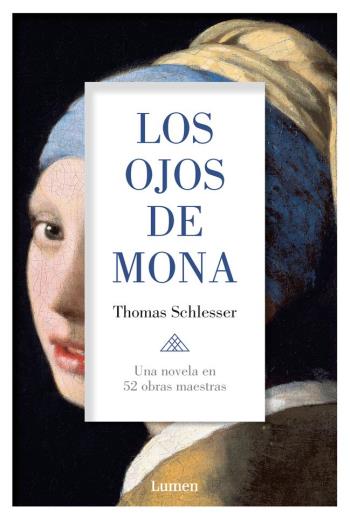
Me reúno con el historiador de arte francés Thomas Schlesser para hablar de su primera novela “Los ojos de Mona”, los ojos de una niña amenazados con la oscuridad. Gracias a él descubro el método oulipo, (Ouvroir de littérature potentielle) “Taller de literatura potencial” y a Georges Perec, el referente de Thomas. El mío habría sido Ítalo Calvino, el miembro del método que mejor conozco. El libro, editado por Lumen, va a ser presentado en un rato en el Instituto Francés de Madrid.
I meet with French art historian Thomas Schlesser to talk about his first novel “Mona’s Eyes,” the eyes of a girl threatened with darkness. Thanks to him I discovered the oulipo method, (Ouvroir de littérature potentielle) “Workshop of potential literature” and Georges Perec, Thomas’ reference. Mine would have been Italo Calvino, the member of the method I know best. The book, published by Penguin, is going to be presented shortly at the French Institute in Madrid.
El “oulipismo” de “Los ojos de Mona”, además de en su base artística, se apoya en otra base psicológica, procedente de un trauma infantil y la más importante, la que crea y une todo, las relaciones entre una niña de once años y un abuelo maravilloso, yo diría que atípico. Mona, a su corta edad ya ha vivido una pérdida irreversible, la de su abuela, ocultada por los tabúes de los adultos; está amenazada de otra, también irreversible si llega a producirse; a lo que se suma la inevitable e irreversible pérdida de la infancia.
The “oulipism” of “Mona’s Eyes”, in addition to its artistic basis, is based on another psychological basis, coming from a childhood trauma and the most important one, the one that creates and unites everything, the relationships between an eleven-year-old girl years and a wonderful grandfather, I would say atypical. Mona, at her young age, has already experienced an irreversible loss, that of her grandmother, hidden by adult taboos; It is threatened by another, also irreversible if it occurs; to which is added the inevitable and irreversible loss of childhood.
Inicio mi conversación con Thomas Schlesser, contándole las profundas sensaciones que la historia de Mona han vuelto a traer a mi realidad. Porque yo soy Mona, también arrastré durante años las consecuencias de una pérdida en mi infancia, ocultada primero y mal contada después por los tabúes de los adultos de mi entorno. No tuve el abuelo providencial que invirtiera su amor en mí y en el arte para curar las consecuencias de mi pérdida, pero la vida sí me ha convertido en abuela referente de una nieta maravillosa. Así que me identifico tanto con el abuelo como con la nieta de la historia. Y con mi posterior encuentro con la belleza a través del arte.
I begin my conversation with Thomas Schlesser, telling him the deep sensations that Mona’s story has brought back to my reality. Because I am Mona, I also carried for years the consequences of a loss in my childhood, first hidden and then poorly told by the taboos of the adults around me. I did not have a providential grandfather who invested his love in me and in art to heal the consequences of my loss, but life has made me a reference grandmother of a wonderful granddaughter. So I identify with both the grandfather and the granddaughter in the story. And with my subsequent encounter with beauty through art.
Se lo cuento de manera espontánea, porque la historia me ha tocado en lo más profundo. Y resulta ser una excelente iniciación para que Thomas Schlesser se abra a una conversación desde sus propias emociones. A la razón de la existencia de Mona, cuando le digo que no creo que Mona sea una invención.
I tell it to you spontaneously, because the story has touched me deeply. And it turns out to be an excellent initiation for Thomas Schlesser to open up to a conversation from his own emotions. To the reason for Mona’s existence, when I say that I don’t think Mona is an invention.
TS. “No, no lo es. Mona nació en mi mente, tras perder un hijo antes de nacer.”
TS. «No, it is not. “Mona was born in my mind, after losing a child before he was born.”
TF. Ya hemos creado el espacio emocional y sincero que va a caracterizar nuestra conversación, mucho más allá de una entrevista convencional por la publicación de su libro en España. Estamos en otra dimensión.
TF. We have already created the emotional and sincere space that will characterize our conversation, far beyond a conventional interview for the publication of your book in Spain. We are in another dimension.
TS. “La pérdida de mi hijo fue un golpe muy duro, que me hizo tomar conciencia de la irreversibilidad de las pérdidas. Viví en lo más profundo esa pérdida durante bastante tiempo, pero me hizo darme cuenta de la necesidad de creación que produjo en mí.” “Así nació Mona, fruto de una pérdida irreversible. Una niña que pronto va a dejar de serlo. Eso me llevó al sentimiento de pérdida irreversible de la infancia, a esa adolescencia tan dura, tan difícil. “Los ojos de Mona” es una historia de pérdidas, inevitables a lo largo de la vida, pero también es una historia de crecimiento, porque precisamente las pérdidas vividas a fondo, son la fuente del crecimiento, de la madurez que vamos adquiriendo.”
TS. “The loss of my son was a very hard blow, which made me aware of the irreversibility of losses. I lived deeply with that loss for quite a long time, but it made me realize the need for creation that it produced in me.” “This is how Mona was born, the result of an irreversible loss. A girl who will soon stop being one. That led me to the feeling of irreversible loss of childhood, to that adolescence that was so hard, so difficult. “Mona’s Eyes” is a story of losses, inevitable throughout life, but it is also a story of growth, because precisely the losses experienced in depth are the source of growth, of the maturity that we are acquiring.”
TF. Por si fuera poco, -digo a Thomas- a esa historia de pérdidas inevitables, su historia plantea desde el primer minuto, y tras un episodio de ceguera momentánea de Mona, la posibilidad de que este pueda reproducirse y convertirse en permanente. Una niña amenazada de ceguera, reúne todos los ingredientes para emocionar y enganchar a su lectura.
TF. As if that were not enough, -I say to Thomas- to this story of inevitable losses, his story raises from the first minute, and after an episode of Mona’s momentary blindness, the possibility that this could be reproduced and become permanent. A girl threatened with blindness brings together all the ingredients to excite and engage her reading.
TS. “Cierto. Mona está amenazada de ceguera y ahí empiezan las consultas con el pediatra Dr. Van Orst que no encuentra nada físico que haga temer por la visión de la niña. Nos lleva a investigar las posibles causas psicológicas, ocultas tras la muerte de una abuela que Mona adoraba. Y ahí empieza el protagonismo de un colgante que la abuela Collette le dio junto con un consejo la última vez que se vieron.”
TS. «TRUE. Mona is threatened with blindness and there begin the consultations with the pediatrician Dr. Van Orst who finds nothing physical that would cause fear for the girl’s vision. It leads us to investigate the possible psychological causes hidden behind the death of a grandmother that Mona adored. And there begins the prominence of a pendant that Grandma Collette gave him along with some advice the last time they saw each other.”
TF. Y ahí entra la madre de Mona, la tensa relación entre ellas, las ocultaciones, las visitas programadas semanalmente con un psiquiatra, acompañada del abuelo y la sustitución de éstas, durante un año, por visitas semanales a tres museos de París, visitas que son un secreto entre ellos dos. Un solo cuadro en cada visita. Le digo a Thomas en este punto, que encuentro que las reacciones de Mona a estas visitas son demasiado adultas para su edad.
TF. And here Mona’s mother comes in, the tense relationship between them, the concealments, the weekly scheduled visits with a psychiatrist, accompanied by the grandfather and the replacement of these, for a year, by weekly visits to three museums in Paris, visits that are a secret between the two of them. A single painting on each visit. I tell Thomas at this point, that I find Mona’s reactions to these visits to be too adult for her age
TS. “Es cierto. Pero he querido crear este contraste. Por un lado la relación secreta con el abuelo, una relación de apertura a la belleza y la filosofía del arte, por otra parte terapéutico, que la sitúa en un espacio de madurez precoz. En contraste, salvaguardo su lado infantil en las relaciones con sus compañeros de colegio, sobre todo en su relación con Lili. Ahí sigue siendo la niña de diez a once años. He querido dotarla de esas dos personalidades, la de la niña actual y la de la joven que el abuelo está creando. (Se ríe) Al fin y al cabo, todos tenemos más de una personalidad, ¿no es así?
TS. «It’s true. But I wanted to create this contrast. On the one hand, the secret relationship with her grandfather, a relationship of openness to beauty and the philosophy of art, on the other hand therapeutic, which places her in a space of precocious maturity. In contrast, he safeguards his childish side in his relationships with his schoolmates, especially in his relationship with Lili. There she is still the ten to eleven year old girl. I wanted to give her those two personalities, that of the current girl and that of the young woman that her grandfather is creating. (Laughs) After all, we all have more than one personality, don’t we?
TF. Me río de buena gana. Sí cierto, todos tenemos varias personalidades, reales o inventadas por necesidad.
TS. Ese paseo por el arte, es para abrirle a la belleza, pero no solo a la belleza. A través de cada cuadro Mona aprende a abrirse a recibir, a sonreír a la vida, al desapego, a confiar en la imaginación, a liberarse de lo material, a respetar a los humildes, a conocerse a sí misma, a lo grande que puede ser lo pequeño, a creer en los milagros, a poner el mundo en pausa, a que no hay sexo débil, a vivir las pulsiones de la muerte, a escuchar su voz interior, a luchar y perseverar, a que el amor es deseo y el deseo carencia… entre muchas otras lecciones para la vida. ¿Entiende ahora porqué esta Mona alcanza una madurez superior a su edad? Mona aprende a sobrellevar el miedo a la oscuridad y a ir comprendiendo que ese miedo está relacionado con el tabú impuesto por la familia acerca de la pérdida de su abuela, que le ha impedido vivir el duelo y que le mantiene enganchada a ese colgante sin saber hasta el final lo que significa en todos estos procesos….
TS. That walk through art is to open you to beauty, but not only beauty. Through each painting, Mona learns to open herself to receive, to smile at life, to detach herself, to trust in the imagination, to free herself from material things, to respect the humble, to know herself, as big as she can. to be the small, to believe in miracles, to put the world on pause, that there is no weaker sex, to live the drives of death, to listen to your inner voice, to fight and persevere, that love is desire and desire lacks… among many other lessons for life. Do you now understand why this Mona reaches a maturity beyond her age? Mona learns to cope with her fear of the dark and to begin to understand that this fear is related to the taboo imposed by the family regarding the loss of her grandmother, which has prevented her from grieving and which keeps her hooked on that pendant without even knowing. the end what it means in all these processes….
TF. Los tabúes familiares que tanto daño han causado a lo largo de la historia. Sé bien de lo que hablo, por eso me he sentido tan representada en este libro. Fui tanto la Mona que no ha podido vivir su duelo por una pérdida, como la abuela que soy. (No el abuelo que ojalá hubiera tenido)… Me dice Thomas cuando le pregunto por la Y griega en lugar de la I latina del abuelo Henry, y por el origen de su apellido Schlesser, que viene de sus ancestros alsacianos, entre los que se coló un gitano. Otro motivo de mi afinidad con este escritor de trato empático, compartiendo lugares comunes. Le hablo de mi cercana relación con gitanos artistas de Flamenco.
TF. The family taboos that have caused so much damage throughout history. I know well what I’m talking about, that’s why I felt so represented in this book. I was both the Mona who has not been able to grieve a loss, and the grandmother that I am. (Not the grandfather I wish I had had)… Thomas tells me when I ask him about the Greek Y instead of Grandpa Henry’s Latin I, and about the origin of his surname Schlesser, which comes from his Alsatian ancestors, among whom a gypsy sneaked in. Another reason for my affinity with this empathetic writer, sharing common places. I tell him about my close relationship with gypsy Flamenco artists.
TF. Ha pensado usted, Thomas (aclaro que esta conversación ha tenido lugar en francés, por tanto he utilizado el “vous” que traduzco naturalmente por nuestro usted. ) en los sentimientos inquietantes que su novela puede transmitir a sus lectores adolescentes, padres de adolescentes y adultos a quienes quizá llevará a recuerdos enterrados en su inconsciente freudiano?
TF. Have you thought, Thomas (I clarify that this conversation has taken place in French, therefore I have used the “vous” which I naturally translate by our you. ) about the disturbing feelings What can your novel convey to its adolescent readers, parents of adolescents and adults to whom it will perhaps lead to memories buried in their Freudian unconscious?
TS. Sí, he contado con ello. Es una de las razones por las que mi relato es tan humano, tan cotidiano, tan relacionado con los sentimientos y experiencias de mis lectores, que al sentirse identificados con las vivencias de Mona, puede incluso tener en alguno de ellos un efecto terapéutico. De alguna forma, Mona somos o hemos sido todos. Y Henry, el abuelo necesario y maravilloso que todos hubiéramos querido tener. La tensión en las relaciones de Mona con su madre, identifica las difíciles relaciones entre madres e hijas, tan difíciles de resolver, cuando ninguna de las partes accede a comunicarse…
TS. Yes, I have counted on it. It is one of the reasons why my story is so human, so everyday, so related to the feelings and experiences of my readers, that by feeling identified with Mona’s experiences, it can even have a therapeutic effect on some of them. In some way, Mona we are or have all been. And Henry, the necessary and wonderful grandfather that we all would have liked to have. The tension in Mona’s relationship with her mother identifies the difficult relationships between mothers and daughters, so difficult to resolve, when neither party agrees to communicate…
TF. He felicitado a Thomas por la clase magistral de arte, la mirada sobre el arte, sobre los miedos que se resuelven aprendiendo a mirarlo, que encierra esta novela que desde aquí invito a leer, con la seguridad de que los lectores sabrán apreciarlo.
TF. I have congratulated Thomas for the master class in art, the look at art, at the fears that are resolved by learning to look at it, contained in this novel that I invite you to read from here, with the certainty that readers will know how to appreciate it.
TS. Eso espero. El arte, desde la prehistoria, ha sido transmisor de todos los aspectos que convergen en el ser humano. Cada cuadro ha enseñado a Mona a vivir con ellos, a reconocerlos, sentirlos y aceptarlos.
TS. I hope so. Art, since prehistory, has been a transmitter of all the aspects that converge in the human being. Each painting has taught Mona to live with them, to recognize them, feel them and accept them
TF. Hasta ahora no hemos hablado, Thomas, de la última pérdida posible, implícita en su relato. La de la muerte del abuelo Henry, que aunque parece que está bien, es un anciano.
TF. Until now we have not talked, Thomas, about the last possible loss, implicit in your story. That of the death of Grandpa Henry, who although he seems to be fine, is an old man.
TS. Teresa, voy a decirle algo que nunca hasta ahora he dicho en ninguna entrevista. Tuve muchas dudas sobre el fin que debía dar a la novela. La duda entre hacer morir a Henry al final o no. Finalmente y gracias a la ayuda de alguien importante para mí, decidí dejarle vivir y creo que acertadamente. ¿Para qué terminar esta hermosa historia, que acaba con la resolución del duelo de Mona por su abuela y la esperanza de la luz, con un drama añadido?
TS. Teresa, I’m going to tell you something that I have never said in any interview until now. I had many doubts about the ending I should give to the novel. The question of whether to make Henry die in the end or not. Finally, and thanks to the help of someone important to me, I decided to let him live and I think I was right. Why end this beautiful story, which ends with the resolution of Mona’s grief for her grandmother and the hope of light, with added drama?
Quiero terminar agradeciéndole que haya dedicado “Los ojos de Mona” a todos los abuelos del mundo.
I want to finish by thanking you for dedicating “Mona’s Eyes” to all the grandparents in the world.
NOTA. Esta entrevista ha estado patrocinada por el Instituto Francés de Madrid, que agradezco en la persona de David Radin, quién me invitó a realizarla.
NOTE. This interview has been sponsored by the French Institute of Madrid, for which I am grateful in the person of David Radin, who invited me to do it.
Descubre más desde LA AGENCIA MUNDIAL DE PRENSA
Suscríbete y recibe las últimas entradas en tu correo electrónico.

Felicidades a ambos por esta entrevista. Interesante libro. ¿En dónde se puede adquirir? ¡Gracias!
Me gustaMe gusta