
Mexican Gonzalo Celorio, winner of the 2025 Cervantes Prize

El Premio Cervantes 2025 Gonzalo Celorio nació en 1948 en Ciudad de México. Es director de la Academia Mexicana de la Lengua, novelista, ensayista, profesor y cronista de la ciudad de México. Doctor en Lengua y Literaturas Hispánicas, especializado en Literatura Hispanoamericana por la Facultad de Filosofía y Letras de la Universidad Nacional Autónoma de México (UNAM), ha desarrollado una extensa labor académica y docente.
The 2025 Cervantes Prize winner, Gonzalo Celorio, was born in 1948 in Mexico City. He is the director of the Mexican Academy of Language, a novelist, essayist, professor, and chronicler of Mexico City. He holds a doctorate in Hispanic Language and Literature, specializing in Latin American Literature, from the Faculty of Philosophy and Letters at the National Autonomous University of Mexico (UNAM), and has developed an extensive academic and teaching career.
Desde 1974 ha impartido clases en diversas instituciones, entre ellas la Universidad Iberoamericana, el Instituto Politécnico Nacional y El Colegio de México.
Since 1974, he has taught at various institutions, including the Ibero-American University, the National Polytechnic Institute, and El Colegio de México.
El acto principal de la Semana Cervantina, será la ceremonia de entrega del Premio Cervantes 2025 a Gonzalo Celorio. El evento tendrá lugar este jueves 23 de abril en el Paraninfo de la Universidad de Alcalá de Henares y estará presidido por los Reyes.
The main event of Cervantes Week will be the awarding of the 2025 Cervantes Prize to the Mexican writer Gonzalo Celorio. The event will take place this Thursday, April 23, in the Paraninfo of the University of Alcalá de Henares and will be presided over by the King and Queen.
Esa misma tarde, el galardonado iniciará la XXX Lectura Continuada del Quijote, en el Círculo de Bellas Artes de Madrid.
That same afternoon, the laureate will begin the 30th Continuous Reading of Don Quixote at the Círculo de Bellas Artes in Madrid.
Las actividades continuarán el viernes 24 de abril con la inauguración de la exposición Ese montón de espejos rotos en torno a la vida y obra de Gonzalo Celorio, en la Universidad de Alcalá de Henares, ciudad natal de Miguel de Cervantes.
The activities will continue on Friday, April 24, with the opening of the exhibition «That Pile of Broken Mirrors,» focusing on the life and work of Gonzalo Celorio, at the University of Alcalá de Henares, Miguel de Cervantes’ birthplace.
Finalmente, el lunes 27, el escritor mantendrá un coloquio con estudiantes de la Universidad Complutense de Madrid, en el Paraninfo de la Facultad de Filología y Filosofía.
Finally, on Monday the 27th, the writer will hold a discussion with students from the Complutense University of Madrid in the Paraninfo of the Faculty of Philology and Philosophy.
El gran premio de las Letras Hispánicas se entrega en reconocimiento a sus facetas de escritor y sabio del idioma. Dice el nuevo Premio Cervantes: Me siento absolutamente afortunado por trabajar con esta lengua prodigiosa. Sin lengua española no tendríamos naciones latinoamericanas.
The prestigious Cervantes Prize is awarded in recognition of his intertwined roles as a writer and scholar of the language. The new Cervantes Prize winner says: «I feel absolutely fortunate to work with this prodigious language. Without the Spanish language, we wouldn’t have Latin American nations.»
Encuentro con los Medios / Meeting with the Media
En un encuentro con diversos medios de prensa en el salón de actos del Museo Nacional Reina Sofía dejó clara su posición referente a la Hispanidad. Citamos al diario El Mundo: Me siento absolutamente afortunado por trabajar con esta lengua prodigiosa que es, y eso no es tan sabido, la lengua materna y de comunicación internacional con mayor número de hablantes en el mundo. Hay más hablantes de inglés que de español, sí, pero no hay tantos hablantes nativos. Y hay más hablantes de mandarín que de español, pero el mandarín no sale de su país. Así que soy un privilegiado por participar como un minúsculo átomo en esta población portentosa y en esta lengua que milagrosamente ha conservado su unidad en un territorio vastísimo. De Río Bravo hasta la Patagonia hay 12.000 kilómetros y 20 fronteras y podemos atravesar ese espacio sin perder la inteligibilidad de la lengua. Es un milagro.
In a meeting with various media outlets in the auditorium of the Reina Sofía National Museum, he made his position on Hispanicity clear. We quote the newspaper El Mundo: «I feel absolutely fortunate to work with this prodigious language, which is—and this isn’t widely known—the mother tongue and international language with the largest number of speakers in the world. There are more English speakers than Spanish speakers, yes, but not as many native speakers. And there are more Mandarin speakers than Spanish speakers, but Mandarin doesn’t leave its country of origin. So I am privileged to participate, like a tiny atom, in this prodigious population and in this language that has miraculously preserved its unity across a vast territory. From the Rio Grande to Patagonia, there are 12,000 kilometers and 20 borders, and we can cross that space without losing the intelligibility of the language. It’s a miracle.»
Diario El País: La lengua española no fue la lengua de la conquista, fue la lengua de la independencia.
El País newspaper: The Spanish language was not the language of conquest, it was the language of independence.
Diario ABC: Pedir disculpas por la Conquista es un despropósito inútil: ni España era España, ni México era México. La cultura mexicana y la cultura de la América española no se pueden disociar de la cultura hispánica.
ABC Newspaper: Apologizing for the Conquest is a pointless exercise: Spain wasn’t Spain, and Mexico wasn’t Mexico. Mexican culture and the culture of Spanish America cannot be separated from Hispanic culture.
El Diario.es. Sigue muy emocionado y un tanto abrumado por haber sido elegido para recibir el Cervantes, y ha adelantado que en su discurso hablará, entre otros temas, sobre el sentido del humor de Miguel de Cervantes. También ha confesado que querría haber abordado la literatura del yo y la repercusión que el modernismo atravesado por Rubén Darío tuvo en la conocida como generación del 98: “Ocurrió igual con el llamado ‘boom’ del la literatura americana, que surgió en editoriales españolas, e influyó en la literatura de la Transición española”. Sin embargo, optó por no incluir estas ideas en su conferencia, porque considera que no tendría espacio ni tiempo suficiente para desarrollarlas.
El Diario.es. I am still very excited and somewhat overwhelmed by having been chosen to receive the Cervantes Prize, and he has announced that in his speech he will speak, among other topics, about Miguel de Cervantes’ sense of humor. He also confessed that he would have liked to address the literature of the self and the impact that the modernism embodied by Rubén Darío had on the so-called Generation of ’98: «The same thing happened with the so-called ‘boom’ of Latin American literature, which emerged in Spanish publishing houses, and influenced the literature of the Spanish Transition.» However, he chose not to include these ideas in his speech because he felt he would not have enough space or time to develop them.
Celorio considera que se está llevando a cabo una especie de “utopía hacia adelante” que pone al pasado como si fuera el paraíso perdido y hay una nostalgia por él cuando las condiciones de la época prehispánica no lo eran. Había condiciones muy adversas en términos de violencia, de guerras; y esta visión nos hace pensar que ese mundo prehispánico era muy diferente a como realmente fue.
Celorio believes that a kind of «future utopia» is being pursued, one that portrays the past as a lost paradise and fosters nostalgia for it, when the conditions of the pre-Hispanic era were anything but. There were very adverse conditions in terms of violence and wars; and this perspective leads us to believe that the pre-Hispanic world was very different from how it actually was.
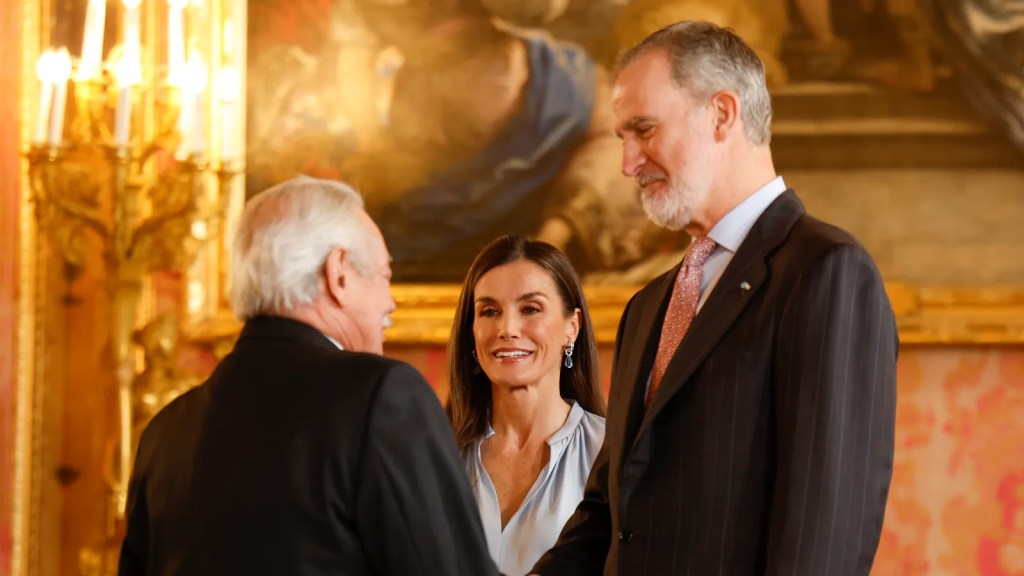
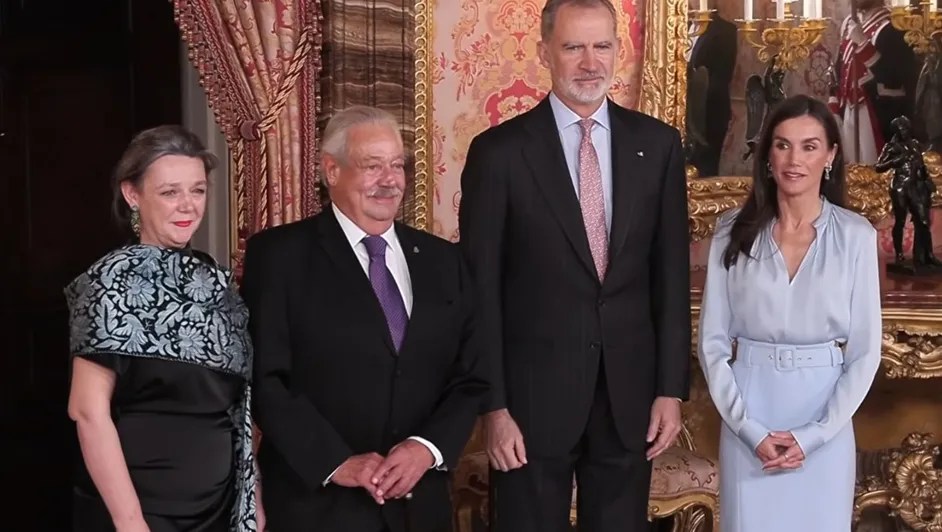
RTVE. El rey Felipe VI, en su intervención en el almuerzo ofrecido al Premio Cervantes en el Palacio Real de Madrid, ha destacado la literatura como una gran escuela de libertad; lo ha elogiado por su aportación fundamental a las letras en español en un acto que ha reunido a académicos, escritores, editores y libreros. Entre ellos los escritores Virginia Feito, María Dueñas o Soledad Puértolas; el director de la RAE Santiago Muñoz Machado; la presidenta de la Real Academia de la Historia, Carmen Iglesias; los Premios Cervantes de años anteriores Luis Mateo Díez (2023) o Sergio Ramírez (2017); y varios Premios Nacionales a la Mejor Traducción, de Literatura Dramática, Narrativa, Poesía, Poesía Joven, Cómic o Periodismo Cultural, además de otros autores más conocidos como el último Premio Planeta Juan del Val, Alfonso J. Ussía o Christian Gálvez.
RTVE. King Felipe VI, in his address at the Royal Palace of Madrid during the presentation of the Miguel de Cervantes Prize to the Mexican writer Gonzalo Celorio, highlighted literature as a great school of freedom; he praised Celorio for his fundamental contribution to Spanish literature at an event that brought together academics, writers, publishers, and booksellers. Among them were the writers Virginia Feito, María Dueñas, and Soledad Puértolas; the director of the Royal Spanish Academy, Santiago Muñoz Machado; and the president of the Royal Academy of History, Carmen Iglesias. The Cervantes Prize winners of previous years Luis Mateo Díez (2023) or Sergio Ramírez (2017); and several National Prizes for Best Translation, Dramatic Literature, Narrative, Poetry, Young Poetry, Comics or Cultural Journalism, in addition to other better-known authors such as the latest Planeta Prize winner Juan del Val, Alfonso J. Ussía or Christian Gálvez.
Almuerzo ofrecido por los Reyes en Palacio / Luncheon hosted by the King and Queen at the Palace
En el almuerzo el jefe del Estado quiso resaltar que el autor premiado ha ensalzado en su trayectoria la aportación de los intelectuales españoles en el exilio a la cultura mexicana y que, cual discípulo, ha hablado de aquellos maestros, que sentían España como propia pese a su forzada distancia y su desarraigo.
At the luncheon preceding the award ceremony, the Head of State emphasized that the laureate has, throughout his career, celebrated the contributions of Spanish intellectuals in exile to Mexican culture and that, like a disciple, he has spoken of those mentors who felt a deep connection to Spain despite their forced distance and uprooting.
También resaltó Felipe VI su excepcional obra literaria y labor intelectual con la que ha contribuido de manera profunda y sostenida al enriquecimiento del idioma y de la cultura hispánica.
King Felipe VI also highlighted the author’s exceptional literary work and intellectual contributions, which have profoundly and consistently enriched the Hispanic language and culture.
Gonzalo Celorio aportó lo que podemos considerar un axioma: Siempre que me he encontrado actitudes de defensa del idioma español he pensado que el idioma se defiende solo, que no necesita ayuda. No tengo ninguna duda sobre la persistencia de una lengua que ya es milenaria, que es jovial, que se enriquece permanentemente, que tiene una amplitud y capacidad creativa impresionantes… La lengua española no es solo un mecanismo de comunicación, sino una identidad, una manera de ser y de entender el mundo. O sea, es una cultura que tiene fuerza y vigencia.
Gonzalo Celorio contributed what we can consider an axiom: Whenever I have encountered attitudes defending the Spanish language, I have thought that the language defends itself, that it needs no help. I have no doubt about the persistence of a language that is already thousands of years old, that is vibrant, that is constantly enriching itself, that has an impressive breadth and creative capacity… The Spanish language is not only a mechanism of communication, but an identity, a way of being and understanding the world. In other words, it is a culture that has strength and relevance.
En el Instituto Cervantes / At the Cervantes Institute
Gonzalo Celorio ha depositado su legado en la Caja de las Letras que incluye un manuscrito a lápiz de su primera novela Amor propio, cartas con su editora Beatriz de Moura, a la que le debe mucho en su vida literaria, una crónica de viajes y algunos cuadernos.
Gonzalo Celorio has deposited his legacy in the Box of Letters, which includes a pencil manuscript of his first novel, Self-Love, letters with his editor Beatriz de Moura, to whom he owes much in his literary life, a travel chronicle, and some notebooks.
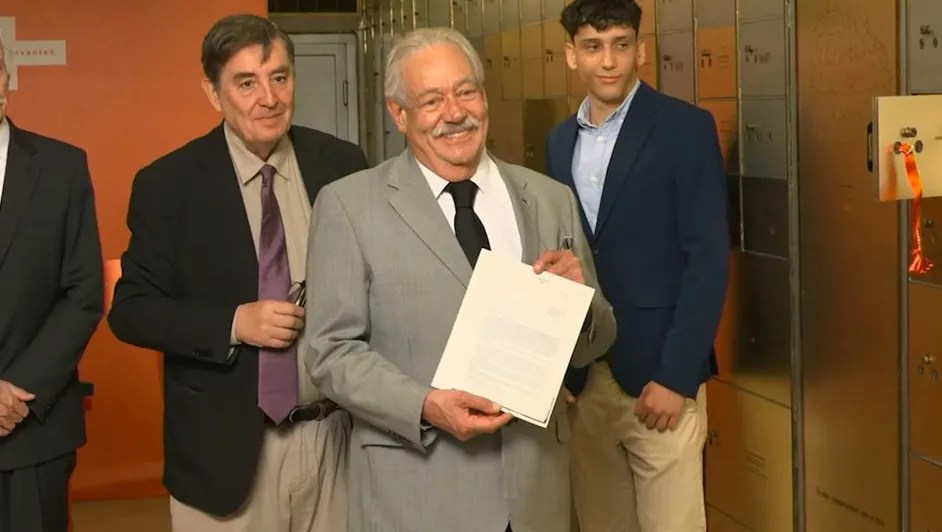
En la entrega de su legado, que reposa ya en la caja 1474 del Instituto Cervantes, le han acompañado el principio y el final de su estirpe, por el momento. Su hermano mayor, el único superviviente con el propio escritor de once hermanos, y su nieto Diego Celorio Camarena. .
At the handover of his legacy, which now rests in box 1474 of the Cervantes Institute, he was accompanied by the beginning and the end of his lineage, for the time being. His older brother, the only survivor of eleven siblings besides the writer himself, and his grandson, Diego Celorio Camarena. This Thursday, the author will receive the 2025 Cervantes Prize in a ceremony at the University of Alcalá, presided over by the King and Queen.
El director del Instituto Cervantes, Luis García Montero, ha comenzado su alocución leyendo el emotivo texto que Celorio dedicó al nacimiento de su nieto, en el que compara los ojos curiosos, cejas interrogantes del bebé con sus propios ojos de anciano en los que vuelve a brillar la fe, cejas gachas que se levantan maravilladas ante el milagro de la vida.
The director of the Cervantes Institute, Luis García Montero, began his address by reading the moving text that Celorio dedicated to the birth of his grandson, in which he compares the baby’s curious eyes and questioning eyebrows to his own eyes in old age, eyes in which faith shines once more, his drooping eyebrows rising in wonder at the miracle of life.
García Montero ha asegurado que es un honor recibir este legado porque el director de la Academia Mexicana de la lengua es un escritor que ha indagado a través de la literatura por sus historias personales, para llegar a la Historia moderna del mundo y, en concreto, de México
García Montero stated that it is an honor to receive this legacy because the director of the Mexican Academy of Language is a writer who has explored his personal histories through literature, in order to arrive at the modern history of the world and, specifically, of Mexico.
Descubre más desde LA AGENCIA MUNDIAL DE PRENSA
Suscríbete y recibe las últimas entradas en tu correo electrónico.
