
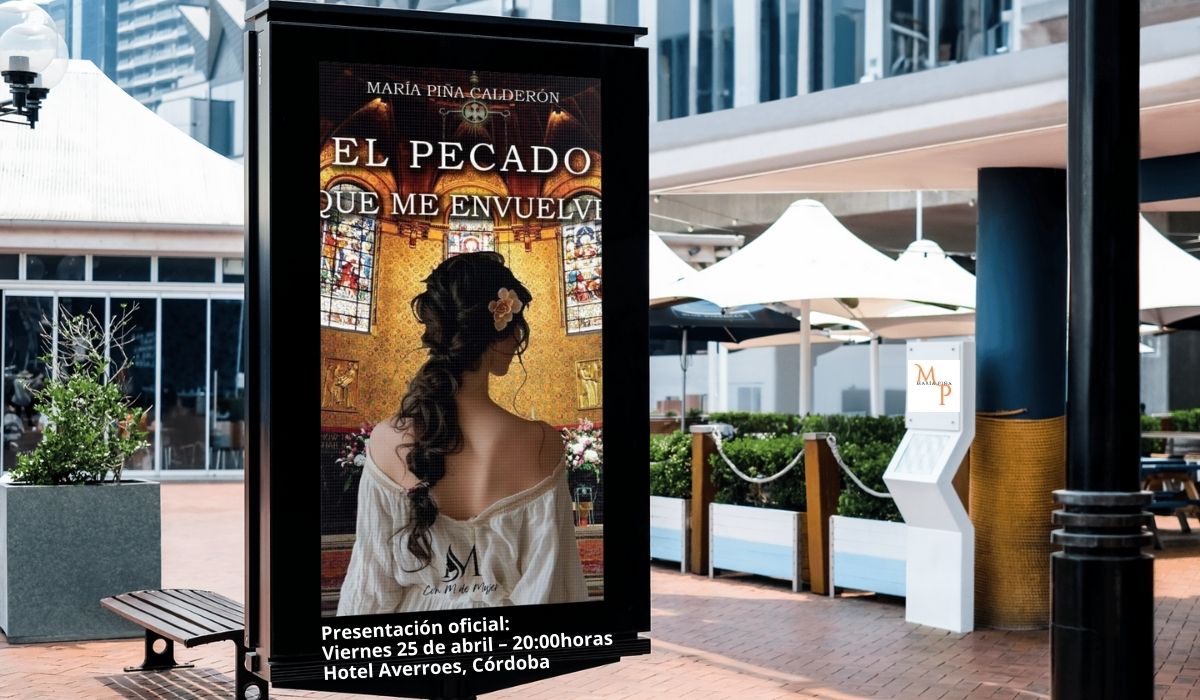
“The Sin That Envelops Me”: the first novel by a woman who not only writes, but transforms with her words.

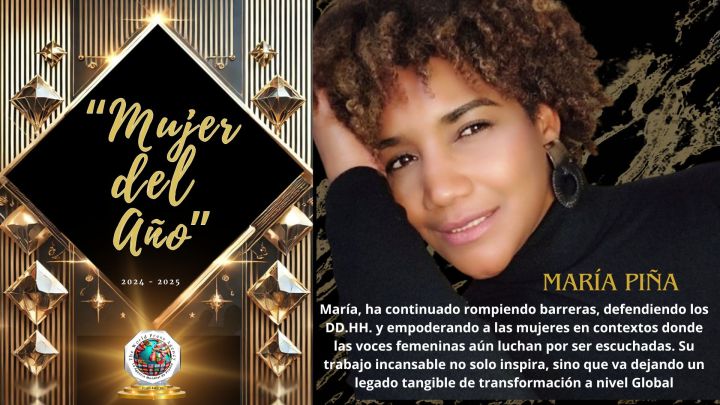
María Piña no necesita presentación, pero sí merece todos los reconocimientos. Galardonada como Mujer del Año por tercera vez por el Grupo APCSX y La Agencia Mundial de Prensa, María representa la voz de una generación de mujeres que no se conforman, que denuncian, crean y sanan con sus letras.
María Piña needs no introduction, but she deserves every recognition. Awarded Woman of the Year for the third time by the APCSX Group and the World Press Agency, María represents the voice of a generation of women who refuse to conform, who speak out, create, and heal with their writing.
Dominicana de nacimiento, panameña de crianza y española de corazón, esta escritora, poeta, periodista, documentalista, conferenciante y activista cultural ha sido siempre una mujer adelantada a su tiempo. Su obra no es solo literatura, es un acto de resistencia, de amor profundo a la cultura y de compromiso con la mujer.
Dominican by birth, Panamanian by upbringing, and Spanish at heart, this writer, poet, journalist, documentary filmmaker, lecturer, and cultural activist has always been a woman ahead of her time. Her work is not just literature; it is an act of resistance, a profound love of culture, and a commitment to women.

María en su brillante trayectoria nos presenta su primera novela, «El pecado que me envuelve», publicada por la editorial M de Mujer. En ella, retoma los ecos de su infancia, memorias de su juventud, y los territorios que habitan su identidad: Panamá, México, República Dominicana. Todo, tejido con la sensualidad poética y la profundidad emocional que caracterizan su pluma.
Now, María, in her brilliant career, presents her first novel, «The Sin That Surrounds Me,» published by M de Mujer. In it, she revisits the echoes of her childhood, the memories of her youth, and the territories that inhabit her identity: Panama, Mexico, the Dominican Republic. All of this is woven with the poetic sensuality and emotional depth that characterize her writing.
La novela narra la historia de Sofía, una mujer atrapada entre la fe y el deseo, entre la lealtad y la libertad. Una historia que atraviesa el alma femenina y nos invita a revisar nuestras propias creencias, miedos, decisiones y, sobre todo, la forma en la que nos hemos permitido (o no) ser.
The novel tells the story of Sofía, a woman caught between faith and desire, between loyalty and freedom. A story that pierces the feminine soul and invites us to examine our own beliefs, fears, decisions, and, above all, the way we have allowed ourselves (or not) to be.
Hay mujeres que definitivamente no escriben para ser recordadas, sino para que no sean olvidadas. Mujeres cuya voz no tiembla, sino que tiembla el mundo cuando se atreven a hablar desde lo profundo. María Piña es una de ellas cuyo nombre ya es sinónimo de compromiso y creación. No solo por su prolífica obra, sino por lo que representa: «Una voz que no se quiebra, una conciencia despierta, una fuerza que abraza».
There are women who definitely don’t write to be remembered, but rather to avoid being forgotten. Women whose voice doesn’t tremble, but rather the world trembles when they dare to speak from the depths of their being. María Piña is one of them whose name is already synonymous with commitment and creation. Not only for her prolific work, but for what it represents: «A voice that doesn’t break, an awakened conscience, a force that embraces.»
Ahora, con la publicación de su novela, “El pecado que me envuelve”, una obra visceral, luminosa y valiente. Una historia que mezcla sensualidad y espiritualidad, dogma y deseo, Latinoamérica y sus heridas, la memoria femenina y sus luchas más silenciadas. Desde lo íntimo hasta lo histórico, la autora traza un puente entre el pasado que nos formó y el presente que nos urge transformar. Esta novela no solo se lee: se respira, se duele y se agradece. Y con motivo de su lanzamiento oficial, tuve el privilegio de conversar con ella en una entrevista profunda y reveladora. A continuación, comparto con ustedes este encuentro de palabras, sentires y verdades.
Now, with the publication of her novel, «The Sin That Envelops Me,» a visceral, luminous, and courageous work. A story that blends sensuality and spirituality, dogma and desire, Latin America and its wounds, women’s memory and its most silenced struggles. From the intimate to the historical, the author builds a bridge between the past that shaped us and the present that urges us to transform. This novel isn’t just read: it’s breathed, it grieves, and it’s grateful. And on the occasion of its official release, I had the privilege of speaking with her in a profound and revealing interview. Below, I share with you this encounter of words, feelings, and truths.

CB: María, en tu trayectoria tan rica y diversa has caminado por la poesía, el periodismo, la dirección audiovisual, la gestión cultural… ¿Qué representa esta novela en tu mapa vital? ¿Qué parte de ti ha sido la que escribió “El pecado que me envuelve”? María, in your rich and diverse career, you’ve explored poetry, journalism, audiovisual directing, and cultural management. What does this novel represent in your life? What part of you was the one who wrote «The Sin That Envelops Me»?
¡Wao! Visto así, y mirando hacia atrás, sí que parece mucho. Sobre lo que representa esta novela puedo afirmar sin temor a equivocarme, que es un sueño cumplido. “El pecado que me envuelve” representa un despertar. En mi mapa vital, una parada inevitable. Es el punto donde empecé a mirar hacia adentro con los ojos del alma, a cuestionar verdades heredadas que antes creía intocables. Sobre la parte de mí que escribió la novela, es esa parte que busca sentido en lo invisible, que se rebela contra lo aprendido sin juzgar, solo con la necesidad de comprender. Es un diálogo entre mi esencia más pura y las estructuras que me enseñaron a seguir. Hoy escribo desde un lugar donde la fe, la culpa, el deseo y la libertad se cruzan… y se reconcilian.
Wow! Seen like that, and looking back, it does seem like a lot. Regarding what this novel represents, I can safely say that it’s a dream come true. «The Sin That Envelops Me» represents an awakening. On my life map, an inevitable stop. It’s the point where I began to look inward with the eyes of my soul, to question inherited truths I previously thought untouchable. Regarding the part of me that wrote the novel, it’s that part that seeks meaning in the invisible, that rebels against what I’ve learned without judgment, only with the need to understand. It’s a dialogue between my purest essence and the structures I was taught to follow. Today I write from a place where faith, guilt, desire, and freedom intersect… and are reconciled.
CB: Has sido reconocida por tercera vez como Mujer del Año por tu labor cultural, social y por tu activismo a favor de la mujer. ¿Crees que esta novela también puede ser leída como una forma de militancia poética o de reivindicación femenina? You’ve been recognized for the third time as Woman of the Year for your cultural and social work and your activism on behalf of women. Do you think this novel can also be read as a form of poetic activism or a women’s vindication?
Pues fíjate que, aunque no fue escrita con esa intención consciente, creo que puede perfectamente enmarcarse en esa perspectiva. Esta novela se convierte en un acto de militancia poética como dices en tu pregunta porque en ella me atrevo a nombrar lo que tantas veces se silencia.
Well, look, although it wasn’t written with that conscious intention, I think it can perfectly be framed within that perspective. This novel becomes an act of poetic activism, as you mention in your question, because in it I dare to name what is so often silenced.
Es un acto de rebeldía, también, por un lado. De tantas cosas que una asimila sin cuestionarse nada en absoluto de lo impuesto por la sociedad, por la iglesia, por generaciones, por la cultura, por la vida en general. Es una forma de reivindicación femenina porque da voz a esas emociones, deseos y conflictos que muchas mujeres llevamos dentro, pero que nos enseñaron a esconder. Al final, escribirla fue un acto de libertad, de romper con lo impuesto, siempre por supuesto, de una forma muy respetuosa, no concibo la vida sin valores y el respeto es fundamental, y, creo que muchas mujeres como yo, que están en el proceso de despertar, o puede que, alguna lo inicie tras la lectura de la novela, se sienta identificada con lo expuesto en esta emocionante historia.
It’s also an act of rebellion, on the one hand. It’s so many things that one assimilates without questioning anything imposed by society, the church, generations, culture, life in general. It’s a form of female vindication because it gives voice to those emotions, desires, and conflicts that many women carry within us but were taught to hide. In the end, writing it was an act of freedom, of breaking with what’s imposed, always, of course, in a very respectful way. I can’t conceive of life without values, and respect is fundamental. And I think many women like me, who are in the process of awakening, or perhaps some who are beginning to do so after reading the novel, will identify with what is presented in this moving story.
CB: “El pecado que me envuelve” es un título tan bello como provocador. ¿Qué significa ese «pecado» en la vida de Sofía, su protagonista… y qué representa en la vida de tantas mujeres que, como ella, han vivido atrapadas entre la fe heredada y la libertad deseada? «The Sin That Envelops Me» is a title as beautiful as it is provocative. What does this «sin» mean in the life of Sofía, its protagonist… and what does it represent in the lives of so many women who, like her, have lived trapped between inherited faith and the freedom they desire?
¡Uf! Pues he ahí el conflicto principal. Como he dicho antes, en la vida de Sofía representa esa lucha entre lo correcto porque lo dicen lo demás o lo indecoroso por lo mismo. Sofía está atrapada en una fe rotunda, en una forma de vida en la que ella no ha podido opinar, simplemente se la impusieron y para ella, era lo que había que hacer, cómo había que actuar, y cuando comienza a despertar, inicia ese camino tormentoso y pone en dudas tantas cosas y empieza a hacerse preguntas. Muchas mujeres, sobre todo de Hispanoamérica, hemos crecido con tantos dogmas impuestos, y tantas verdades que no nos pertenecen pero que a lo largo de la vida hemos aceptado como nuestras y creídas como absolutas. Pero los tiempos cambian, una va madurando y se va dando cuenta que hay cosas que no tienes que aceptar porque sí y punto. Que puede existir otra forma de ver la vida, de vivir tus emociones y que también está bien. Nos han educado atrapada en esa fe que mencionas, con el miedo como denominador común. Y, estoy convencida que todas las mujeres del mundo, independientemente de su religión, cultura o filosofía de vida, en algún momento de la existencia, se han sentido Sofía.
Phew! Well, there lies the main conflict. As I said before, in Sofía’s life, it represents that struggle between what’s right because others say so, and what’s indecorous for the same reason. Sofía is trapped in a resounding faith, in a way of life in which she hasn’t had a say; it was simply imposed on her, and for her, it was what had to be done, how to act, and when she begins to wake up, she begins that stormy path and questions so many things and begins to ask herself. Many women, especially in Latin America, have grown up with so many imposed dogmas, and so many truths that don’t belong to us but that throughout life we’ve accepted as our own and believed as absolute. But times change, one matures and realizes that there are things you don’t have to accept just because, period. That there may be another way of seeing life, of living your emotions, and that’s okay too. We’ve been raised trapped in that faith you mention, with fear as the common denominator. And I am convinced that every woman in the world, regardless of her religion, culture, or philosophy of life, has felt like Sofia at some point in her life.
CB: Sofía es una mujer moldeada por creencias religiosas, que se enfrenta a una Latinoamérica convulsa y a una revolución personal silenciosa. ¿Cómo construiste su voz? ¿Cuánto hay de ti, de tu memoria, de tus mujeres queridas en este personaje? Sofía is a woman shaped by religious beliefs, facing a turbulent Latin America and a silent personal revolution. How did you craft her voice? How much of yourself, your memory, and your loved ones are reflected in this character?
¡Una pregunta muy profunda! Debo confesar que esta novela y sus personajes surgieron de la nada. Siempre soñé con escribir una novela, pero no siempre estás preparada para ello y antes no era el momento. Los personajes me llevaban de la mano, aunque suene extraño, nunca sabía lo que iba a escribir y para mí era una experiencia nueva y emocionante y que a la vez vivía con miedo porque no sabía cómo acabaría. La voz de Sofía en particular tiene mucho de mi voz, de esas ganas de gritar, de reivindicar derechos que tenemos las mujeres a elegir, a cuestionarnos, a dudar, a despertar. Y respecto a mis memorias, ¿qué puedo decirte? Una gran parte de mi vida la pasé en Panamá así que esos recuerdos y vivencias están muy marcados en estas páginas.
A very profound question! I must confess that this novel and its characters emerged out of nowhere. I’ve always dreamed of writing a novel, but you’re not always ready for it, and before, it just wasn’t the right time. The characters held my hand. Strange as it may sound, I never knew what I was going to write, and for me, it was a new and exciting experience, and at the same time, I lived in fear because I didn’t know how it would end. Sofía’s voice, in particular, has a lot of my voice, that desire to scream, to demand the rights we women have—to choose, to question, to doubt, to awaken. And regarding my memoirs, what can I say? I spent a large part of my life in Panama, so those memories and experiences are deeply etched in these pages.
CB: La novela se ambienta en hechos históricos como la reversión del canal de Panamá o la tragedia de Vargas, en Venezuela ¿Qué valor crees que tiene que nuestras historias de mujeres se enmarquen también en los grandes acontecimientos políticos y sociales de nuestra historia? The novel is set in historical events such as the reversal of the Panama Canal or the Vargas tragedy in Venezuela. What value do you think there is in our women’s stories also being framed within the major political and social events of our history?
Tiene un valor inmenso, porque durante mucho tiempo las grandes historias se contaron sin nosotras. Las mujeres estábamos, pero no nos nombraban. Enmarcar nuestras vivencias dentro de acontecimientos como la reversión del canal o la tragedia de Vargas es, para mí, un acto de justicia narrativa. Es reconocer que las mujeres no solo acompañamos los procesos históricos, sino que los vivimos en carne propia: desde la casa, la calle, el vientre, la lucha… y también desde el silencio. Yo particularmente, viví con gran entusiasmo ese momento histórico de la reversión del canal de Panamá a manos panameñas, ese fervor patriótico que retrato en la novela y quizás por ese sentimiento tan único y bonito, logro reflejarlo en Sofía. Sobre la Tragedia de Vargas en Venezuela, yo tenía (y aún conservo) grandes amigas de la universidad que son de origen venezolano y pude vivir esos momentos de angustia con ellas cuando vivíamos en Panamá. En definitiva, creo firmemente que nuestras historias merecen ocupar ese lugar, porque también son memoria, también son país.
En el “El pecado que me envuelve”, lo personal, lo político y lo histórico se entrelazan como un mismo tejido, porque al final, las emociones también hacen historia. Y cuando una mujer se atreve a contar su verdad en medio del caos del mundo, ahí también hay revolución.
It has immense value, because for a long time, the great stories were told without us. Women were there, but we weren’t named. Framing our experiences within events like the reversal of the canal or the Vargas tragedy is, for me, an act of narrative justice. It’s recognizing that women not only accompany historical processes, but also experience them firsthand: from the home, the street, the womb, the struggle… and also from silence. I, for one, experienced with great enthusiasm that historic moment of the reversal of the Panama Canal to Panamanian hands, that patriotic fervor I portray in the novel, and perhaps because of that unique and beautiful feeling, I manage to reflect it in Sofía. Regarding the Vargas tragedy in Venezuela, I had (and still have) great friends from university who are of Venezuelan origin, and I was able to experience those moments of anguish with them when we lived in Panama. Ultimately, I firmly believe that our stories deserve to occupy that place, because they are also memory, they are also country. In «The Sin That Envelops Me,» the personal, the political, and the historical intertwine like a single fabric, because, in the end, emotions also make history. And when a woman dares to tell her truth amidst the chaos of the world, there too is a revolution.
CB: Eres una mujer que se ha reinventado muchas veces. ¿Sentiste que esta novela era una necesidad interior? ¿Fue catártica, liberadora, desafiante…? ¿Qué emociones te acompañaron en el proceso de escribirla? You’re a woman who has reinvented herself many times. Did you feel this novel was an inner need? Was it cathartic, liberating, challenging? What emotions accompanied you during the writing process?
Sí… escribir esta novela fue una necesidad del alma. Lo fue todo: fue catarsis, fue desafío, pero sobre todo fue liberación. Unas dos semanas después de haber empezado a escribir las primeras páginas, me detectaron un bulto en la mama y tras todo lo que se hace en estos casos, que tenían que analizar resultados de la biopsia y demás, ya sabes… pero era el verano de 2022 y nos íbamos de vacaciones familiares a la playa como cada año, así que, en medio de la incertidumbre, ¿y por qué no? el miedo a un resultado positivo, me dije a mí misma: “A ver, María, esos resultados pueden ser positivos o negativos, pero no lo sabrás hasta dentro de 2 semanas por lo que, tienes dos opciones: hundirte y sufrir por lo que no sabes y de paso arrastrar a tu familia; o seguir adelante, vivir a plenitud y ser feliz con los tuyos porque al final, sea lo que sea, ese resultado, no lo puedes cambiar” así que opté por la segunda opción y escribía cada día y fui inmensamente feliz. Al volver, el resultado fue positivo, tenía cáncer de mama, pero, ahora, tras casi tres años de aquel momento estoy como una rosa e inmensamente agradecida.
Yes… writing this novel was a soul-stirring experience. It was everything: it was catharsis, it was a challenge, but above all, it was liberation. About two weeks after I started writing the first pages, they detected a lump in my breast, and after everything that’s done in these cases—they had to analyze the biopsy results and so on, you know… but it was the summer of 2022, and we were going on a family vacation to the beach like every year. So, amidst the uncertainty—and why not?—the fear of a positive result, I said to myself: «Look, María, those results could be positive or negative, but you won’t know for another two weeks, so you have two options: sink and suffer for what you don’t know, dragging your family down with you in the process; or move forward, live life to the fullest, and be happy with your loved ones because, in the end, whatever the outcome, you can’t change.» So I opted for the second option and wrote every day and was immensely happy. When I returned, the result was positive: I had breast cancer, but now, almost three years after that moment, I feel as fresh as a rose and immensely grateful.
Así que, como ves, sí, fue esa mezcla maravillosa y salvadora en medio de la incertidumbre, del miedo y de la vulnerabilidad absoluta, escribir esta historia fue como tender un puente hacia mí misma. Cada palabra que salía era un acto de resistencia, de vida.
“El pecado que me envuelve” me sostuvo como mujer, escribir una vez más y como casi siempre, acaba salvándome. Me recordaba, en cada línea, que aún tenía mucho por decir, por sentir, por sanar. Y sí, he tenido que reinventarme muchas veces… pero esta vez lo hice con cicatrices nuevas, con una verdad más profunda, y con la certeza de que cuando se escribe desde el abismo, se puede tocar el cielo.
So, as you can see, yes, it was that wonderful and life-saving blend, amidst uncertainty, fear, and absolute vulnerability. Writing this story was like building a bridge to myself. Every word that came out was an act of resistance, of life.
«The Sin That Envelops Me» sustained me as a woman, writing once again, and as almost always, it ended up saving me. It reminded me, in every line, that I still had so much to say, to feel, to heal. And yes, I’ve had to reinvent myself many times… but this time I did it with new scars, with a deeper truth, and with the certainty that when you write from the abyss, you can touch the sky.
CB: Tu pluma es conocida por su sensualidad sutil, por esa forma de tocar el alma con palabras. ¿Cómo fue integrar esa sensualidad en una historia que también habla de culpa, religiosidad y represión? Your writing is known for its subtle sensuality, for that way of touching the soul with words. How was it to integrate that sensuality into a story that also speaks to guilt, religiosity, and repression?
La sensualidad no es solo una herramienta narrativa para mí, es una forma de estar en el mundo, de habitar el cuerpo y las emociones con autenticidad. Durante generaciones, las mujeres hemos callado nuestros deseos porque nos hicieron creer que todo era pecado, que sentir era un acto vergonzoso. Se nos ha juzgado por nombrar lo que sentimos, por desear, por ser libres en nuestros cuerpos. Así que, Integrar esa sensualidad en esta historia fue una forma de sanar, de romper silencios heredados, de ser fiel también a nuestros instintos, a nuestra esencia humana. Empecé haciéndolo hace 20 años, como una forma de rebeldía en mi primer libro “Despertando tu sensualidad” y como bien dices, soy conocida por esa sensualidad porque me siento una mujer muy sensual sin rozar la delgada línea que separa lo sensual de lo vulgar, por eso a mi literatura la autodenomino: “sensoerótica” y, por supuesto respeto a quien piensa distinto. Por lo tanto, la sensualidad es parte de mi esencia, no podía quedar fuera de esta historia. En el contexto donde reina la culpa y la represión, escribir desde el deseo fue una forma de resistencia. La palabra puede acariciar o herir… yo elegí que acariciara, incluso cuando dolía.
Sensuality isn’t just a narrative tool for me; it’s a way of being in the world, of inhabiting the body and emotions with authenticity. For generations, women have silenced our desires because we were led to believe that everything was a sin, that feeling was a shameful act. We’ve been judged for naming what we feel, for desiring, for being free in our bodies. So, integrating that sensuality into this story was a way of healing, of breaking inherited silences, of being faithful to our instincts, to our human essence. I started doing this 20 years ago, as a form of rebellion in my first book, «Awakening Your Sensuality,» and as you rightly say, I’m known for that sensuality because I consider myself a very sensual woman without treading the fine line that separates sensuality from vulgarity. That’s why I call my writing «sensuoerotic,» and, of course, I respect those who think differently. Therefore, sensuality is part of my essence; it couldn’t be left out of this story. In a context of guilt and repression, writing from desire was a form of resistance. Words can caress or wound… I chose to caress, even when it hurt.
CB: En este libro no solo se habla de Sofía, se habla de todas las que un día fueron niñas obedientes, esposas fieles, mujeres atrapadas en estructuras… ¿Qué conversación te gustaría que las lectoras tuvieran con ellas mismas después de leer tu obra? This book isn’t just about Sofía; it’s about all those who were once obedient girls, faithful wives, women trapped in structures… What conversation would you like readers to have with themselves after reading your work?
Pues, me encantaría que se plantearan cosas. Que empiecen a cuestionarse creencias, que echen la vista atrás y, en este ahora, se pregunten si su forma de vida realmente está en sintonía con lo que desean. Que hagan un acto de introspección e inicien su despertar, que suelten las culpas que no les pertenecen, sin reproches, y que se perdonen. Que se sientan más libres, más ellas, como lo hace Sofía. Y, sobre todo, que se abracen con ternura, sin juicio, sabiendo que nunca es tarde para empezar a ser quienes realmente son. Y, por supuesto, que sean más conscientes que nunca que, el mejor amor, es el propio.
Well, I would love for them to consider things. For them to begin to question their beliefs, to look back, and, in this now, ask themselves if their way of life is truly in tune with what they desire. For them to undergo an act of introspection and begin their awakening, to let go of guilt that doesn’t belong to them, without reproach, and to forgive themselves. For them to feel freer, more themselves, like Sofía does. And, above all, for them to embrace each other tenderly, without judgment, knowing that it’s never too late to start being who they really are. And, of course, for them to be more aware than ever that the best love is their own.
CB: María, tú representas un cruce hermoso de culturas: naciste en el Caribe, creciste en Panamá y te desarrollaste en España. ¿Cómo influye esa triple raíz en tu mirada como autora y en el alma de esta novela? María, you represent a beautiful fusion of cultures: you were born in the Caribbean, grew up in Panama, and grew up in Spain. How does this triple root influence your perspective as an author and the soul of this novel?
Sin duda, mi triple raíz cultural ha sido fundamental en mi desarrollo como autora y evidentemente, como persona. Nacer en el Caribe, en esa hermosa tierra que es República Dominicana y que tanto amo, me dio una conexión profunda con la calidez y la riqueza de esa región, mientras que crecer en Panamá me permitió abrazar una mezcla de culturas latinoamericanas que enriquecieron mi perspectiva del mundo. Allí pasé la etapa maravillosa de la pubertad hasta la adultez, estudié periodismo, y empecé mi desarrollo como profesional. Mi experiencia en España, por su parte, me ha permitido ver la vida desde una óptica europea, equilibrando esa mezcla de influencias y dotando a mi escritura de una visión más global, pero siempre con la esencia de mis raíces. Creo que esta diversidad cultural ha alimentado no solo mi estilo de narrar, sino también la manera en que percibo las emociones, las historias y las relaciones humanas. De manera particular, en esta novela, pues influyen al 100% ya que, se desarrolla en Panamá con esos tintes históricos que envuelven de manera sublime la historia.
Without a doubt, my triple cultural roots have been fundamental in my development as an author and, obviously, as a person. Being born in the Caribbean, in that beautiful land that is the Dominican Republic, which I love so much, gave me a deep connection with the warmth and richness of that region, while growing up in Panama allowed me to embrace a mix of Latin American cultures that enriched my perspective of the world. There, I spent the wonderful stage of puberty through adulthood, studied journalism, and began my professional development. My experience in Spain, meanwhile, has allowed me to see life from a European perspective, balancing that mix of influences and giving my writing a more global vision, but always with the essence of my roots. I believe this cultural diversity has informed not only my storytelling style, but also the way I perceive emotions, stories, and human relationships. This novel is particularly influential in this regard, as it is set in Panama, with those historical overtones that sublimely envelop the story.
CB: Has sido testigo y parte activa del quehacer cultural latinoamericano y europeo. ¿Crees que la mujer escritora aún tiene que demostrar más para ser escuchada? ¿Qué obstáculos y qué fortalezas ves hoy en el camino de la mujer en la literatura? You’ve witnessed and actively participated in Latin American and European cultural events. Do you think women writers still have more to demonstrate to be heard? What obstacles and strengths do you see in the path of women in literature today?
Definitivamente, a lo largo de los años hemos tenido que luchar por un espacio en la sociedad en general y en la literatura en particular. Aunque hemos avanzado mucho, aún hay muchas voces femeninas que tienen que demostrar más para ser escuchadas, especialmente en contextos donde las voces masculinas han predominado durante siglos. Los obstáculos siguen siendo visibles; el acceso a las mismas oportunidades de visibilidad, el prejuicio de que las mujeres escribimos solo sobre temas “femeninos”, o la falta de representación en las grandes editoriales.
Pero, al mismo tiempo, las mujeres escritoras tenemos una fortaleza inmensa y que nuestra capacidad de resiliencia es inquebrantable, nuestra visión única sobre la vida y las emociones, y el hecho de que estamos creando redes de apoyo muy poderosas. Cada vez más, las mujeres nos estamos uniendo y creando espacios donde nuestras voces puedan resonar más fuerte. En ese sentido, desde la Asociación Mujer y Poder, que presido, y el canal de TV Mujer y Poder que dirijo, estamos impulsando el arte y la cultura de las mujeres, creando plataformas que nos permiten visibilizar nuestras obras, nuestras luchas y nuestras historias. La cultura femenina es el alma de lo que hacemos, y es esencial que sigamos apostando por ella. Además, las redes sociales se han convertido en un escaparate vital donde nuestras voces pueden ser escuchadas sin barreras, conectando con audiencias de todo el mundo y derribando las fronteras que durante tanto tiempo nos separaron.
Over the years, we’ve definitely had to fight for a place in society in general and in literature in particular. Although we’ve made a lot of progress, there are still many female voices that need to prove themselves in order to be heard, especially in contexts where male voices have predominated for centuries. Obstacles remain: access to the same opportunities for visibility, the prejudice that women write only about «feminine» topics, or the lack of representation in major publishing houses.
But at the same time, women writers possess immense strength and an unwavering capacity for resilience, a unique perspective on life and emotions, and the fact that we are creating very powerful support networks. Increasingly, women are uniting and creating spaces where our voices can resonate more loudly. In this sense, through the Women and Power Association, which I chair, and the Women and Power TV channel, which I direct, we are promoting women’s art and culture, creating platforms that allow us to showcase our work, our struggles, and our stories. Women’s culture is the soul of what we do, and it is essential that we continue to champion it. Furthermore, social media has become a vital showcase where our voices can be heard without barriers, connecting with audiences around the world and breaking down the borders that have separated us for so long.

CB: Si tuvieras a Sofía sentada frente a ti, ¿qué le dirías? ¿Qué le aconsejarías a esa mujer que quiere rebelarse contra sus propios miedos? If you had Sofia sitting in front of you, what would you say? What advice would you give to that woman who wants to rebel against her own fears?
OMG! si tuviera a Sofía frente a mí, le diría que ha sido muy valiente por aprender a desaprender, por atreverse a sentir y por ser una mujer auténtica. Y a esa mujer le diría que haga caso a su instinto, a su voz interior que es la única que jamás le falla ni se equivoca, que se escuche y de el paso que la salva del abismo, y que aunque duele, despertar, reencontrarse, aceptarse y amarse es francamente liberador, que vaya a por todas!
OMG! If I had Sofia in front of me, I would tell her that she was very brave for learning to unlearn, for daring to feel, and for being an authentic woman. And to that woman, I would tell her to listen to her instinct, to her inner voice, which is the only one that never fails her or makes a mistake, to listen to herself and take the step that saves her from the abyss, and that although it hurts, waking up, rediscovering herself, accepting and loving herself is truly liberating. Go for it!
CB: Para terminar, María… ¿Qué mensaje te gustaría dejar grabado en el corazón de quien se acerque a esta novela por primera vez? Finally, María… What message would you like to leave engraved in the hearts of those who come across this novel for the first time?
Me gustaría que, al acercarse a esta novela, quien la lea sienta la conexión profunda con su propia historia. Que descubra que más allá de las páginas, estamos todas unidas por las mismas emociones, las mismas luchas y la misma fuerza transformadora. Esta novela es un homenaje a la resiliencia de las mujeres, a nuestra capacidad de reinventarnos y de encontrar luz incluso en los momentos más oscuros. Este sería mi mensaje: “No importa de dónde vengas ni lo que hayas vivido, tu voz es poderosa, tu historia merece ser contada, y el mundo necesita escucharla. Porque cuando las mujeres nos unimos, no hay barrera que nos detenga. Y por supuesto; Vive, Sonríe, ¡Agradece!”.
Gracias por vuestro tiempo, por acercarse al ” Pecado que me envuelve”, por acercaros a mi mundo.
Un fuerte abrazo.
I hope that, upon reading this novel, the reader feels a deep connection with their own story. They discover that beyond the pages, we are all united by the same emotions, the same struggles, and the same transformative force. This novel is a tribute to the resilience of women, to our ability to reinvent ourselves and find light even in the darkest moments. This would be my message: «No matter where you come from or what you’ve been through, your voice is powerful, your story deserves to be told, and the world needs to hear it. Because when women unite, there are no barriers that can stop us. And of course: Live, Smile, Be Thankful!»
Thank you for your time, for reading «Sin That Envelops Me,» for coming into my world.
A big hug.
Leer a María Piña es abrir una puerta hacia lo no dicho. Es permitirnos sentir con los ojos y cuestionar con el alma. Su novela no solo nos narra una historia: nos devuelve la mirada de tantas mujeres que aprendieron a callar lo que ardía por dentro.
Reading María Piña is like opening a door to the unspoken. It’s allowing ourselves to feel with our eyes and question with our souls. Her novel doesn’t just tell a story: it gives us back the perspective of so many women who learned to silence what burned inside.
“El pecado que me envuelve” no busca respuestas fáciles, ni finales complacientes. Es una invitación valiente a reconciliarnos con nuestras sombras, a revisar nuestras creencias heredadas y, sobre todo, a escribir nuestra propia libertad.
«The Sin That Envelops Me» doesn’t seek easy answers or complacent endings. It’s a courageous invitation to reconcile ourselves with our shadows, to reexamine our inherited beliefs, and, above all, to write our own freedom.
La presentación oficial se realizará este viernes 25 de abril, en el Hotel Averroes conocido como “El hotel de la Cultura” de Córdoba, te invitamos a un evento íntimo y lleno de emociones, donde la palabra, la música, la historia y el alma femenina se entrelazarán para presentar esta obra que ya nace siendo imprescindible.
The official presentation will take place this Friday, April 25, at the Averroes Hotel, known as «The Hotel of Culture» in Córdoba. We invite you to an intimate and emotional event, where words, music, history, and the feminine soul will intertwine to present this work, which is already essential
«Gracias, María, por abrirnos tu mundo. Por recordarnos que cada mujer tiene derecho a contar su historia… aunque duela, aunque arda, aunque desafíe. Y sobre todo, gracias por enseñarnos que la palabra, cuando nace del alma, también puede ser un acto de justicia«.
«Thank you, Maria, for opening your world to us. For reminding us that every woman has the right to tell her story… even if it hurts, even if it burns, even if it challenges. And above all, thank you for teaching us that words, when they come from the soul, can also be an act of justice.»

Descubre más desde LA AGENCIA MUNDIAL DE PRENSA
Suscríbete y recibe las últimas entradas en tu correo electrónico.


Un comentario en ““El pecado que me envuelve”: la primera novela de una mujer que no solo escribe, sino que transforma con su palabra.”