

AMERICAN COMPANY, una novela arriesgada: Ana Claudia Molinari

Columnista – Prensa Especializada
The Mexican writer Ana Claudia Molinari, presents her second novel AMERICAN COMPANY, published by Ediciones del Espejo Somos. This time it focuses on fiction literature, where migration, love are combined, with a dose of reality loaded with rawness, a journey to the Zapatista encounter, to anarchism, to collectives, geopolitics, control of the media, in in the midst of a global paralysis, whose focus is centered on San Cristóbal de las Casas, Chiapas.
La escritora mexicana Ana Claudia Molinari, presenta su segunda novela AMERICAN COMPANY, editada por Ediciones del Espejo Somos. Esta vez se enfoca en literatura de ficción, donde se une la migración, el amor, con una dosis de realidad cargada de crudeza, un viaje al encuentro zapatista, al anarquismo, a los colectivos, geopolítica, el control de medios de comunicación, en medio de una parálisis mundial, cuyo foco está centrado en San Cristóbal de las Casas, Chiapas.
In this work we can also get closer to writers from other times, to the play of some invented words, to the encounter with the characters’ feelings and the reflection on what writing is. Sprinkled with poetic prose, its reading is dizzying.
En esta obra nos podemos acercar también a escritores de otros tiempos, al juego de algunas palabras inventadas, al encuentro de los sentimientos de los personajes y la reflexión de qué es la escritura. Salpicada de prosa poética, su lectura es vertiginosa.
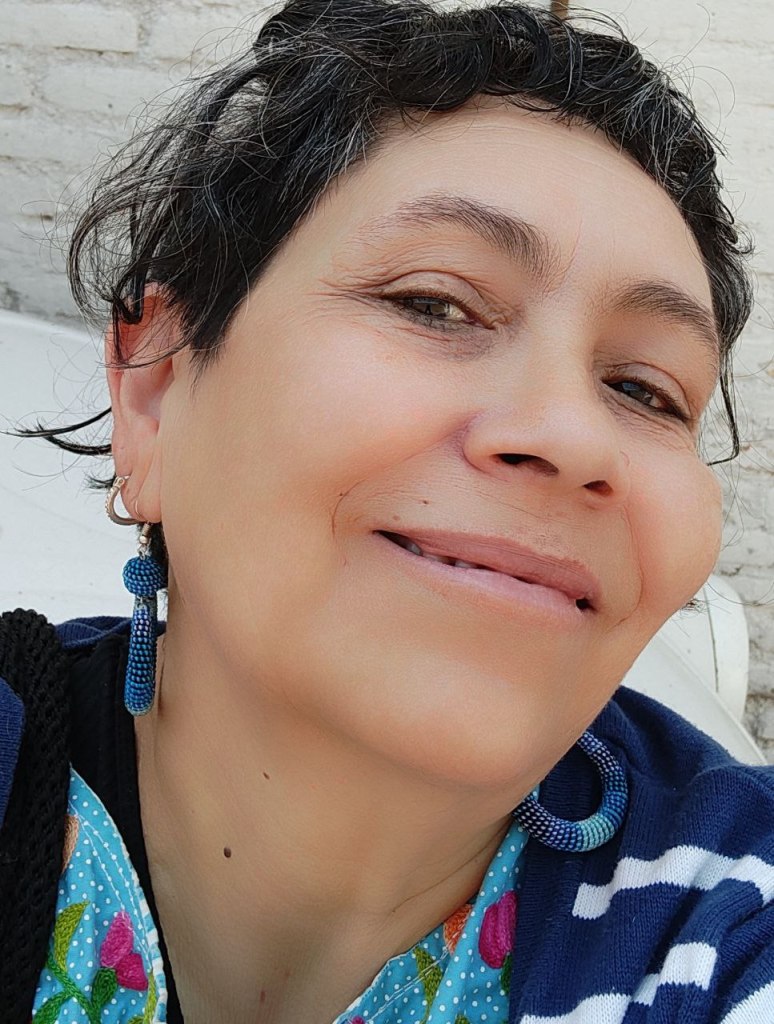
Surrounded by a warm circle of readers and friends, the editor, ethnographer and semiotician, Ana Claudia Molinari, presented at the Volcana Lugar Común bookstore in Mexico City, her most recent work printed through Espejo Somos, a self-taught publishing house that She and her daughter Denise have been managing it since 2009, and it was born just like this novel in San Cristóbal de las Casas.
Rodeada de un cálido círculo de lectores y amigos, la editora, etnógrafa y semióloga, Ana Claudia Molinari, presentó en la librería Volcana Lugar Común, de la Ciudad de México, su más reciente trabajo impreso a través de Espejo Somos, una editorial autodidacta que ella y su hija Denise, gestionan desde 2009, y que nace igual que esta novela en San Cristóbal de las Casas.

“I consider American Company to be an infrarealist novel and with that attitude I have thought about boycotting Juan Villoro,” he says with a mischievous tone. “It is my second self-published novel (the first is: On the other side of the turbulent river, 2010) and I feel happy. «I want to see it grow, it took me 10 years to finish it but it was barely born, I want to see its effects and know what repercussions it has on me.»
“Considero que American Company es una novela infrarrealista y con esa actitud he pensado hacer boicot a Juan Villoro”, afirma con un tono travieso.“Es mi segunda novela auto publicada (la primera es: Del otro lado del turbulento río, 2010) y me siento feliz. Quiero verla crecer, me tardé 10 años en terminarla pero nació apenas, deseo ver sus efectos y saber qué repercusiones tiene en mí”.
“The content is risky, because we are talking about powers and when you talk about that, you take risks, and I think that literature is about that, too. There are other risks in how you say things, and in the case of being a woman, how you dare to tell about the world, what you think about world politics. For the message of an unknown writer to be received, that writing has to be endorsed by an institution or a man, and if not, there is another risk, that they ignore you, you expose yourself to greater criticism.”
“El contenido es arriesgado, porque estamos hablando de poderes y cuando hablas de eso, te arriesgas, y creo que la literatura va de eso, también. Hay otros riesgos en cómo dices las cosas, y en el caso de ser mujer, cómo te atreves a relatar el mundo, lo que piensas de las políticas mundiales. Para que el mensaje de una escritora desconocida sea recibido, esa escritura tiene que estar avalada por una institución o un hombre, y si no es así, ahí hay otro riesgo, que te ignoren, te expones a una mayor crítica”.
Open and sincere, she confesses:
“I’m trying and not in a game, but in reality. Currently the most difficult identity to build is that of an independent writer. I don’t know if that exists or if I’m dreaming or pretending to be something that is denied to me. “You cannot be a writer outside of the publishing industry, it is almost impossible.”
“I don’t know if that happens everywhere, but I’m sure that’s how it is in Mexico. You can’t be if you don’t have something that supports you, a great writer, a last name, money, something that links you to the publishing industry, you can’t link yourself alone, maybe if you have a lot of money yes, but I can’t experience that.»
Abierta y sincera, confiesa:
“Lo estoy intentando y no en un juego, sino en la realidad. En la actualidad la identidad más difícil de construir es la de escritora independiente. No sé si eso existe o estoy soñando o pretendiendo ser algo que me está negado. No se puede ser escritora al margen de la industria editorial, es algo casi imposible”.
“No sé si eso pasa en todas partes, pero estoy segura que en México así es. No puedes serlo si no tienes algo que te cobije, un gran escritor, apellido, dinero, algo que te vincule a la industria editorial, tu sola no te puedes vincular, quizá si tienes mucho dinero sí, pero eso no lo puedo experimentar”.
“Writers in general never comment on how they came to be published, it is something that I would like to know, but it is taboo, only she exists, isolated from the world…”.
“Las escritoras en general nunca comentan cómo llegaron a ser publicadas, es algo que a mí me gustaría saber, pero es tabú, solo existe ella, aislada del mundo…”.
“We can recognize a career in famous writers for winning awards, but winning them in this country is not because you want to, whether you are good or bad at literature, it is because someone gave you a certain push to win. I don’t believe one hundred percent that it is natural, you need to be in the gear, and if you are not, the women and men within the gear are going to make sure that you are not, because you did not arrive through those paths. It’s elite stuff. So I don’t know if I’m still playing at being a writer, but I love this rebellion. «It’s difficult.»
“Podemos reconocer una trayectoria en las escritoras famosas por ganar premios, pero ganarlos en este país no es porque tú quieras, seas bueno o malo en la literatura, es porque alguien te dio cierto empuje para ganar. No creo al cien por ciento que sea natural, necesitas estar en el engranaje, y si no lo estás, las mujeres y hombres dentro del engranaje se van a encargar de que no lo estés, porque no llegaste por esos caminos. Es algo de élite. Así que no sé si sigo jugando a ser escritora, pero me encanta esta rebeldía. Es difícil”.
“I lived the experience when we wrote: Dictionary, A Room of All (Ediciones del Espejo Somos, 2022). It was a book of which we even made a second edition, it sold a lot, women and groups wanted to have the book. And over time when you decant the experience, what happened? The information, what is said there, is absorbed, but since the author is a nobody, the name does not pass, the writer does not pass. The editorial world of writers is made of names, not of collective writers, nor of ordinary people, it is something that is built, part of marketing.”
“Viví la experiencia cuando escribimos: Diccionaria, Una habitación de todas (Ediciones del Espejo Somos, 2022). Fue un libro del que incluso hicimos una segunda edición, se vendió mucho, mujeres y grupos quisieron tener el libro. Y al paso del tiempo cuando decantas la experiencia, ¿qué pasó? La información, lo que ahí se dice se absorbe, pero como la autora es una doña nadie, no pasa el nombre, no pasa la escritora. El mundo editorial de los escritores está hecho de nombres, no de escritores colectivos, ni de personas comunes, es algo que se construye, parte de la mercadotecnia”.
“We opted for a different path, in which we collectively produced the book, we know almost all the processes of the book. It’s another route. This bet is much more complex, it is not a bet to enter the market, to begin with we are outside the market, we have to accept it to enjoy every part of the path and not suffer disappointment or sadness when you see that your ideas were taken by a man, and To him yes, his novel is very high and yours only reached (to rise) to the house of your friends. I know that experience, those things happen in any field, ideas are not private property, but obviously you recognize your work in other work. It’s when you say to yourself, I think I have good ideas.”
“Nosotras optamos por un camino distinto, en el que colectivamente producimos el libro, conocemos casi todos los procesos del libro. Es otra ruta. Esta apuesta es mucho más compleja, no es una apuesta para entrar al mercado, de entrada estamos fuera del mercado, hay que asumirlo para gustar de cada parte del camino y no sufrir decepciones o tristezas cuando ves que tus ideas las tomó un hombre, y al él sí, su novela está muy arriba y la tuya no llegó (a encumbrarse) más que a la casa de tus amigos. Conozco esa experiencia, esas cosas pasan en cualquier campo, las ideas no son propiedad privada, pero obviamente reconoces tu trabajo en otro trabajo. Es cuando te dices creo que tengo buenas ideas”.
“Women’s ideas are like women’s bodies, anyone feels they have the right to take it and without even mentioning you. It is the price of a sexist society. I love being a writer, I still write, but readers are needed. It is not true that you only want to write without being read, if you do not read your writing it does not live, it is there, inert, waiting for something to activate it like a virus, to grow in the profession you need the cycle of the text to be completed and the Reading is essential.”
“Las ideas de las mujeres son como los cuerpos de las mujeres, cualquiera se siente con el derecho de tomarlo y sin siquiera citarte. Es el precio de una sociedad machista. Amo ser escritora, sigo escribiendo, pero se necesitan lectores. No es verdad que solo quieras escribir sin que te lean, si no te leen tu escritura no vive, está ahí, inerte, esperando que algo la active como un virus, para crecer en el oficio necesitas que el ciclo del texto se complete y la lectura es indispensable”.
In this long creative and literary adventure, Ana Claudia invites us to stop by her personal blog:
https://lase Escritorasnoexisten.wordpress.com/ where she publishes reviews of her most beloved authors. Finally, he adds that he presented American Company for the first time, at street level, at the 5th Autonomous and Popular Literary Tianguis in the city of Oaxaca, on October 13 of this year.
En esta larga aventura creativa y de letras, Ana Claudia nos invita de paso, a hacer un alto en su blog personal:
https://lasescritorasnoexisten.wordpress.com/ donde publica reseñas de sus autoras más amadas. Añade para finalizar que presentó por primera vez American Company, a pie de calle, en el 5° Tianguis Literario Autónomo y Popular en la ciudad de Oaxaca, el 13 de octubre de este año.
American Company, is a novel that can be purchased at Volcana Lugar Común (CDMX) in Santa María la Ribera, and is also available at the La Cosecha bookstore in San Cristóbal de Las Casas, Chiapas or by return mail on social networks. We are @espejo publishing house.
American Company, es una novela que se puede adquirir en Volcana Lugar Común (CDMX) en Santa María la Ribera, y está disponible también, en la librería La Cosecha, de San Cristóbal de Las Casas, Chiapas o a vuelta de correo en las redes de la editorial @espejo somos.
Descubre más desde LA AGENCIA MUNDIAL DE PRENSA
Suscríbete y recibe las últimas entradas en tu correo electrónico.
