
IMAGINED STORIES: “Your Secret”

Columnista
Le gustaba recorrer los barrios pobres, amaba los cafés y buscaba, a veces desordenadamente, como si supiera que la vida se le iría pronto, el diálogo con cualquier parroquiano. Fue admirado por Borges, quien sobre él escribió su primer y celebrado ensayo y, curiosamente, influyó en la mayoría de los letristas de tango que abandonaron el lunfardo. La masa de su pan poético fue la cotidianidad, con una mirada compasiva, cuasi candorosa, aunque siempre preocupado por la marginalidad que observaba alrededor; llegó a decir: «Me basta el corazón de una muchacha que sufre».
He liked to walk through the poor neighborhoods, he loved cafes and he sought, sometimes disorderly, as if he knew that his life would soon pass away, for dialogue with any customer. He was admired by Borges, who wrote his first celebrated essay about him and, curiously, influenced the majority of tango lyricists who abandoned lunfardo. The dough of his poetic bread was everyday life, with a compassionate, almost candid look, although always concerned about the marginality he observed around him; He even said: «The heart of a girl who suffers is enough for me.»
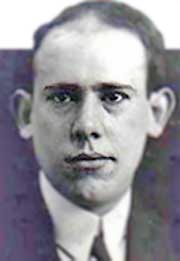
Anoche hablé con Evaristo Carriego. O, tal vez, fue un sueño. No importa, porque, en todo caso, ahora, ya difusas las imágenes y la charla que se van alejando, me siento bendecido por un privilegio y un sano ardor de buenas intenciones me abraza y no me suelta.
Last night I spoke with Evaristo Carriego. Or, perhaps, it was a dream. It doesn’t matter, because, in any case, now, with the images and the chatter already diffused and receding, I feel blessed by a privilege and a healthy ardor of good intentions embraces me and does not let go.
Sus ojos casi circulares, miopes, hondos, me miraron desde una profunda melancolía y me aceptaron. Un soñador, pensé. No hubo necesidad de gestos corteses. —Creí que lo iba a encontrar en el Café de los Inmortales… Pasé por allí y me dijeron que probablemente estuviese aquí, en el bar Luzio… Movió las manos como si dudara y dijo: —Sí, bueno, también frecuento el sótano del Royal Seller… No sé. Supongo que voy donde hallo franqueza, respeto, cariño… Ignoro cómo me ven los demás, pero siempre me he sentido modesto, hasta ingenuo a veces, y esos ambientes…
—Que al comienzo no sintió suyos… —le interrumpí con torpeza.
—No. Es verdad. Pero yo era entonces poco más que un chiquilín romántico que prefería las redacciones de diarios y revistas, y hasta los cenáculos masones. ¿Sabe? Yo también amé a Baudelaire, el simbolismo desmelenado, tanto como el verbo enérgico, como un rayo de mi poeta de la adolescencia, Almafuerte.
His almost circular, myopic, deep eyes looked at me from a deep melancholy and accepted me. A dreamer, I thought. There was no need for polite gestures. —I thought I was going to find him at the Café de los Inmortales… I passed by there and they told me that he was probably here, at the Luzio bar… He moved his hands as if in doubt and said: —Yes, well, I also frequent the basement of the Royal Seller… I don’t know. I guess I go where I find openness, respect, affection… I don’t know how others see me, but I have always felt modest, even naive at times, and those environments… «That at the beginning he didn’t feel like his…» I interrupted him awkwardly. -No. It’s true. But I was then little more than a romantic boy who preferred the editorial offices of newspapers and magazines, and even the Masonic cenacles. Knows? I also loved Baudelaire, the wild symbolism, as much as the energetic verb, like a lightning bolt of my poet of adolescence, Almafuerte.
Hizo una pausa, respiró con cierta dificultad y tras un vago ademán que no pude interpretar, añadió con voz queda:
—Como otros, quizás como todos… tropecé pronto con la vida real, con los desheredados, con la tristeza de tantos… Me influyó mucho un compatriota suyo, Florencio Sánchez. —Me sorprende, aunque no sé por qué…
—Es que ahora me basta, para escribir lo que vale la pena sentir y describir, con el corazón de una muchacha que sufre… Con un suburbio oscurecido y cálido, mi suburbio, mío y de los demás, los que quiero… Con el dolor de los que padecen en
silencio, con la aspereza del amor sin sentido…
—Me han contado… —comencé a decir y recuerdo que balbuceé una disculpa— que usted tuvo un gran amor…
Levantó la mirada hacia mí, sin verme: —Sí, mi único amor. Un amor frustrado, ella murió… También he escrito un solo libro, Misas herejes… Demasiado poco…
Me quedé en silencio y, de pronto, él dijo: —No sé si usted me comprenderá, pero pienso mucho en la muerte…
—¡Pero si tiene veintinueve años! Encogió levemente los hombros, tomó un sorbo de café y suspiró, casi vencido: —Bueno, sí… Pero tal vez soy, como me dibujó alguien, «uno de esos que lloran su noche entristecida sin creer en la aurora del mañana».
He paused, breathed with some difficulty and after a vague gesture that I could not interpret, he added in a quiet voice: —Like others, perhaps like everyone… I soon stumbled upon real life, with the disinherited, with the sadness of so many… I was greatly influenced by one of your compatriots, Florencio Sánchez. —It surprises me, although I don’t know why… —It’s just that now it’s enough for me to write what is worth feeling and describing, with the heart of a girl who suffers… With a darkened and warm suburb, my suburb, mine and the others, those I love… With the pain of those who suffer in silence, with the harshness of meaningless love… «They told me…» I began to say and I remember stammering an apology «that you had a great love…» He looked up at me, without seeing me: —Yes, my only love. A frustrated love, she died… I have also written only one book, Heretical Masses… Too little… I remained silent and, suddenly, he said: «I don’t know if you understand me, but I think about death a lot…» —But he’s twenty-nine years old! He shrugged his shoulders slightly, took a sip of coffee and sighed, almost defeated: «Well, yes… But maybe I am, as someone drew me, «one of those who cry their sad night without believing in the dawn of tomorrow.»
He alcanzado a recordar que oscurecía alrededor y eso me empujó a un loco apuro: —Por favor, antes de separarnos, ¿podría recitarme uno de sus poemas? Elija el que quiera…
Su voz ya era apenas audible y se iba apagando. Pero, qué raro, yo no lo veía, no lo veía… y supuse que se habría levantado y caminaba cansinamente… ¿hacia dónde?
«¡De todo te olvidas! Anoche dejaste/ aquí, sobre el piano, que ya jamás tocas,/ un
poco de tu alma de muchacha enferma:/ un libro, vedado, de tiernas memorias./ Íntimas
memorias. Yo lo abrí, al descuido,/ y supe, sonriendo, tu pena más honda,/ el dulce
secreto que no diré a nadie:/ a nadie interesa saber que me nombras./ …Ven, llévate el
libro, distraída llena/ de luz y de ensueño. Romántica loca…/ ¡Dejar tus amores ahí,
sobre el piano!/ …De todo te olvidas ¡cabeza de novia!»
I managed to remember that it was getting dark around me and that pushed me into a crazy hurry: —Please, before we part, could you recite one of your poems to me? Choose the one you want…
His voice was barely audible now and was fading. But, how strange, I didn’t see him, I didn’t see him… and I assumed that he had gotten up and was walking wearily… where to?
«You forget everything! Last night you left/ here, on the piano, which you never play anymore,/ a
little of your soul as a sick girl:/ a book, forbidden, of tender memories./ Intimate
memories. I opened it, carelessly,/ and I knew, smiling, your deepest sorrow,/ the sweet
secret that I will not tell anyone:/ no one is interested in knowing what you name me./ …Come, take the
book, distracted full of light and dream. Crazy romantic…/ Leave your loves there,
on the piano!/ …You forget everything, bride head!»
No sabrá que el primer ensayo del genial Borges fue sobre su vida y su obra, sus
barrios pobres, sus sufrientes hermanos y su muerte joven.
Y no sabrá que, después del vuelo al infinito indescifrable, rescatando papeles
desordenados y cuadernos, le publicaron La canción del barrio y El alma del suburbio.
Pero… ¿y si todo —por un milagro celeste— le hubiese llegado a su alma vagante,
entre sus vuelos melancólicos que nos siguen, vigilando nuestros destinos?
De sus ojos miopes escaparía una serena alegría.
You will not know that the first essay of the brilliant Borges was about his life and his work, his poor neighborhoods, his suffering brothers and his young death. And he will not know that, after the flight to the indecipherable infinity, rescuing papers messy books and notebooks, they published The Song of the Neighborhood and The Soul of the Suburb. But… what if everything—by a celestial miracle—had reached his wandering soul, between its melancholic flights that follow us, watching our destinies? A serene joy would escape from his myopic eyes.
«Tu Secreto» es un poema muy popular de Evaristo Carriego publicado póstumamente como gran parte de su obra. Carriego, de humilde cuna, fue poeta y periodista, y murió muy joven, a los veintinueve años, en 1912, en Buenos Aires. Allí había nacido en 1883. Su obra está condensada en el libro Misas herejes y en varios textos que se editaron luego de su muerte.
«Tu Secreto» is a very popular poem by Evaristo Carriego published posthumously as much of his work. Carriego, of humble birth, was a poet and journalist, and died very young, at the age of twenty-nine, in 1912, in Buenos Aires. He was born there in 1883. His work is condensed in the book Heretical Masses and in several texts that were published after his death.
Descubre más desde LA AGENCIA MUNDIAL DE PRENSA
Suscríbete y recibe las últimas entradas en tu correo electrónico.
