

Imagined Stories

LO FATAL figura como el mejor poema del último libro publicado por Ruben Darío, poeta, periodista y diplomático nacido en Nicaragua en 1867 y muerto en el mismo país en 1916. Darío fue el máximo representante del modernismo literario en lengua española, y ha sido llamado “El príncipe de las letras castellanas”. Pasó por una infancia infeliz, se sumergió en la lectura de clásicos y pronto –aunque escribió sus primeros sonetos exitosos en 1897- se reveló como un escritor de enorme nivel. Viajó por el mundo e influyó a muchísimos escritores. Uno de sus rasgos distintivos fue el uso frecuente del verso alejandrino, símbolo, precisamente, de la primera poesía modernista. Sus obras más famosas son Azul…, Prosas profanas y otros poemas y El Canto errante.
LO FATAL appears as the best poem in the last book published by Ruben Darío, poet, journalist and diplomat born in Nicaragua in 1867 and died in the same country in 1916. Darío was the greatest representative of literary modernism in the Spanish language, and has been called “The prince of Castilian letters.” He went through an unhappy childhood, immersed himself in reading classics and soon – although he wrote his first successful sonnets in 1897 – he revealed himself as a writer of enormous level. He traveled the world and influenced many writers. One of its distinctive features was the frequent use of Alexandrian verse, a symbol, precisely, of the first modernist poetry. His most famous works are Azul…, Profane Prosas y otros Poems and El Canto errante.
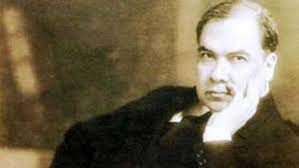
LO FATAL / FATAL
Detuve mis inútiles apremios e hice tiempo para releer Azul… y, al penetrar en esos relatos conmovedores de Rubén Darío, me atrapó un estado extraño de ensoñación que me llevó a una de esas representaciones fantásticas del que duerme, aunque yo me sentía en serena vigilia.
I stopped my useless urges and made time to reread Azul… and, upon entering into those moving stories by Rubén Darío, I was captured by a strange state of dreaminess that led me to one of those fantastic representations of the one who sleeps, although I felt serenely awake. .
–Dichoso el árbol, que es apenas sensitivo,/ y más la piedra dura porque esa ya no siente,/ pues no hay dolor más grande que el dolor de ser vivo,/ ni mayor pesadumbre que la vida consciente.
-Blessed is the tree, which is barely sensitive,/ and even harder is the hard stone because it no longer feels,/ because there is no pain greater than the pain of being alive,/ nor greater sorrow than conscious life.
¿Es que se ha producido el milagro de que me preste atención, maestro?
Has the miracle occurred that you are paying attention to me, teacher?
-Bueno, en fin… me gustaría volver a recordar el galopar alocado de mi vida: no tuve una infancia feliz –pese a que se dijo de mí que era “un niño prodigio” porque leía a los tres años- viajé mucho, amé tal vez demasiado y, ¡oh, repugnancia que me sigue persiguiendo!, me venció el alcoholismo.
-Well, anyway… I would like to remember again the crazy gallop of my life: I did not have a happy childhood – despite the fact that it was said of me that I was «a child prodigy» because I read at the age of three – I traveled a lot, I loved such time too much and, oh, the disgust that continues to haunt me!, alcoholism conquered me.
Lo sé, lo sé. Fue criado por padres adoptivos, conoció el mundo, enfrentó penurias, no le fue sencillo lograr el reconocimiento de su arte, dejó mujeres e hijos que murieron pronto…
I know, I know. He was raised by adoptive parents, he saw the world, he faced hardships, it was not easy for him to achieve recognition for his art, he left behind wives and children who died soon…
-Sí, hasta Francisca Sánchez, la hija de un jardinero, analfabeta pero bellísima, a la que llevé a París, le enseñé a leer y a escribir y me dio el único hijo que, entre tantos, me sobrevivió. Las anteriores, Rafaela, Rosario, qué sé yo, el torrente de mi vida en vuelo las arrastró…
-Yes, even Francisca Sánchez, the daughter of a gardener, illiterate but beautiful, whom I took to Paris, I taught her to read and write and she gave me the only son who, among many, survived me. The previous ones, Rafaela, Rosario, what do I know, the torrent of my life in flight dragged them…
Maestro… ¿a qué remover esos recuerdos? ¿Por qué no arroparse con las coronas que le impusieron en vida de “Príncipe de las letras castellanas” y “Padre del modernismo hispanoamericano”? ¿Por qué no recordar su oceánica obra en prosa y en poesía, la influencia que ejerció a comienzos del siglo XX, incluso entre quienes fueron sus amigos del alma, como Juan Ramón Jiménez, Antonio Machado, Leopoldo Lugones, Julio Herrera y Reissig y tantos más?
Master…why remove those memories? Why not cover himself with the crowns that were imposed on him during his lifetime as “Prince of Castilian Letters” and “Father of Spanish-American Modernism”? Why not remember his oceanic work in prose and poetry, the influence he exerted at the beginning of the 20th century, even among those who were his bosom friends, such as Juan Ramón Jiménez, Antonio Machado, Leopoldo Lugones, Julio Herrera and Reissig and so many others. further?
–Ser y no saber nada, y ser sin rumbo cierto,/ y el temor de haber sido y un futuro terror…/ Y el espanto seguro de estar mañana muerto…
-To be and not know anything, and to be without a certain direction,/ and the fear of having been and a future terror…/ And the certain horror of being dead tomorrow…
Pero… ¿y la estremecedora belleza de Cantos de vida y esperanza, Los cisnes y otros poemas, El oro de Mallorca, La historia de mis libros, El canto errante, Prosas profundas…? ¡Qué exaltada inspiración, cual sangre que brota de una herida que le atraviesa el pecho!
But… and the shocking beauty of Songs of Life and Hope, The Swans and Other Poems, The Gold of Mallorca, The History of My Books, The Wandering Song, Profound Proses…? What an exalted inspiration, like blood gushing from a wound that runs through his chest!
-Sí, sí… Pero me llamaban “afrancesado”… ¡Claro que Verlaine y Víctor Hugo influenciaron en mí! ¿Y con eso qué? El modernismo no es otra cosa que el verso y la prosa castellanos pasados por el fino tamiz del buen verso y la buena prosa francesa. Caramba, mi inesperado amigo, si hasta les preocupaba más ver cuánto bebía o mi hábito de mojar el habano en el champán… Creo que fui más apreciado en Uruguay y sobre todo Argentina que en España y en mi propia tierra centroamericana, a la que no olvido.
-Yes, yes… But they called me “French-ish”… Of course Verlaine and Victor Hugo influenced me! And what with that? Modernism is nothing other than Spanish verse and prose passed through the fine sieve of good French verse and prose. Wow, my unexpected friend, they were even more concerned about how much I drank or my habit of dipping my cigar in champagne… I think I was more appreciated in Uruguay and especially Argentina than in Spain and in my own Central American land, which I don’t know. forgot.
Ah, ignoraba yo semejante sufrimiento. Creo, maestro, que es usted injusto consigo, que niega la admiración que desparramó y el legado que dejó en nuestras manos, indignas de su talento. ¡Qué bueno que haya hecho suya la sentencia de Verlaine: “De la musique avant tout chose”! En su literatura la poesía fue, siempre y ante todo, pura música. ¿Olvida que su aporte al arte escrito ha sido enseñado a generaciones? ¿Se ha desinteresado de su revolución de la métrica castellana, de las nuevas posibilidades rítmicas que deslizó en sus libros, de la figura retórica clave, la sinestesia, mediante la cual asoció sensaciones propias de distintos sentidos? ¿Y su símbolo amoroso y más característico, el cisne?
Ah, I was unaware of such suffering. I think, teacher, that you are unfair to yourself, that you deny the admiration that you spread and the legacy that you left in our hands, unworthy of your talent. How good it is that you have adopted Verlaine’s sentence: “De la musique avant tout chose”! In his literature, poetry was, always and above all, pure music. Do you forget that your contribution to written art has been taught to generations? Have you become disinterested in his revolution of the Castilian meter, in the new rhythmic possibilities that he introduced into his books, in the key rhetorical figure, synesthesia, through which he associated sensations from different senses? And its most characteristic and loving symbol, the swan?
Usted llenó de colores, de exotismo, de refinamiento el mundo literario.
You filled the literary world with colors, exoticism, and refinement.
Sentí, en mi ensueño delirante, que me miraba, triste y condescendiente pero con una sonrisa pequeñamente cínica en el rostro…
I felt, in my delirious reverie, that he was looking at me, sad and condescending but with a slightly cynical smile on his face…
-Quisiera creerlo hoy, como tal vez lo creí antes. Sólo que…
-I would like to believe it today, as perhaps I believed it before. Except that…
¿Qué, maestro?
What, teacher?
–Sufrir por la vida y por la sombra/ y por lo que no conocemos y apenas sospechamos,/ y la carne que tienta con sus frescos racimos, y la tumba que aguarda con sus fúnebres ramos, ¡y no saber adónde vamos,/ ni de dónde venimos…!
-Suffer for life and for the shadow/ and for what we do not know and barely suspect,/ and the flesh that tempts with its fresh clusters, and the tomb that awaits with its funereal branches, and without knowing where we are going,/ Nor where we come from…!
___________________________________________________________________
Descubre más desde LA AGENCIA MUNDIAL DE PRENSA
Suscríbete y recibe las últimas entradas en tu correo electrónico.
