

PYGMALION EFFECT

Prensa Especializada
Si está en nuestro anhelo servir, crecer, ser equipo, amar; irremisiblemente este tiene que estar cargado de confianza, de creer en el otro seguido de un constante reconocimiento que nos permita descubrir capacidades. Si así obramos, de manera imperceptible estaremos generando nuevas y asombrosas realidades cuajas de salud, verdad y vida.
If it is in our desire to serve, grow, be a team, love; This inevitably has to be loaded with trust, with believing in the other followed by constant recognition that allows us to discover capabilities. If we do this, we will imperceptibly be generating new and amazing realities filled with health, truth and life.
..Es por ello que hoy hablamos del Efecto Pigmalión como una de sus herramientas, de lo que en psicología denominamos “profecía autocumplida”.
That is why today we talk about the Pygmalion Effect as one of its tools, what in psychology we call a “self-fulfilling prophecy.”
De esos sucesos que cada día hacemos, que las llevamos a cabo y solo nos ponemos en ello porque pensamos que es lo mejor para nosotros, nos va a permitir crecer, es lo que se está esperando de nosotros; y por ello las hacemos. Y es que la confianza que ponen en nosotros es proporcional al éxito que podemos llegar a alcanzar. Respondemos, ejecutamos “esa” conducta en función de lo que las otras personas esperan de nosotros. En la mochila de la confianza siempre hay un par de alas.
Of those events that we do every day, that we carry out and we only put ourselves into it because we think it is the best for us, it will allow us to grow, it is what is expected of us; and that’s why we do them. And the trust they place in us is proportional to the success we can achieve. We respond, we execute “that” behavior based on what other people expect of us. In the backpack of confidence there is always a pair of wings.
Publio Ovidio Nason
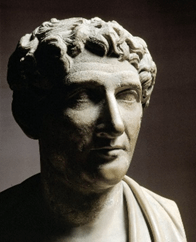
Pero ¿Por qué el calificativo de Efecto Pigmalión? La leyenda de Pigmalión, nos la recrea el poeta romano Publio Ovidio Nasón (43 a.C.–17 d.C.) en el Libro X de su obra “Las Metamorfosis” (1) en la que trata del rey de Chipre, Pigmalión. Famoso escultor que cansado de no encontrar a su mujer ideal vivió su soledad esculpiendo estatuas de jóvenes. Un día, al finalizar una de sus obras se quedó totalmente fascinado al contemplar sus hermosos y perfectos rasgos. La llamo Galatea. Como a cualquier humano de tanto y tanto mirarla y pensarla termino por enamorarse de ella. –Centrar insistentemente la atención en un pensamiento siempre tiene consecuencias- Su mente le recreaba hermosos sueños de vino y rosas viviendo historias con Galatea pletórica de vida. Tanto se dejó llevar por tal fascinación que se convirtió en su monomanía.
But why the label Pygmalion Effect? The legend of Pygmalion is recreated for us by the Roman poet Publius Ovid Nasón (43 BC–17 AD) in Book X of his work “The Metamorphoses” (1) in which he deals with the king of Cyprus, Pygmalion. Famous sculptor who, tired of not finding his ideal woman, lived out his loneliness sculpting statues of young people. One day, upon finishing one of his works, he was completely fascinated by contemplating her beautiful and perfect features. I call her Galatea. Like any human, from looking at her and thinking about her so much, he ended up falling in love with her. –Insistently focusing your attention on a thought always has consequences- His mind recreated beautiful dreams of wine and roses living stories with Galatea full of life. He got so carried away by such fascination that it became his monomania.
Un día, consternada la diosa Afrodita de su lamentable estado, apiadándose de él, tomó la decisión de darle vida a su obra. Al despertar Pigmalión, la conmovida Afrodita le dijo: mereces la felicidad que tú mismo has plasmado. Aquí tienes a la reina que has buscado. Pigmalión toco a la estatua y le pareció caliente, el marfil cedía suavemente a sus manos y las venas daban sus pulsaciones al explorarlas con sus dedos; Galatea se había convertido en una hermosa mujer de carne y hueso. Es por ello que llamamos efecto Pigmalión al proceso donde somos capaces de materializar deseos y creencias. Si, hay que tener mucho cuidado y respeto con lo que pensamos; pueden llegar a cumplirse.
One day, the goddess Aphrodite was dismayed by his lamentable state, taking pity on him, and made the decision to give life to his work. When Pygmalion woke up, the moved Aphrodite told him: you deserve the happiness that you yourself have created. Here is the queen you have been looking for. Pygmalion touched the statue and it seemed warm to him, the ivory gave softly to his hands and the veins gave their pulsations when he explored them with his fingers; Galatea had become a beautiful woman of flesh and blood. That is why we call the Pygmalion effect the process where we are able to materialize desires and beliefs. Yes, we have to be very careful and respectful with what we think; can be fulfilled.
A lo largo de la Historia han existido y existen infinidad de ejemplos Pigmalión, y como es norma en estos casos unos conocidos y otros tantos y tantos desconocidos.
Throughout History there have been and still are countless Pygmalion examples, and as is the norm in these cases, some are known and many others are unknown.
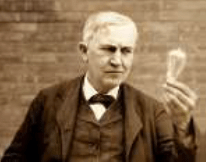
Uno de ellos lo tenemos en Thomas Alba Edison (1847-1931) A los siete años su familia se trasladó a Michigan. Era el séptimo de los hermanos. En el colegio solo pudo asistir doce semanas. Un buen día llego a casa con una carta que sus profesores le habían entregado con el consejo de que solo la podía leer su madre; solo ella podía hacerlo. Abrirla y comenzar a llorar fue cuestión de segundos. Thomas se quedó turbado. Ella se recompuso y le dijo: Thomas ¿sabes lo que dice la carta? Qué eres un genio y que el colegio no te puede enseñar más, tengo que hacerlo yo a partir de mañana. Y así fue como empezó su madre a ejercer de profesora para con él. Hasta los once años se los pasó devorando literatura, cosa lógica y natural ya que sus maestros le habían confirmado a su madre que era un genio y como tal no tenía más remedio que actuar. Había recién cumplido los doce cuando emprendió sus primeros pasos en pequeños proyectos de pura invención.
We have one of them in Thomas Alba Edison (1847-1931). At the age of seven his family moved to Michigan. He was the seventh of the brothers. He was only able to attend school for twelve weeks. One day he came home with a letter that his teachers had given him with the advice that only his mother could read it; only she could do it. Opening it and starting to cry was a matter of seconds. Thomas was confused. She composed herself and said: Thomas, do you know what the letter says? You are a genius and the school can’t teach you more, I have to do it starting tomorrow. And that’s how his mother began to act as a teacher for him. Until the age of eleven he spent devouring literature, a logical and natural thing since his teachers had confirmed to his mother that he was a genius and as such he had no choice but to act. He had just turned twelve when he took his first steps in small projects of pure invention.
Tenía veinticuatro años cuando falleció su madre y Thomas junto con sus hermanos, mientras recogían sus cosas encontró la vieja carta que le había llevado del Colegio siendo niño. Cuando la abrió para recordar lo que su madre le había dicho, en ese momento no pudo dejar de llorar también; la carta no decía nada de lo que su madre le había contado. Exponía: Thomas es un niño enfermo mentalmente, no le permitimos que vuelva al Colegio. (2) ¡Qué poder tiene el creer! Y es que cuando crees; estás creando. Tu cuerpo, el universo entero se orienta para que empieces a ver, a pensar a partir de ese momento según tu empeño, y Thomas al contemplarse en ese espejo amoroso de su madre, se vio tal cual ella decía. Descubrió la imagen que había creado de él; y creyó. Esa era su auténtica imagen; era un ser especial, ¡un genio!, y se repitió que le gustaba porque a su madre le gustaba.
He was twenty-four years old when his mother died and Thomas, along with his brothers, while collecting his things, found the old letter that he had brought him from school as a child. When she opened it to remember what her mother had told her, at that moment she couldn’t stop crying too; The letter said nothing of what his mother had told him. He stated: Thomas is a mentally ill child, we do not allow him to return to school. (2) What power there is in believing! And when you believe; you are creating. Your body, the entire universe, is oriented so that you begin to see, to think from that moment on according to your determination, and Thomas, when he contemplated himself in that loving mirror of his mother, saw himself just as she said. He discovered the image he had created of him; and believed. That was his true image; He was a special being, a genius!, and he repeated to himself that he liked him because his mother liked him.
Efecto Pigmalión. Ir, a través del reconocimiento, responsabilidad, ayudando al otro utilizando como herramienta la imagen que de él nos hemos forjado, que estamos convencidos que es; en la que creemos, y con ella ir cincelando, con confianza y libertad.
Pygmalion effect. Go, through recognition, responsibility, helping others using as a tool the image that we have forged of them, which we are convinced it is; in which we believe, and with it we go chiselling, with confidence and freedom.

Partiendo del principio de lo que hasta ese momento era una simple teoría plausible, el psicólogo estadounidense Robert Rosenthal (1933-2024) profesor en la Universidad de California, Riverside y Leonor Jacobson (1922-) directora de una escuela de San Francisco, master en la Universidad Estatal de California, decidieron constatarla empíricamente mediante una investigación que llevaron a cabo en 1982 y que pusieron por título “Pigmalión en el aula” (3). Consistió, en que durante el primer trimestre de clase en el Instituto que dirigía Leonor Jacobson informaron al grupo de profesores de una de las clase en concreto, sobre los resultados de la batería de pruebas que previamente habían pasado a sus alumnos para medir sus capacidades intelectuales, indicándoles de quienes habían obtenido los mejores resultados, y que estos, como consecuencia, confiaban en que deberían ser dentro del grupo, los que mejor rendimiento obtendrían. Y efectivamente, así ocurrió; los alumnos seleccionados por Rosenthal y Jacobson fueron los mejores.
Starting from the beginning of what until then was a simple plausible theory, the American psychologist Robert Rosenthal (1933-2024) professor at the University of California, Riverside and Leonor Jacobson (1922-) director of a school in San Francisco, master in California State University, decided to verify it empirically through research they carried out in 1982 and titled “Pygmalion in the classroom” (3). It consisted of the fact that during the first quarter of class at the Institute directed by Leonor Jacobson, they informed the group of teachers of one of the specific classes about the results of the battery of tests that they had previously given to their students to measure their intellectual abilities. , indicating to them those who had obtained the best results, and that these, as a consequence, trusted that they should be those within the group, who would obtain the best performance. And indeed, that’s how it happened; the students selected by Rosenthal and Jacobson were the best.
A decir verdad, las pruebas psicométricas jamás se pasaron; en eso consistió parte de la investigación. Los estudiantes fueron seleccionados aleatoriamente y sin embargo, el grupo escogido confirmó lo dicho por los investigadores: fueron los que mejor rendimiento obtuvieron. Pero ¿Qué es lo que ocurrió?:
To tell the truth, the psychometric tests were never passed; That’s what part of the investigation consisted of. The students were selected randomly and however, the chosen group confirmed what the researchers said: they were the ones who obtained the best performance. But what happened?:
- Sucedió qué los profesores empezaron a crear altas expectativas sobre el rendimiento de este grupo de alumnos, y estos actuaron a favor para que se cumplieran. It happened that teachers began to create high expectations about the performance of this group of students, and they acted to ensure that they were met.
- Había un compromiso moral de una mayor predisposición a enseñarles ¡Ya que eran los mejores! There was a moral commitment to a greater willingness to teach them since they were the best!
- El incremento en el contacto visual para ellos fue exponencial. Con el consecuente refuerzo permanente. The increase in eye contact for them was exponential. With the consequent permanent reinforcement.
- El “clima” llegó a ser inmejorable. Lógico, ¡Eran los más inteligentes! ¡Los que mejor y más rápido sabían captar el punto de vista de cada profesor! Y los profesores empezaron a ver según pensaban. The “climate” became unbeatable. Logically, they were the smartest! Those who best and fastest knew how to capture each teacher’s point of view! And the teachers began to see what they thought.
- Ante cualquier posible conducta disruptiva por parte de este grupo, la actitud de los profesores siempre estaba marcada por la comprensión, buscando el “lado positivo”. In the face of any possible disruptive behavior on the part of this group, the teachers’ attitude was always marked by understanding, looking for the “positive side.”
El factor que todo lo explicó fue que creyeron y como respuesta iniciaron un constante reconocimiento a ese pequeño grupo seleccionado, terminando por crear una nueva realidad.
The factor that explained everything was that they believed and in response they began a constant recognition of that small selected group, ending up creating a new reality.
- Establecieron un clima emocional personalizado. Lenguaje verbal y no verbal: voz, refuerzo con la mirada. El poder de la sonrisa. They established a personalized emotional climate. Verbal and non-verbal language: voice, reinforcement with gaze. The power of the smile.
- Elogios. Tanto en privado como dentro del grupo. Praise. Both privately and within the group.
- Concienzuda preparación de los temas por parte del profesor. Requería hacerlo porque estaban seguros que se estaban enfrentando a los mejores. Se motivaron y elevaron su exigencia porque los alumnos que tenían enfrente eran los mejores. Conscientious preparation of the topics by the teacher. They needed to do it because they were sure they were facing the best. They were motivated and raised their demands because the students in front of them were the best.
- Mayor participación en la clase tanto del grupo como del profesor. La confianza de enriquecerse de contenidos en ambas direcciones era asumida. Greater participation in the class of both the group and the teacher. The confidence of enriching content in both directions was assumed.
Quedo confirmado: el Efecto Pigmalión funciona. Son nuestras expectativas las que van a condicionar –sino a determinar- al grupo. Mucho cuidado con lo que pensamos respecto al grupo, porque según nuestra influencia pueden llegar a cumplirse! El estereotipo que nos hemos formado del grupo es la clave que hace posible el cambio.
It is confirmed: the Pygmalion Effect works. It is our expectations that will condition – if not determine – the group. Be very careful with what we think about the group, because depending on our influence they can come true! The stereotype that we have formed about the group is the key that makes change possible.
Si dirigimos un equipo humano debemos creer en él. ¿Se imaginan un entrenador sin reconocer los valores de sus hombres? ¿Un padre pensando que sus hijos…..? Todo se convierte en un virus letal, o cuando menos; enfermizo. Si no hay talente, de nada sirve el talento.
If we lead a human team we must believe in it. Can you imagine a coach without recognizing the values of his men? A father thinking that his children…? Everything becomes a lethal virus, or at least; sickly. If there is no talent, talent is of no use.

No queremos finalizar este artículo sin hablar del galardonado premio Nobel de Literatura en 1994, el escritor y periodista Kenzaburo Oe (Osehigashi, Japón 1935-). A tenor de quedar embarazada su esposa de su primer hijo, en una visita médica los especialistas detectaron hidrocefalia en la criatura. Rechazaron el aborto y en el año 1963 nació Hikari, con diagnóstico de Autismo. No hablaba, no se comunicaba y apenas se movía. Este acontecimiento se convirtió en el eje principal de la vida familiar que terminó manifestándose a través del libro “Una cuestión personal” donde cuenta todo el proceso de aceptación y reconocimiento que llevaron a cabo tanto él como su mujer.
We do not want to end this article without talking about the winner of the Nobel Prize in Literature in 1994, the writer and journalist Kenzaburo Oe (Osehigashi, Japan 1935-). As his wife became pregnant with their first child, during a medical visit, specialists detected hydrocephalus in the child. They rejected abortion and in 1963 Hikari was born, diagnosed with Autism. He didn’t speak, he didn’t communicate and he barely moved. This event became the main axis of family life that ended up manifesting itself through the book “A personal question” where he tells of the entire process of acceptance and recognition that both he and his wife carried out.

Van pasando los años y un buen día observaron que Hikari se fijaba en un pájaro del jardín; parecía que balbuceaba una palabra. A consecuencia de este descubrimiento se arma la revolución en casa, decidiendo sus padres comprarle un disco donde se recopilaban cantos de aves. A partir de ese momento, cada vez que sonaba el canto de un pájaro contemplaban llenos de alegría que su hijo parecía recobrar vida.
The years go by and one day they observed that Hikari noticed a bird in the garden; It seemed like he was stammering a word. As a result of this discovery, a revolution broke out at home, with his parents deciding to buy him a record containing bird songs. From that moment on, every time a bird sang, they watched, full of joy, as their son seemed to come back to life.
Al cumplir los once años de edad lo iniciaron en el aprendizaje de la música como terapia; utilizando como instrumento un piano. De nuevo pasaron los años marcados por un proceso de inspiración en la música de los pájaros que felizmente hoy podemos decir que Hikari, ha pasado a ser un genial interprete de Mozart. Actualmente es un reconocido compositor. Los padres nunca dejaron de repetirse que tenían un tesoro en casa y que pronto sabrían “para qué”.
When he was eleven years old, they started him learning music as therapy; using a piano as an instrument. Once again, the years passed marked by a process of inspiration in the music of birds that, happily today, we can say that Hikari has become a brilliant interpreter of Mozart. Currently he is a renowned composer. The parents never stopped telling themselves that they had a treasure at home and that they would soon know “what for.”
Pueden disponerse a disfrutar del arreglo “A Talk” del propio Hikari Oe bajo la interpretación de Martha Argerich y el mítico Rostropóvich durante un concierto en Japón, en el audiovisual titulado: Rostropóvich Argerich in Japan (Itsyoshi, 2018)”.
Hemos pretendido con estos ejemplos dar unas pinceladas a la importancia que tiene el reconocimiento, creer en las personas. Las neuronas espejo -en otro artículo hablaremos de ellas- Nuestra voz, intención, pensamiento y sinceridad nos están determinando en todo momento. El poder de la palabra sigue siendo un arma necesaria para la creación y el cambio si fuera necesario.
We have tried with these examples to give a few strokes to the importance of recognition, believing in people. Mirror neurons – in another article we will talk about them – Our voice, intention, thought and sincerity are determining us at all times. The power of the word continues to be a necessary weapon for creation and change if necessary.
Referencias / References
- Ovidio, P. (2000) Las Metamorfosis. Editorial Espasa Libros. Barcelona. Ovid, P. (2000) The Metamorphoses. Espasa Books Editorial. Barcelona.
- https://revista.lideresgenerandolideres.com/la-historia-de-thomas-alva-edison-y-su-madre/
- Moretti, L, (2019) Pigmalión en el aula: una experiencia real. Independenrly Published. Moretti, L, (2019) Pygmalion in the classroom: a real experience. Independently Published.
- Oé, Kenzaburo, (1999) Una cuestión personal. Editorial Anagrama. Barcelona. Oé, Kenzaburo, (1999) A personal question. Anagrama Editorial. Barcelona.
Descubre más desde LA AGENCIA MUNDIAL DE PRENSA
Suscríbete y recibe las últimas entradas en tu correo electrónico.
