

SEPHARAD, JEWISH SPAIN
Este título podría dar origen a un libro, pero aquí necesariamente tiene que manifestarse como una síntesis de varios, seguramente de no todos los elementos constitutivos de uno de los aportes culturales más relevantes que han contribuido al conjunto de la cultura española.
This title could easily be the subject of a book, but here it must necessarily be presented as a synthesis of several, certainly not all, of the constituent elements of one of the most significant cultural contributions to Spanish culture as a whole.
Muchos de quienes lean este principio seguramente pensarán antes que en las luces en las sombras de la historia judía en Sefarad o España. Porque sin duda lo que más ruido ha hecho, ha sido la expulsión de los judíos, mediante una decreto real datado el 31 de marzo de 1492. Menudo año: 2 de enero el fin del último reino musulmán de la península. 31 de marzo, expulsión de los judíos. 12 de octubre, descubrimiento de América. Todos estos hechos están entrelazados, y de ellos hablaremos aquí. Pero vamos a empezar por hechos constitutivos de “luces”.
Many who read this introduction will surely think more of the shadows of Jewish history in Sepharad or Spain than of the highlights. For undoubtedly, the most resounding event was the expulsion of the Jews by royal decree dated March 31, 1492. What a year: January 2, the end of the last Muslim kingdom on the peninsula; March 31, the expulsion of the Jews; October 12, the discovery of America. All these events are intertwined, and we will discuss them here. But let’s begin with the events that constitute the highlights.
Escuela de traductores de Toledo siglo XIII.
Toledo School of Translators, 13th century.
Este título trata de sintetizar todos los procesos de traducción e interpretación de los textos clásicos greco latinos procedentes del árabe y el hebreo vertidos a la lengua romance castellana.
This title aims to synthesize all the processes of translation and interpretation of classical Greco-Latin texts from Arabic and Hebrew into the Castilian Romance language.
Con la conquista del reino musulmán de Toledo en 1085, la ciudad se convirtió en refugio para sabios de las tres religiones, (Toledo, Ciudad de las Tres Culturas) y gracias a la tolerancia de los reyes cristianos con los intelectuales árabes y judíos se produjo un renacimiento filosófico, teológico y científico en España, más tarde extendido al occidente cristiano. En el siglo XII Toledo era el lugar ideal para concentrar todos estos saberes en una institución como la Escuela de Traductores que llegó a convertirse en el primer centro europeo de creación de la primera Historia Universal, la Grande e Generale Estoria, con la Biblia como primera fuente.
With the conquest of the Muslim kingdom of Toledo in 1085, the city became a refuge for scholars of the three religions (Toledo, City of the Three Cultures). Thanks to the tolerance of the Christian kings toward Arab and Jewish intellectuals, a philosophical, theological, and scientific renaissance took place in Spain, later spreading throughout the Christian West. In the 12th century, Toledo was the ideal place to concentrate all this knowledge in an institution like the School of Translators, which became the first European center for the creation of the first Universal History, the Grande e Generale Estoria, with the Bible as its primary source.
Nombres como los de Domingo Gundisalvo, comentarista y traductor al latín de Aristóteles, y el de Juan Hispalense al castellano. Gerardo di Crémona tradujo el Almagesto de Ptolomeo y obras de Aristóteles.
Names such as Domingo Gundisalvo, commentator and translator of Aristotle into Latin, and Juan Hispalense into Castilian, stand out. Gerardo di Crémona translated Ptolemy’s Almagest and works by Aristotle.
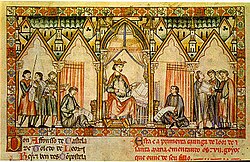
Durante el reinado de Fernando III de Castilla y León fue compuesto el Libro de los Doce Sabios, (1237) un resumen del conocimiento moral clásico heredado de sabios orientales. En el reinado de Alfonso X el Sabio se creó la primera Crónica General de España, hecho que dio categoría institucional a la Escuela de Traductores. A partir de ahí los estudios se centraron en textos de astronomía, medicina y derecho. Alfonso X oficializó el castellano como lengua de cultura, logrando así la expansión del conocimiento más allá del clero.
During the reign of Ferdinand III of Castile and León, the Book of the Twelve Wise Men (1237) was compiled, a summary of classical moral knowledge inherited from Eastern sages. In the reign of Alfonso X the Wise, the first General Chronicle of Spain was created, an event that gave institutional status to the School of Translators. From then on, studies focused on texts of astronomy, medicine, and law. Alfonso X made Castilian the official language of culture, thus achieving the expansion of knowledge beyond the clergy.
Música medieval sefardí.
Medieval Sephardic music.
La música sefardí no solo tuvo un gran desarrollo en la España medieval. Muchas de estas músicas han prevalecido en forma de cantos populares hasta la actualidad.
Sephardic music not only flourished in medieval Spain, but many of its musical forms have endured as folk songs to this day.
Si podemos considerar en cierto modo como un aspecto positivo de la expulsión, fue el desarrollo de estas músicas en los países de acogida de los exiliados. Marruecos, Turquía, Grecia, Bulgaria, Rumanía, Bosnia y Croacia. Este influjo ha trascendido al mundo socioeconómico y educativo de los sefardíes en el siglo XIX. Y en el XX mediante las migraciones a América del Norte e Israel.
If we can consider the expulsion a positive outcome, it was the development of this music in the countries that welcomed the exiles: Morocco, Turkey, Greece, Bulgaria, Romania, Bosnia, and Croatia. This influence permeated the socioeconomic and educational lives of Sephardic Jews in the 19th century and continued into the 20th century through migrations to North America and Israel.
El folklore sefardí sigue vivo, transformado y enriquecido por la influencia de las otras culturas donde se ha desarrollado. HY ha mantenido durante cinco siglos la lengua de Sefarad.
Sephardic folklore remains alive, transformed and enriched by the influence of the other cultures where it has developed. For five centuries, the Sephardic language has been preserved.
Filosofía
Philosophy.
La filosofía medieval sefardí floreció entre los siglos XI y XV. Su logro principal fue sintetizar la Torá con el racionalismo griego y la filosofía islámica. Su núcleo intelectual se desarrolló durante la Edad de Oro en Al-Ándalus.
Sephardic medieval philosophy flourished between the 11th and 15th centuries. Its main achievement was synthesizing the Torah with Greek rationalism and Islamic philosophy. Its intellectual core developed during the Golden Age of Al-Andalus.
Los filósofos más relevantes fueron Salomón Ibn Gabirol. (1022 – 1069) Nacido en Málaga y formado en Zaragoza. Su obra cumbre, Fons Vitae fue clave para introducir el neoplatonismo en el pensamiento occidental medieval.
The most important philosophers were Solomon Ibn Gabirol (1022–1069), born in Málaga and educated in Zaragoza. His magnum opus, Fons Vitae, was key to introducing Neoplatonism into medieval Western thought.
Bahya ibn Paquda. (siglo XI) Autor de Los deberes de los corazones, una obra fundamental sobre la ética y la espiritualidad judía, centrada en la devoción interior.
Bahya ibn Paquda (11th century), author of The Duties of the Heart, a fundamental work on Jewish ethics and spirituality, centered on inner devotion.
Yehudah Halevi (c. 1075 – 1141): Poeta y filósofo de Tudela. En su obra Cuzari, (el libro del diálogo y de la prueba) defendió la revelación histórica del judaísmo frente al racionalismo filosófico.
Yehudah Halevi (c. 1075–1141), a poet and philosopher from Tudela. In his work Kuzari (The Book of Dialogue and Proof), he defended the historical revelation of Judaism against philosophical rationalism.
Abraham Ibn Ezra (1089 – 1164): Erudito polifacético de Tudela, conocido por su exégesis bíblica racionalista y sus aportes a la astronomía y las matemáticas.
Abraham Ibn Ezra (1089–1164): A multifaceted scholar from Tudela, known for his rationalist biblical exegesis and his contributions to astronomy and mathematics.
Maimónides. (1138 – 1204) Nacido en Córdoba, es la figura más destacada. Su obra maestra, Guía de los perplejos, es el intento definitivo de armonizar el aristotelismo con la fe judía.
Maimonides (1138–1204): Born in Córdoba, he is the most prominent figure. His masterpiece, Guide for the Perplexed, is the definitive attempt to harmonize Aristotelianism with the Jewish faith.
Corrientes Principales.
Mainstreams.
El Neoplatonismo influyó fuertemente en autores como Ibn Gabirol, entendiendo el universo como una emanación de la divinidad.
Neoplatonism strongly influenced authors like Ibn Gabirol, who understood the universe as an emanation of the divine.
El Aristotelismo y Racionalismo, prevaleció desde finales del siglo XII con Maimónides, y buscó demostrar que la razón humana y los mandamientos divinos no entran en contradicción.
Aristotelianism and Rationalism prevailed from the late 12th century onward with Maimonides, seeking to demonstrate that human reason and divine commandments are not contradictory.
La Filosofía Política y Ética, integró conceptos de la filosofía moral clásica grecorromana con la tradición hebrea.
Political and ethical philosophy integrated concepts from classical Greco-Roman moral philosophy with the Hebrew tradition.
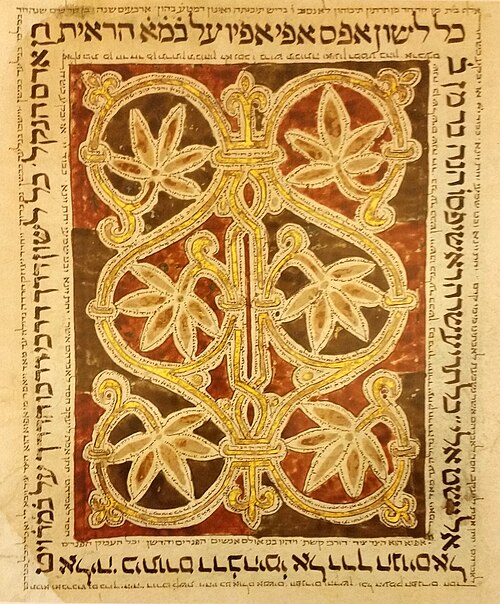
Al apogeo en Al-Ándalus, el centro intelectual se trasladó a los reinos cristianos, Castilla, Aragón y Cataluña.
At its height in Al-Andalus, the intellectual center shifted to the Christian kingdoms of Castile, Aragon, and Catalonia.
Su corriente mística (la Cábala), tuvo su mayor exponente en Moshé ben Nahmán, Nahmánides, que rechazaba la especulación filosófica pura en favor de la revelación esotérica.
Its mystical tradition (Kabbalah) found its greatest exponent in Moses ben Nahman, Nahmanides, who rejected pure philosophical speculation in favor of esoteric revelation.
La influencia de estos pensadores trascendió las fronteras del judaísmo, inspirando profundamente a filósofos y teólogos escolásticos cristianos como Santo Tomás de Aquino o Duns Escoto.
The influence of these thinkers transcended the boundaries of Judaism, profoundly inspiring Christian scholastic philosophers and theologians such as Thomas Aquinas and Duns Scotus.
Maimónides.
Merece capítulo especial por su relevancia y cercanía Moisés Maimónides. (1135-1204) Está considerado unánimemente la figura más prominente del judaismo durante el período medieval. Nacido en el seno de la comunidad judía sefardí cordobesa, su riquísima formación intelectual teológica, filosófica y médica, unida a una profunda espiritualidad, dio origen a la figura de un médico altamente humanitario, racional y abnegadamente dedicado a su trabajo. Su legado médico consta de diez tratados, entre los cuales destaca la obra Aforismos Médicos de Moisés. Es un conjunto de mil quinientos aforismos estructurados en veinticinco capítulos que tratan sobre otras tantas áreas de la medicina. Su célebre Guía de Perplejos ha alzado su figura como teólogo y filósofo moderno, siendo esta última considerada la más universal de sus creaciones. Su vida y obra son una invitación a elevar la vocación y profesión médica más allá de un simple oficio.
Moses Maimonides (1135-1204) deserves special mention due to his relevance and proximity to our times. He is unanimously considered the most prominent figure in medieval Judaism. Born into the Sephardic Jewish community of Cordoba, his rich intellectual background in theology, philosophy, and medicine, combined with a profound spirituality, gave rise to the figure of a highly humanitarian, rational, and selflessly dedicated physician. His medical legacy consists of ten treatises, among which the work *Medical Aphorisms of Moses* stands out. This collection of fifteen hundred aphorisms is structured into twenty-five chapters, each addressing a different area of medicine. His celebrated *Guide for the Perplexed* has elevated his stature as a modern theologian and philosopher, the latter being considered the most universal of his creations. His life and work are an invitation to elevate the medical vocation and profession beyond a mere occupation
El idioma Ladino.
The Ladino language.
El ladino o judeoespañol fue y es la lengua de las comunidades judías sefardíes. Es una evolución del castellano medieval y otras lenguas peninsulares que fueron preservadas tras su expulsión de 1492.
Ladino, or Judeo-Spanish, was and is the language of the Sephardic Jewish communities. It evolved from medieval Castilian and other Peninsular languages that were preserved after their expulsion in 1492.
Conserva gran parte de la fonética, el vocabulario y la estructura del castellano antiguo.
It retains much of the phonetics, vocabulary, and structure of Old Castilian.
Su sincretismo lingüístico: Al asentarse en la cuenca mediterránea, los sefardíes enriquecieron el idioma con vocablos del hebreo para temas religiosos, el turco, el griego, el árabe y el francés por la influencia de la Alianza Israelita Universal.
Its linguistic syncretism: Upon settling in the Mediterranean basin, the Sephardim enriched the language with Hebrew words for religious topics, as well as Turkish, Greek, Arabic, and French, influenced by the Alliance Israélite Universelle.
Sistema de escritura: Tradicionalmente se escribía con caracteres latinos, aunque a menudo se utilizaba el alfabeto hebreo para textos religiosos.
Writing system: Traditionally, it was written with Latin characters, although the Hebrew alphabet was often used for religious texts.
Tras el exilio, la lengua floreció principalmente en el Imperio Otomano, en Salónica y Estambul, y en el norte de África. Actualmente, la mayoría de los hablantes se encuentran en Israel, Turquía y pequeñas comunidades de la diáspora.
After the exile, the language flourished primarily in the Ottoman Empire, in Thessaloniki and Istanbul, and in North Africa. Currently, most speakers are found in Israel, Turkey, and small diaspora communities.
Los físicos de Isabel la Católica y la Medicina Sefardí.
The Physicists of Isabella the Catholic and Sephardic Medicine.
En la época de los Reyes Católicos, el término físico hacía referencia a los médicos. La Reina Isabel I de Castilla contó con un destacado equipo médico, integrado en su mayoría por judíos y, posteriormente, por judeoconversos.
During the reign of the Catholic Monarchs, the term «physician» referred to doctors. Queen Isabella I of Castile had a distinguished medical team, composed mostly of Jews and, later, of Jewish converts to Christianity.
Entre los físicos más notables al servicio de la Corona estuvieron el famosísimo Lorenzo Badoz, médico personal de la reina, célebre por tratar sus problemas de salud y velar por sus embarazos, especialmente durante la gestación del príncipe Juan. Su figura fue clave en la línea sucesoria de Castilla.
Among the most notable physicians in the service of the Crown was the renowned Lorenzo Badoz, the queen’s personal physician, famous for treating her health problems and overseeing her pregnancies, especially during the gestation of Prince John. His role was key in the Castilian line of succession.
Francisco López de Villalobos fue un médico judeoconverso, humanista y escritor del Renacimiento que sirvió a Isabel la Católica y, más tarde, al rey Carlos I.
Francisco López de Villalobos was a Jewish convert to Christianity, a humanist, and a Renaissance writer who served Isabella I and, later, King Charles I.
Gerónimo Bustamante, fue uno de los médicos de cámara y tuvo la tarea de atender a la reina en su lecho de muerte.
Gerónimo Bustamante was one of the royal physicians and was tasked with attending to the queen on her deathbed.
Gabriel Álvarez Abarca, catedrático de medicina en la Universidad de Salamanca desde 1465 y médico de confianza de la reina.
Gabriel Álvarez Abarca, professor of medicine at the University of Salamanca from 1465 and a trusted physician to the queen.
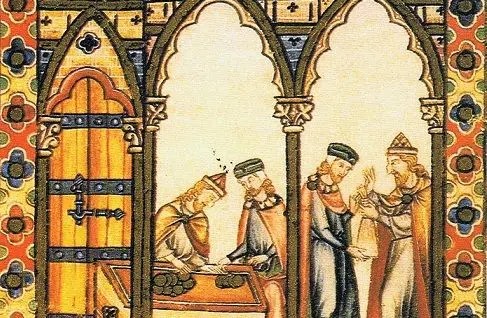
Los físicos judíos en el Reino de Castilla fueron figuras clave de la ciencia medieval, destacando como médicos personales de la realeza y eminentes astrónomos. Dominaban el hebreo, el árabe y el latín, lo que les permitió traducir y transmitir el saber clásico y oriental a Europa, impulsando el desarrollo científico.
Jewish physicians in the Kingdom of Castile were key figures in medieval science, distinguished as personal physicians to royalty and eminent astronomers. They were fluent in Hebrew, Arabic, and Latin, which allowed them to translate and transmit classical and Eastern knowledge to Europe, thus driving scientific development.
Entre otros destacaron Yehudá ben Moshé, médico y astrónomo de la corte de Alfonso X el Sabio. Fue uno de los directores del equipo científico que elaboró las Tablas Alfonsíes. (1252)
Among them was Yehuda ben Moshe, physician and astronomer at the court of Alfonso X the Wise. He was one of the directors of the scientific team that produced the Alfonsine Tables (1252).
Mosse Abzaradiel, judío de corte que ejerció como médico y hombre de confianza para monarcas castellanos como Alfonso XI durante la primera mitad del siglo XIV.
Mosse Abzaradiel, a Jewish courtier, served as physician and confidant to Castilian monarchs such as Alfonso XI during the first half of the 14th century.
Isaac ibn Sid (Rabiçag). Astrónomo y colaborador directo de Alfonso X. Junto a Yehudá ben Moshé, tradujo y redactó tratados fundamentales de astronomía y el diseño de instrumentos como el astrolabio.
Isaac ibn Sid (Rabiçag). Astronomer and close collaborator of Alfonso X. Together with Yehuda ben Moshe, he translated and wrote fundamental treatises on astronomy and the design of instruments such as the astrolabe.
Maimónides. (Rabí Moshe ben Maimón) Sus tratados de medicina y filosofía fueron una influencia fundamental para toda la comunidad médica asentada posteriormente en Castilla.
Maimonides (Rabbi Moshe ben Maimon). His treatises on medicine and philosophy were a fundamental influence on the entire medical community that later settled in Castile.
A través del mecenazgo de reyes como Alfonso X el Sabio, estos físicos judíos emplearon el conocimiento islámico para actualizar los cálculos astronómicos, creando las célebres Tablas Alfonsíes y los Libros del Saber de Astronomía.
Through the patronage of kings like Alfonso X the Wise, these Jewish physicians used Islamic knowledge to update astronomical calculations, creating the famous Alfonsine Tables and the Books of Knowledge of Astronomy.
La medicina judía castellana se basaba en la observación de síntomas y el equilibrio de los humores, usando textos de Galeno, Hipócrates, Avicena y Rhazes. Eran a menudo eruditos que unían su labor clínica con el estudio de la física aristotélica.
Jewish medicine in Castile was based on the observation of symptoms and the balance of humors, using texts by Galen, Hippocrates, Avicenna, and Rhazes. They were often scholars who combined their clinical work with the study of Aristotelian physics.
Ejercieron de puente cultural entre el mundo islámico oriental y el Occidente cristiano, traduciendo obras científicas del árabe y el hebreo al romance castellano y al latín.
They served as a cultural bridge between the eastern Islamic world and the Christian West, translating scientific works from Arabic and Hebrew into Castilian Spanish and Latin.
La huella de estos eruditos se puede explorar a través de las juderías históricas de Castilla, como el Patrimonio Histórico de Toledo y la Red de Juderías de España, que preservan el legado material y documental de las comunidades sefardíes.
The legacy of these scholars can be explored through the historic Jewish quarters of Castile, such as the Historical Heritage of Toledo and the Network of Jewish Quarters of Spain, which preserve the material and documentary heritage of the Sephardic communities.
Samuel Halevi, Tesorero de Pedro I de Castilla.
Samuel Halevi, Treasurer of Pedro I of Castile.
Pertenecía al linaje aristocrático de los Abulafia de Toledo. Samuel ha-Leví ocupó importantes cargos en la Corte del rey de Castilla Pedro I. Era hijo de Meir ha-Leví, el cual había fallecido en Toledo a consecuencia de la peste negra. Apenas subido al trono Pedro I, Samuel ha-Leví, apoyado por el hombre de confianza del rey, Juan Alfonso de Alburquerque, fue su camarero mayor, dedicándose ante todo a los problemas financieros y económicos de la hacienda regia.
He belonged to the aristocratic Abulafia lineage of Toledo. Samuel ha-Levi held important positions at the court of King Pedro I of Castile. He was the son of Meir ha-Levi, who had died in Toledo from the Black Death. Shortly after Pedro I ascended the throne, Samuel ha-Levi, supported by the king’s trusted advisor, Juan Alfonso de Alburquerque, became his chamberlain, primarily dedicated to the financial and economic affairs of the royal treasury.
Poco tiempo después se convirtió en el Tesorero Mayor del reino. Más tarde, Samuel ha-Leví llegó a ser miembro del Consejo Real.
Shortly thereafter he became the Chief Treasurer of the kingdom. Later, Samuel ha-Levi became a member of the Royal Council.
La banca judía de Castilla en el siglo XV.
Jewish banking in Castile in the 15th century.
En el siglo XV, la banca judía en Castilla fue un pilar de la economía, actuando como prestamistas privados y recaudadores de impuestos para la corona y la nobleza.
In the 15th century, Jewish banking in Castile was a pillar of the economy, acting as private lenders and tax collectors for the crown and the nobility.
La inestabilidad política y el creciente antisemitismo prepararon el terreno para el Edicto de Granada de 31 de marzo de 1492. La expulsión de los judíos provocó la salida de importantes capitales y dejó un vacío financiero en Castilla, obligando a la monarquía a depender cada vez más de banqueros extranjeros, como los genoveses y alemanes en el siglo XVI. *
Political instability and growing antisemitism paved the way for the Edict of Granada of March 31, 1492. The expulsion of the Jews led to the outflow of significant capital and left a financial vacuum in Castile, forcing the monarchy to become increasingly dependent on foreign bankers, such as the Genoese and Germans in the 16th century.
La expulsión y sus consecuencias inmediatas.
The expulsion and its immediate consequences.
Reyes europeos que conocían muy bien al político astuto Fernando el Católico, no se explicaban la medida de la expulsión. Incluso la devota y pragmática Isabel, rodeada por eminentes judíos en su corte, tuvo que tener muchas dudas antes de decidirse a tomar una medida tan perjudicial para la economía y el desarrollo científico del reino.
European monarchs, who knew the astute politician Ferdinand the Catholic very well, could not understand the expulsion. Even the devout and pragmatic Isabella, surrounded by eminent Jews at her court, must have had many doubts before deciding to take such a detrimental measure to the kingdom’s economy and scientific development.
Las fechas de 1492 guardan muchas claves. La rendición del último reino nazarí el 2 de enero, influyó de forma determinante en la presión sobre las personas reales de algunas figuras eclesiásticas cercanas a los reyes, tal como el Cardenal Cisneros, confesor de la reina y arzobispo de Toledo. Criterio de la Iglesia, con el fin del último reino musulmán, y la unificación política del estado, se imponía también la unidad religiosa. Desde el punto de vista de la Iglesia, eso tenía bastante lógica. Desde un punto de vista laico y económico, carecía de sentido. Y todo pesaba en la balanza.
The dates of 1492 hold many clues. The surrender of the last Nasrid kingdom on January 2nd decisively influenced the pressure exerted on the royal family by certain ecclesiastical figures close to the monarchs, such as Cardinal Cisneros, the queen’s confessor and archbishop of Toledo. According to the Church, with the end of the last Muslim kingdom and the political unification of the state, religious unity was also imperative. From the Church’s perspective, this made perfect sense. From a secular and economic standpoint, it was nonsensical. And everything weighed in the balance.
Si el Descubrimiento de América hubiese tenido lugar antes de estos acontecimientos, un proyecto retrasado durante años precisamente por la guerra contra Granada, la historia hubiera podido ser otra muy diferente.
If the Discovery of America had taken place before these events, a project delayed for years precisely because of the war against Granada, history could have been very different.
La banca castellana, una de las importantes en Europa, hubiera sido crucial para financiar el proyecto de atravesar el Atlántico y todos los procesos posteriores.
Castilian banking, one of the most important in Europe, would have been crucial in financing the project to cross the Atlantic and all subsequent processes.
Desde luego el heredero de los Reyes Católicos, Carlos I jamás hubiera expulsado a los judíos, en los que hubiera tenido los mejores prestamistas para sus guerras europeas tras ser elegido Emperador. No hubiera necesitado de banqueros flamencos ni alemanes.
Certainly, the heir of the Catholic Monarchs, Charles I, would never have expelled the Jews, who would have provided him with the best lenders for his European wars after being elected Emperor. He would not have needed Flemish or German bankers.
Visto desde una perspectiva actual, la expulsión de los judíos fue un tremendo error, un golpe contra toda la historia de Sefarad, donde hasta entonces habían prevalecido las luces sobre las sombras.
Seen from a present-day perspective, the expulsion of the Jews was a tremendous mistake, a blow against the entire history of Sepharad, where until then the light had prevailed over the shadows.
_______________________________________________________
*Para profundizar en la documentación histórica sobre las deudas, litigios y el papel de las familias judías en esta época, puedes consultar el análisis de la institución académica Edad Media. Revista de Historia del CSIC.
*For further historical documentation on debts, litigation, and the role of Jewish families during this period, you can consult the analysis by the academic institution Edad Media. Revista de Historia del CSIC (CSIC’s Journal of History).
Descubre más desde LA AGENCIA MUNDIAL DE PRENSA
Suscríbete y recibe las últimas entradas en tu correo electrónico.
