
Imagined Stories: Funeral Blues

Columnista
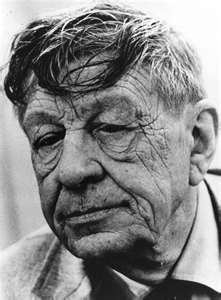
FUNERAL BLUES es uno de los más conocidos poemas de Wynstan Hugh Auden, poeta, periodista y libretista británico, considerado uno de los mejores escritores en la historia literaria de su nación. Vio la luz en York, Inglaterra, en 1907, y murió en Viena, Austria, en 1973. Edificó una poesía de innovaciones rítmicas, muy vigorosa y de contenida emoción. Sus poemas con coloquiales y verdaderos y, a la vez, de sensibilidad compleja. Adhirió al anglicanismo y fue un homosexual declarado: compartió gran parte de su vida adulta con el joven poeta Chester Kallman, pero no sufrió por ello las consecuencias que debió afrontar, por ejemplo, Oscar Wilde, y el respeto presidió la influencia de su obra.
FUNERAL BLUES is one of the best-known poems by Wynstan Hugh Auden, British poet, journalist and librettist, considered one of the best writers in the literary history of his nation. He was born in York, England, in 1907, and died in Vienna, Austria, in 1973. He built a poetry of rhythmic innovations, very vigorous and with contained emotion. His poems are colloquial and true and, at the same time, complex in sensitivity. He adhered to Anglicanism and was an avowed homosexual: he shared a large part of his adult life with the young poet Chester Kallman, but he did not suffer the consequences that Oscar Wilde had to face, for example, and respect presided over the influence of his work.
FUNERAL BLUES
Tristeza, padecimiento, rebeldía. La pérdida del amor que se creyó eterno. Un poeta estremecido ante un sentimiento nuevo e inesperado es como un pájaro débil, al pie de la rama que lo sostenía con ternura.
Sadness, suffering, rebellion. The loss of love that was believed to be eternal. A poet shaken by a new and unexpected feeling is like a weak bird, at the foot of the branch that held him tenderly.
Por eso, míster Auden, yo quiero decirle ahora, que ya no está aquí, sin otro sustento que mi emoción, que nada lo ha representado más pleno, desnudo de alma, que ese poema de amor –sobre el amor con la intensidad que usted lo vivió-, y que fue dicho años después por un espléndido actor en un filme, Cuatro bodas y un funeral, inimaginable para usted en su tiempo; sí, ese poema en especial, por encima del resto de los cuatrocientos que comenzó a escribir a los trece años, corriendo apenas 1920, y más que su primer libro de dos décadas después, que sus ensayos, sus obras de teatro ligero y sus guiones encargados para óperas y documentales de cine:
For this reason, Mr. Auden, I want to tell you now that you are no longer here, with no other support than my emotion, that nothing has represented you more fully, naked of soul, than that love poem – about love with the intensity that you he lived it -, and that was said years later by a splendid actor in a film, Four Weddings and a Funeral, unimaginable for you in your time; yes, that poem in particular, above the rest of the four hundred that he began to write at the age of thirteen, just in 1920, and more than his first book two decades later, than his essays, his light theater works and his scripts commissioned for operas and film documentaries:
-Detengan los relojes, desconecten el teléfono, denle un hueso al perro para que no ladre. Callen los pianos y con ese tamborileo sordo saquen el féretro…
-Stop the clocks, disconnect the phone, give the dog a bone so he doesn’t bark. Silence the pianos and with that dull drumming take out the coffin…
¡El mismo hombre al que a mediados del siglo pasado llamaron “l’enfant terrible” de la literatura! Claro, usted, míster Auden, fue siempre un rebelde, alguien que despreció su nacionalidad británica –aquel lejano nacimiento en York, en 1907- y adoptó, en un gesto de desasosiego, la norteamericana. Alguien delicado y pasional, sensible y severo, contradictorio tal vez, igual a tantos, que deslizó su estilo magistral por la política, el concepto de ciudadanía, la religión y la moral y la relación entre el individuo y la naturaleza, conmoviendo los cimientos de las viejas tradiciones.
The same man who in the middle of the last century was called “l’enfant terrible” of literature! Of course, you, Mr. Auden, were always a rebel, someone who despised your British nationality – that distant birth in York, in 1907 – and adopted, in a gesture of restlessness, the American one. Someone delicate and passionate, sensitive and severe, perhaps contradictory, like so many, who glided his masterful style through politics, the concept of citizenship, religion and morality and the relationship between the individual and nature, shaking the foundations of the old traditions.
Pero aun aquellos críticos le debieron entregar, no importa si distante, su respeto.
But even those critics should have given him, no matter how distant, their respect.
Y eso fue por la poesía y por el amor desgarrado:
And that was for poetry and for torn love:
–Acérquense los dolientes que los aviones sobrevuelan quejumbrosos, y escriban en el cielo el mensaje… Él ha muerto. Pongan moños negros en los níveos cuellos de las palomas. Que los policías usen guantes de algodón negro.
-Let the mourners come closer as the planes fly over complainingly, and write the message in the sky… He has died. Put black bows on the white necks of the pigeons. Let the police wear black cotton gloves.
A cierta gente puede serle fácil hablar de su homosexualidad como si fuera una ofensa o un crimen, aunque sin cárcel, ésa que no pudo evitar Wilde. ¿Y su libre albedrío? ¿Y su generosidad sin tasa? ¿Ya nadie recuerda que se casó con Érika –matrimonio por una noble conveniencia-, la hija de Thomas Mann, en 1935, para que ella, legalmente, pudiera salir de la Alemania nazi y reiniciar su vida sin los horrores que la perseguían y oscurecían?
It can be easy for certain people to talk about their homosexuality as if it were an offense or a crime, although without prison, the kind that Wilde could not avoid. And your free will? And his unlimited generosity? Does no one remember anymore that he married Erika – a marriage out of noble convenience -, the daughter of Thomas Mann, in 1935, so that she could legally leave Nazi Germany and restart her life without the horrors that haunted and darkened her?
Pero es verdad, sí, que sus entrañas y su espíritu y su verbo latían, Wystan -¿puedo llamarlo por su primer nombre?- gracias al sentimiento más fuerte que sintió en su existencia de luces y sombras:
But it is true, yes, that his insides and his spirit and his word beat, Wystan – can I call him by his first name? – thanks to the strongest feeling he felt in his existence of lights and shadows:
–Él era mi norte, mi sur, mi este y oeste, mi semana de trabajo y mi domingo de descanso, mi mediodía, mi media noche, mi conversación, mi canción…
-He was my north, my south, my east and west, my work week and my Sunday of rest, my noon, my midnight, my conversation, my song…
Él, como otros antes, quizás, era entonces lo esencial. Él brotó de la vida como una dulce caricia de apego. El borró de su cotidiano andar el ácido desprecio ajeno, los roces de elogios fáciles -¡hasta tres veces los hipócritas lo elevaron a candidato al Nobel de Literatura!- y le permitió levantar su pluma cual si quisiera hacerla estallar en el cielo infinito.
He, like others before, perhaps, was then the essential thing. He burst forth from life like a sweet caress of attachment. He erased from his daily walk the acid contempt of others, the friction of easy praise – up to three times the hypocrites elevated him to a candidate for the Nobel Prize in Literature! – and allowed him to raise his pen as if he wanted to make it explode into the infinite sky.
Sin embargo, debió escribir, deshecho:
However, he had to write, broken:
-Creí que el amor perduraría por siempre. Estaba equivocado. No precisamos estrellas ahora… Apáguenlas todas, envuelvan la luna, desarmen el sol, desagüen el océano y talen el bosque…
-I thought love would last forever. I was wrong. We don’t need stars now… Turn them all off, envelop the moon, disarm the sun, drain the ocean and cut down the forest…
La herida fatal de lo perdido, la profunda descomposición interior no descansan, y de usted, Wystan, no huyeron. Pero el amor fue tanto que pudo seguir creando belleza para el mundo hasta su propia y serena muerte; ciertamente, sin que haya sabido jamás cómo, y llevando encima el peso espantoso de lo que no se acepta:
The fatal wound of what was lost, the deep inner decomposition does not rest, and from you, Wystan, they did not flee. But love was so much that he could continue creating beauty for the world until his own serene death; certainly, without ever knowing how, and carrying on top of it the frightening weight of what is not accepted:
“-…porque de ahora en adelante, nada servirá”.
“-…because from now on, nothing will do.”
______________________________________________________________________
Descubre más desde LA AGENCIA MUNDIAL DE PRENSA
Suscríbete y recibe las últimas entradas en tu correo electrónico.
