

GASTRONOMY: MEATS

Las carnes en la cocina han sido y seguirán siendo fundamentales, e independientemente de sus tipos. Son protagonistas de grandes propuestas culinarias al más alto nivel por tanto una condición indispensable de la cocina es conocerla, respetarla y ensalzarla. Es decir, saber elaborarla sin desvirtuar su exquisitez, y sus propiedades saludables. De hecho hoy por hoy grandes Estrellas Michelin cambian el rumbo de sus restaurantes para dedicarse de forma exclusiva solo al cocinado de carnes.
Meats in the kitchen have been and will continue to be essential, regardless of their types. They are protagonists of great culinary proposals at the highest level, therefore an essential condition of the kitchen is to know it, respect it and extol it. That is, knowing how to make it without distorting its exquisiteness and its healthy properties. In fact today great Michelin stars change the direction of their restaurants to dedicate themselves exclusively to cooking meat.
Las carnes son cuidadas hasta el más mínimo detalle por grandes profesionales expertos desde ganaderos e industriales hasta experimentados carniceros y chefs, quienes consiguen preservar perfectamente todas sus cualidades y para ello es importante dejar claro los 4 parámetros imprescindibles que nos aseguran una carne de primera calidad, infiltrada, jugosa y tierna:
The meats are cared for down to the smallest detail by great professional experts from farmers and industrialists to experienced butchers and chefs, who manage to perfectly preserve all their qualities and for this it is important to make clear the 4 essential parameters that ensure top quality meat, infiltrated , juicy and tender:
- La raza: será la determinante de las características del producto final, es el pilar, pero no es garantía de excelencia. The race: it will be the determinant of the characteristics of the final product, it is the pillar, but it is not a guarantee of excellence.
- La alimentación: además de hierba y los alimentos que brinda la naturaleza, para adquirir grasa, deberá tener una alimentación suplementaria, es decir «pienso» que contenga maíz, centeno, avena, trigo y soja, aceite de soja para incorporar un ácido graso que mezclan con paja para que la vaca rumie. Este tipo de alimentación extra se incrementa en los últimos 6 meses de vida. Diet: In addition to grass and the foods provided by nature, to acquire fat, you must have a supplementary diet, that is, «feed» that contains corn, rye, oats, wheat and soybeans, soybean oil to incorporate a fatty acid that mixed with straw for the cow to ruminate. This type of extra feeding increases in the last 6 months of life.
- La salud: vigilar contagios, eliminando agentes externos que puedan traer contaminación, apartando los animales enfermos del resto del ganado, haciendo inspecciones médicas, un control exhaustivo. Health: monitor infections, eliminating external agents that may bring contamination, separating sick animals from the rest of the livestock, carrying out medical inspections, exhaustive control.
- El Bienestar: Cuidando la higiene y la limpieza, sin tener ganado en exceso y evitándoles el estrés. Well-being: Taking care of hygiene and cleanliness, without having excess cattle and avoiding stress
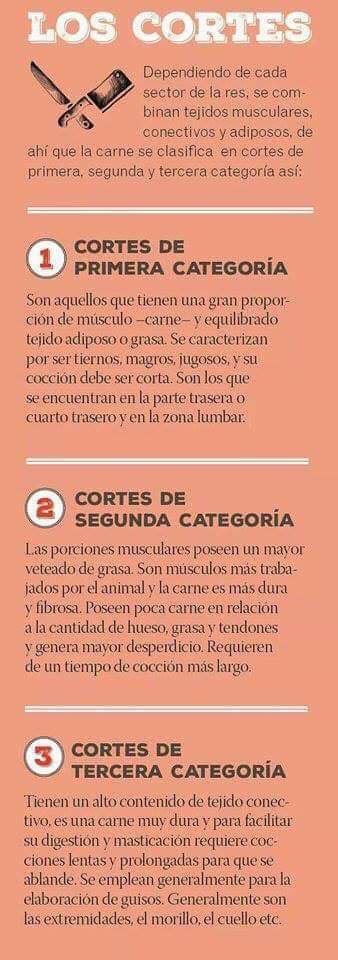
Conocer los diferentes tipos de corte de las carnes es importante para poder realizar un buen menú tanto en lo nutritivo como en conseguir la pieza de carne escogida ideal para que el plato se haga a la perfección.
Knowing the different types of cuts of meat is important to be able to prepare a good menu both in terms of nutrition and in getting the ideal piece of meat chosen so that the dish is made to perfection.
Es importante tambien, conocer que cada uno de los cortes se integra dentro de una clasificación especial teniendo en cuenta, entre otras cosas, la categoría en la que se engloba la carne que dependiendo del aprovechamiento de la pieza de carne, valor nutritivo y calidad puede estar dentro de la categoría extra, de primera ( y aqui encontramos dos subgrupos diferenciados en A y B) Luego de Segunda y Tercera. Lo perfecto es tener controlados los diferentes tipos de corte e ir afinando cuál va más con tu paladar.
It is also important to know that each of the cuts is integrated into a special classification taking into account, among other things, the category in which the meat is included, which depending on the use of the piece of meat, nutritional value and quality can be within the extra category, first (and here we find two differentiated subgroups in A and B) After Second and Third. The perfect thing is to have the different types of cut under control and refine which one best suits your palate.
En las categorías tenemos:
In the categories we have:
- La categoría extra es la que mejor aprovecha toda la pieza de carne y destaca por su alto contenido en nutrientes. The extra category is the one that makes the best use of the entire piece of meat and stands out for its high nutrient content.
- En la categoría De Primera, nos encontramos con los subgrupos A, que también se caracteriza por aprovechar bien la carne y la B en la que las piezas necesitan un mayor tiempo de preparación a la hora de ser cocinados. In the Primera category, we find subgroups A, which is also characterized by making good use of the meat, and B, in which the pieces need a longer preparation time when cooking.
- En la categoría segunda tienen esta mención porque son carnes más fibrosas que las de primera. In the second category they have this mention because they are more fibrous meats than the first.
- En la categoría tercera estan aquellas piezas con menor nivel de aprovechamiento y que pueden usarse para hacer caldos o sopas en la que tambien se usan los huesos. In the third category are those pieces with a lower level of use and that can be used to make broths or soups in which the bones are also used.
Cada una de estas categorías y sus cortes se utilizan para distintos tipos de cocción en la cocina, conocer cada uno de ellos nos ayuda para darle a las piezas de carne un mejor uso. Empecemos por definir lo que llamamos un corte de carne: “que es un tejido muscular de los animales y que es apto para el consumo humano“. En este sentido, las diferentes clases de cortes de carne se clasifican en función del animal. Así tenemos los distintos tipos de carne:
Each of these categories and their cuts are used for different types of cooking in the kitchen, knowing each of them helps us to give the pieces of meat a better use. Let’s start by defining what we call a cut of meat: «which is a muscle tissue of animals and which is suitable for human consumption». In this sense, the different classes of meat cuts are classified according to the animal. This is how we have the different types of meat:
Vacuno. Se divide según la edad en ternera (menos de 12 meses) añojo (de 12 a 24 meses de edad), novillo (Macho o hembra entre 24 y 48 meses, la carne es más sabrosa y con mas grasa). Cebón (Macho castrado menor de 48 meses, es muy sabrosa) y buey cuando superan el 2º año de vida los animales ya no se consideran ni terneras o añojos y se clasifican por su sexo (vaca o buey). Cerdo o porcino, Cordero, Venado y caza: aquí también entran de ave o pluma tipo perdiz, codorniz o faisán. Conejo. Ave: pollo, pavo.
Bovine. It is divided according to age into calf (less than 12 months), yearling (from 12 to 24 months of age), steer (Male or female between 24 and 48 months, the meat is tastier and with more fat). Cebón (castrated male less than 48 months, it is very tasty) and ox when they exceed the 2nd year of life the animals are no longer considered calves or yearlings and are classified by their sex (cow or ox). Pork or swine, lamb, deer and game: birds or feathers such as partridge, quail or pheasant also enter here. Rabbit. Bird: chicken, turkey.
A continuación los tipos de cortes de los animales más requeridos:
Below are the types of cuts of the most required animals:
CLASES DE CORTE DE CARNE DE VACA / BEEF CUTTING CLASSES

La carne más consumida es la de vaca, no solo por ser el animal más grande, sino que es una de las carnes que más gustan por varios motivos.

The most consumed meat is cow, not only because it is the largest animal, but it is one of the most liked meats for various reasons.
- El marmoleado: es decir, la grasa intramuscular que varía en cada raza y animal. Este aspecto influye en el sabor final de cada trozo. The marbling: that is, the intramuscular fat that varies in each breed and animal. This aspect influences the final flavor of each piece.
- Sabor y textura: muy agradables al paladar. Taste and texture: very pleasant on the palate.
- Nutrientes y propiedades: es una importante fuente de proteínas, vitaminas y minerales. Nutrients and properties: it is an important source of protein, vitamins and minerals.
Todos estos aspectos se ven afectados por la forma o el corte de la carne. Algunos de los cortes de carne de vacuno más comunes son el chuletón o el solomillo, pero hay muchos más.
All these aspects are affected by the shape or cut of the meat. Some of the most common cuts of beef are the ribeye or sirloin, but there are many more.
Existen más de 20 cortes diferentes, siendo las piezas más solicitadas las que proceden de la zona lumbar del animal.
There are more than 20 different cuts, the most requested pieces being those that come from the lower back of the animal.
Los cortes se diferencian en su sabor, textura y jugosidad, entre otros factores. Es importante conocer los diferentes tipos de cortes para poder elegir el adecuado según quieras hacer la carne a la parrilla, asada o guisada.
The cuts differ in their flavor, texture and juiciness, among other factors. It is important to know the different types of cuts to be able to choose the right one depending on how you want to grill, roast or stew the meat.
CORTES DE LA CARNE DE CERDO / PORK CUTS

En cuanto a la carne de cerdo, los cortes más comunes son el solomillo, la costilla, las chuletas, el jamón y el lomo.
As for pork, the most common cuts are sirloin, rib, chops, ham and loin.
- El solomillo procede de la zona del lomo del cerdo y es un corte magro, adecuado para asar, hornear y cocinar a la parrilla. Sirloin comes from the pork loin area and is a lean cut, suitable for roasting, baking and grilling.
- Las chuletas proceden de la costilla entera y son ideales para recetas a la parrilla. El lomo de cerdo es tierno y jugoso y suele servirse asado entero o en chuletas. The chops come from the whole rib and are ideal for grilled recipes. Pork loin is tender and juicy and is usually served roasted whole or in chops.
- La costilla es un corte económico que procede de la panza del cerdo, es un corte graso, suele utilizarse para preparar barbacoas, churrascos y servirse con salsas normales como el chimichurri o salsas más picantes. The rib is an economic cut that comes from the belly of the pig, it is a fatty cut, it is usually used to prepare barbecues, churrascos and it is served with normal sauces such as chimichurri or more spicy sauces.

CORTES DE CORDERO / LAMB CUTS
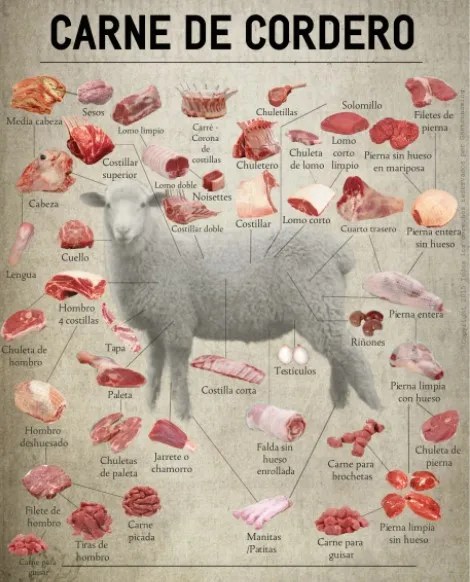
Podemos encontrar varios tipos de corte de cordero que son:
We can find several types of cut of lamb that are:
- La Pierna de cordero es el corte más solicitado, tierno y jugoso. The Leg of lamb is the most requested cut, tender and juicy.
- La Paletilla de cordero es un corte económico y versátil, perfecto para asar, a la parrilla o estofar. The lamb shoulder is an economical and versatile cut, perfect for roasting, grilling or braising.
- Las Chuletas proceden del lomo y son muy tiernas, ideales para recetas a la parrilla. The Chops come from the loin and are very tender, ideal for grilled recipes.
- Pechuga y costillar brisket and rib
- El costillar también es un corte tierno perfecto para asar. Ribs are also a tender cut perfect for grilling.
El resto de cortes de carne de ave como el pollo se suele hacer en dados, en pechuga o en lomos.
The rest of the poultry meat cuts such as chicken are usually diced, breast or loins.
Aunque estos pueden ser «algunos de los cortes básicos más utilizados», hay algunos más que dependen del tipo de animal, del país donde se hace el despiece y de la categoría a la que pertenezca la pieza de carne.
Although these may be «some of the most commonly used basic cuts», there are some more that depend on the type of animal, the country where the cutting is done and the category to which the piece of meat belongs.
TIPOS DE CORTE DE CARNE / TYPES OF CUT OF MEAT
Teniendo en cuenta las categorías descritas, podemos encontrar los siguientes cortes que nos ayudarán a que los platos de carne que cocinemos tengan éxito gracias a una buena cocción.
Taking into account the categories described, we can find the following cuts that will help us to make the meat dishes we cook successful thanks to good cooking.
- Rib Eye Es el lomo alto limpio, sin tapilla y sin intercostal, y se le conoce al castellano como “ojo de costilla” por ser el centro del lomo, y muy posiblemente lo encontrarás en las cartas como «ojo de bife». También es un corte típico americano y tiene un gran sabor y jugosidad. En Australia y Nueva elanda sí suelen servirlo con el hueso. Rib Eye It is the clean high loin, without cover and without intercostals, and it is known in Spanish as «rib eye» because it is the center of the loin, and it is quite possible that you will find it on the cards as «rib eye». It is also a typical American cut and has great flavor and juiciness. In Australia and New Zealand, they usually serve it with the bone.
- La cadera se puede utilizar en diferentes elaboraciones como para hacer al horno, freír o hacerla en filetes que podemos rebozar. Es una carne bastante tierna, parte trasera de la vaca. The hip can be used in different preparations such as baking, frying or making it into fillets that we can coat. It is quite tender meat, rear of the cow.
- La contra se utiliza para hacer guisos o para empanar, y un poco más abajo está la culata de contra que es algo más seca. The contra is used to make stews or for breading, and a little further down is the contra butt, which is somewhat drier.
- Entrecot corte de origen francés que proviene de la unión de las palabras ‘entre’ y ‘côte’ (costilla) y, como su nombre indica, se refiere a la carne que queda entre las costillas. Se corta del lomo bajo sin hueso, en la región dorsal de la res. Entrecote cut of French origin that comes from the union of the words ‘entre’ and ‘côte’ (rib) and, as its name suggests, refers to the meat that remains between the ribs. It is cut from the low boneless loin, in the dorsal region of the beef.
- Culata de contra es una pieza muy sabrosa, pero hay que tener en cuenta que tiene muchos tendones. Este corte se aprovecha para guisos y filetes. Buttstock is a very tasty piece, but keep in mind that it has a lot of tendons. This cut is used for stews and steaks.
- Brazuelo se usa como norma general para guisos y caldos. Se caracteriza por la presencia de nervios y porque necesita de una cocción larga para que quede perfecta. Aun así, resulta una carne con mucho sabor. Brazuelo is used as a general rule for stews and broths. It is characterized by the presence of nerves and because it requires long cooking to make it perfect. Even so, it turns out a meat with a lot of flavor.
- La aguja es otro de los cortes más conocidos. Se utiliza para hacer a la plancha, freír o hacer guisos y estofados. Es una carne magra y con sabor. The needle is another of the best known cuts. It is used to grill, fry or make stews and casseroles. It is a lean and flavored meat.
- Pecho: es un corte poco usado debido a la presencia de muchos nervios. Pero para los que quieran cocinarlo, se utiliza en especial para hacer sopas, pucheros y caldos. Chest: it is a little used cut due to the presence of many nerves. But for those who want to cook it, it is used especially to make soups, stews and broths.
- La falda es un corte sin huesos que se suele utilizar para las recetas de puchero, para rellenar o para picar. Se encuentra en la región torácica debajo del costillas, puede tener mucha o poca grasa dependiendo de si se obtiene con o sin hueso. Normalmente se prepara a la parrilla o en pucheros.
The brisket is a boneless cut that is often used for stew recipes, for stuffing, or for snacking. It is found in the thoracic region below the ribs, it can have a lot or little fat depending on whether it is obtained with or without bone. It is usually prepared on the grill or in pots. - La Costilla, es uno de los cortes que se piden a la hora de asar o para hacer a la parrilla cuya carne se encuentra pegada al hueso y la grasa que contiene le da un sabor increíble. The Rib is one of the cuts that are requested when roasting or grilling whose meat is attached to the bone and the fat it contains gives it an incredible flavor.
- El rabo es un corte usado sobre todo para guisos y caldos. El rabo de toro es uno de los platos con más fama. Su carne es gelatinosa pegada a las vértebras de la cola. The tail is a cut used above all for stews and broths. The oxtail is one of the most famous dishes. Its meat is gelatinous attached to the tail vertebrae.
- Pescuezo o cogote: es la parte del animal que une la cabeza y el tronco. Es perfecta para hervir, hacer guisos, estofados, caldos, cortada en forma de bastones o de cubos. Neck or neck: it is the part of the animal that joins the head and the trunk. It is perfect for boiling, making stews, stews, broths, cut into sticks or cubes.
- Aguja, filete de pobre, pobre, lomo de aguja: se trata de una pieza grande, tierna, jugosa y magra localizada entre las 5 primeras vértebras dorsales del animal. Sirve para preparar guisos, empanadas, estofados… Needle, poor fillet, poor, needle loin: it is a large, tender, juicy and lean piece located between the first 5 dorsal vertebrae of the animal. It is used to prepare stews, empanadas, stews…
- Brazuelo u osobuco: es la parte superior del morcillo delantero o garrón y suele usarse para hacer caldos. Normalmente necesita entre una y dos horas de cocción para que se ablande, pero a pesar de los nervios es muy sabrosa. Brazuelo or ossobuco: it is the upper part of the front shank or garrón and is usually used to make broths. Normally it takes between one and two hours to cook for it to soften, but despite the nerves it is very tasty.
- Cuadril: se trata de un corte trasero del bovino el cual se divide en cuadril, utilizado para hacer churrascos y coleta en horno o parrilla. Rump: it is a rear cut of the bovine which is divided into a rump, used to make steaks and pigtails in the oven or on the grill.
- Solomillo, filete: forma parte del lomo bajo. Es una carne jugosa, redonda, magra y tierna. Es perfecta para hacer a la parrilla, a la plancha o al horno. Sirloin, fillet: it is part of the low tenderloin. It is a juicy, round, lean and tender meat. It is perfect for grilling, grilling or baking.
- Lomo alto: Es una de las piezas de mayor calidad, contiene mucho músculo con gran valor nutritivo y es muy tierna por la grasa infiltrada y porque sus fibras son muy poco gruesas. Se sitúa en la zona de las vértebras lumbares y las últimas dorsales. Dentro de ella, diferenciamos esta carne por ser tierna y jugosa, recomendada para cocinar a la plancha, a la parrilla o al horno. Limita con la aguja y contiene las 7 u 8 últimas costillas dorsales. De aquí se extraen cortes como el entrecot y los chuletones (con costilla). El lomo alto suele tener más infiltración de grasa que el lomo bajo, de ahí su fama de ser más sabroso. High loin: It is one of the highest quality pieces, it contains a lot of muscle with great nutritional value and is very tender due to the infiltrated fat and because its fibers are not very thick. It is located in the area of the lumbar vertebrae and the last dorsals. Within it, we differentiate this meat for being tender and juicy, recommended for cooking on the grill, on the grill or in the oven. It borders the needle and contains the last 7 or 8 dorsal ribs. Cuts such as entrecote and T-bone steaks (with rib) are extracted from here. The high loin tends to have more infiltration of fat than the low loin, hence its reputation for being tastier.
- Lomo bajo: se encuentra a continuación del lomo alto, tapa las vértebras lumbares y limita con la cadera. De aquí también se pueden obtener el entrecot y los filetes de lomo, también es magra, jugosa y tierna. It is located below the upper back, covers the lumbar vertebrae and borders the hip. From here you can also get the entrecote and loin steaks, it is also lean, juicy and tender.
- T-Bone Este corte posee entrecot y solomillo separados por un hueso en forma de ‘T’, lo que justifica su nombre. Proviene de la parte media-baja del lomo de la res. Es el último de los cortes típicos americanos. T-Bone This cut has entrecote and sirloin separated by a ‘T’-shaped bone, which justifies its name. It comes from the lower-middle part of the beef loin. It is the last of the typical American cuts.
- Culata de contra: es jugosa y tierna pero cuenta con una gran cantidad de tendones. Sin embargo puedes preparar filetes para rebozar e incluso cortar en cuadrados para hacer guisos. Buttstock: It is juicy and tender but has a large amount of sinew. However, you can prepare fillets to batter and even cut into squares to make stews.
- Tapilla y tapa: pertenecen a la pierna de la vaca. La carne es magra y tierna, ideal para filetear y rebozar. La tapilla es un corte que se hace cerca de la cadera del animal y es una carne magra. Esta parte del animal se puede usar para asar y freír. Cap and cover: they belong to the leg of the cow. The meat is lean and tender, ideal for filleting and coating. The tapilla is a cut that is made near the hip of the animal and is a lean meat. This part of the animal can be used for roasting and frying.
- Asado de tira. Es un corte de aproximadamente 1 centímetro de grosor, aunque se puede cortar a gusto del consumidor, y tiene forma de tira. Se saca del despiece que se obtiene de la falda cortada transversalmente, incluyendo los huesos del costillar. Strip roast. It is a cut of approximately 1 centimeter thick, although it can be cut to suit the consumer, and it is shaped like a strip. It is taken from the quartering that is obtained from the brisket cut transversely, including the rib bones.
- Contra, cuadrada: es una de las piezas traseras de la vaca y contiene poca grasa por lo que puede resultar dura y seca. Ideal para filetear y rebozar. Against, square: it is one of the rear parts of the cow and contains little fat, so it can be hard and dry. Ideal for filleting and coating.
- Espaldilla o carnaza de paleta: es una gran masa de la que pueden extraerse el matambre, la paleta, bifes de la parte central y la palomita. En la espaldilla podemos diferenciar dos cortes distintos. Uno de ellos conocido como plana es de donde se saca lo que se conoce como solomillo del pobre. Esta pieza tiene bastante grasa. Shoulder or shoulder meat: it is a large mass from which the matambre, the shoulder, steaks from the central part and the popcorn can be extracted. In the shoulder we can differentiate two different cuts. One of them known as flat is where what is known as sirloin of the poor is taken from. This piece has quite a bit of fat.
- Entraña: Corresponde al diafragma del animal y tiene forma alargada. Es una pieza recubierta con una piel bastante dura, que se quita con facilidad; es mejor cocinarla con ella para que quede más jugosa. Entraña: Corresponds to the diaphragm of the animal and has an elongated shape. It is a piece covered with a rather hard skin, which is easily removed; it is better to cook it with it so that it is juicier.
- El Chuletón se obtiene del lomo alto dejando solo el hueso de la costilla, término muy usado en España, sobre todo cuando la porción de carne es de buen tamaño aunque hay en partes de la geografía española en las que también lo llaman chuleta. Suelen tener mayor infiltración de grasa. The T-bone steak is obtained from the top loin, leaving only the rib bone, a term widely used in Spain, especially when the portion of meat is of a good size, although there are parts of the Spanish geography in which it is also called a T-bone steak. They tend to have greater infiltration of fat.
- Tomahawk es lo mismo que un chuletón pero dejando todo el hueso de la costilla totalmente limpio de grasa. Suele proceder de animales de gran tamaño y su nombre viene de las hachas que utilizaban los antiguos indígenas norteamericanos, que tenían una forma parecida. Tomahawk is the same as a ribeye but leaving the entire rib bone completely clean of fat. It usually comes from large animals and its name comes from the axes used by the ancient North American Indians, which had a similar shape.
- New York Steak Corte americano que se obtiene del centro del lomo, localizado en la parte trasera del animal, cerca de las costillas. Es muy apreciado por su sabor y textura. Es ligeramente magro, no tiene hueso y puede cocinarse tanto a la parrilla como al horno. Además, es un tipo de carne muy tierna porque viene de un músculo que no trabaja demasiado. New York Steak American cut obtained from the center of the loin, located at the back of the animal, near the ribs. It is highly prized for its flavor and texture. It is slightly lean, boneless and can be cooked on the grill or in the oven. In addition, it is a very tender type of meat because it comes from a muscle that does not work too much.
- Picaña típico en asadores latinoamericanos en España es la tapilla, situada en la zona exterior del cuarto trasero, junto a la cadera. Es una pieza de forma triangular, cubierta de grasa en la parte superior. Cuanta más grasa tenga la pieza, se considerará de mejor calidad. Typical picaña in Latin American steakhouses in Spain is the tapilla, located in the outer area of the hind quarter, next to the hip. It is a triangular shaped piece, covered in fat on top. The more fat the piece has, it will be considered of better quality.
- Sirloin y derivados denominación inglesa del solomillo, una pieza que discurre por las vértebras lumbares terminando entre las dos últimas dorsales. Tiene forma alargada y aplastada y se considera la pieza de carne por excelencia por su terneza. De la punta se obtiene el filet mignon, con los filetes gruesos del centro el turnedó y de la cabeza el chateaubriand. Sirloin and derivatives English name for sirloin, a piece that runs through the lumbar vertebrae ending between the last two dorsals. It has an elongated and flattened shape and is considered the quintessential piece of meat for its tenderness. From the tip you get the filet mignon, with the thick fillets in the center the turnedó and from the head the chateaubriand.
- Vacío situada en la parte lateral, junto a las costillas, donde ya no hay hueso. Es una carne fibrosa recubierta de dos capas de grasa externa que retiene sus jugos al cocinarla. Vacuum located on the side, next to the ribs, where there is no bone. It is a fibrous meat covered in two layers of external fat that retains its juices when cooked.
Teniendo en cuenta las categorías descritas, podemos encontrar los siguientes cortes que nos ayudarán a que los platos de carne que cocinemos tengan éxito gracias a una buena cocción.
Taking into account the categories described, we can find the following cuts that will help us to make the meat dishes we cook successful thanks to good cooking.
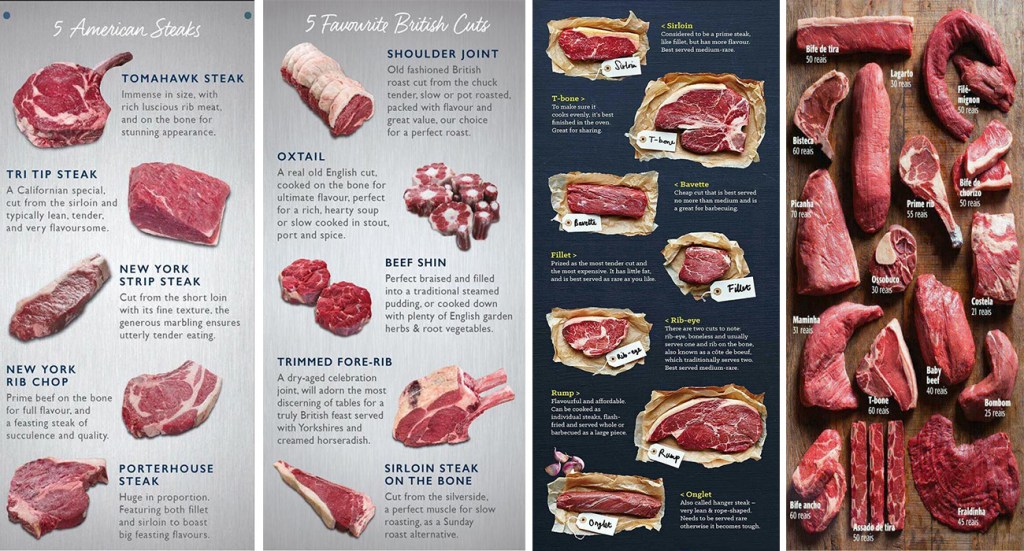
Aunque estos pueden ser «algunos de los cortes básicos más utilizados», hay algunos más que dependen del tipo de animal, del país donde se hace el despiece y de la categoría a la que pertenezca la pieza de carne.
Although these may be «some of the most commonly used basic cuts», there are some more that depend on the type of animal, the country where the cutting is done and the category to which the piece of meat belongs.
Ver recetas con carnes aqui https://www.facebook.com/groups/planetaalasbrasasyfogoneslaamdp
See meat recipes here https://www.facebook.com/groups/planetaalasbrasasyfogoneslaamdp
Descubre más desde LA AGENCIA MUNDIAL DE PRENSA
Suscríbete y recibe las últimas entradas en tu correo electrónico.


Un comentario en “GASTRONOMIA: LAS CARNES (I)”