
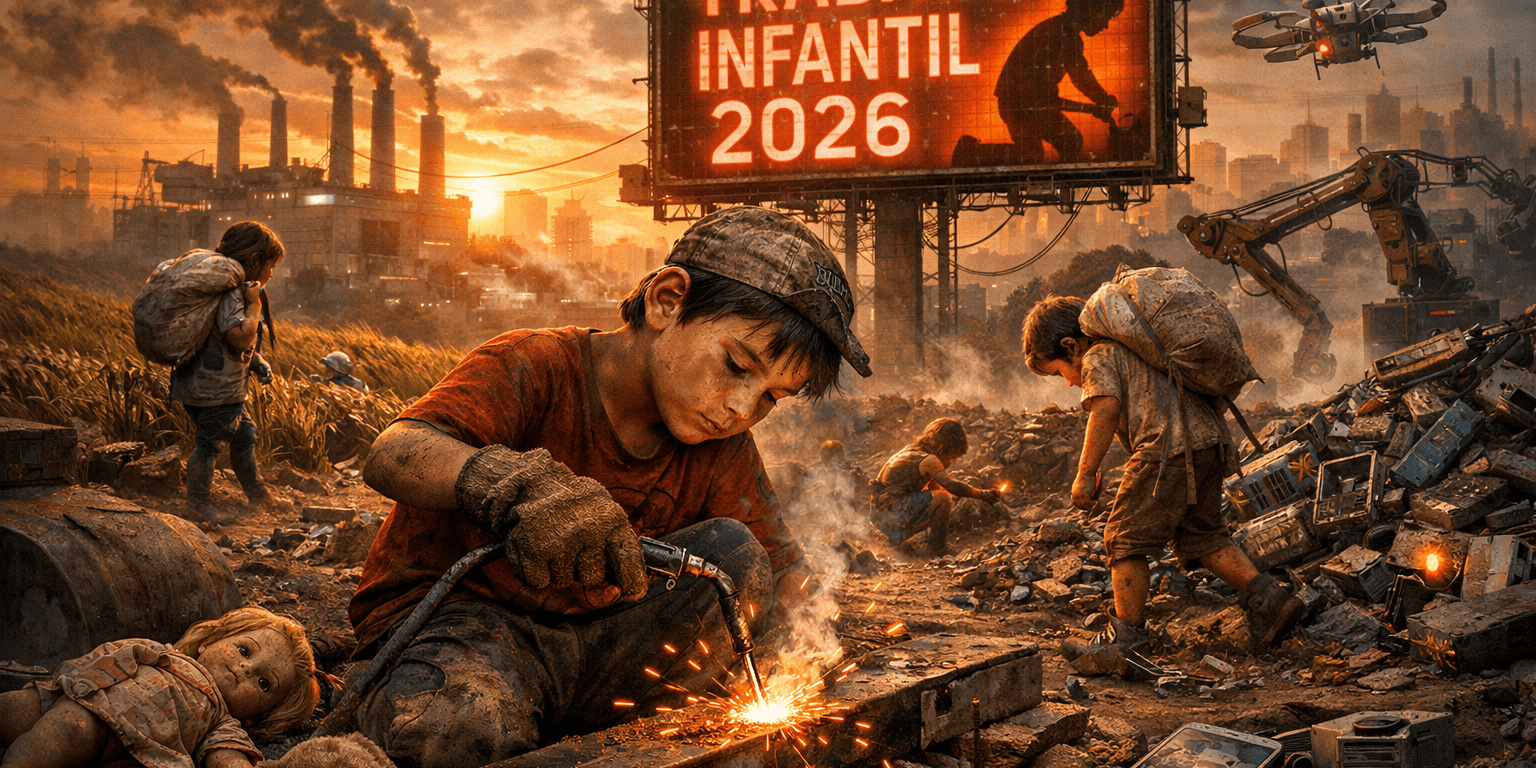
Child labor in 2026: the world’s moral debt to children and the failure of our collective conscience
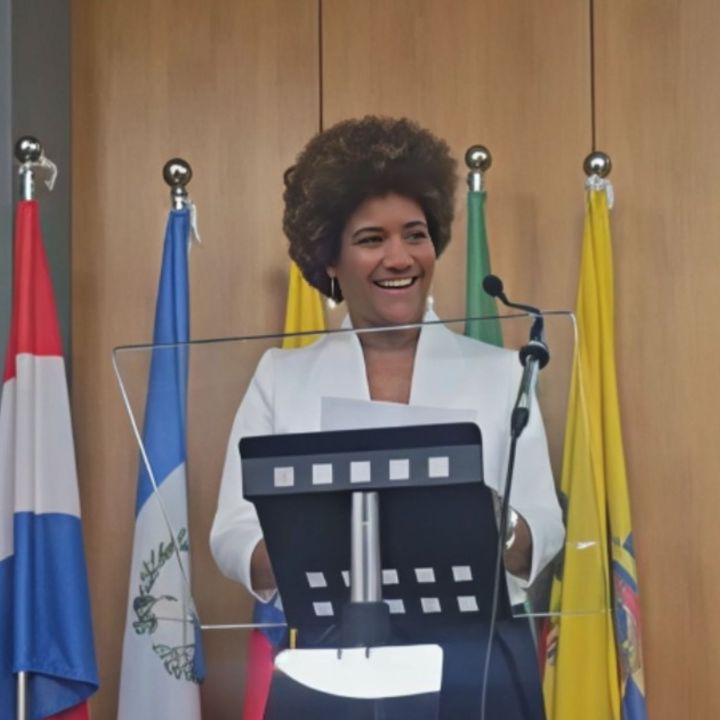
Consejera Delegada Global de la Mujer Apcsx Group – La Agencia Mundial de Prensa, Hola Mundo Global Media.
Periodista y escritora. Pta. Asociación Mujer y Poder
@mariapinaescritora
Hoy, 12 de junio, Día Mundial contra el Trabajo Infantil, no basta con recordar una fecha. No basta con repetir cifras. No basta con volver a pronunciar un problema que llevamos décadas identificando sin resolver de manera definitiva.
Today, June 12, World Day Against Child Labor, it is not enough to simply remember a date. It is not enough to repeat statistics. It is not enough to reiterate a problem that we have been identifying for decades without definitively resolving it.
Desde mi responsabilidad como Consejera delegada global de la mujer en La Agencia Mundial de Prensa, y desde mi compromiso con los derechos humanos, no puedo abordar esta realidad desde la distancia. Porque el trabajo infantil no es solo una cuestión social. Es una cuestión ética. Es una cuestión de justicia. Es, en esencia, una cuestión de humanidad.
From my position as Global Chief Executive for Women at the World Press Agency, and from my commitment to human rights, I cannot address this reality from a distance. Because child labor is not just a social issue. It is an ethical issue. It is a matter of justice. It is, in essence, a matter of humanity.
Hoy sabemos que cerca de 138 millones de niños y niñas siguen en situación de trabajo infantil en el mundo, y que aproximadamente 54 millones lo hacen en condiciones peligrosas, poniendo en riesgo su salud, su seguridad y su desarrollo. Son datos confirmados por la Organización Internacional del Trabajo y UNICEF, organismos que llevan años advirtiendo que, aunque se han producido avances, estos siguen siendo insuficientes.
Today we know that nearly 138 million children are still engaged in child labor worldwide, and that approximately 54 million of them do so in hazardous conditions, jeopardizing their health, safety, and development. These figures have been confirmed by the International Labour Organization and UNICEF, organizations that have been warning for years that, although progress has been made, it remains insufficient.
Pero lo verdaderamente importante no son las cifras. Lo verdaderamente importante es lo que esas cifras representan. Cada número es una infancia que no está siendo vivida. Es un derecho que no está siendo garantizado. Es una vida que empieza en condiciones de desigualdad.
Y cuando una es madre, sostener esta realidad no es solo un ejercicio de análisis… es una herida que cuesta aceptar.
But what truly matters isn’t the numbers. What truly matters is what those numbers represent. Each number is a childhood that isn’t being lived. It’s a right that isn’t being guaranteed. It’s a life that begins under conditions of inequality.
And when you’re a mother, confronting this reality isn’t just an exercise in analysis… it’s a wound that’s hard to accept.
La infancia no es negociable. Y nunca debería tener que esperar.
Childhood is non-negotiable. And it should never have to wait.
Duele imaginar esas infancias. Duele pensar en esos niños que deberían estar aprendiendo, jugando, creciendo sin miedo… y que, en cambio, están trabajando para sobrevivir. Desde esa mirada, no es posible quedarse impasible. No es posible mirar hacia otro lado.
It hurts to imagine those childhoods. It hurts to think of those children who should be learning, playing, growing up without fear… and who, instead, are working to survive. From that perspective, it’s impossible to remain indifferent. It’s impossible to look the other way.
Porque cuando eres madre, entiendes que la infancia no es negociable.
Y que no debería depender del lugar en el que se nace.
Because when you’re a mother, you understand that childhood is non-negotiable.
Hablar de trabajo infantil no es hablar únicamente de pobreza. Es hablar de estructuras que perpetúan la desigualdad. De sistemas que permiten que millones de niños asuman responsabilidades que no les corresponden. De un modelo global que, en demasiadas ocasiones, sigue priorizando la rentabilidad sobre la dignidad.
And that it shouldn’t depend on where you’re born.
Talking about child labor isn’t just talking about poverty. It’s talking about structures that perpetuate inequality. About systems that allow millions of children to assume responsibilities that aren’t theirs to bear. About a global model that, all too often, continues to prioritize profitability over dignity.
Y ahí es donde debemos detenernos.
And that’s where we must stop.
Porque mientras el trabajo infantil exista, no podemos hablar de desarrollo real. No podemos hablar de progreso. No podemos hablar de sociedades justas.
Because as long as child labor exists, we cannot speak of real development. We cannot speak of progress. We cannot speak of just societies.
El mundo asumió un compromiso claro dentro de la Agenda 2030: erradicar el trabajo infantil en todas sus formas a través del Objetivo de Desarrollo Sostenible 8.7. Ese objetivo tenía un horizonte concreto: 2025 y, lamentablemente, no se ha cumplido.
The world made a clear commitment within the 2030 Agenda: to eradicate child labor in all its forms through Sustainable Development Goal 8.7. That goal had a specific target date: 2025, and unfortunately, it has not been met.
Y cuando un compromiso de esta magnitud no se alcanza, la respuesta no puede ser la resignación. La respuesta debe ser la revisión profunda.
And when a commitment of this magnitude is not achieved, the response cannot be resignation. The response must be a thorough review.
Debemos preguntarnos qué ha fallado. Pero, sobre todo, debemos preguntarnos qué estamos dispuestos a hacer de forma diferente.
We must ask ourselves what has gone wrong. But above all, we must ask ourselves what we are willing to do differently.
El trabajo infantil es una manifestación de múltiples desigualdades: económicas, sociales, educativas y territoriales. La agricultura, por ejemplo, concentra alrededor del 61% del trabajo infantil a nivel global, lo que refleja una estrecha relación entre pobreza rural, falta de oportunidades y trabajo infantil.
Child labor is a manifestation of multiple inequalities: economic, social, educational, and territorial. Agriculture, for example, accounts for approximately 61% of child labor globally, reflecting a close relationship between rural poverty, lack of opportunities, and child labor.
Pero no estamos hablando de una realidad ajena. No es un problema de “otros países” o de “otras culturas”. Es un problema global. Es un espejo. Y en ese espejo también están nuestras decisiones como sociedad.
But we are not talking about a distant reality. It is not a problem of “other countries” or “other cultures.” It is a global problem. It is a mirror. And in that mirror, our decisions as a society are also reflected.
Las cadenas de producción, los modelos de consumo, las políticas públicas y las prioridades económicas forman parte de este entramado. Por eso, abordar el trabajo infantil no puede limitarse a intervenciones puntuales. Requiere una transformación estructural.
Production chains, consumption patterns, public policies, and economic priorities are all part of this complex web. Therefore, addressing child labor cannot be limited to isolated interventions. It requires structural transformation.
Requiere voluntad política y compromiso institucional. Pero, también, requiere conciencia colectiva. Y aquí es donde la comunicación adquiere un papel fundamental.
It requires political will and institutional commitment. But it also requires collective awareness. And this is where communication plays a fundamental role.
No podemos seguir normalizando el lenguaje distante cuando hablamos de infancia. No podemos reducir vidas a estadísticas sin activar la responsabilidad que esas cifras implican. No podemos permitirnos la indiferencia.
We cannot continue to normalize detached language when we talk about childhood. We cannot reduce lives to statistics without acknowledging the responsibility those numbers entail. We cannot afford indifference.
Porque la infancia debería ser el territorio más protegido de cualquier sociedad. Sin embargo, millones de niños en el mundo siguen creciendo en contextos donde su derecho a jugar, aprender y desarrollarse queda relegado por la necesidad.
Because childhood should be the most protected sphere of any society. However, millions of children around the world continue to grow up in contexts where their right to play, learn, and develop is sidelined by necessity.
Y eso, desde una mirada humanista, es inaceptable. No se trata de culpabilizar,
se trata de asumir responsabilidad.
And that, from a humanist perspective, is unacceptable. It’s not about assigning blame, it’s about taking responsibility.
Cada avance demuestra que el cambio es posible. En los últimos años, más de 20 millones de niños han dejado de estar en situación de trabajo infantil. Pero ese progreso no puede hacernos perder de vista la magnitud del desafío.
Every step forward demonstrates that change is possible. In recent years, more than 20 million children have been freed from child labor. But this progress cannot make us lose sight of the magnitude of the challenge.
Porque no hablamos solo de cifras pendientes.
Hablamos de infancias esperando.
Hablamos de un derecho universal que aún no es plenamente universal.
Because we’re not just talking about outstanding figures.
We’re talking about children waiting.
We’re talking about a universal right that is not yet fully universal.
Por eso, el posicionamiento debe ser claro.
That’s why our stance must be clear.
No podemos conformarnos con reducir el problema.
Debemos comprometernos a erradicarlo.
We cannot be content with reducing the problem. We must commit to eradicating it.
No podemos limitarnos a analizar.
Debemos actuar.
We cannot limit ourselves to analysis.
We must act.
No podemos mirar hacia otro lado.
We cannot look the other way.
La infancia no es negociable.
No es algo que pueda esperar.
No es un indicador más dentro de una agenda internacional.
Childhood is non-negotiable.
It’s not something that can wait.
It’s not just another indicator on an international agenda.
Es el reflejo más honesto del mundo que estamos construyendo.
It’s the most honest reflection of the world we are building.
Y mientras haya un solo niño al que se le niegue su derecho a ser niño,
la deuda seguirá siendo nuestra.
And as long as there is a single child denied their right to be a child, the debt will remain ours.
Descubre más desde LA AGENCIA MUNDIAL DE PRENSA
Suscríbete y recibe las últimas entradas en tu correo electrónico.

