


TERESA FERNANDEZ HERRERA. Periodista, Escritora, Editorialista. CDG de CULTURA.
Sé que su estreno fue en 2009, para mí fue ayer en el Teatro Cervantes de Málaga cuando pude ver la versión de Pepa Gamboa de la última obra de Federico García Lorca, La casa de Bernarda Alba.
I know its premiere was in 2009, but for me it was yesterday at the Teatro Cervantes in Málaga when I was able to see Pepa Gamboa’s version of Federico García Lorca’s last work, The House of Bernarda Alba.
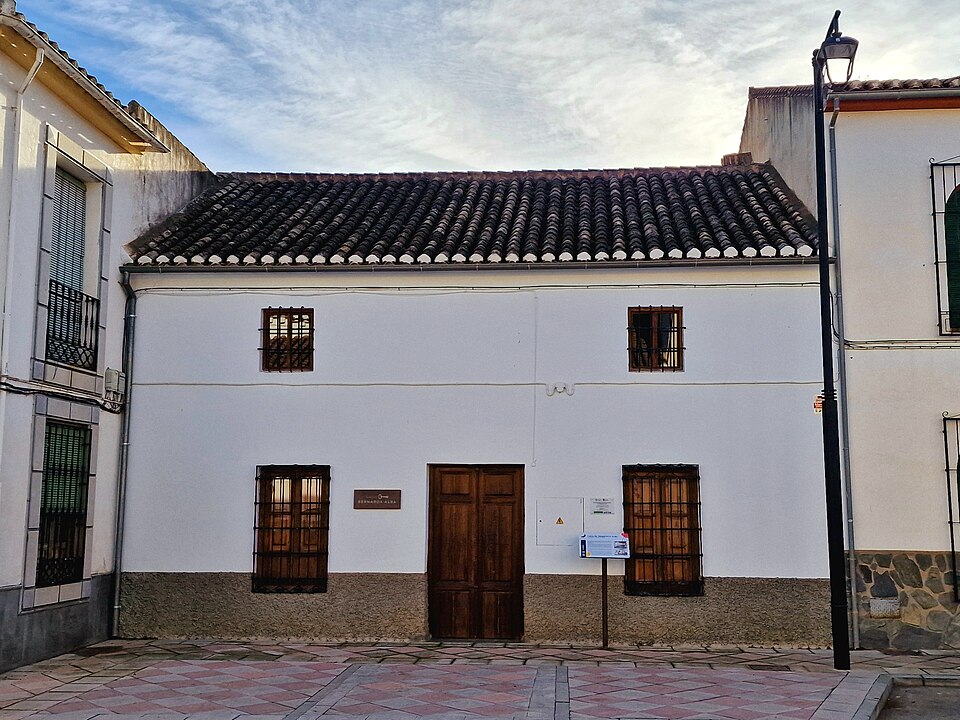
Conozco de memoria esta historia basada en un hecho real, de una tragedia de mujeres, víctimas de una sociedad, sobre todo rural, en que la mujer no era nada ni nadie.
I know this story by heart, based on a real event, a tragedy of women, victims of a society, especially rural, in which women were nothing and nobody.
A Federico le molestaba esa sociedad. Él conocía y admiraba el valor de la mujer. Por eso, su dramatización tuvo un trasfondo de crítica feroz de una situación insoportable humanamente. Por eso la joven Adela prefiere quitarse la vida antes que vivir castrada y sin amor.
Federico was bothered by that society. He knew and admired the value of women. That’s why his dramatization had a backdrop of fierce criticism of a humanly unbearable situation. That’s why the young Adela prefers to take her own life rather than live castrated and without love.
La versión de Pepa Gamboa, premiada entre 2009 y 2011 en Canal Sur, Premio Revelación, Premio Europeo de la Comunidad Gitana, Premio Europeo de Cultura Gitana, Premio Escenarios de Sevilla a la mejor
Dirección, Premio Festival TAC Valladolid, Premio Clara Campoamor de Orense y Premio Macarenas del Año del Ayuntamiento de Sevilla, cambia mucho sin cambiar nada.
Pepa Gamboa’s version, awarded between 2009 and 2011 by Canal Sur, Revelation Award, European Award from the Gypsy Community, European Gypsy Culture Award, Escenarios de Sevilla Award for Best Direction, TAC Valladolid Festival Award, Clara Campoamor Award from Orense, and Macarenas of the Year Award from the Seville City Council, changes a lot without changing anything.
Lo primero y más importante, las actrices son gitanas del asentamiento chabolista de El Vacíe de Sevilla, el más antiguo de España. Es decir, no son actrices profesionales, pero son las más auténticas que he visto en las
muchas Bernardas que llevo vistas. Son auténticas, porque son andaluzas, porque hablan y sienten como andaluzas, porque ni siquiera necesitan actuar porque ya están en la piel de esas mujeres.
First and foremost, the actresses are gypsy women from the shantytown settlement of El Vacíe in Seville, the oldest in Spain. That is, they are not professional actresses, but they are the most authentic I’ve seen in the many Bernardas I’ve watched. They are authentic because they are Andalusian, because they speak and feel like Andalusians, because they don’t even need to act since they are already in the skin of those women.
Lo segundo, son auténticas porque cantan en ese par de días que se narran en la historia; cantan porque son andaluzas y jóvenes y necesitan minimizar su drama para sobrevivir a esa vida de mujeres sin hombre. Algo muy andaluz, el aje, el reírse de uno mismo aún viviendo el mayor y más íntimo de los dramas.
Second, they are authentic because they sing in those couple of days narrated in the story; they sing because they are Andalusian and young and need to minimize their drama to survive that life of women without men. Something very Andalusian, the «aje,» laughing at oneself even while living the greatest and most intimate of dramas.
Evidentemente desde 2009 las actrices han cambiado, pero siguen siendo gitanas chabolistas, algunas analfabetas, siguen encontrando en esta obra la transformación de sus vidas. De la invisibilidad y la marginación a romper las barreras de la exclusión y la pobreza, a ser aclamadas, reconocidas y respetadas internacionalmente. La obra les dio voz y dignidad a toda su comunidad, entonces y ahora mismo. Orgullo gitano.
Evidently, since 2009 the actresses have changed, but they continue to be gypsy shantytown dwellers, some illiterate, and they continue to find in this work the transformation of their lives. From invisibility and marginalization to breaking the barriers of exclusion and poverty, to being acclaimed, recognized, and respected internationally. The work gave voice and dignity to their entire community, then and now. Gypsy pride.
Pepa Gamboa ha suprimido el luto lorquiano actualizando la vestimenta y poniéndole colores, ahora el luto ha dejado de existir. Ni siquiera Bernarda viste de negro, sino de marrón. Viste de negro la Poncia, la criada que lleva con Bernarda desde que ambas eran niñas de la misma edad, la única que osa subírsele a las barbas a Bernarda, hacerle ver lo que ella se niega a ver.
Pepa Gamboa has eliminated the Lorquian mourning by updating the clothing and adding colors; now mourning has ceased to exist. Not even Bernarda dresses in black, but in brown. Poncia, the servant who has been with Bernarda since they were both girls of the same age, dresses in black—the only one who dares to stand up to Bernarda, to make her see what she refuses to see.
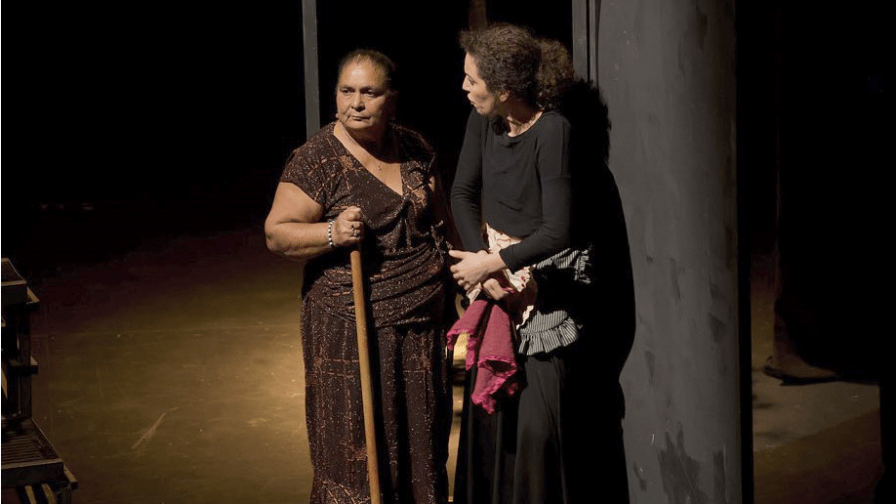
Pepa Gamboa ha eliminado de la obra lo superflúo, ha dejado lo fundamental. Un solo acto de una hora de duración. Ha potenciado el protagonismo de la abuela María Josefa. Ella y la Poncia son las almas del
drama, Bernarda es la corporeidad mandona, de la que nadie hace mucho caso un siglo más tarde de ser escrita. Una Angustias que además de cuarentona es una obesa morbosa frente a una joven y delicada Adela,
marcan la diferencia entre la rica que compra un marido y la pobre capaz de inspirar amor al invisible con presencia constante Pepe el Romano.
Pepa Gamboa has removed the superfluous from the work, leaving the fundamental. A single act lasting one hour. She has enhanced the prominence of the grandmother María Josefa. She and Poncia are the souls of the drama; Bernarda is the bossy corporeality, whom no one pays much attention to a century after it was written. An Angustias who, besides being in her forties, is a morbidly obese woman facing a young and delicate Adela, marking the difference between the rich woman who buys a husband and the poor one capable of inspiring love to the invisible yet constantly present Pepe el Romano.
Esta versión de Pepa Gamboa es un auténtico drama andaluz, creíble de principio a fin. Dicen que Nuria Espert cuando la vio dijo a Bernarda: Yo he hecho una versión de Bernarda, pero tú eres Bernarda.
This version by Pepa Gamboa is a genuine Andalusian drama, believable from beginning to end. They say that when Nuria Espert saw it, she said to Bernarda: I have done a version of Bernarda, but you are Bernarda.
Y con razón. La versión de Nuria fue inglesa, en un teatro londinense, con insignes actrices inglesas. Es posible que en un tiempo, en una sociedad rural inglesa, pudiera vivirse ese drama. Pero nunca sería lo mismo.
And with good reason. Nuria’s version was English, in a London theater, with renowned English actresses. It’s possible that in a time, in a rural English society, such a drama could have been lived. But it would never be the same.
Nunca lo mismo que en la Granada de los años treinta del siglo pasado. Y por primera vez en mi experiencia Bernarda, María Josefa, la Poncia, la criada, Angustias, Magdalena, Amelia, Martirio y Adela van vestidas de
colores y ponen cantos alegres a sus dramas ocultos.
Never the same as in the Granada of the 1930s in the last century. And for the first time in my experience, Bernarda, María Josefa, Poncia, the servant, Angustias, Magdalena, Amelia, Martirio, and Adela are dressed in colors and add cheerful songs to their hidden dramas.
Descubre más desde LA AGENCIA MUNDIAL DE PRENSA
Suscríbete y recibe las últimas entradas en tu correo electrónico.

Muy guapo el artículo. Yo soy un admirador total de García Lorca. Parece que esta representación es más auténtica y genuina. Pues estupendo, cuanto más perfecta, mejor.
Me gustaMe gusta