
Meeting with the Goncourt Prize winner, Jean Baptiste Andrea

COLUMNISTA
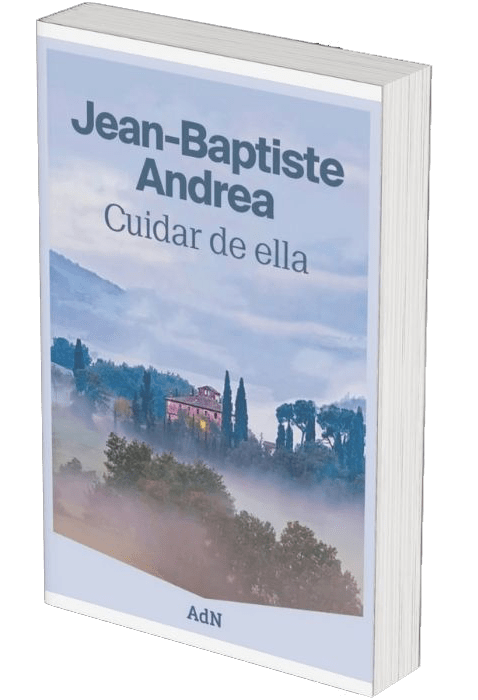
Me encuentro a primera hora de la tarde del viernes 7 de junio, en su hotel de Madrid, con Jean Baptiste Andrea, ganador del Premio Goncourt 2023 en Francia y 2024 en España por su última novela “Cuidar de ella”. Una novela brillante, tan llena de simbolismos, que podríamos referenciarla en varias épocas históricas y estilos, en los que el realismo mágico está muy presente. Su autor, ha querido situar la acción en la Italia de los años veinte y treinta del siglo pasado. Una historia que yo veo muy renacentista. El protagonista, Michelangelo Vitaliani ‘Mimo’ la narra muchos años más tarde en su lecho de muerte.
I meet early in the afternoon on Friday, June 7, at his hotel in Madrid, with Jean Baptiste Andrea, winner of the 2023 Goncourt Prize in France and 2024 in Spain for his latest novel “Take Care of Her.” A brilliant novel, so full of symbolism, that we could reference it in various historical periods and styles, in which magical realism is very present. Its author wanted to place the action in Italy in the 1920s and 1930s. A story that I see as very Renaissance. The protagonist, Michelangelo Vitaliani ‘Mimo’ narrates it many years later on his deathbed.

Jean Baptiste Andrea es un inconfundible tipo mediterráneo, cálido, cercano, descendiente de italianos y españoles, francés de tercera generación. Defiende la ficción hasta un ochenta por ciento en esta obra que creó en diez meses. Cuidar de ella es la historia de dos almas gemelas que se encuentran, se reconocen, la vida puede alejarlos, pero siempre se reencuentran. El protagonista cuidará de ella hasta más allá de la muerte, hasta en la eternidad.
Jean Baptiste Andrea is an unmistakable Mediterranean type, warm, approachable, descendant of Italians and Spanish, third generation French. He defends fiction up to eighty percent in this work that he created in ten months. Taking care of her is the story of two soul mates who meet, recognize each other, life can separate them, but they always meet again. The protagonist will take care of her beyond death, even into eternity.
T. Cineasta y escritor. Sus películas, Dead End, Big nothing, con David Schwimmer, Hellphone. Novelas Ma reine, Cent millions d’années et un jour, y Des diables et des saints. Y ahora Veiller sur elle, (Cuidar de ella) hasta la eternidad. ¿Volvería a hacer cine?
T. Filmmaker and writer. His films, Dead End, Big nothing, with David Schwimmer, Hellphone. Novels Ma reine, Cent millions d’années et un jour, and Des diables et des saints. And now Veiller sur elle, (Take care of her) until eternity. Would you go back to making movies?
JB. No. Estuve dedicado al cine lo que podríamos llamar un ciclo de mi vida. Hasta que llegué a un punto en que me dí cuenta que me restaba libertad, un punto en el que necesitaba de esa libertad absoluta de creación, sin más intermediarios, sin millones de euros de por medio, y otros intereses. Ese punto en que necesitaba escribir, para ser yo mismo en plena libertad. Y tuve la suerte de dar con personas del mundo editorial que me acogieron con amor.
JB. No. I was dedicated to cinema for what we could call a cycle of my life. Until I reached a point where I realized that I was losing my freedom, a point where I needed that absolute freedom of creation, without more intermediaries, without millions of euros involved, and other interests. That point where I needed to write, to be myself in complete freedom. And I was lucky enough to meet people from the publishing world who welcomed me with love.
T. ¿Usted es de origen italiano, francés de segunda generación?. Por el apellido y la temática de su novela.
T. Are you of Italian origin, second generation French? Because of the last name and the theme of his novel.
JB. Soy francés de tercera generación. Sí, tengo orígenes italianos, también españoles. He vivido en Argelia, aunque he nacido en Francia. Es decir, pertenezco a una cultura mediterránea de ambas orillas. Cuidar de ella fue una revelación inspirada en muchas de mis referencias culturales, pero es ficción en un altísimo porcentaje que incluye a los dos personajes protagonistas, tan alejados socialmente y tan cercanos en la singularidad de sus personalidades, que hace que se reconozcan en esta singularidad , desde el momento en que se encuentran por primera vez. Esta singularidad los acerca, al tiempo que los hace darse cuenta de lo lejos que están de sus entornos respectivos. Son dos seres, Mimo en su determinación de esculpir o de encontrar sus personajes en bloques de mármol, con su toque de genialidad, ella, Viola, en ser libre, de ahí sus ansias de volar. Ambos se saben poseedores de una realidad que es solo suya, que nadie más puede entender ni compartir.
JB. I am third generation French. Yes, I have Italian origins, also Spanish. I have lived in Algeria, although I was born in France. That is to say, I belong to a Mediterranean culture from both shores. Taking care of her was a revelation inspired by many of my cultural references, but it is a very high percentage of fiction that includes the two main characters, so socially distant and so close in the singularity of their personalities, that it makes them recognize each other in this singularity. , from the moment they meet for the first time. This uniqueness brings them closer, while also making them realize how far they are from their respective environments. They are two beings, Mimo in his determination to sculpt or find his characters in blocks of marble, with his touch of genius, she, Viola, in being free, hence her desire to fly. They both know they possess a reality that is theirs alone, that no one else can understand or share.
T. Me han llamado mucho la atención los recursos literarios con los que construye su novela. Cuidar de ella es una novela del Renacimiento, pero ubicada en los años anteriores al fascismo, durante el fascismo y la segunda guerra mundial. Pero percibo que tanto los personajes como la temática son renacentistas.
T. I have been very struck by the literary resources with which you construct your novel. Taking Care of Her is a Renaissance novel, but set in the years before fascism, during fascism and the Second World War. But I perceive that both the characters and the theme are Renaissance.
JB. Pues ahora que lo dice… No fue mi intención verla como una historia del Renacimiento, me sorprende que usted la haya relacionado con esa época. Pero es cierto, que Cuidar de ella es una historia que podría suceder en cualquier tiempo y yo lo facilito poniendo en primer plano una familia Orsini, que no tiene nada que ver con la familia histórica de ese nombre. Y utilizando el nombre de Michelangelo, un nombre clave del Renacimiento italiano. No era mi intención, pero su percepción prueba que la obra no se extingue con el autor, sino que crece con las percepciones de sus lectores.
JB. Well now that you say it… I didn’t mean to see it as a Renaissance story, I’m surprised that you related it to that time. But it is true that Caring for Her is a story that could happen at any time and I facilitate it by putting an Orsini family in the foreground, which has nothing to do with the historical family of that name. And using the name Michelangelo, a key name of the Italian Renaissance. It was not my intention, but your perception proves that the work does not become extinct with the author, but rather grows with the perceptions of its readers.
T. Hasta el punto de que yo he creído ver al Papa Julio II, el mecenas de Michelangelo de la capilla Sixtina, en la figura de Pío XII en su historia. Incluso indagando en la famosa familia Orsini encontré al papa Benedicto XIII de 1624 a 1630, último papa Orsini. En su novela, Mussolini es un mecenas de Mimo. Los artistas nunca se preocuparon de las ideologías de sus mecenas, aunque en su historia llega un momento de rebelión a tal mecenazgo…
T. To the point that I thought I saw Pope Julius II, Michelangelo’s patron of the Sistine Chapel, in the figure of Pius XII in his story. Even digging into the famous Orsini family I found Pope Benedict XIII from 1624 to 1630, the last Orsini Pope. In his novel, Mussolini is a patron of Mime. The artists never worried about the ideologies of their patrons, although in their history there comes a moment of rebellion against such patronage…
JB. Es curioso, yo no he hecho esa indagación, no tenía ni idea de ese papa Orsini de siglo XVII. Ni he relacionado a mi Pio XII con el Renacimiento. El hecho de que usted haya encontrado esa relación, que podría ser cierta, pero que no lo es, prueba sin lugar a dudas la universalidad de mis personajes. Es cierto, Mimo y Viola son personajes de cualquier tiempo histórico y de forma muy particular de la Italia del Renacimiento, en la que los artistas geniales tenían que imponer su libertad de creación, y lo hicieron, a sus mecenas que con frecuencia tenían otros intereses.
JB. It’s curious, I haven’t done that research, I had no idea about that 17th century Pope Orsini. Nor have I related my Pius XII to the Renaissance. The fact that you have found that relationship, which could be true, but is not, proves without a doubt the universality of my characters. It is true, Mimo and Viola are characters from any historical time and in a very particular way from Renaissance Italy, in which brilliant artists had to impose their freedom of creation, and they did, on their patrons who often had other interests.
T. Viola Orsini es tanto una mujer del Renacimiento o del barroco como de los años 20 y 30 del siglo pasado o de ahora mismo. Una mujer con memoria fotográfica, absolutamente libre de espíritu, un espíritu que necesita volar y que prefiere estrellarse antes que casarse con alguien impuesto, y más tarde someterse a un matrimonio como moneda de cambio para su familia. Es como la larga historia de la mujer.
T. Viola Orsini is as much a woman of the Renaissance or the Baroque as she is of the 20s and 30s of the last century or right now. A woman with a photographic memory, absolutely free of spirit, a spirit that needs to fly and that prefers to crash rather than marry someone imposed on her, and later submit to a marriage as a bargaining chip for her family. It’s like the long history of women.
JB. Viola es una mujer excepcional y representa esa excepcionalidad en cualquier tiempo, la excepcionalidad de la libertad siempre negada a la mujer. Viola es la mayor representante del realismo mágico en mi novela, por la presencia de la osa Blanca que los demás ven como una transmutación de Viola. La osa Orsini. Sus ansias de volar, son sus ansias de ser libre, aunque se estrelle, con tal de no someterse a un matrimonio impuesto. Es un personaje andrógino, que es tanto una fuente de su entendimiento con Mimo, un amor más allá de lo físico, donde el enanismo de él no importa, como una vía de escape a su libertad interior en su matrimonio forzado por los intereses familiares. Es la mujer excepcional que encontramos en cualquier tiempo, que necesita escapar de todo lo que la limita, lo que la ata, sobre todo de la incomprensión de todo su entorno. De ahí, Mimo, la osa y las máquinas voladoras.
JB. Viola is an exceptional woman and represents that exceptionality at any time, the exceptionality of freedom always denied to women. Viola is the greatest representative of magical realism in my novel, due to the presence of the White bear that others see as a transmutation of Viola. The Orsini Bear. His desire to fly is his desire to be free, even if he crashes, as long as he does not submit to an imposed marriage. He is an androgynous character, who is both a source of his understanding with Mimo, a love beyond the physical, where his dwarfism does not matter, and an escape route to his inner freedom in his marriage forced by family interests. She is the exceptional woman that we find at any time, who needs to escape from everything that limits her, what binds her, especially from the lack of understanding of her entire environment. Hence, Mime, the bear and the flying machines.
T. ¿En qué o en quién se ha basado usted para crear esos dos personajes, el genial artista pobre y enano y la aristócrata que no soporta su entorno y que se reconocen como almas gemelas, en su idioma como hermanos cósmicos, desde el primer momento?
T. On what or who have you based yourself to create these two characters, the brilliant poor and dwarf artist and the aristocrat who cannot stand her environment and who recognize each other as soul mates, in their language as cosmic brothers, from the first moment?
JB. Pues no me he inspirado en nadie en particular, no de manera consciente, aunque he de reconocer que esos personajes pueden representar una inspiración en otros personajes reales en la percepción del lector, porque cada lector es un mundo que percibe en función de sus referencias culturales. En Cuidar de ella, Mimo y Viola son ficción digamos en un ochenta por ciento, el restante veinte por ciento es percepción del lector.
JB. Well, I have not been inspired by anyone in particular, not consciously, although I have to recognize that these characters can represent an inspiration in other real characters in the reader’s perception, because each reader is a world that perceives based on their cultural references. . In Cuidar de ella, Mimo y Viola are, let’s say, eighty percent fiction, the remaining twenty percent is the reader’s perception.
T. Deduzco que usted ha querido crear una obra intemporal, o universal, que podría suceder en cualquier tiempo de la historia, incluso ahora mismo.
T. I deduce that you wanted to create a timeless, or universal, work that could happen at any time in history, even right now.
JB. Así es. A pesar de toda la evolución social del último siglo, la mujer sigue sin alcanzar su máximo. Pero déjeme decir que tampoco el hombre es libre. Mimo y Viola siguen hoy limitados en su libertad y cuando estallan y traspasan esos límites, siguen sufriendo. No hay más que mirar alrededor. Un enano sigue siendo un enano y una mujer que quiera ser libre sin limitaciones sigue siendo una incomprendida.
JB. That’s how it is. Despite all the social evolution of the last century, women still have not reached their maximum. But let me say that man is not free either. Mimo and Viola are still limited in their freedom today and when they explode and cross those limits, they continue to suffer. All you have to do is look around. A dwarf is still a dwarf and a woman who wants to be free without limitations is still misunderstood.
T. Y al final, la señal, la fuerza del destino. El terremoto anunciado.
T. And in the end, the sign, the force of destiny. The earthquake announced.
JB. La liberación final en la muerte. Suponiendo que exista un más allá, que en la novela existe, a través de la obra más genial del artista, esa Pietà, en la que Viola alcanza la libertad eterna en la figura de Jesús muerto que reposa en brazos de su madre.
JB. The final liberation in death. Assuming that there is an afterlife, which exists in the novel, through the artist’s most brilliant work, that Pietà, in which Viola achieves eternal freedom in the figure of the dead Jesus resting in his mother’s arms.
T. Cierto. Un Jesús/Viola que surge de un maravilloso bloque de mármol destinado a esculpir el hombre nuevo según el criterio fascista.
T. True. A Jesus/Viola that emerges from a wonderful block of marble destined to sculpt the new man according to fascist criteria.
JB. Sí. Ahí reside de nuevo el realismo mágico, en la rebelión del artista para quién en el fondo el hombre nuevo es Jesús que tiene que morir una y otra vez y resucitar esta vez en la eterna libertad que Viola solo encuentra en la muerte…
JB. Yes. There lies magical realism again, in the rebellion of the artist for whom deep down the new man is Jesus who has to die again and again and be resurrected this time in the eternal freedom that Viola only finds in death…
T. Un final inesperado que hace merecedora de todos los premios a Cuidar de ella. Me maravilló ese final. Como también me sorprendió su referencia a Sabicas. ¿A usted le interesa el flamenco?
T. An unexpected ending that makes Caring for Her worthy of all the awards. I marveled at that ending. Just as I was also surprised by your reference to Sabicas. Are you interested in flamenco?
JB. .Digamos que me interesan todas las músicas y entre ellas el flamenco. Y los innovadores de la guitarra, Segovia de la guitarra clásica, Sabicas de la guitarra flamenca.
JB. Let’s say that I am interested in all music and among them flamenco. And the innovators of the guitar, Segovia of the classical guitar, Sabicas of the flamenco guitar.
T. Para terminar. Usted ha sido premio Goncourt 2023 en Francia, 2024 en España. Le han votado como ganador en otros países que votan el Goncourt?
T. To finish. You have been awarded Goncourt 2023 in France, 2024 in Spain. Have you been voted as the winner in other countries that vote for Goncourt?
JB. Sí. En Portugal, donde estuve la semana pasada. También en Bulgaria, Estonia, Costa de Marfil, China y Japón.
JB. Yes. In Portugal, where I was last week. Also in Bulgaria, Estonia, Ivory Coast, China and Japan.
T. Ya ve. Más votado fuera que dentro de la francofonía. También en esto, la historia se repite. Muchas gracias, Jean Baptiste.
T. You see. More votes outside than within the Francophonie. Here too, history repeats itself. Thank you very much, Jean Baptiste.
Descubre más desde LA AGENCIA MUNDIAL DE PRENSA
Suscríbete y recibe las últimas entradas en tu correo electrónico.
