
«Social impacts of climate change»

PRENSA ESPECIALIZADA
Cristina García Fernández, es la autora del libro “Impactos sociales del cambio climático”, que se presentará el próximo 31 de mayo en la octava Expo Literaria de Nuestra América online Radio (www.nuestraamericaonlineradio,com)
Cristina García Fernández is the author of the book “Social impacts of climate change”, which will be presented on May 31 at the eighth Literary Expo of Nuestra América online Radio (www.nuestraamericaonlineradio,com).
Cristina García es profesora de Economía de la Facultad de Ciencias Políticas y Sociología de la Universidad Complutense de Madrid. También es doctora en Ciencias Económicas y Empresariales por la UCM y directora del Máster en la Unión Europea y el Mediterráneo, (EUROMED) de la UCM. Es autora de artículos en diversas publicaciones en revistas científicas sobre la materia del libro citado.
Cristina García is a professor of Economics at the Faculty of Political Sciences and Sociology at the Complutense University of Madrid. She also has a doctorate in Economics and Business Sciences from the UCM and director of the Master in the European Union and the Mediterranean, (EUROMED) at the UCM. She is the author of articles in various publications in scientific journals on the subject of the aforementioned book.

Investigadora del cambio climático (CC) desde que hizo su tesis doctoral en 1998, la primera sobre este tema en España, “El cambio climático: Un estudio económico”. Desde entonces ha seguido en esta línea de investigación desde la UCM, la University California Los Angeles, (UCLA), Universidad de Newcastle, (Reino Unido), congresos, conferencias, etc., hasta la publicación del libro “Impactos sociales del cambio climático”, auspiciado por el Instituto Universitario de Desarrollo y Cooperación y prologado por su director Esteban Sánchez Moreno.
Climate change researcher (CC) since she did her doctoral thesis in 1998, the first on this topic in Spain, “Climate change: An economic study”. Since then he has continued in this line of research from the UCM, the University California Los Angeles, (UCLA), University of Newcastle, (United Kingdom), congresses, conferences, etc., until the publication of the book “Social impacts of climate change ”, sponsored by the University Institute of Development and Cooperation and prefaced by its director Esteban Sánchez Moreno.
Entrevistamos a la profesora Cristina García Fernández, con ocasión de la presentación del libro citado.
We interviewed Professor Cristina García Fernández, on the occasion of the presentation of the aforementioned book.
Teresa Fernández. Observo que existe cierto desconocimiento entre variabilidad climática y cambio climático.
Teresa Fernandez. I observe that there is a certain lack of knowledge between climate variability and climate change.
Cristina García. El concepto de cambio climático ha adquirido distintos significados en la literatura científica. Por lo general, «cambio climático» denota las variaciones en el clima debidas a la interferencia de los seres humanos (origen antropogénico), mientras que el concepto de “variaciones climáticas» hace referencia a los cambios naturales propios del clima y su evolución. Con el propósito de unificar todas las definiciones y acepciones posibles, el Convenio de las Naciones Unidas sobre Cambio Climático define el cambio climático como ‘un cambio en el clima que es atribuido directa o indirectamente a la actividad humana que altera la composición de la atmósfera global y que se suma a la variabilidad observada a lo largo de períodos de tiempo comparables’.
Cristina Garcia. The concept of climate change has acquired different meanings in scientific literature. Generally, «climate change» denotes variations in the climate due to the interference of human beings (anthropogenic origin), while the concept of «climate variations» refers to the natural changes in the climate and its evolution. For the purpose of unifying all possible definitions and meanings, the United Nations Convention on Climate Change defines climate change as ‘a change in climate that is attributed directly or indirectly to human activity that alters the composition of the global atmosphere and which adds to the variability observed over comparable time periods’.
TF. Lo primero que constatamos en “Impactos sociales del cambio climático” es que no hay ni un solo juicio de valor. Todo son hechos documentados por la propia naturaleza del cambio y por estudios realizados por miembros de la Comunidad Científica internacional, lo que en principio hace difícil tanto el negacionismo como la resistencia a no ver lo que está delante de los ojos de todos. ¿A qué achaca este negacionismo y resistencia?
TF. The first thing we see in “Social impacts of climate change” is that there is not a single value judgment. All are facts documented by the very nature of the change and by studies carried out by members of the international Scientific Community, which in principle makes both denialism and resistance to not seeing what is before everyone’s eyes difficult. What do you attribute this denialism and resistance to?
CG. El negacionismo y la resistencia a reconocer lo que hoy en día es una evidencia indiscutible, viene de la mano de las grandes empresas contaminantes procedentes de distintos sectores emisores de gases de efecto de invernadero. Estas empresas pagan sumas millonarias a lobbies y a distintas instituciones para que difundan misivas y mensajes falsos sobre la realidad inequívoca del cambio climático, a la vez que no dudan en bloquear las negociaciones que se realizan en las cumbres del clima.
CG. Denialism and resistance to recognizing what today is indisputable evidence comes from the hand of large polluting companies from different sectors that emit greenhouse gases. These companies pay millionaire sums to lobbies and different institutions to spread missives and false messages about the unequivocal reality of climate change, while at the same time they do not hesitate to block the negotiations that take place at climate summits.
TF. Es cierto, que la intervención humana en producir cambios en la naturaleza que alteran el equilibrio del planeta viene de antiguo. Pero lo que preocupa ahora, es el ritmo acelerado que comienza con la revolución industrial y sin precedentes desde la década de 1950. ¿Nos habla un poco de esto?
TF. It is true that human intervention in producing changes in nature that alter the balance of the planet goes back a long way. But what is worrying now is the accelerated pace that begins with the industrial revolution and is unprecedented since the 1950s. Can you tell us a little about this?
CG. Ciertamente. Lo que es exclusivo de la tendencia actual del calentamiento, es su ritmo de avance. El calentamiento está siendo entre 40 y 50 veces más rápido que durante la época que sucedió a la última glaciación. Por ejemplo, al final del período Pleistoceno, hace más de diez mil años, la Tierra se calentó entre 2,5 y 5 grados centígrados. La diferencia principal radica, en que aquel aumento de temperatura tardó varios miles de años en manifestarse y no estuvo comprimido en menos de un siglo. En el último siglo, esto es, los últimos cien años, la Tierra se ha calentado 1,3 grados centígrados. Este hecho no tiene ninguna referencia en el pasado. Generalmente, los cambios climáticos del pasado han sido lo suficientemente lentos como para permitir la adaptación del mundo biológico, cosa que ahora ya no sucede.
CG. Certainly. What is unique about the current warming trend is its rate of advance. Warming is between 40 and 50 times faster than during the period that followed the last ice age. For example, at the end of the Pleistocene period, more than ten thousand years ago, the Earth warmed by 2.5 to 5 degrees Celsius. The main difference is that this increase in temperature took several thousand years to manifest and was not compressed into less than a century. In the last century, that is, the last hundred years, the Earth has warmed by 1.3 degrees Celsius. This fact has no reference in the past. Generally, past climate changes have been slow enough to allow the biological world to adapt, which is no longer the case.
TF. Nos gustaría que nos informara de las negociaciones internacionales sobre cambio climático y las razones para el fracaso de las cumbres del clima.
TF. We would like you to inform us about the international negotiations on climate change and the reasons for the failure of climate summits.
CG.Todas estas reuniones se celebran en el ámbito del Convenio Marco de Naciones Unidas sobre Cambio Climático, donde juegan un papel importante los organismos internacionales como el Banco Mundial, la OCDE, el PNUMA, la UE y otros. Se organizan, teóricamente, con el objetivo de establecer unos parámetros claros de reducción de emisiones que conduzcan a una disminución de la temperatura global media. La realidad es que las negociaciones, en general, suelen finalizar en fracaso, ya que los compromisos sobre emisiones, son escasos y poco exigentes. Estos resultados tienen mucho que ver con la existencia de grupos de presión o lobbies que son contratados por las grandes empresas energéticas, petroleras, gasísticas, automovilísticas, de telefonía móvil y un largo etcétera, las cuales pagan sumas importantes de dinero para que trunquen aquellos posibles acuerdos que puedan poner en peligro su propia permanencia productiva. Paradójicamente, son las mismas compañías que, muchas veces, patrocinan las cumbres del clima. Grandes entidades que lideran un “lobbying” intenso y manipulador que trunca los acuerdos para que no se vean afectados los intereses de grandes empresas que podrían perder el control del mercado.
CG.All these meetings are held within the framework of the United Nations Framework Convention on Climate Change, where international organizations such as the World Bank, the OECD, UNEP, the EU and others play an important role. They are organized, theoretically, with the objective of establishing clear emission reduction parameters that lead to a decrease in the average global temperature. The reality is that negotiations, in general, usually end in failure, since emissions commitments are few and undemanding. These results have a lot to do with the existence of pressure groups or lobbies that are hired by large energy, oil, gas, automobile, mobile phone companies and a long etcetera, which pay significant sums of money to truncate those possible agreements that could jeopardize their own productive permanence. Paradoxically, they are the same companies that often sponsor climate summits. Large entities that lead intense and manipulative “lobbying” that truncates agreements so that the interests of large companies that could lose control of the market are not affected.
TF. Sin duda el impacto más desconocido por el gran público y el más doloroso es el de las migraciones climáticas y la situación jurídica del migrante climático.
TF. Without a doubt, the impact most unknown to the general public and the most painful is that of climate migrations and the legal situation of the climate migrant.
CG. El problema aquí radica en que el migrante climático no tiene ninguna protección a nivel legal. El Derecho Internacional no le reconoce, por lo que se crea un vacío legal que deja al migrante en una completa indefensión. De momento no existe ningún estatuto regulatorio que ampare esta situación de aquellos que tienen que desplazarse a otros países, cruzando las fronteras internacionales, porque sus medios de vida han sido aniquilados por los impactos climáticos. Este un tema de máximo interés pues son más los desplazamientos internos por motivos climáticos que aquellos por conflictos y, sin embargo, los migrantes climáticos están completamente desprotegidos, mientras que aquellos que migran por conflictos, motivos políticos, nacionalidad o raza si encuentran amparo en el Derecho Internacional, lo que les hace aptos para recibir asilo o refugio en otros países.
CG. The problem here is that the climate migrant does not have any legal protection. International Law does not recognize them, which is why a legal vacuum is created that leaves the migrant completely defenseless. At the moment there is no regulatory statute that protects this situation for those who have to move to other countries, crossing international borders, because their livelihoods have been annihilated by climate impacts. This is a topic of maximum interest since there are more internal displacements due to climate reasons than those due to conflicts and, however, climate migrants are completely unprotected, while those who migrate due to conflicts, political reasons, nationality or race do find protection in the International Law, which makes them eligible to receive asylum or refuge in other countries.
TF. Otro aspecto que se me antoja bastante desconocido por el gran público, es el del papel que juegan las instituciones internacionales en el cambio climático. Veáse, Unión Europea, la ONU y la OTAN. ¿Nos ilustra un poco?
TF. Another aspect that seems quite unknown to the general public is the role that international institutions play in climate change. See, European Union, the UN and NATO. Can you enlighten us a little?
CG. La Organización del Tratado del Atlántico Norte (OTAN) lleva tiempo tomando cartas en el asunto, ya que le preocupa la seguridad, y, claro está, los impactos climáticos están exacerbando algunos conflictos. En la Cumbre de Madrid de junio de 2022, la Organización dejó claro que el calentamiento global va a influir cada vez más en sus actividades (creo que esto es lo que más preocupa a la Alianza). Aprovechando esta Cumbre presentó un documento (OTAN, 2022) en el que identificaba sus retos más importantes frente al cambio climático. En él se definen los efectos que el Cambio Climático tiene y tendrá sobre la propia Organización (como los impactos sobre sus propias infraestructuras y sus misiones), pero no desarrolla un plan específico de viabilidad para la seguridad de los Estados aliados. Parece más bien un informe elaborado con cierta prisa de cara a la reunión celebrada en Madrid. Respecto a la UE un dato relevante es que en febrero de 2022, el Consejo Europeo reconoció que ‘efectos directos e indirectos del cambio climático, así como la pérdida de biodiversidad y la degradación del medio ambiente constituyen riesgos para el respeto de los derechos humanos y la seguridad de las personas y de los Estados, al socavar la paz y la estabilidad mundiales y a menudo acelerar o agravar las vulnerabilidades y la inestabilidad existentes’[1]. Este reconocimiento supone un avance importante tanto en materia de seguridad como en el tratamiento del CC en el seno de los derechos humanos.
CG. The North Atlantic Treaty Organization (NATO) has been taking action on the issue for some time, as it is concerned about security, and, of course, climate impacts are exacerbating some conflicts. At the Madrid Summit in June 2022, the Organization made it clear that global warming will increasingly influence its activities (I think this is what worries the Alliance the most). Taking advantage of this Summit, it presented a document (NATO, 2022) in which it identified its most important challenges in the face of climate change. It defines the effects that Climate Change has and will have on the Organization itself (such as the impacts on its own infrastructure and its missions), but it does not develop a specific viability plan for the security of the allied States. It seems more like a report prepared in some haste for the meeting held in Madrid. Regarding the EU, a relevant fact is that in February 2022, the European Council recognized that ‘direct and indirect effects of climate change, as well as the loss of biodiversity and environmental degradation constitute risks for respect for human rights and the security of people and States, by undermining global peace and stability and often accelerating or aggravating existing vulnerabilities and instability'[1]. This recognition represents an important advance both in terms of security and in the treatment of CC within human rights.
TF. Entre las conclusiones de sus trabajos de investigación, llama la atención las de la vulnerabilidad ante el cambio climático en amplias comunidades del Estado de California, el más rico de Estados Unidos y quinto más rico del mundo. ¿Podría hablarnos de esto, que a simple vista parece tan paradójico?
TF. Among the conclusions of his research work, attention is drawn to the vulnerability to climate change in large communities in the State of California, the richest in the United States and the fifth richest in the world. Could you tell us about this, which at first glance seems so paradoxical?
CG. California es el Estado más rico de Estados Unidos, la quinta Región a nivel mundial por su nivel de renta per cápita y, sin embargo, uno de los Estados con mayor tasa de pobreza en Estados Unidos. Más de uno de cada seis californianos es pobre y, sin embargo, CA tiene la tasa de multimillonarios más alta del mundo. Un Estado de contrastes donde alrededor de medio millón de personas se ha marchado en los dos últimos años para asentarse en lugares que impongan menos cargas tributarias y tengan costes de vida más bajos. Una región de estas características tiene un número altísimo de comunidades marginales, especialmente vulnerables al cambio climático.
CG. California is the richest State in the United States, the fifth Region in the world for its level of per capita income and, yet, one of the States with the highest poverty rate in the United States. More than one in six Californians are poor, yet CA has the highest rate of billionaires in the world. A State of contrasts where around half a million people have left in the last two years to settle in places that impose fewer tax burdens and have lower costs of living. A region with these characteristics has a very high number of marginal communities, especially vulnerable to climate change.
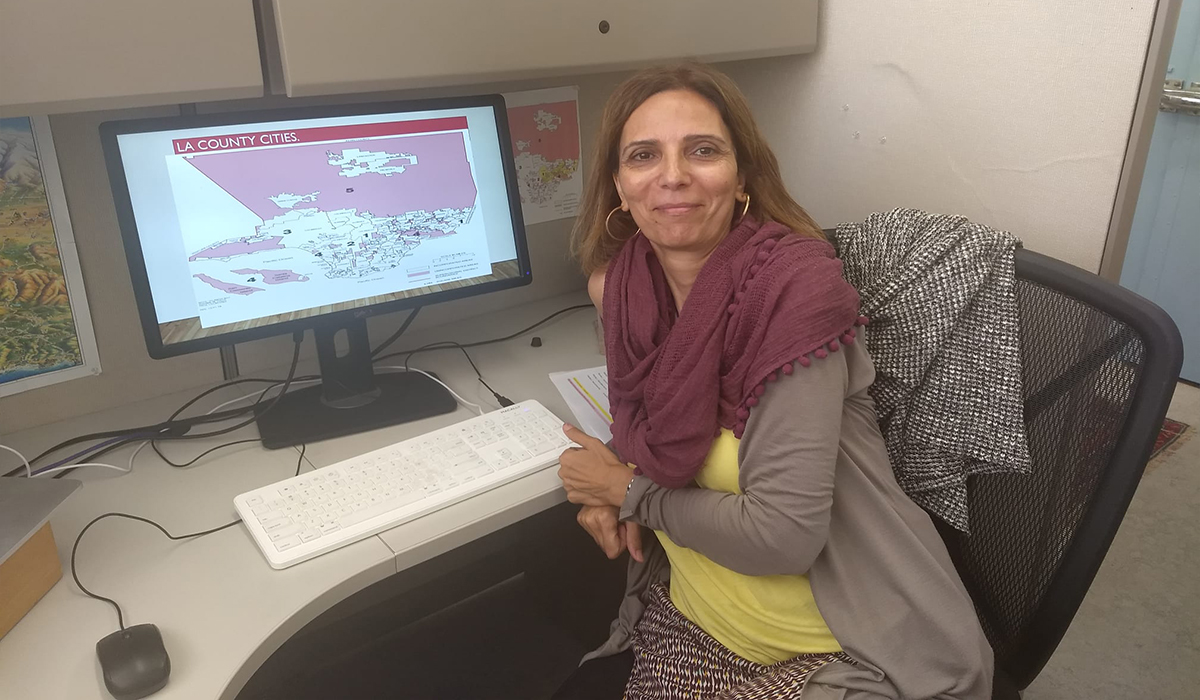
Mi interés por el estudio de las comunidades desfavorecidas de CA nace a raíz de obtener una beca de investigación en la Universidad Complutense de Madrid para realizar una estancia en la Universidad de California en Los Ángeles (UCLA). Después de tres períodos de estancia distanciados en el tiempo, 2015, 2019 y 2023, y de haber participado en diversos proyectos de cambio climático, lo que más me llamó la atención fue descubrir la existencia de múltiples comunidades con un alto nivel de pobreza y de marginalidad.
My interest in the study of disadvantaged communities in CA stems from obtaining a research scholarship at the Complutense University of Madrid to carry out a stay at the University of California in Los Angeles (UCLA). After three periods of stay separated in time, 2015, 2019 and 2023, and having participated in various climate change projects, what caught my attention the most was discovering the existence of multiple communities with a high level of poverty and marginality.
TF. ¿Qué son las ciudades inteligentes?
TF. What are smart cities?
CG. Las nuevas “ciudades inteligentes” o Smart Cities tienen ya unas características que las distinguen de otras que no han avanzado. Allanar el terreno para convertirse en una Smart City es facilitar el camino de la adaptación y la mitigación, algo sumamente importante para ralentizar el proceso de avance del calentamiento global. En el libro hablo de quiénes son y de qué se está haciendo en España, al igual que hablo de las Aldeas o Pueblos inteligentes. Esto es algo de máximo interés para el progreso de cualquier país dentro de los parámetros de sostenibilidad. Existen diversas definiciones de ciudad inteligente, con poco consenso sobre las mismas, pero hay tres características que son, a priori, indispensables para que una ciudad pueda ser “Smart”: la tecnología, la sostenibilidad ambiental y la participación ciudadana.
CG. The new “smart cities” or Smart Cities already have characteristics that distinguish them from others that have not advanced. Paving the way to become a Smart City is facilitating the path of adaptation and mitigation, something extremely important to slow down the process of advancing global warming. In the book I talk about who they are and what is being done in Spain, just as I talk about intelligent villages or towns. This is something of utmost interest for the progress of any country within the parameters of sustainability. There are various definitions of a smart city, with little consensus on them, but there are three characteristics that are, a priori, essential for a city to be “Smart”: technology, environmental sustainability and citizen participation.
TF. Parece que no tenemos más remedio que decir que a lo hecho pecho. El daño causado va a quedarse. Pero, ¿qué expectativas podemos visualizar en cuanto a formas futuras de vida en esta Tierra generosa y maltratada? ¿Podemos confiar en su capacidad de auto regeneración? ¿Podemos confiar en un cambio de actitud del género humano hacia el mejor hábitat, que se sepa, del universo, nuestro planeta?
TF. It seems that we have no choice but to say what is done. The damage caused will remain. But what expectations can we envision for future forms of life on this generous and abused Earth? Can we trust its ability to self-regenerate? Can we trust in a change in the attitude of the human race towards the best known habitat in the universe, our planet?
CG. Yo no soy pesimista ni mucho menos, pero los datos no me dejan ofrecer una visión de futuro demasiado optimista. Según los últimos informes del IPCC (Panel Intergubernamental del cambio climático), los años recientes están siendo la manifestación más dura y evidenciable de que los efectos extremos están causando impactos irreversibles a nivel físico, económico y social. En su Informe de marzo de 2023, el IPCC manifestaba que ‘limitar el calentamiento global causado por el hombre requiere cero emisiones netas de CO2’, algo que ‘debe conseguirse a través de la reducción extrema de emisiones en todos los sectores’. Al menos, sí puedo decir que debemos concentrarnos en MITIGAR, esto es, reducir emisiones y crear sumideros de carbono. Lo digo con mayúsculas porque es algo que difícilmente conseguiremos si se siguen bloqueando las negociaciones internacionales o pagando a negacionistas y derrotistas.
CG. I am not a pessimist by any means, but the data does not allow me to offer a very optimistic vision of the future. According to the latest reports from the IPCC (Intergovernmental Panel on Climate Change), recent years are being the harshest and most evident manifestation that extreme effects are causing irreversible impacts on a physical, economic and social level. In its March 2023 Report, the IPCC stated that ‘limiting human-caused global warming requires zero net CO2 emissions’, something that ‘must be achieved through extreme emissions reductions in all sectors.’ At least, I can say that we must focus on MITIGATION, that is, reducing emissions and creating carbon sinks. I say it in capital letters because it is something that we will hardly achieve if we continue to block international negotiations or pay deniers and defeatists.
TF. Siempre termino mis entrevistas con la misma pregunta. ¿Hay algo que no he preguntado que le gustaría comentar?
TF. I always end my interviews with the same question. Is there anything I haven’t asked that you would like to comment on?
CG. El libro ofrece soluciones interesantes y es una guía muy informativa sobre lo que realmente deberíamos hacer. Recomiendo su lectura para aquel que desee informarse sobre el presente y el futuro de nuestra sociedad y de nuestro planeta. Sólo decir que ralentizar y limitar el calentamiento global requiere un gran esfuerzo a nivel internacional. La vía actual más importante la constituye el Convenio de Naciones Unidas para el Cambio Climático, pero mientras no haya vía libre para tomar decisiones vinculantes fuera del alcance de las empresas e instituciones que interceptan la toma de decisiones y acuerdos, la solución estará por llegar.
CG. The book offers interesting solutions and is a very informative guide to what we should really do. I recommend reading it for anyone who wants to learn about the present and future of our society and our planet. Just to say that slowing down and limiting global warming requires a great effort at the international level. The most important current path is the United Nations Convention on Climate Change, but as long as there is no free way to make binding decisions outside the reach of companies and institutions that intercept decision-making and agreements, the solution will be yet to come.
[1]Consejo de la UE, Comunicado de prensa 21 de febrero de 2022 ,13:40
[1]Council of the EU, Press Release February 21, 2022, 1:40 p.m.
Descubre más desde LA AGENCIA MUNDIAL DE PRENSA
Suscríbete y recibe las últimas entradas en tu correo electrónico.

Interesante libro. Sobre todo me interesa leerlo para entender que puede hacer el humano de a pie… desde la posicion en la que se encuentra , bastante limitada. Que están haciendo o no están haciendo los gobiernos del mundo que pudiera afectar a este cambio. Que se permite, y como afecta lo que se permite hacer o no hacer… Y hacia donde nos dirigimos de no poner remedio a lo que estamos viviendo con el clima.
Me gustaMe gusta