
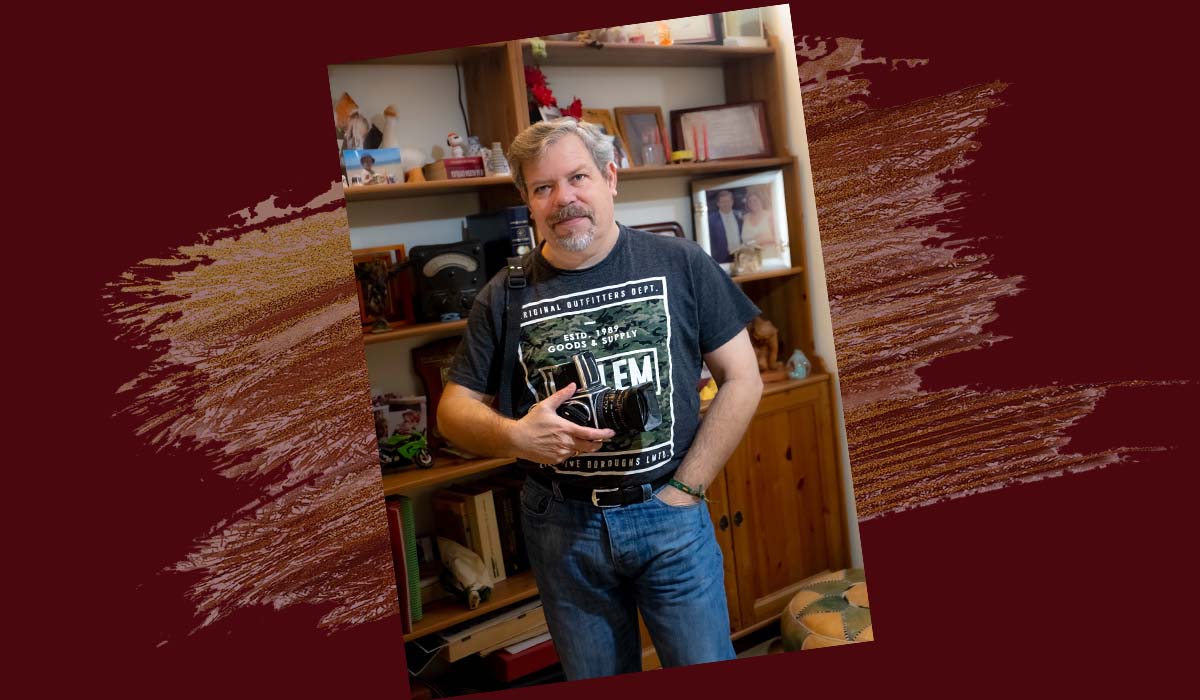
Tomás Ortiz, art photographer (II)

Tomás es tan intenso que hace necesario este intervalo de asimilación de lo que enseña. Hoy retomamos la conversación donde la dejamos ayer. La intensidad, el interés, persisten.
Tomás is so intense that he makes this interval of assimilation of what he teaches necessary. Today we resume the conversation where we left off yesterday. The intensity, the interest, persist.
T. Tú has cubierto muchos eventos… / You have covered many events…
O. He hecho el Nacional de Gimnasia, cuerpos en movimiento en un pabellón oscuro, donde hay cuatro focos de un color amarillo especial, con poca luz, poca brillantez. Es complicado de hacer, pero en mi máquina, el ojo es la máquina, tienes que subir la velocidad a uno, un nivel espectacular, tener un punto de vista, tener una diagonal, y no siempre estás en el sitio.
I have done the National Gymnastics, bodies in movement in a dark pavilion, where there are four spotlights of a special yellow color, with little light, little brightness. It’s complicated to do, but on my machine, the eye is the machine, you have to turn the speed up to one, a spectacular level, have a point of view, have a diagonal, and you’re not always in place.
T. Esto me sugiere algo. Se dice que el ojo de la cámara ve algo totalmente diferente a lo que ve el ojo humano. Tú, ¿realmente modificas a tu gusto lo que ve el ojo de la cámara? / This suggests something to me. It is said that the camera eye sees something totally different from what the human eye sees. Do you really modify what the camera’s eye sees to your liking?
O. El ojo de la cámara soy yo, mi ojo es el que ve antes, y modifico la cámara en tiempo real. No tan instantáneo como quisiera, pero preveo antes los movimientos, las formas, las texturas, las posibilidades. Lo veo antes y lo aplico a la cámara. La cámara es una simple señal, una simple brocha que hace lo que yo le digo. Hay que decirle a la cámara lo que tiene que ver. Un saludo, una caricia, una sensación, porque la cámara no ve nada.
The eye of the camera is me, my eye is the one that sees before, and I modify the camera in real time. Not as instantaneous as I would like, but I foresee the movements, the shapes, the textures, the possibilities. I see it before and apply it to the camera. The camera is a simple signal, a simple paintbrush that does what I tell it. You have to tell the camera what it has to see. A greeting, a caress, a sensation, because the camera sees nothing.

T. Entonces, por eso tu libro sobre una exposición histórica se llama Sensaciones / So, that’s why your book about a historical exhibition is called Sensations.
O. Sí, son sensaciones desde cuando era chaval en 1977 y estamos en 2023. Hay un mundo en progresión en los avances tecnológicos…
Yes, they are sensations since when I was a kid in 1977 and we are in 2023. There is a world in progress in technological advances…
T. ¿Y una progresión en el avance de tus sentimientos? / And a progression in the advancement of your feelings?
O. También. No soy la misma persona de los años noventa, hay treinta años de diferencia. Digamos que ahora soy la suma de todas las personas en las que he ido mutando, una suma de mi vida, una suma de sensaciones, sensibilidades, forma de ver las cosas, una suma de experiencias, conocimientos, personalidad, todo. Y todo eso se llama estilo. Es la diferencia que te hace mejor o peor persona.
Also. I am not the same person from the nineties, there are thirty years of difference. Let’s say that now I am the sum of all the people I have been mutating into, a sum of my life, a sum of sensations, sensitivities, way of seeing things, a sum of experiences, knowledge, personality, everything. And all that is called style. It is the difference that makes you a better or worse person.

T. Seguimos hablando de Sensaciones, la exposición / We continue talking about Sensations, the exhibition
O. Tienes el libro de la exposición. Ahí puedes seguir su historia, su tipo de proceso, la forma de hacer las cosas, tal como yo lo veo. Insisto, en que digitalmente se hace lo mismo, no cambia nada. O mejor dicho, cambia el método, el pincel. A mí, en la fotografía me gusta el grano, que dice mucho según donde se ponga. Me gusta tanto la monocromía, como los colores y la tridimensionalidad en las fotos.
You have the exhibition book. There you can follow their history, their type of process, the way of doing things, as I see it. I insist that the same thing is done digitally, nothing changes. Or rather, change the method, the brush. In photography, I like grain, which says a lot depending on where it is placed. I like monochrome as well as colors and three-dimensionality in photos.
T. Hablemos de la inteligencia artificial. ¿Qué cambia si la utilizas? / Let’s talk about artificial intelligence. What changes if you use it?
O. Viene bien para hacer ciertas cosas, para automatizar lo que siempre se ha hecho a mano. Para hacer reservas de colores, de iluminación, de texturas, solo que fuera. Pues yo hago lo mismo con el fotoshop en cualquier programa y momento. Me da igual, es un pincel para poder quitar algo que me estorba, una arruga, o dejar la arruga. Yo acostumbro hacer edición para añadir o quitar, modificar, recortar o encuadrar la imagen según sus valores. No ha cambiado nada.
It is good for doing certain things, for automating what has always been done by hand. To make reservations of colors, lighting, textures, just outside. Well, I do the same with Photoshop in any program and at any time. I don’t care, it’s a brush to be able to remove something that’s in my way, a wrinkle, or leave the wrinkle. I usually do editing to add or remove, modify, crop or frame the image according to its values. Nothing has changed.

T. ¿Cómo consigues la tridimensionalidad en la fotografía?/ How do you achieve three-dimensionality in photography?
O. Con profundidad y capas de color. Por poner un ejemplo extremo, se puede conseguir la tridimensionalidad mediante el desplazamiento de límites, con el enfoque, con la profundidad de campo, con luz controlada y mezclando procedimientos. Como lo que percibes en un cuadro fuera de sus límites. Luego está la impresión. Yo imprimo en Alemania, a través de una empresa por la red, que dobla la calidad a buen precio en pedidos grandes, en fotos para exposición o galería, en blanco y negro o color. En España hay alguna empresa que hace este tipo de trabajo a precios prohibitivos.
With depth and layers of color. To give an extreme example, three-dimensionality can be achieved by shifting limits, with focus, with depth of field, with controlled light and by mixing procedures. Like what you perceive in a painting outside its limits. Then there’s the printing. I print in Germany, through an online company, that doubles the quality at a good price on large orders, on photos for exhibition or gallery, in black and white or color. In Spain there is a company that does this type of work at prohibitive prices.
T. Un tema que quiero traer aquí, las redes sociales que prácticamente sustituyen a los no tan antiguos marchantes. Hoy en día, por ejemplo, Picasso no hubiera necesitado un Khanwailer / A topic that I want to bring up here, social networks that practically replace the not so old dealers. Today, for example, Picasso would not have needed a Khanwailer
O. Sí y no. En realidad o te haces un experto en redes o necesitas a alguien, como el antiguo marchante, que sea el experto para colocarte en los circuitos de redes y contactos que se puedan interesar por tu trabajo. Normalmente el artista no tiene tiempo para gestionarse su marketing. Pero ser visible en redes es todo un trabajo de mercadotecnia. Tú puedes publicar la mejor foto y nadie la ve. O te manejas en ese mundo o necesitas un marchante especialista en redes.
T. No sé si la fotografía está en el mercado de los coleccionistas de arte / I don’t know if photography is in the art collectors’ market.
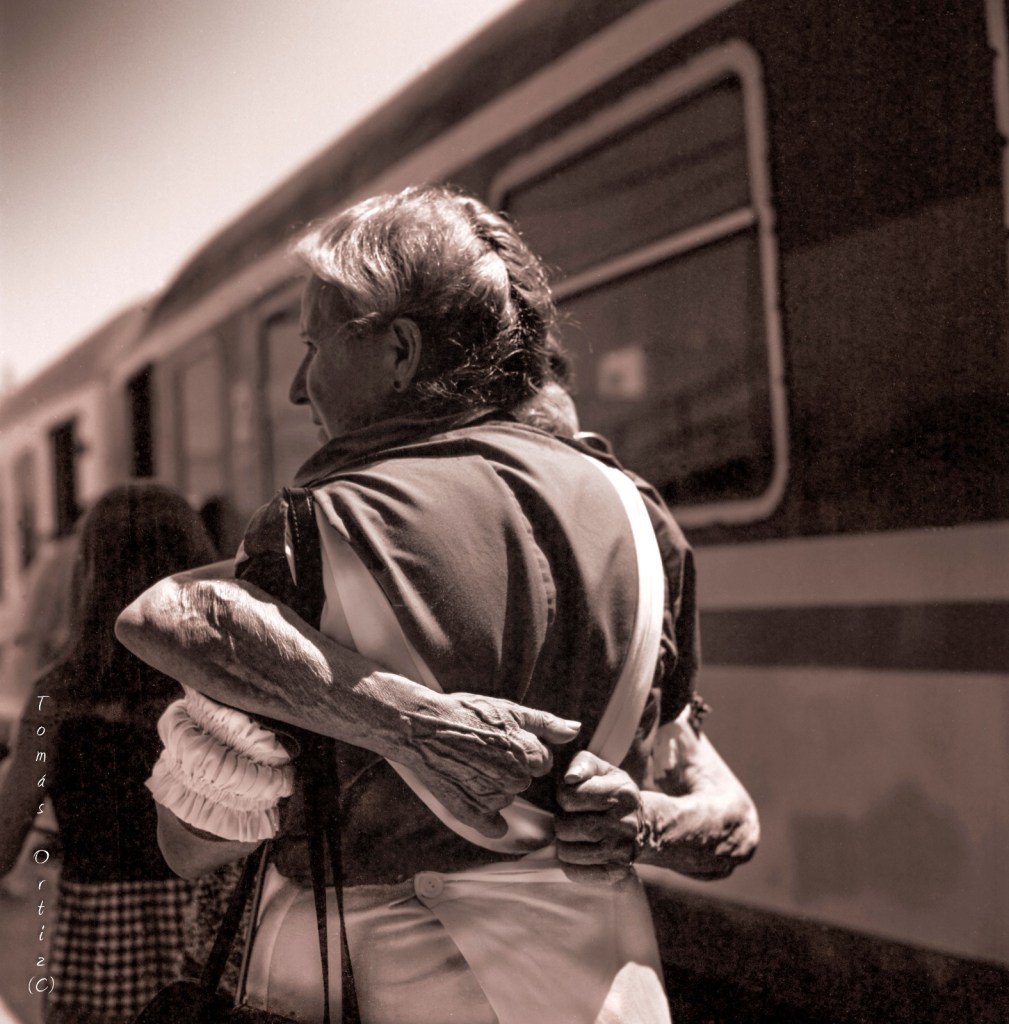
O. Si está, hasta ahora no he tenido la suerte o la oportunidad de entrar en él. De momento me muevo en el circuito de concursos fotográficos. Gracias a ellos he colocado alguna fotografía en algún museo. El Museo de la Fundación de Ferrocarriles Españoles, en su Concurso Caminos de Hierro, tiene algunas obras mías. El Concurso de la Fundación del Ferrocarril tuvo seleccionadas fotos de varios años desde el primer periodo del 1992 hasta el 1998. Si se quedan con la obra, son los que la mueven por todo el mundo. Pero no he tenido la suerte de tener marchante, o tener alguien que me ayude.
If it is, so far I haven’t had the luck or opportunity to get into it. At the moment I am moving in the photography contest circuit. Thanks to them I have placed a photograph in a museum. The Museum of the Spanish Railways Foundation, in its Iron Roads Competition, has some of my works. The Railway Foundation Contest had selected photos from several years from the first period of 1992 to 1998. If they keep the work, they are the ones who move it around the world. But I haven’t been lucky enough to have a dealer, or have someone to help me.
T. Por eso, una de las cosas que te apuntaba aquí, Tomás, es la agencia de fotografía artística, social, etc., como medio extraordinario de difusión. Tipo Photo España con sus exposiciones anuales, la agencia Magnum / For this reason, one of the things that I pointed out to you here, Tomás, is the artistic, social, etc. photography agency, as an extraordinary means of dissemination. Tipo Photo Spain with its annual exhibitions, the Magnum agency

O. Mira, yo trabajo con lo que voy encontrando por el camino. Voy haciendo lo que me gusta, lo que me hace disfrutar.
T. Tomás, hay fotos que dan la vuelta al mundo. ¿Te acuerdas de aquella foto de un niño caído de una patera, muerto en una playa mediterránea? ¿La pasta que reportó al autor? / Tomás, there are photos that go around the world. Do you remember that photo of a child fallen from a boat, dead on a Mediterranean beach? The money he reported to the author?
O. Ese tipo de foto te la encuentras, no la buscas. Es cuestión de estar ahí en ese momento y ese lugar. Y lo que ese niño representa, un mar Mediterráneo convertido en tumba de cientos de miles de personas. Pero es algo efímero, no crea conciencia social permanente. Ese es el problema, que esa foto al final no es más que un objeto de mercado. Yo no vendo foto. Yo intento crear documentos únicos, irreemplazables, ver cosas con otra mirada, otra forma. Todo lo que trabajo son documentos de situaciones de vida.
You find that type of photo, you don’t look for it. It’s a matter of being there at that time and that place. And what that child represents, a Mediterranean Sea converted into a tomb for hundreds of thousands of people. But it is something ephemeral, it does not create permanent social awareness. That is the problem, that that photo in the end is nothing more than a market object. I don’t sell photos. I try to create unique, irreplaceable documents, see things with another look, another way. All I work on are documents of life situations.
T. Se necesita una sensibilidad especial para hacer ese tipo de documentos /
It takes a special sensitivity to make these types of documents.
O. Yo, cuando voy a hacer un reportaje, lo vivo, lo río o lo sufro y trato de transmitir ese momento, ese minuto, con las personas y cosas que pasan durante ese momento. Emocionalmente siempre te involucras mucho. Dicho de otro modo, reflejas el impulso de la llamada del documento.
When I go to do a report, I live it, laugh or suffer it and I try to convey that moment, that minute, with the people and things that happen during that moment. Emotionally you always get very involved. In other words, you reflect the impulse of the document’s call.
T. Tema presencia de la mujer fotógrafa en la actualidad. Hace más o menos un siglo algunas fotógrafas y escritoras notables firmaban su trabajo con el nombre de sus parejas. Muestras famosas, la de Gerda Taro pareja de Man Ray o el de María Lejárraga pareja de Gregorio Martínez Sierra / The presence of women photographers today. About a century ago, some notable female photographers and writers signed their work with the names of their partners. Famous samples, that of Gerda Taro, partner of Man Ray or that of María Lejárraga, partner of Gregorio Martínez Sierra.
O. Por supuesto hoy eso sería imposible, sería un delito de apropiación de identidad ajena. Sigue habiendo menos fotógrafas que fotógrafos, pero las hay tan famosas como la desaparecida en 2022 Ouka Leele, Cristina García Rodero, Lorena Ros, Charo Guijarro, Eva Díez, Estela de Castro, la hispano palestina Maysun, Tessa Dóniga, María Novo, Sara Zorraquino, Layna Fernández, María Moldes, un montón de mujeres fotógrafas que están dando una visión muy nueva y valiosa de la realidad social, del arte, del paisaje, del retrato o de la moda, desde su mirada femenina. Son un aporte necesario que está llenando un vacío. Yo personalmente prefiero hablar de personas muy válidas, hombres y mujeres, personas con experiencias de vida diferentes que plasman en su obra.
Of course today that would be impossible, it would be a crime of appropriation of another’s identity. There are still fewer female photographers than male photographers, but there are some as famous as the one who disappeared in 2022 Ouka Leele, Cristina García Rodero, Lorena Ros, Charo Guijarro, Eva Díez, Estela de Castro, the Hispanic Palestinian Maysun, Tessa Dóniga, María Novo, Sara Zorraquino , Layna Fernández, María Moldes, a lot of women photographers who are giving a very new and valuable vision of social reality, art, landscape, portraiture or fashion, from their feminine perspective. They are a necessary contribution that is filling a void. I personally prefer to talk about very valid people, men and women, people with different life experiences that they capture in their work.
T. La fotografía de los móviles / Mobile photography
O. Los móviles han pasado a ser las cámaras compactas de toda la vida. Pero claro, hay una diferencia de calidad, de resolución, de pensamiento, de preparación, de creatividad, de mejor ojo para ver las cosas, por muy buen móvil que sea, aunque sea el mejor del mundo.
Mobile phones have become the traditional compact cameras. But of course, there is a difference in quality, resolution, thinking, preparation, creativity, a better eye for seeing things, no matter how good a mobile phone it is, even if it is the best in the world.
T. Para terminar, Tomás. ¿Quién eres? / Finally, Thomas. Who are you?
O. Una persona normal y corriente del montón, que se llama Tomás y está super bien casado, en todos los aspectos, hasta en el de felicidad.
A normal, ordinary person named Tomás and he is very well married, in all aspects, even in terms of happiness.
T. Ser Tomás Ortiz o estar casado es una circunstancia. Se trata de llegar al fondo, a conocerse a uno mismo interiormente. Se trata de responder esa pregunta con algo que no sea tú y tu circunstancia externa / Being Tomás Ortiz or being married is a circumstance. It’s about getting to the bottom, knowing yourself internally. It’s about answering that question with something other than you and your external circumstance.
O. Es un Tomás Ortiz con muchas posibilidades, siempre tengo más preguntas que certezas y eso me ayuda a seguir aprendiendo. No hay muchos amigos, porque un amigo no es necesariamente un amigo, más bien un conocido. O que todo el mundo quiere algo de ti. Los amigos son los que no piden, ni quieren, ni buscan. Solo te quieren a ti por cómo eres. De esos se pueden contar con una mano y ya sería mucho.
He is a Tomás Ortiz with many possibilities, I always have more questions than certainties and that helps me continue learning. There are not many friends, because a friend is not necessarily a friend, rather an acquaintance. Or that everyone wants something from you. Friends are those who do not ask, nor want, nor seek. They only love you for who you are. You can count those on one hand and it would be a lot.
T. Tú, ¿en qué categoría de amigo te sitúas?/ You, in what category of friend do you place yourself?
O. En la del paquete de sentimientos que tengo a nivel básico. No en la de la gente que no se quiere. Para querer hay que quererse. Esto sorprendería a cantidad de gente que no se quiere, pero que tampoco se valora. Si no te valoras, no te puedes querer. Si te valoras por todas las cosas que has hecho con tu esfuerzo, no está mal. Al mismo tiempo que hacía fotos, al mismo tiempo que hacía de reportero, al mismo tiempo que hacía cosas con mi madre, al mismo tiempo que hacía cualquier cosa, siempre miré las posibilidades positivas, con espíritu positivo. Mi mujer dice que soy un poco negativo, pero yo trato de ver todas las posibilidades, las buenas y las malas, intento compensar la mala con la buena e ir en positivo en situaciones negativas. Intento pensar cómo resolver la ecuación. Seguimos siendo un cúmulo de experiencias.
In the package of feelings that I have at a basic level. Not that of people who don’t love each other. To love you have to love yourself. This would surprise many people who do not love each other, but who do not value themselves either. If you don’t value yourself, you can’t love yourself. If you value yourself for all the things you have done with your efforts, it is not bad. At the same time that I was taking photos, at the same time that I was being a reporter, at the same time that I was doing things with my mother, at the same time that I was doing anything, I always looked at positive possibilities, with a positive spirit. My wife says I’m a little negative, but I try to see all the possibilities, the good and the bad, I try to compensate for the bad with the good and be positive in negative situations. I’m trying to think how to solve the equation. We continue to be a wealth of experiences.
T. Ahora sí lo has clavado, Tomás. Un millón de gracias / Now you’ve nailed it, Tomás. A million thanks
Descubre más desde LA AGENCIA MUNDIAL DE PRENSA
Suscríbete y recibe las últimas entradas en tu correo electrónico.
