Doña Rosita la soltera y su tiempo

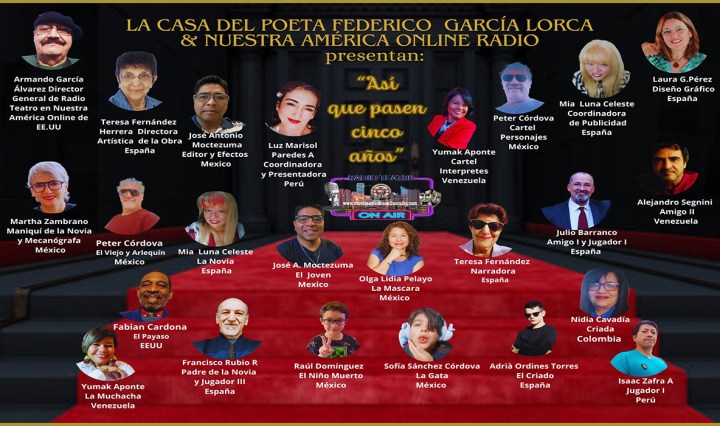
Radio Nuestra América on line prepara para este mes de marzo el estreno de una de las obras capitales de Federico García Lorca, Doña Rosita la soltera o el lenguaje de las flores. Publicada y estrenada en 1935, la acción de Doña Rosita ocupa el primer cuarto del siglo XX, desde 1900 a 1925, en la ciudad de Granada, cuya sociedad conocía el poeta y dramaturgo desde su infancia. Continúa leyendo Doña Rosita la soltera y su tiempo

Adiós para siempre 2022

A few hours after having definitively said goodbye to a year that was very intense in every way, let’s put aside personal, national and global ones for the moment. And let’s pay a year-end homage to Flamenco, which occupied us so much, and filled us with both satisfaction and bitterness. Like life itself. Continúa leyendo Adiós para siempre 2022

Armando García: «Un pueblo con Cultura siempre será un pueblo Fuerte y Libre»

We are talking with Armando García Álvarez, a Mexican and North American who has done so many things in his life that one has no choice but to wonder, but what has Don Armando not done in the world of communication? Continúa leyendo Armando García: «Un pueblo con Cultura siempre será un pueblo Fuerte y Libre»

LITERAL PLANET: LAS ESPAÑAS DE GARCÍA LORCA

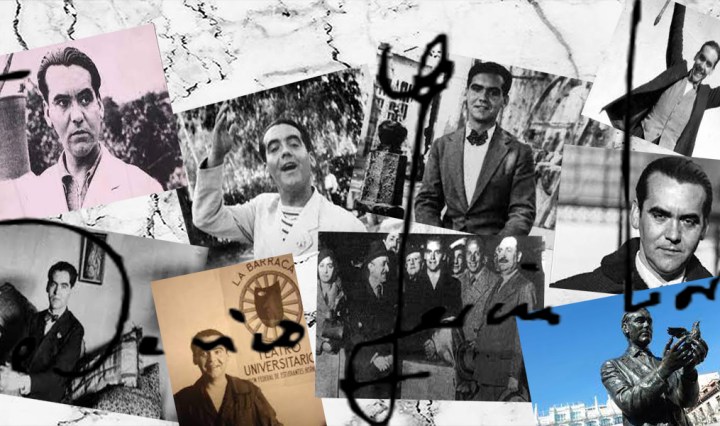
Federico García Lorca was born on June 5, 1898 in Fuente Vaqueros, (Granada). The year of what was popularly called in Spain, the year of the loss of the Pearl of the Antilles, (Cuba) in addition to Puerto Rico, the Philippines and Guam.
The end of the empire that did not mean the independence of these territories, but the beginning of the North American empire, which now, one hundred twenty-four years later, is in decline, as is the destiny of all the empires that have existed in the world, whose paradigm It is the Roman Empire, which was undoubtedly the most important, which began and ended in the city of Rome, with an interval of eleven centuries. Continúa leyendo LITERAL PLANET: LAS ESPAÑAS DE GARCÍA LORCA