

Mexico: Iván Uriel, among migrant literature

Periodista, Escritora, Editorialista. Directora Norteamérica de LaAmpd
PRENSA ESPECIALIZADA
Atravesado por la nostalgia, quizá desde la infancia, el escritor, politólogo y documentalista mexicano Iván Uriel Atanacio Medellín, continúa con el mar de presentaciones de su gira literaria, que ha alcanzado más de 1,200 participaciones en los cinco continentes, enlazándose a comunidades migrantes, universidades y embajadas, donde los papeles protagónicos en sus novelas están en el sentido social, la migración y la mujer.
Haunted by nostalgia, perhaps since childhood, Mexican writer, political scientist, and documentary filmmaker Iván Uriel Atanacio Medellín continues his whirlwind literary tour, which has already reached over 1,200 appearances across five continents. He connects with migrant communities, universities, and embassies, where social issues, migration, and women take center stage in his novels.
Recordemos que el propio Iván Uriel ha encarnado la migración desde su niñez. El sello personal de este escritor es hacer de cada evento un espacio de reflexión, inclinado siempre hacia lo social, construye proyectos en torno a esta causa que lo ha movido desde que tiene memoria, esmerándose en presentaciones donde rompe esquemas.
It’s worth noting that Iván Uriel himself has embodied migration since childhood. His personal hallmark is transforming each event into a space for reflection, always with a social focus. He develops projects around this cause that has driven him for as long as he can remember, striving to create groundbreaking presentations.
Iván Uriel es politólogo egresado de la Universidad Popular Autónoma del Estado de Puebla y Maestro en Letras Españolas e Hispanoamericanas por la Universidad de Barcelona, España.
Iván Uriel is a political scientist, a graduate of the Popular Autonomous University of the State of Puebla, and holds a Master’s degree in Spanish and Latin American Literature from the University of Barcelona, Spain.
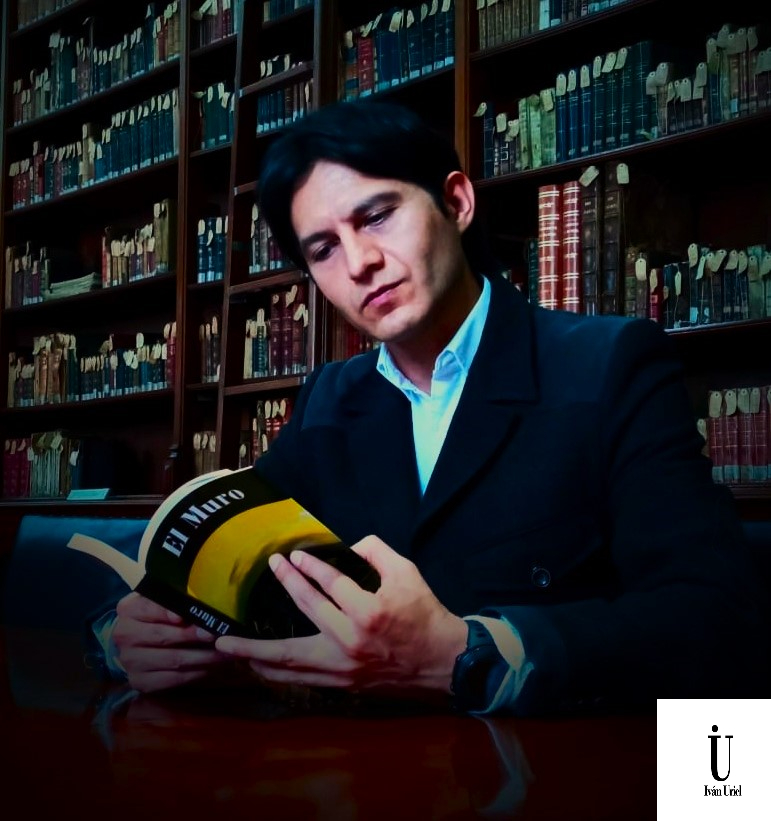
Es autor de “Días de Paso”, la novela más reciente, a la que le antecede la trilogía “El Surco”, “El Ítamo”, “El Muro”. Es activista y realizador del documental “Día de descanso”, que le mereció el reconocimiento a “Mejor documental internacional” en el Festival Internacional de Derechos Humanos en Bogotá, Colombia, con este mismo trabajo fue nominado al Premio Guillermo González Camarena por valor testimonial. Responsable del documental “De sueño y lucha”, donde las mujeres son protagonistas abordando el tema sobre derechos laborales en el mundo. Es responsable del documental “La voz humana”. Estuvo al frente del documental “Tu ciudad, tus derechos” para la Comisión de Derechos Humanos de la Ciudad de México; además, “Hitos: Realidad, ideales y utopías”, documental histórico para la Universidad Iberoamericana. Ganador al mérito “Valor iconográfico” de los Premios Pantalla de Cristal.
He is the author of «Días de Paso» (Days of Passage), his most recent novel, which follows the trilogy «El Surco» (The Furrow), «El Ítamo,» and «El Muro» (The Wall). He is an activist and the director of the documentary «Día de descanso» (Day of Rest), which earned him the award for «Best International Documentary» at the International Human Rights Film Festival in Bogotá, Colombia. This same work was nominated for the Guillermo González Camarena Award for its testimonial value. He is also responsible for the documentary «De sueño y lucha» (Of Dream and Struggle), which features women as protagonists in addressing the issue of labor rights worldwide. He directed the documentary «La voz humana» (The Human Voice). He helmed the documentary «Tu ciudad, tus derechos» (Your City, Your Rights) for the Mexico City Human Rights Commission, as well as «Hitos: Realidad, ideales y utopías» (Milestones: Reality, Ideals, and Utopias), a historical documentary for the Ibero-American University. He won the «Iconographic Value» award at the Pantalla de Cristal Awards.
Siempre en movimiento para compartir sus obras en distintos escenarios, reconocido por su narrativa, el escritor de origen veracruzano Iván Uriel Atanacio Medellín, Premio Aportación a las Letras Mexicanas, en esta entrevista nos abre su entorno sin límites para hacernos partícipes de microhistorias.
Always on the move, sharing his work in different venues, and renowned for his narrative, the Veracruz-born writer Iván Uriel Atanacio Medellín, recipient of the Mexican Literature Award, opens up his boundless world to us in this interview, inviting us to participate in his micro-histories.
“La celebración de estas presentaciones, para mí implican una serie de momentos y recuerdos que se agolpan con emoción desde aquel viaje inesperado a la sierra del Estado de Puebla, donde todo comenzó en 2011”.
“For me, these presentations evoke a series of moments and memories that come flooding back with emotion, starting from that unexpected trip to the mountains of Puebla, where it all began in 2011.”
“La primera aparición de la novela “El Surco”, estaba programada en el Instituto Nacional de Migración en la Ciudad de México, me sentía nervioso, estaba todo dispuesto cuando mi hermano (parte del equipo de trabajo) me comentó que, en la sierra de Puebla, una universidad rural tendría un curso para estudiantes migrantes de distintas regiones de Centroamérica y del sur de México, un mes antes de la presentación oficial”.
“The first appearance of the novel “El Surco” was scheduled at the National Institute of Migration in Mexico City. I was nervous, everything was ready, when my brother (part of the team) told me that a rural university in the mountains of Puebla would be holding a course for migrant students from different regions of Central America and southern Mexico a month before the official launch.”
“Me adelanté a la editorial, significó un reto estar ante una población de estudiantes migrantes, fue emotivo, recuerdo las reacciones de los jóvenes. El mismo día compartí escenario con la directora y productora de cine que admiro Rebecca Cammisa, quien realizó el documental que fue nominado al Oscar, denominado “El camino a casa” Wich Way Home, y que se presentó junto a la novela “El Surco”, fue un honor, jamás hubiera imaginado compartir con ella y los personajes que me acompañaron. El primero en comentar la novela fue el maestro Andrés Palma Urata, director de cine italo-chileno, donde además de la palabra, compartimos pan y atole”.
“I got ahead of the publisher. It was a challenge to be in front of a group of migrant students, but it was moving. I remember the young people’s reactions. That same day, I shared the stage with Rebecca Cammisa, the film director and producer I admire, who made the Oscar-nominated documentary “Which Way Home,” which was presented alongside the novel “El Surco.” It was an honor; I never imagined I would share the stage with her and the people who accompanied me. The first person to discuss the novel was Andrés Palma Urata, the Italian-Chilean film director, with whom, in addition to talking, we shared bread and atole.”
“La segunda presentación de la novela “El Surco” fue en la Comisión de Derechos Humanos de la Ciudad de México con la maestra Elena Poniatowska, Premio Cervantes, un sueño. A partir de ese momento sentí que mi caminar con la literatura sería también de forma migrante”.
“The second presentation of my novel, “El Surco” (The Furrow), was at the Human Rights Commission of Mexico City with Elena Poniatowska, winner of the Cervantes Prize—a dream come true. From that moment on, I felt that my journey with literature would also be a journey of migration.”
MI RELACIÓN CON EL MAESTRO SERGIO PITOL
MY RELATIONSHIP WITH SERGIO PITOL
“Escribir la primera novela me llevó siete años con el maestro Sergio Pitol, acompañándome. Veía su trayectoria que había viajado por el mundo, o la de mi padre con tanta migración, la de mi familia, y la mía, desde mi desarrollo social, porque viajaba a todos los municipios del país como politólogo, me di cuenta que viajar lleva la palabra y nunca me imaginé que a tantos países. El sentido de mi escritura surge de la experiencia migrante”.
“Writing my first novel took me seven years, with Sergio Pitol as my mentor. I saw his trajectory, having traveled the world, or my father’s, with so much migration, my family’s, and my own, from my social development, because I traveled to every municipality in the country as a political scientist. I realized that travel carries with it words, and I never imagined it would be to so many countries. The meaning of my writing arises from the migrant experience.”
“Pasé muchos años en la técnica narrativa para que las novelas pudieran ser estudiadas como literatura y en programas en el extranjero, eso me llevó a las primeras presentaciones fuera de México. Ocurrieron en distintas universidades a las que me invitaron, me di cuenta que eran poderosas para estos libros”.
“I spent many years studying narrative techniques so that novels could be studied as literature and in programs abroad; this led to my first presentations outside of Mexico. They took place at various universities that invited me, and I realized that they were powerful for these books.”
LA MIGRACIÓN DE MIS PADRES A UN VIAJE SIN ESPACIO-TIEMPO
MY PARENTS’ MIGRATION ON A JOURNEY WITHOUT SPACE AND TIME
“Todo me llevó a dedicar desde el primer momento las novelas a mi madre y a mi padre, que se han ido a un viaje sin espacio-tiempo, mueren en un accidente en el que parten juntos, me di cuenta que esa es otra migración y que podía llevar un mensaje de esperanza, aliento. De niño la literatura me ayudó a comprender la migración de papá y mamá, sanar el dolor y la depresión. La literatura es un bálsamo que viaja a mis conferencias y presentaciones con un mensaje de empatía hacia la migración que son mis primeras novelas (la trilogía), después hacia los derechos humanos y en mis trabajos posteriores”.
“Everything led me from the very beginning to dedicate my novels to my mother and father, who have gone on a journey beyond space and time, dying in an accident they were traveling in together. I realized that this is another kind of migration, and that I could carry a message of hope and encouragement. As a child, literature helped me understand my parents’ migration, to heal the pain and depression. Literature is a balm that travels to my lectures and presentations with a message of empathy toward migration, which is present in my first novels (the trilogy), later in human rights, and in my subsequent work.”
Regresa el tiempo y exclama:
He goes back in time and exclaims:
“Comencé como escritor a los nueve años. De niño los cuentos viajaban a través de la adaptación que hacían en Radio Universidad Veracruzana”.
“I started writing at nine years old. As a child, stories traveled through the adaptations they did on Radio Universidad Veracruzana.”
Con la sonrisa afable que le caracteriza, añade: “La palabra migra, trasciende, viaja, la palabra no tiene sentido si no hay un sentimiento que la abrigue, y a través del lenguaje hacer del arte un puente, un canal de comunicación, abrazándonos a la distancia, desde pensarnos y sentirnos”.
With her characteristic affable smile, she adds: “Words migrate, transcend, travel; words have no meaning without a feeling to nurture them. And through language, we make art a bridge, a channel of communication, embracing each other across the distance, through thinking and feeling.”
EL SURCO, ADAPTADA A RADIONOVELA
THE FURROW, ADAPTED AS A RADIO DRAMA
“Cuando Radio Ultra México estrenó en 2018 la novela “El Surco”, es porque surgió de la presentación de la novela en ese espacio que transmite distintas radionovelas importantes. Mi hermana que es guionista hizo la adaptación de 80 capítulos. El día que se lanzó nos conectaron con varias ciudades de Estados Unidos, para hablar con los radioescuchas, que nos sintonizaban desde sus trabajos, fábricas, restaurantes, desde sus casas. Guardo el momento en que un taxista de la audiencia nos visitó en cabina para comentar que la radionovela era una forma de sentirse cerca de su familia”.
“When Radio Ultra Mexico premiered the radio drama “El Surco” in 2018, it was because it originated from the presentation of the novel on their program, which broadcasts various important radio dramas. My sister, who is a screenwriter, adapted it into 80 episodes. On launch day, they connected us with listeners in several cities across the United States, who were tuning in from their workplaces, factories, restaurants, and homes. I remember the moment when a taxi driver from the audience visited us in the studio to say that the radio drama was a way for him to feel close to his family.”
“Lo que atesoro de la audiencia son sus preguntas, sus comentarios, valoro el inmenso regalo del tiempo, encontrarnos a través de la literatura”.
“What I treasure most about the audience are their questions, their comments; I value the immense gift of time, of connecting through literature.”
“Me invitaron a Chihuahua para una actividad en el Lago Arareco, por parte del Instituto de Asuntos Indígenas y en el Instituto Nacional de Lenguas Indígenas para presentar en un congreso la novela “El Surco” en el Día Internacional de la Lengua Materna (21 de febrero), el evento tenía primero un recorrido en el tren El Chepe, donde hice una presentación espontánea con los colegas, muchos de ellos activistas. Llegué al evento donde había más de dos mil asistentes, creo que ha sido la presentación con más público que he tenido de manera presencial, más allá de congresos o ferias de libros, y al terminar, se acercaron investigadores de la Universidad Veracruzana, me invitaron a Xalapa, fue un momento impactante, porque sería la primera vez en presentar la novela en mi ciudad natal, en ese tiempo tenía tres años de gira y gracias a esa relación con la UV es que inicié otra travesía de actividades”.
“I was invited to Chihuahua for an event at Lake Arareco, organized by the Institute of Indigenous Affairs and the National Institute of Indigenous Languages, to present my novel “El Surco” at a conference on International Mother Language Day (February 21). The event began with a ride on the El Chepe train, where I gave a spontaneous presentation to colleagues, many of whom were activists. I arrived at the event, which had over two thousand attendees. I think it was the largest in-person presentation I’ve ever had, excluding conferences and book fairs. Afterward, researchers from the University of Veracruz approached me and invited me to Xalapa. It was a powerful moment, because it would be the first time I presented the novel in my hometown. At that time, I had been touring for three years, and thanks to that connection with the University of Veracruz, I embarked on another journey of activities.”
TALLERES PARA NIÑOS EN LENGUAS ORIGINARIAS
WORKSHOPS FOR CHILDREN IN INDIGENOUS LANGUAGES
“Para entonces ya estaba en el Hispanic Writers de Estados Unidos, haciendo contenido para niños bilingües que escriben en español e inglés. En conversaciones con la Universidad Veracruzana, decidimos hacerlo con el español y lenguas originarias, diseñamos el taller “Sueños de la palabra”, que se tuviera esta conexión con los niños de diversas regiones del estado de Veracruz, iniciando una cruzada desde la Sierra de Zongolica, en el municipio de Tequila, y en el albergue de Magdalena, realizando talleres de creación literaria bilingües. A partir de aquí tuve la oportunidad de realizar presentaciones en una comunidad, y luego en una ciudad, llevando la novela “El Ítamo”. Al compartir con estudiantes me di cuenta que podíamos adaptar “El Ítamo”, y llevar el mensaje a los niños, sobre ¿cuáles son sus sueños?, ¿cómo han cambiado los sueños?, ¿hacia dónde se dirigen?”.
“By then I was already working with Hispanic Writers in the United States, creating content for bilingual children who write in Spanish and English. In discussions with the University of Veracruz, we decided to do it in Spanish and indigenous languages. We designed the workshop “Dreams of the Word,” which aimed to connect with children from various regions of the state of Veracruz. We began a campaign in the Sierra de Zongolica, in the municipality of Tequila, and at the Magdalena shelter, conducting bilingual creative writing workshops. From there, I had the opportunity to give presentations in a community, and then in a city, sharing the novel “El Ítamo.” Sharing with students, I realized we could adapt “El Ítamo” and convey the message to children about their dreams, how their dreams have changed, and where they are headed.”
“Una presentación de “El Ítamo” que nunca olvidaré la hicimos en una lancha hacia Coatzacoalcos (sur de Veracruz), aquella gira la planeamos con la Universidad Veracruzana. Estas presentaciones a lo largo de Veracruz son momentos icónicos”.
“A performance of “El Ítamo” that I will never forget was on a boat to Coatzacoalcos (southern Veracruz). We planned that tour with the Veracruzana University. These performances throughout Veracruz are iconic moments.”
“La visita a las Universidades Interculturales representa una parte importante del andar porque se genera conocimiento en nuestras lenguas originarias y desde la cosmovisión de los pueblos originarios, eso me entusiasma”.
“Visiting the Intercultural Universities is an important part of my journey because it generates knowledge in our native languages and from the worldview of Indigenous peoples, and that excites me.”
RECORRIENDO EL PAÍS
TRAVELING THE COUNTRY
“Tuve la oportunidad de hacer una presentación breve de “El Surco” en laAsociación Mensajera de Paz, Puebla fue la sede que reunió a 75 países y me solicitaron como invitado mexicano participara dando el mensaje de clausura en 2012, había pasado un tiempo del inicio de mi gira y lo mantendré presente siempre”.
“I had the opportunity to give a brief presentation of “El Surco” at the Mensajera de Paz Association in Puebla, which hosted a gathering of 75 countries. As the Mexican guest, I was invited to deliver the closing message in 2012. Some time had passed since the start of my tour, and I will always remember it.”
“Estuve en Tuxtla Gutiérrez y en San Cristóbal de las Casas el mismo día, me di cuenta que podía hacer hasta tres presentaciones en un solo día en coordinación de la gente que me invita. Trabajo siempre en lograr fondos de gente que crea en lo que hago, así ha sido el peregrinar”.
“I was in Tuxtla Gutiérrez and San Cristóbal de las Casas on the same day. I realized I could do up to three presentations in a single day, thanks to the coordination of the people who invite me. I always work to raise funds from people who believe in what I do; that’s how my journey has been.”
“Cada presentación tiene instantes como la primera vez que llegué a Orizaba, la tierra de mi madre, donde cayó una tromba que no podía bajar del vehículo, pensé que no habría audiencia y la sorpresa fue que en el Museo de Arte, ya se encontraba el público”.
“Each presentation has moments like the first time I arrived in Orizaba, my mother’s hometown, when a downpour hit and I couldn’t get out of the car. I thought there wouldn’t be an audience, but to my surprise, the public was already gathered at the Art Museum.”
MI ACERCAMIENTO CON HIJOS DE DREAMERS EN EU
MY APPROACH TO CHILDREN OF DREAMERS IN THE US
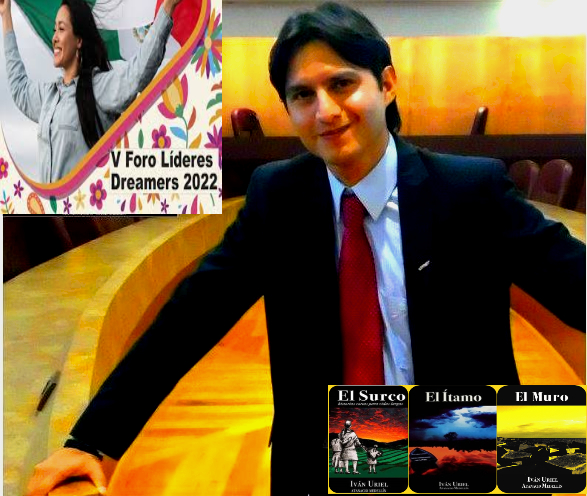
“La primera vez fuera de México ocurrió en la Semana de Escritores Hispanos en Estados Unidos. La novela “El Muro” fue presentada en 2022, en el V Foro Líderes Dreamers, en Raleigh, Carolina del Norte, Estados Unidos, donde cada año se hace en una ciudad diferente, comparten sus proyectos y reflexiones entre la comunidad de migrantes. Son generaciones que vienen de un sueño, hijos de dreamers”.
“The first time outside of Mexico was at Hispanic Writers Week in the United States. The novel “The Wall” was presented in 2022 at the 5th Dreamers Leaders Forum in Raleigh, North Carolina, USA, where each year it takes place in a different city, and where they share their projects and reflections with the migrant community. They are generations who come from a dream, children of dreamers.”
MI PRESENCIA EN CHILE
MY PRESENCE IN CHILE
“Estuve en la Casa del Escritor en Chile, una presentación cumbre, quien me dio el tour fue una de las activistas importantes en aquel país, Yolanda Pizarro, me permitió que la novela fuera comentada por la gran poeta chilena Carmen Berenguer (+), considerada una de las más importantes de nuestra lengua y gracias a ella formo parte de Sociedad de Escritores Chilenos, es también quien me llevó a la Casa del Escritor, a la sala Ramón López Velarde, una experiencia increíble, donde la migración es distinta, pero el lenguaje es el mismo y la comprensión de lo que sucede alrededor, de lo que vivimos cuando migramos, quienes se quedan, y quienes se van, le dio sentido a seguir migrando”.
“I was at the House of the Writer in Chile, a landmark presentation. The person who gave me the tour was one of the important activists in that country, Yolanda Pizarro. She arranged for the novel to be discussed by the great Chilean poet Carmen Berenguer (+), considered one of the most important in our language, and thanks to her I am a member of the Chilean Writers Society. She is also the one who took me to the House of the Writer, to the Ramón López Velarde room. It was an incredible experience, where migration is different, but the language is the same, and the understanding of what happens around us, of what we experience when we migrate, those who stay, and those who leave, gave meaning to continue migrating.”
“En 2013 estuve en el Primer Congreso de Literatura y Cine, que se organizó en la Universidad de Los Andes, en Chile. La representación mexicana es para mí una gran responsabilidad, no solo por la obra”.
“In 2013 I attended the First Congress of Literature and Film, which was organized at the University of Los Andes, in Chile. Representing Mexico is a great responsibility for me, not only because of the work.”
MI PASO EN EL INSTITUTO CERVANTES
MY TIME AT THE CERVANTES INSTITUTE
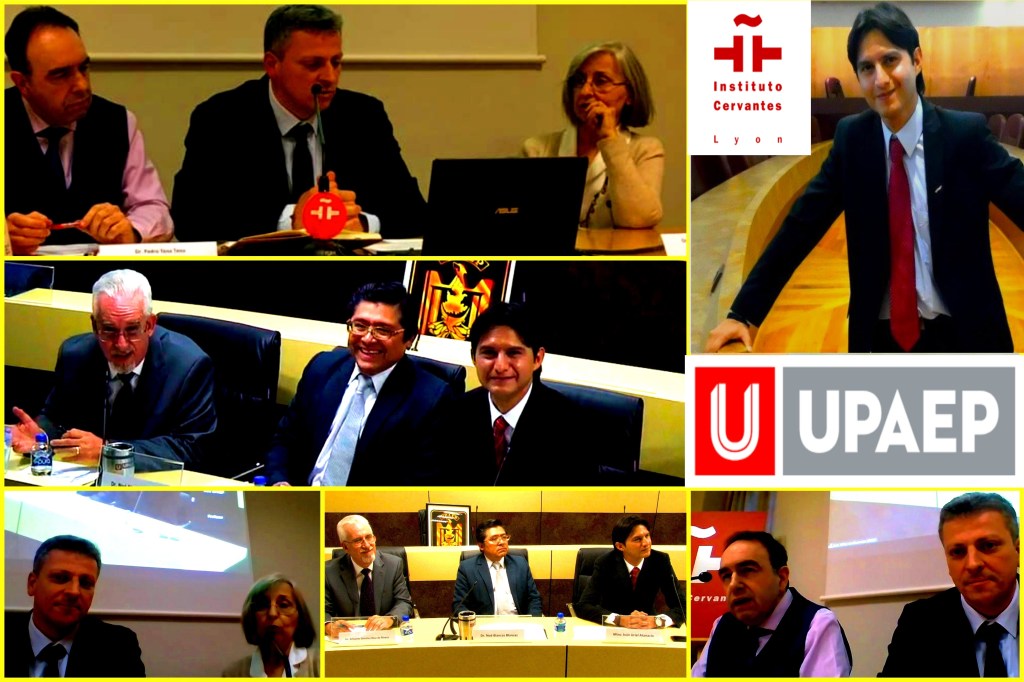
“Con el trabajo que me precedía, llegó la oportunidad en 2018 de presentar mis novelas fuera del continente americano, registrando los primeros eventos en el Instituto Cervantes, para difundir el español, reflexionar el español en el nuevo milenio, lo realizamos sobre todo desde Lyon, Francia, fue interesante conocer el impacto de otros escritores, como la literatura del poeta náhuatl Juan Hernández Ramírez (Medalla Bellas Artes 2024), me di cuenta que llevaba una bandera de la literatura en español, de ser mexicano, siento orgullo compartir con escritores y lectores de otros países desde las presentaciones”.
“With the work I had done before, the opportunity arose in 2018 to present my novels outside the Americas, participating in the first events at the Cervantes Institute. These events aimed to promote Spanish and reflect on Spanish in the new millennium. We primarily held these events in Lyon, France. It was interesting to learn about the impact of other writers, such as the Nahuatl poet Juan Hernández Ramírez (Bellas Artes Medal 2024). I realized I was carrying the banner of Spanish-language literature, of being Mexican. I feel proud to share with writers and readers from other countries through these presentations.”
“A la primera presentación en Zaragoza (España) asistieron migrantes, reflexionamos e hicimos una lectura comunitaria y cálida”.
“At the first presentation in Zaragoza, Spain, migrants attended. We reflected and held a warm, communal reading.”
“En 2019 representé a México en el Festival Isla, el más importante de lengua hispana que se hace en Europa, con representantes de América Latina”.
“In 2019, I represented Mexico at the Isla Festival, the most important Spanish-language festival in Europe, alongside representatives from Latin America.”
“Para mí la empatía es importante no tanto lo que lleves escrito, el mensaje que se pueda entregar y al mismo tiempo, tender puentes, como está escrito en la novela “El Muro”.
“For me, empathy is important, not so much what you have written, but the message you can convey and, at the same time, build bridges, as is written in the novel “The Wall.”
“En África el primer evento fue el Foro del Instituto Cervantes, un trabajo de reflexión sobre la migración en Marruecos, lo que significó conocer Guinea Ecuatorial, un país que tiene el español como primer idioma; reflexionar la literatura de África en Asia”.
“In Africa, the first event was the Cervantes Institute Forum, a reflection on migration in Morocco, which meant getting to know Equatorial Guinea, a country where Spanish is the first language; and reflecting on African literature in Asia.”
JAPÓN, MI MADRE, Y YO
JAPAN, MY MOTHER, AND I
“Japón es muy importante para mí, porque mi madre representó a los maestros de México hace 26 años, cuando sus alumnos ganaban los primeros lugares en aprovechamiento a nivel nacional y el impacto que tenía su metodología. Mi madre Rosalía Medellín Ponce impartía en la mañana clases a nivel primaria y en las tardes en la Escuela Normal Veracruzana, donde su especialidad era Métodos de Investigación, tenía dos perfiles. Su metodología la llevó al programa especial de televisión japonesa sobre las y los maestros del mundo, donde ella representó a México. La vida me ha dado la oportunidad de visitar Asia y recordé con mis hermanos el momento de mamá”.
“Japan is very important to me because my mother represented Mexican teachers 26 years ago, when her students were winning top national rankings in academic achievement and her teaching methodology had a significant impact. My mother, Rosalía Medellín Ponce, taught elementary school classes in the mornings and at the Veracruz Normal School in the afternoons, specializing in Research Methods; she had two roles. Her methodology led her to a special Japanese television program about teachers from around the world, where she represented Mexico. Life has given me the opportunity to visit Asia, and my siblings and I reminisced about that time with my mother.”
EN CONEXIÓN VIRTUAL CON OTROS PAÍSES
VIRTUAL CONNECTION WITH OTHER COUNTRIES
Iván Uriel representó a México para celebrar los días de independencia en Corea del Sur, Canadá, Perú, donde surgieron las primeras ideas de hacer algo más amplio y de llegar a otros países de forma virtual.
Iván Uriel represented Mexico to celebrate Independence Day in South Korea, Canada, and Peru, where the initial ideas arose for a broader project and for reaching other countries virtually.
“Inicio con toda la serie de actividades virtuales tras la experiencia migrante que obtuve en Irlanda cuando acudí a presentar una película, invitado por una universidad, donde quedé varado a causa de la pandemia”.
“I’m starting this whole series of virtual activities following my migrant experience in Ireland, where I went to present a film at a university and was stranded there due to the pandemic.”
“Así como las anteriores hemos tenido presentaciones en los Países Bajos, con la Asociación de Hispanistas de La Haya, fue tan importante porque se comentó “El Ítamo” desde un enfoque de infancias, refiriéndome al niño que llevamos dentro y el joven que somos, cómo cambia en las perspectivas del entorno”.
“Just like before, we’ve had presentations in the Netherlands, with the Association of Hispanists of The Hague. It was particularly important because we discussed ‘El Ítamo’ from a childhood perspective, referring to the child within us and the young person we are, and how our perspectives change.”
“Una Conferencia de la Mujer Latina se realizó en Boston, Estados Unidos, donde se presentó la “Oda a la Mujer Migrante”, inspirada y basada en la novela “El Surco”. Mis novelas están narradas por mujeres, el hecho de estar en la Conferencia de la Mujer Latina en 2013, fue un momento extraordinario”.
“A Latin Women’s Conference was held in Boston, USA, where I presented “Ode to the Migrant Woman,” inspired by and based on the novel “The Furrow.” My novels are narrated by women, and being at the Latin Women’s Conference in 2013 was an extraordinary experience.”
ACERCAMIENTO CON MIGRANTES EN CONSULADOS
OUTREACH TO MIGRANTS AT CONSULATES
“Las presentaciones en los consulados son generalmente con el público migrante al que van dirigidas las novelas y a los círculos culturales”.
“Presentations at consulates are generally with the migrant audience to whom the novels are addressed, as well as with cultural circles.”
“En Franckfort, Alemania hemos hecho actividades en el Día Internacional de las Lenguas Maternas y llevado a otros países lejanos como Malasia, donde se celebró el español como lengua con la novela “El Muro”. Universidades como INSA en Francia, en el Trinity College Dublin, hice varias sesiones, como en Tailandia en la Universidad Chulalongkorn, de todo esto quedan las reflexiones, hay momentos chuscos también, cuando en plena presentación olvido cosas (la saturación de tanta información), lo curioso es que la audiencia quizá no lo nota”.
“In Frankfurt, Germany, we held events for International Mother Language Day and traveled to other distant countries like Malaysia, where Spanish was celebrated with the novel “The Wall.” I’ve also given several sessions at universities like INSA in France, Trinity College Dublin, and Chulalongkorn University in Thailand. All of this has provided valuable insights, and there are even some funny moments, like when I forget things during a presentation (the information overload). The curious thing is that the audience probably doesn’t notice.”
CICLO DE ACTIVIDADES EN MI CIUDAD NATAL
SERIES OF ACTIVITIES IN MY HOMETOWN
“En 2024 hicimos un trabajo de 52 actividades en Xalapa. En un evento mencioné que por primera vez iba a compartir el poema dedicado a esta ciudad “Manantial en la arena”, me entretuve leyendo otros textos, y ese no lo leí, terminó por convertirse en anécdota”.
“In 2024, we carried out 52 activities in Xalapa. At one event, I mentioned that I was going to share, for the first time, the poem dedicated to this city, “Spring in the Sand.” I got caught up reading other texts, and I didn’t get around to reading that one; it ended up becoming just an anecdote.”
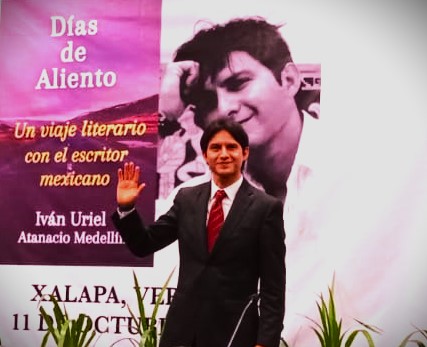
“En Xalapa en un trabajo coordinado con el Ayuntamiento acordamos estar presentes en muchos escenarios como centros comunitarios, juntas auxiliares, en los cultivos, en bibliotecas, al aire libre, estoy seguro que innovamos y concluimos en octubre 2024 en la sede del Ayuntamiento con el evento titulado “Días de Aliento, un viaje literario” que se trató de una lectura con 400 personas alzando la voz al mismo tiempo, primero cien lectores consecutivos con distintos pasajes participaron y luego la lectura al unísono de 400 con el poema “Lo haremos”. Esta fue la presentación número mil, en mi ciudad natal”.
“In Xalapa, in a coordinated effort with the City Council, we agreed to be present in many settings, such as community centers, auxiliary councils, in agricultural fields, in libraries, and outdoors. I’m sure we innovated, and we culminated in October 2024 at City Hall with the event titled “Days of Breath, a Literary Journey,” which consisted of a reading with 400 people raising their voices simultaneously. First, one hundred consecutive readers participated with different passages, and then all 400 read the poem “We Will Do It” in unison. This was the one thousandth presentation, in my hometown.”
“He de confesar que las emociones me han tocado de forma tan profunda en algunos eventos que las lágrimas han llegado como consecuencia, en una escuela normal donde nos encontrábamos, alguien hizo alusiones a mi infancia tan precisas que me impactaron mientras la escuchaba y comentaba detalles que solamente alguien que hubiera estado ahí lo sabría, y que además nunca había revelado. El rostro seguramente lo tenía desencajado, y mientras en el interior me pregunté ¿qué pasa?, la respuesta llegó de inmediato cuando caminó hacia mí y afirmó: Lo sé porque yo estuve ahí, fuimos compañeros en la escuela primaria… Nos dimos un gran abrazo”.
“I must confess that emotions have touched me so deeply at some events that tears have flowed as a result. At a teachers’ college where we were, someone made such precise allusions to my childhood that they impacted me deeply as I listened. She shared details that only someone who had been there would know, and which she had never revealed before. Her face must have been contorted with emotion, and while I wondered to myself, ‘What’s wrong?’ the answer came immediately when she walked toward me and said, ‘I know because I was there. We were classmates in elementary school…’ We gave each other a big hug.”
“En Xalapa en 2024 a través del ayuntamiento de esta ciudad se llevó a cabo el primer concurso de creación literaria con el nombre de mi madre “Rosalía Medellín Ponce”, estos sucesos son como un círculo, únicos, estuve como invitado en el cabildo para estar presente en la entrega del premio a quien ganó”.
“In Xalapa in 2024, the city council held the first literary creation contest named after my mother, Rosalía Medellín Ponce. These events are like a circle, unique. I was invited to the council meeting to be present for the award ceremony.”
“Dentro de estas presentaciones haríamos una en Palacio de Gobierno (Xalapa), aunque había gente montando los altares de Día de Muertos, entonces pensé hacerla fuera entre los puestos de venta de artesanías convocando a la gente. Siempre estoy seguro que tengo aliados para llevar a cabo actividades en las que salen movimientos espontáneos que se convierten en aventuras”.
“Among these presentations, we were going to hold one at the Government Palace (in Xalapa), but since people were setting up Day of the Dead altars, I thought I’d hold it outside among the craft stalls, inviting people to join in. I’m always confident that I have allies to carry out activities that spark spontaneous movements and turn into adventures.”
“Poder llevar todas mis novelas a distintos canales me hace sentir que ha valido este esfuerzo, dándole sentido a mi vida literaria. Mi camino es peregrinar con la literatura. Espero que la última presentación sea en un tiempo futuro para el que falten muchos años”.
“Being able to bring all my novels to different platforms makes me feel that this effort has been worthwhile, giving meaning to my literary life. My path is a pilgrimage through literature. I hope the last presentation will be sometime in the future, many years from now.”
Descubre más desde LA AGENCIA MUNDIAL DE PRENSA
Suscríbete y recibe las últimas entradas en tu correo electrónico.
