
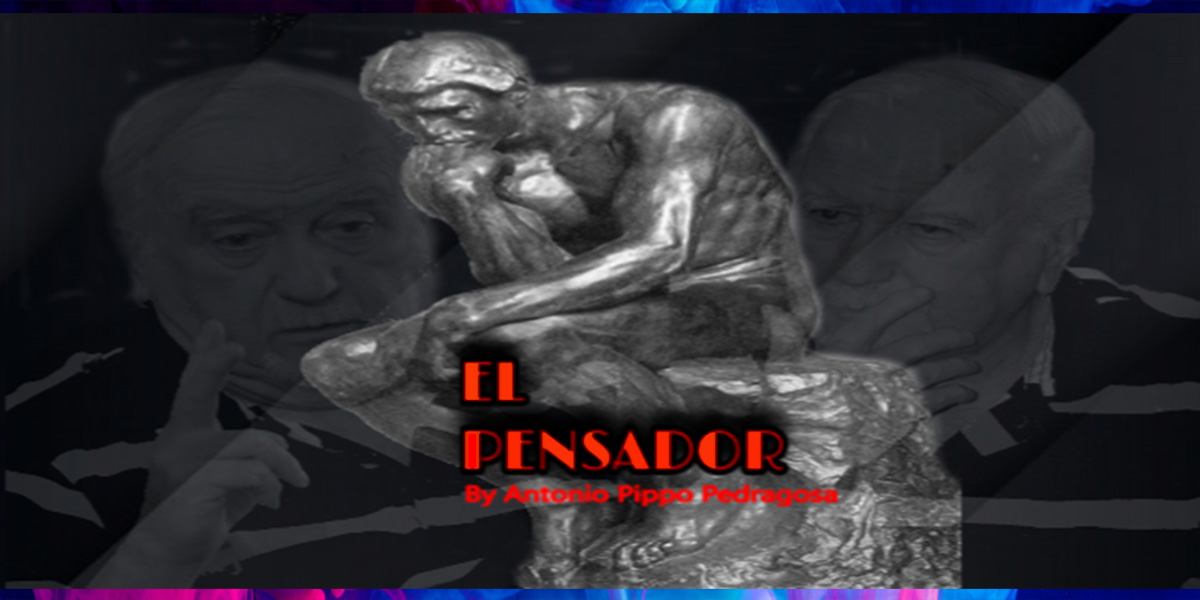
THE THINKER: Getting worse
Por Antonio Pippo
Redundando, volveré a confesar que me he ido enamorando, para construir estas columnas sobre la realidad nacional, de definir muy brevemente cuál es el problema y desarrollar la opinión con una metáfora-no siempre bien lograda- extraída de circunstancias extraordinarias del pasado milenario.
To sum up, I will once again confess that I have fallen in love, in order to build these columns on the national reality, to very briefly define what the problem is and develop the opinion with a metaphor – not always well achieved – extracted from extraordinary circumstances of the millennia past.
Uruguay está perdiendo -y sus gobiernos no lo admiten- la lucha contra el crecimiento de la narco delincuencia, que, destruyendo las cifras oficiales falsamente optimistas, sigue, paso a paso y desde la niñez avanzada y la adolescencia, su horrible misión con pasmosa facilidad.
Uruguay is losing – and its governments do not admit it – the fight against the growth of drug crime, which, destroying the falsely optimistic official figures, continues, step by step and from advanced childhood and adolescence, its horrible mission with astonishing ease.
Esto ocurre porque, al menos hasta ahora, la política no encuentra el camino: fallan los mecanismos de inteligencia, falta preparación adecuada en las personas colocadas en puestos claves y ningún Poder del Estado va a fondo contra la corrupción que corre entre algunas de sus propias venas.
This occurs because, at least until now, politics does not find the way: intelligence mechanisms fail, there is a lack of adequate preparation in people placed in key positions and no State Branch goes in-depth against the corruption that runs among some of its own. veins.
En síntesis, por complicidad, obcecación o mero error la política se aferra a las mismas ideas que han ido arrastrando al país a la degradación total. O sea, al final.
In short, through complicity, stubbornness or simple error, politics clings to the same ideas that have been dragging the country to total degradation. I mean, in the end.
Tomás Eloy Martínez, el periodistas y escritor argentino, en un celebrado artículo publicado hace décadas, “El poder y la historia” me pone en las manos una anécdota apropiada a ese sentido metafórico un poco audaz que mencioné.
Tomás Eloy Martínez, the Argentine journalist and writer, in a celebrated article published decades ago, “Power and History” puts in my hands an anecdote appropriate to that somewhat audacious metaphorical sense that I mentioned.
Hace cientos de años, la emperatriz china Tsu Hsi sentía tanto miedo ante la sola idea del final de su vida que prohibió a todos quienes tenían contacto con ella, jerarcas, servidores, militares y por supuesto médicos, invocar palabras como “muerte”, “fin”, “agonía” o “decadencia”, bajo la amenaza de un castigo terrible: mencionar en voz alta a la muerte era un seguro medio para morir. Particularmente le atemorizaban los venenos y la insalubridad de las comidas.
Hundreds of years ago, the Chinese empress Tsu Hsi was so afraid of the mere idea of the end of her life that she forbade all those who had contact with her, hierarchs, servants, soldiers and of course doctors, from invoking words like “death,” “ end”, “agony” or “decay”, under the threat of a terrible punishment: mentioning death out loud was a sure way to die. He was particularly afraid of poisons and unhealthy foods.
Dice Eloy Martínez: -Tres de sus hijos, a la larga, murieron de hambre por esquivar alimentos que podían estar emponzoñados. Hubo gran cantidad de personal leal del palacio que sucumbió a una melancolía extraña, que los ponía a temblar cada vez que se presentaban ante la emperatriz.
Eloy Martínez says: -Three of his children, in the long run, died of hunger from avoiding food that could be poisoned. There were many loyal palace personnel who succumbed to a strange melancholy, which made them tremble every time they appeared before the empress.
El 16 de noviembre de 1908, Tsu Hsi, a punto de cumplir 70 años, murió de una infección intestinal, largamente sufrida. Los médicos no se atrevieron siquiera a revisarla. Murió por aferrarse a la loca idea que había implantado, según la cual lo que se oculta no existe.
On November 16, 1908, Tsu Hsi, about to turn 70, died of a long-suffering intestinal infection. The doctors did not even dare to examine her. He died for clinging to the crazy idea he had implanted, according to which what is hidden does not exist.
Y para que el lector advierta que esto merece una profunda reflexión, aquí, entre los responsables del asunto que he planteado, les añado: dos mil años antes de Tsu Hsi, otro emperador chino T’sin Tse-Huan Ti -nada menos que el constructor de la Gran Muralla- ordenó quemar todos los libros para que la historia de la humanidad comenzara con su hazaña.
And so that the reader notices that this deserves deep reflection, here, among those responsible for the matter I have raised, I add: two thousand years before Tsu Hsi, another Chinese emperor T’sin Tse-Huan Ti – none other than the builder of the Great Wall – ordered all the books to be burned so that the history of humanity would begin with his feat.
En fin, lector, tal vez esto le aburra o le parezca de poco interés. A mí, al menos por ahora, no se me quita de la cabeza, si es que me entiende.
Well, reader, maybe this bores you or seems of little interest to you. For me, at least for now, I can’t get it out of my head, if you understand what I mean.
Descubre más desde LA AGENCIA MUNDIAL DE PRENSA
Suscríbete y recibe las últimas entradas en tu correo electrónico.
