
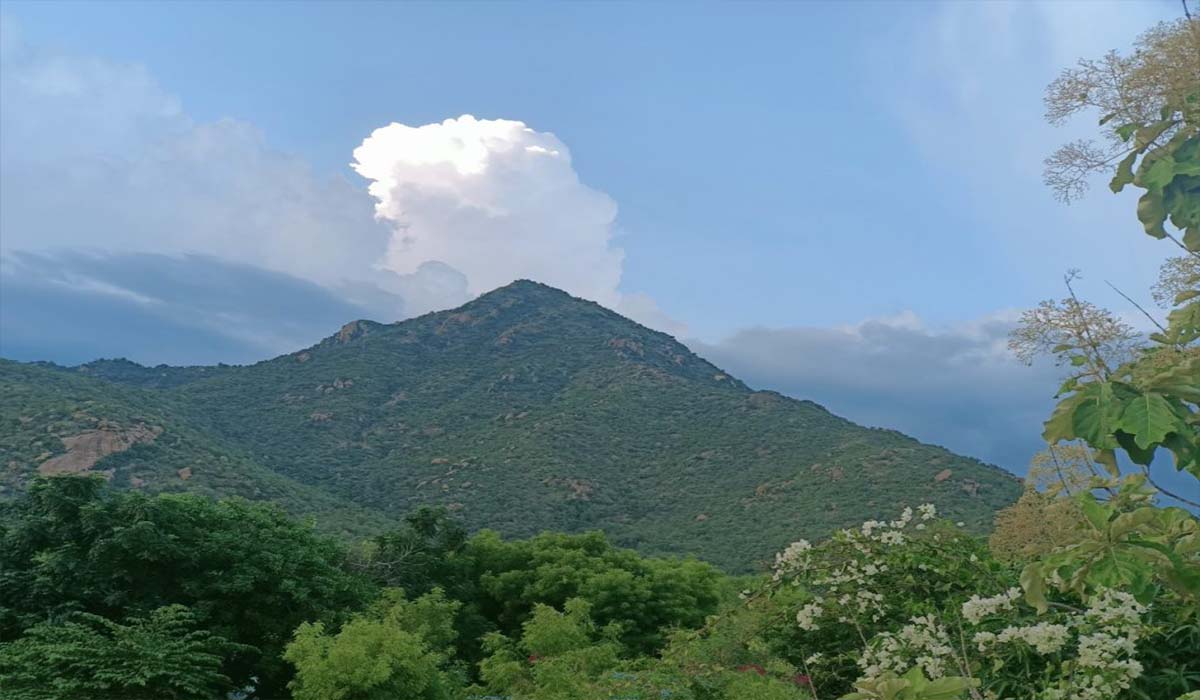
Arunachala, the sacred fire

Prensa Especializada
Hay un lugar sagrado en el sur de India, en el estado de Tamil Nadu. Es Arunachala, la montaña roja, considerada como el dios Shiva en persona. Esta es su historia o leyenda.
There is a sacred place in southern India, in the state of Tamil Nadu. It is Arunachala, the red mountain, considered to be the god Shiva himself. This is your story or legend.
En tiempos muy remotos, los dioses Vishnu y Brahma se disputaron ser el mayor de los dioses. El Señor Shiva para restablecer la armonía entre ellos y dar una lección a sus egos, se transformó en una columna de fuego que se perdía en las alturas. Al ver esto, Vishnu respondió con fe y humildad, pero la respuesta de Brahma fue desde su ego. El castigo del Señor Shiva fue que jamás tendría un templo dedicado a él, ni siquiera tendría presencia en ningún templo. Así se ha cumplido hasta el día de hoy.
In very ancient times, the gods Vishnu and Brahma competed to be the greatest of the gods. Lord Shiva, to restore harmony between them and teach their egos a lesson, transformed himself into a column of fire that was lost in the heights. Seeing this, Vishnu responded with faith and humility, but Brahma’s response was from his ego. Lord Shiva’s punishment was that he would never have a temple dedicated to him, nor would he even have a presence in any temple. This has been accomplished to this day.
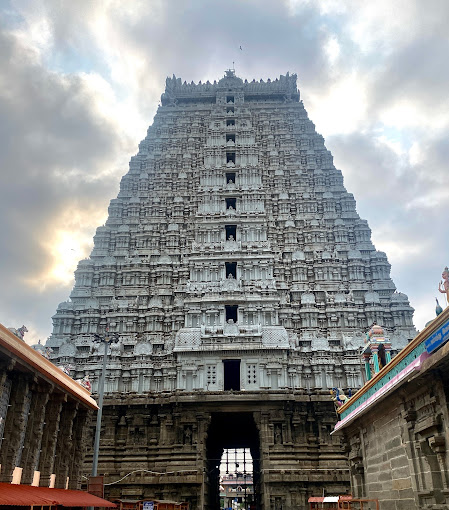
A los pies de la colina sagrada Arunachala surgió la ciudad de Thiruvanamalai y su templo Annamalaiyar dedicado al Señor Shiva. Este templo fue un lugar de residencia temporal del gran maestro espiritual Ramana Maharshi en su juventud. Luego se trasladó a Arunachala donde habitó en cuevas hasta la construcción de su ashram. En él vivió hasta su muerte en 1950. Su presencia sigue viva en su lugar de oración y en su shamadi.
At the foot of the sacred Arunachala hill arose the city of Thiruvanamalai and its Annamalaiyar temple dedicated to Lord Shiva. This temple was a temporary residence of the great spiritual master Ramana Maharshi in his youth. He then moved to Arunachala where he lived in caves until the construction of his ashram. He lived there until his death in 1950. His presence is still alive in his place of prayer and in his shamadi.
Desde siempre, la colina cónica Arunachala, en los meses de noviembre o diciembre, cuando se conmemora la aparición de la columna de fuego de Shiva, es objeto de peregrinación mundial, en celebración de ese hecho milagroso en el centro espiritual más importante del shivaismo en India.
The Arunachala conical hill, in the months of November or December, when the appearance of Shiva’s pillar of fire is commemorated, has always been the object of a worldwide pilgrimage, in celebration of that miraculous event in the most important spiritual center of Shaivism in India.
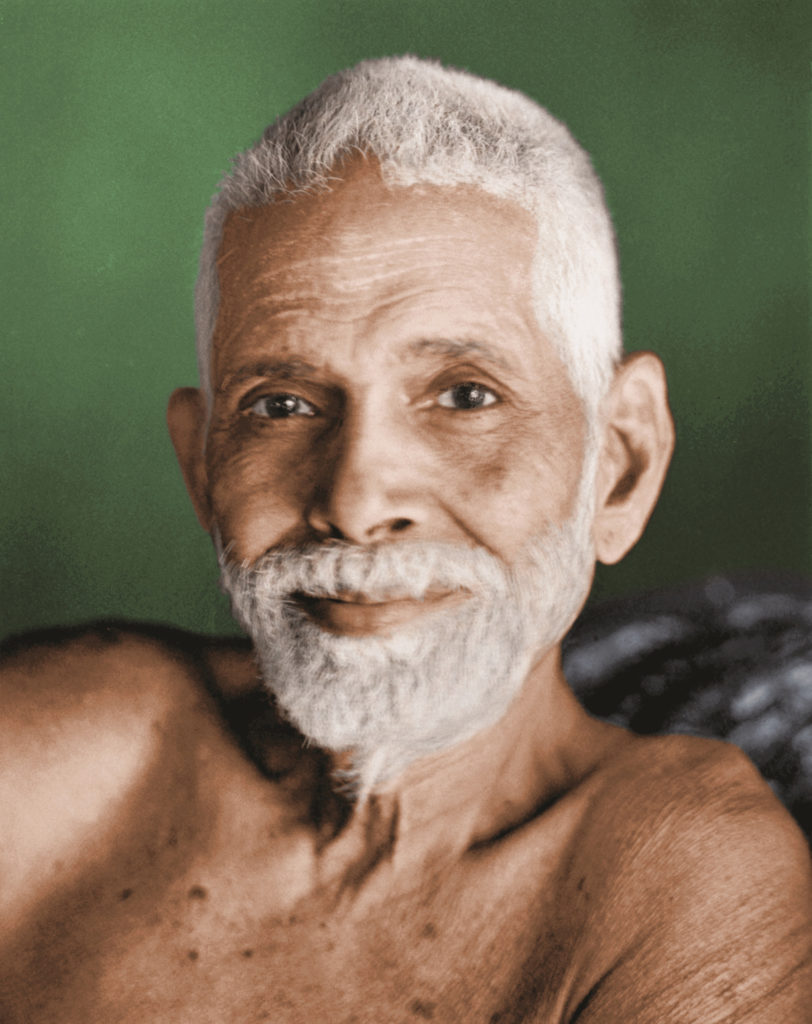
Una experiencia real / A real experience
Hace unos años, en un viaje de peregrinación por varios lugares sagrados de India, me quedé más o menos una semana en el ashram de Ramana Maharshi, a los pies de Arunachala. Allí viví una experiencia de total emancipación del ego mientras practicaba la meditación en su espacio de oración y en su shamadi.
A few years ago, on a pilgrimage trip to several sacred places in India, I stayed for a week or so at the Ramana Maharshi ashram, at the foot of Arunachala. There I lived an experience of total emancipation from the ego while practicing meditation in his prayer space and in his shamadi.
Las laderas de Arunachala están surcadas de pequeños santuarios en cuevas en las que habitó Ramana Maharshi hasta que su ashram estuvo construido. Estas cuevas son lugares sagrados de oración y meditación.
The slopes of Arunachala are dotted with small cave shrines where Ramana Maharshi lived until his ashram was built. These caves are sacred places of prayer and meditation.
Una mañana temprano salí del ashram con el propósito de peregrinar por estos lugares. Alegremente, sin un bastón de montaña, sin nada. A la media hora empecé a darme cuenta de lo arriesgado que era ir sola y sin preparación.
One early morning I left the ashram with the purpose of making a pilgrimage to these places. Happily, without a mountain stick, without anything. After half an hour I began to realize how risky it was to go alone and without preparation.
De pronto, como surgido de la nada, apareció un hombre aún joven, enteramente vestido de blanco, que se ofreció a acompañarme y ayudarme con una sonrisa radiante, llena de empatía.
Suddenly, as if out of nowhere, a still young man appeared, dressed entirely in white, who offered to accompany me and help me with a radiant smile, full of empathy.
Me dio la mano para hacerme sentir segura, me guió por las cuevas santuario, me explicó toda la historia vivida en ellas por el maestro Ramana Maharshi, me dio mi tiempo en cada lugar para disfrutar y reflexionar sobre donde estaba y sobre mi Ser interior. Hizo de mi experiencia algo inolvidable, algo que quedó grabado a fuego en mi espíritu entonces y para siempre.
He gave me his hand to make me feel safe, he guided me through the sanctuary caves, he explained to me the entire history lived in them by the master Ramana Maharshi, he gave me my time in each place to enjoy and reflect on where I was and on my inner Being. It made my experience unforgettable, something that was burned into my spirit then and forever.
El recorrido por los santuarios empieza desde el ashram de Ramana y termina en el centro de Thiruvanamalai, tras subir por la ladera de la colina y descender por el lado opuesto hasta la calle más céntrica y populosa de la ciudad, llena de gente, de rickshaws, de vacas sagradas, de comercios, movimiento y colorido.
The tour of the sanctuaries begins from Ramana’s ashram and ends in the center of Thiruvanamalai, after climbing the side of the hill and descending on the opposite side to the most central and populous street of the city, full of people and rickshaws. , of sacred cows, of shops, movement and color.
Allí, mi desconocido guía me dijo: “Bueno, aquí ya no me necesitas”.
There, my unknown guide told me: “Well, you don’t need me here anymore.”
No recuerdo ni como le di las gracias, ni como fueron esos segundos. De lo que sí fui consciente es que en un momento estaba allí y en otro momento había desaparecido entre la multitud. Me quedé perpleja, me costó asimilar lo sucedido como en otra dimensión. Cuando lo recuerdo, sigo sintiendo lo mismo que entonces, con la misma fuerza.
I don’t even remember how I thanked him, or what those seconds were like. What I was aware of was that at one moment it was there and at another moment it had disappeared into the crowd. I was perplexed, it was difficult for me to assimilate what happened as if in another dimension. When I remember it, I still feel the same as I did then, with the same strength.
Creo que estuve en presencia de Shiva, que recibí su ayuda y guía…..
I believe that I was in the presence of Shiva, that I received his help and guidance…..
Y esto, en Arunachala, es perfectamente verosímil.
And this, in Arunachala, is perfectly plausible.
El sadhu.
El ashram de Ramana Maharshi, sirve comida a diario gratuitamente a todo necesitado que se acerque, una tradición en los ashrams de India. Frente al ashram, al otro lado de la calle, hay una serie de pequeños restaurantes y tiendas al aire libre, protegidos del sol por una techumbre vegetal.
The Ramana Maharshi ashram serves free food daily to anyone in need who comes, a tradition in the ashrams of India. In front of the ashram, on the other side of the street, there are a series of small open-air restaurants and shops, protected from the sun by a green roof.
Yo frecuentaba un restaurante al que también asistía un sadhu o asceta que ha renunciado a todo lo material, no tanto por recibir comida, como por hacer escuchar su experiencia de vida. Tenía un rostro agradable, lleno de dignidad. Vestía una túnica blanca sobre su dotti y gracias a Shiva, hablaba inglés de forma fluida.
I frequented a restaurant that was also attended by a sadhu or ascetic who has renounced all material things, not so much to receive food, but to have his life experience heard. He had a pleasant face, full of dignity. He wore a white robe over his dotti and thanks to Shiva, he spoke fluent English.
Compartí varias conversaciones y comida con él. ¿Cómo te llamas? – No tengo nombre. ¿Cómo que no tienes nombre? – Y, ¿para qué necesito un nombre? ¿Dónde vives? – Donde me alcanza la noche. ¿Quieres decir que pasas la noche en cualquier lugar? – En todos los lugares está el Señor. (Gracias al clima del sur de India, pueden permitirse esos ascetismos.) ¿Y tu ropa? ¿dónde la guardas? – No tengo más que esta…
I shared several conversations and food with him. What is your name? – I do not have a name. How come you don’t have a name? –And, why do I need a name? Where do you live? – Where the night reaches me. Do you mean you spend the night anywhere? – The Lord is in all places. (Thanks to the climate of southern India, they can afford such asceticisms.) And your clothes? where do you keep it? – I have nothing more than this…
Le ofrecí regalarle otro dotti y túnica, o mejor darle el dinero para comprarlo a su gusto. Logré que aceptara.
I offered to give him another dotti and tunic, or better to give him the money to buy it as he liked. I got him to accept.
El día siguiente lo pasé visitando el ashram de otro maestro de Tamil Nadu, donde en ese momento residía un amigo, un swami español, Satyananda Saraswati, que ahora tiene su ashram en España, en la provincia de Zamora, junto a la frontera de Portugal. Y un día más tarde, tuve que ir al único banco de Thiruvanamalai que cambiaba euros a rupias. Cuando llegué, me instalaron en el despacho del director, que en ese momento no estaba. Me dijeron que lo esperase. Y mientras esperaba vi que de las paredes de ese despacho colgaban cuadros de Shiva en varias de sus representaciones, de su esposa Parvathi, de sus hijos Ganesha, (el dios elefante) Kartikeya y Ashokasundari. Me quedé pasmada. ¿Dónde es posible ver en el despacho de un director de banco cuadros de sus dioses? Y cuando llegó, antes de saludarme a mí, saludó a sus divinidades. Algo así, en nuestro occidente es impensable e imposible.
The next day was spent visiting the ashram of another teacher in Tamil Nadu, where a friend, a Spanish swami, was residing at the time. Satyananda Saraswati, who now has his ashram in Spain, in the province of Zamora, next to the border of Portugal. And a day later, I had to go to the only bank in Thiruvanamalai that exchanged euros into rupees. When I arrived, they installed me in the director’s office, who was not there at that time. They told me to wait for it. And while I was waiting I saw that on the walls of that office there were pictures of Shiva in various representations, of his wife Parvathi, of his children Ganesha, (the elephant god) Kartikeya and Ashokasundari. I was stunned. Where is it possible to see paintings of his gods in the office of a bank director? And when he arrived, before greeting me, he greeted his divinities. Something like this, in our West, is unthinkable and impossible.
Al día siguiente, busqué en vano al sadhu por todos los alrededores del ashram en horas diferentes del día. No estaba en ninguna parte. Pregunté por él en los restaurantes, en las tiendas, en el ashram. Nadie supo dónde podía estar. Y el drama, mi drama, es que al día siguiente me marchaba temprano de Arunachala.
The next day, I searched in vain for the sadhu all around the ashram at different times of the day. It wasn’t anywhere. I asked about him in restaurants, in stores, at the ashram. Nobody knew where it could be. And the drama, my drama, is that the next day I was leaving Arunachala early.
Nunca he vuelto a saber de él. Ni siquiera tengo su fotografía, porque ningún sadhu consiente que se capte su imagen. Solo pervive en mi memoria.
I have never heard from him again. I don’t even have his photograph, because no sadhu consents to his image being captured. It only lives on in my memory.
Descubre más desde LA AGENCIA MUNDIAL DE PRENSA
Suscríbete y recibe las últimas entradas en tu correo electrónico.
