
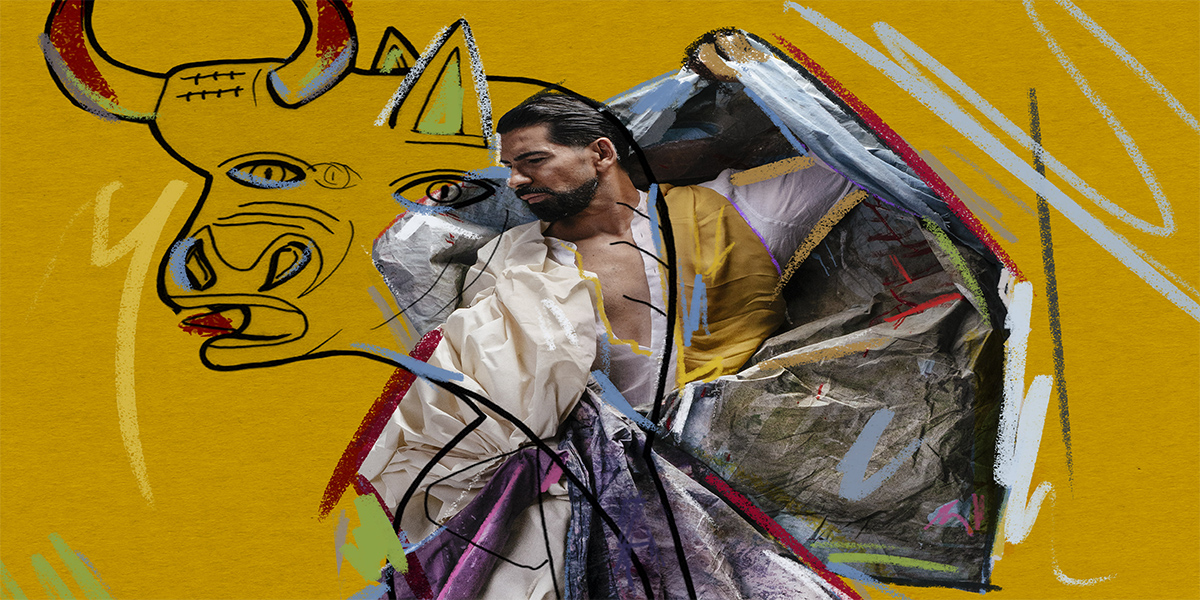
«Eternal», a tribute to Picasso arrives in Madrid

Periodista – Prensa Especializada
Carlos Rodríguez estrena por fin en la capital, en el teatro EDP “Eterno”, su espectáculo homenaje a Picasso en el medio siglo de su desaparición física. Muy probablemente será eterno Picasso en los museos del mundo. Pero este Eterno,en el lenguaje sin igual de la danza, es una creación state of the arts.
Carlos Rodríguez finally premieres in the capital, at the EDP “Eterno” theater, his show tribute to Picasso in the half century of his physical disappearance. Very probably Picasso will be eternal in the museums of the world. But this Eternal, in the unparalleled language of dance, is a state of the arts creation.
Cierto que la trayectoria creativa de Carlos Rodríguez viene de lejos. Y es lógico, que cada paso adelante desde un mayor conocimiento y experiencia escénica, dé como fruto una mayor sabiduría, un arte más depurado y consciente. Eterno es todo eso y más. Es el espectáculo redondo, reflejo de los desarrollos picassianos y de la historia de España que le tocó vivir, porque sin la guerra civil, ese icono universal que es el Guernica no hubiera existido, el arte de Picasso no hubiese sido el mismo y este Eterno no hubiera tenido razón de ser.
It is true that the creative trajectory of Carlos Rodríguez goes back a long way. And it is logical, that each step forward from a greater knowledge and stage experience, gives as a result a greater wisdom, a more refined and conscious art. Eternal is all that and more. It is the round spectacle, a reflection of Picasso’s developments and of the history of Spain that he lived through, because without the civil war, that universal icon that is Guernica would not have existed, Picasso’s art would not have been the same and this Eternal there would have been no reason to be.
Eterno, condensa la danza del siglo XX, flamenca, folklore regionalista, escuela bolera, tan querida por Rodríguez, danza clásica española, moderna y contemporánea, condensa lo figurativo y lo abstracto, por eso es también historia no solo de país, sino de las sociedades europeas marcadas por una evolución artística sin igual y por la mayor violencia que conocieron los tiempos hasta hoy.
Eternal, it condenses the dance of the 20th century, flamenco, regionalist folklore, the bolero school, so dear to Rodríguez, classical Spanish, modern and contemporary dance, it condenses the figurative and the abstract, for this reason it is also history not only of the country, but of the European societies marked by an artistic evolution without equal and by the greatest violence that times have known until today.
En dos actos que reflejan el contraste brutal entre el fin y comienzo de siglo y los felices años veinte y la tragedia surrealista desencadenada en los treinta, el primero bailado en clave flamenca, desde los gloriosos fandangos de inicio hasta los alegres caracoles que ponen fin a esa era, con un vestuario rico en colorido nos ponen ante la vista a un joven Picasso y su entorno y a un personaje que perdura a lo largo del ballet, el que baila e interpreta magistralmente La Lupi como madre tierra, que siempre estará ahí, pase lo que pase.
In two acts that reflect the brutal contrast between the end and beginning of the century and the roaring twenties and the surrealist tragedy unleashed in the thirties, the first danced in a flamenco key, from the glorious fandangos at the beginning to the happy snails that end that era, with a costume rich in color, they put before us a young Picasso and his entourage and a character that lasts throughout the ballet, the one who dances and masterfully interprets La Lupi as mother earth, who will always be there, no matter what. whatever happens.
Todo el primer acto es una preparación consciente de lo que refleja el segundo. El segundo acto es todo lo que inspira al Guernica. Muy significativo es ese ojo que va contemplando con asombro a los humanos alegres y confiados del primer acto en su transformación. La lámpara del Guernica, el caballo y el toro, el lienzo que se agrieta y se rompe y ahí queda roto hasta el final. El vestuario en negro y blanco como en el cuadro, porque la guerra no es de colores. No vemos violencia explícita en el cuadro ni en el ballet Eterno, vemos sus símbolos. Y nada como este ambiente surrealista de la extraordinaria coreografía para arrastrarnos a hacer inmersión, de la forma más hermosa, a través de la danza, en toda la belleza y crueldad de ese entorno, desconocido e imprevisible en el primer acto.
The entire first act is a conscious preparation for what the second reflects. The second act is everything that inspires Guernica. Very significant is that eye that is contemplating in amazement the happy and confident humans of the first act in their transformation. The Guernica lamp, the horse and the bull, the canvas that cracks and breaks and remains broken there until the end. The wardrobe in black and white as in the painting, because war is not colored. We do not see explicit violence in the painting or in the Eternal ballet, we see its symbols. And nothing like this surreal environment of the extraordinary choreography to drag us to immerse ourselves, in the most beautiful way, through dance, in all the beauty and cruelty of that environment, unknown and unpredictable in the first act.
El toro mítico, deificado desde la prehistoria en casi todas las culturas y geografías, como testigo universal de todas las guerras, como testigo de que nada cambia en la humana ambición de poderes absurdos, conflictos inventados que resuelve a bombazos hasta hoy sin que nadie lo impida. El toro, que en el último cuadro en escena, es el de uno de los bocetos del Guernica, con una lágrima cayendo sobre su rostro, como llanto por todo y por todos, tal como lo vio Picasso.
The mythical bull, deified since prehistory in almost all cultures and geographies, as a universal witness of all wars, as a witness that nothing changes in the human ambition for absurd powers, invented conflicts that are resolved by bombing until today without anyone seeing it. prevent. The bull, which in the last painting on stage, is the one from one of the Guernica sketches, with a tear falling on his face, like crying for everything and everyone, just as Picasso saw it.
Asombra tanta sabiduría y belleza en este homenaje a Picasso que es Eterno. No habrá conferencia, encuentro ni mesa redonda, que en este cincuenta aniversario de la muerte del artista, pueda expresarlo como las músicas, la maravillosa escenografía e iluminación casi mágica, la coreografía y la danza, sobre todo la danza de este espectáculo. La danza, que fue vehículo de expresión anterior a la palabra y siempre más genuino que la palabra, nos pone ante los ojos lo que fue la vida y arte de Picasso, así como su entorno.
It amazes so much wisdom and beauty in this homage to Picasso that is Eternal. There will be no conference, meeting or round table, that on this fiftieth anniversary of the artist’s death, can express it like the music, the wonderful scenery and almost magical lighting, the choreography and the dance, especially the dance of this show. The dance, which was a vehicle of expression prior to the word and always more genuine than the word, puts before our eyes what Picasso’s life and art was, as well as his environment.
Las mujeres y los hombres de su vida van moviéndose por la escena, quizá sin una identificación precisa, pero muy claros en su simbología. Puro arte del siglo XX en pleno siglo XXI.
The women and men in her life move around the scene, perhaps without precise identification, but very clear in their symbology. Pure 20th century art in the 21st century.
Ficha artística / Artistic sheet
Bailarines y bailarinas:
Dancers and dancers:
Carlos Rodríguez, La Lupi, Joaquín de Luz, Miguel Ángel Berna, Mayte Bajo, Estrella Alonso, Laura Fúnez, Ana del Rey, Cynthia Cano, Joan Fenollar, Hugo Aguilar, Juan Bravo.
Músicas:
Music:
Música original, Lucas Vidal y Manuel Urbina. Violín, Roberto Jabonero, Julio Alcocer, percusión, Daniel Jurado, Pedro Medina y Ricardo Vázquez, guitarras, José Luis Hernández y David Vázquez, cante.
Descubre más desde LA AGENCIA MUNDIAL DE PRENSA
Suscríbete y recibe las últimas entradas en tu correo electrónico.
