
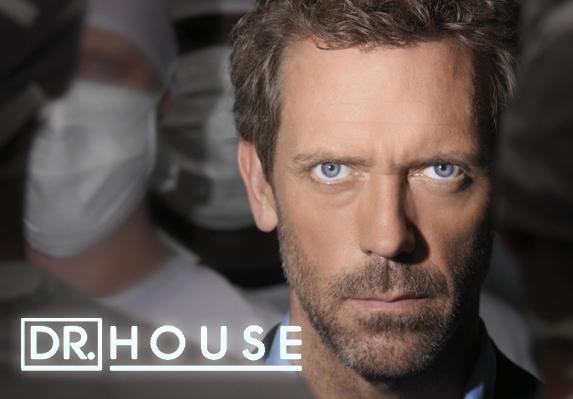
SHOWS: DR. HOUSE HAS COME TO AN END

Tras ocho temporadas, la conocida serie televisiva Dr. House llegó a su fin tras ser estrenada hace 22 años por la cadena Fox en el 2004, y que durante esos años conquisto miles de seguidores alrededor del mundo.
After eight seasons, the well-known television series Dr. House came to an end after being premiered 22 years ago by the Fox network in 2004, and during those years it won over thousands of fans around the world.
Las historias de la serie se centran en el médico Gregory House, un sujeto misántropo, cínico y extremadamente antipático, pero en quién también se conjugan enormes conocimientos y habilidades médicas, así como unas dotes intelectuales sorprendentes para la observación, la síntesis y la abstracción. Tales aptitudes lo ubican como “as” del diagnóstico médico del también ficticio Princeton-Plainsboro Hospital. Luego se pudo apreciar en unas últimas temporadas en las que su protagonista se sumergía más y más en una introspección psicológica con ribetes metafísicos que dieron lugar a capítulos de tema bastante sombrío.
The series centers on Dr. Gregory House, a misanthropic, cynical, and extremely unlikeable individual, but one who also possesses enormous medical knowledge and skills, as well as astonishing intellectual gifts for observation, synthesis, and abstraction. These abilities make him the ace of medical diagnosis at the also fictional Princeton-Plainsboro Hospital. Later seasons saw the protagonist delve deeper and deeper into psychological introspection with metaphysical undertones, resulting in some rather somber episodes.
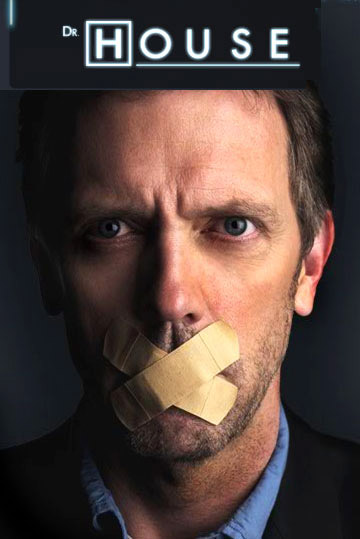
Es notorio el éxito que pueden llegar a alcanzar las series de médicos y hospitales, algo que desde hace tiempo se ha convertido en todo un subgénero importante de este mundillo.
The success of medical and hospital dramas is undeniable, having long since become a significant subgenre within the entertainment industry.
Y es que resulta que la práctica sanitaria desarrolla su acción en estrecha cercanía a la persona, y precisamente al servicio de algunos de sus bienes más preciados: la vida y la salud. Esto, en momentos tan cruciales de la existencia como son su jubiloso inicio, su siempre dramático fin, así como durante la enfermedad; situación esta última en la que el paciente sufre, además de los síntomas propios de su estado, grados variables de limitación, dependencia e incertidumbre….
This is because healthcare practice operates in close proximity to the individual, precisely in service of some of their most precious assets: life and health. This is true at crucial moments in life, such as its joyful beginning, its always dramatic end, and during illness; a situation in which the patient suffers, in addition to the symptoms of their condition, varying degrees of limitation, dependence, and uncertainty.
Frente a esto tenemos la agobiante presión de trabajo y la enorme sobrecarga emocional de unos profesionales que disponen de estrecho margen para el error y se enfrentan a difíciles decisiones, en su continua carrera contrarreloj frente al dolor y la muerte. Todo ello convierte a este campo del ejercicio profesional en un complejo y rico ámbito de vivencias y relaciones interpersonales, que gira en torno a la precariedad de la condición humana en el reino de este mundo. Nada más apropiado para recrear situaciones que van desde el drama hasta el thriller, siempre con alguna que otra dosis de hilaridad.
In contrast, we have the overwhelming work pressure and enormous emotional burden on professionals who have little room for error and face difficult decisions in their constant race against time in the face of pain and death. All of this transforms this field of professional practice into a complex and rich realm of experiences and interpersonal relationships, revolving around the precariousness of the human condition in this world. Nothing could be more fitting for recreating situations ranging from drama to thriller, always with a touch of humor.
Según nos comento en su momento, Paul Attanasio, David Shore y el resto de los creadores de la serie que se inspiraron en una columna del New York Times que estaba a cargo de la Dra. Lisa Sanders profesora de la Facultad de Medicina de la Universidad de Yale. Allí se mostraban casos médicos difíciles e inusuales. Pero como suele suceder en este subgénero, las historias médicas son solo un marco o instrumento para abordar el entramado de relaciones que dan pie a los conflictos humanos y profesionales entre médicos, directivos y pacientes.
As Paul Attanasio, David Shore, and the rest of the series creators told us at the time, they were inspired by a New York Times column written by Dr. Lisa Sanders, a professor at Yale University School of Medicine. The column featured difficult and unusual medical cases. But, as is often the case in this subgenre, the medical stories are merely a framework or tool for exploring the complex web of relationships that give rise to human and professional conflicts between doctors, administrators, and patients.
Sin embargo, el centro de toda la serie ha sido la lucha interna de su protagonista. A pesar de su éxito profesional, House está lleno de defectos, carencias y limitaciones. Es un hombre atrapado, no tanto por el dolor físico de su pierna enferma (que apunta a ese “lado podrido” en cada uno de nosotros), como por un intenso sufrimiento psicológico y espiritual. No por gusto, el propio Hugh Laurie, ese actor que tan magistralmente le ha sabido encarnar, ha definido al Dr. House como un “náufrago emocional”.
However, the central theme of the entire series has been the internal struggle of its protagonist. Despite his professional success, House is riddled with flaws, shortcomings, and limitations. He is a man trapped, not so much by the physical pain of his ailing leg (which points to that «rotten side» in each of us), but by intense psychological and spiritual suffering. It is no coincidence that Hugh Laurie himself, the actor who so masterfully embodied him, has described Dr. House as an «emotional castaway.»
House es un contradictorio mosaico: casi siempre es huraño, intempestivo y sarcástico, pero a ratos muestra un lado jocoso y hasta pueril. Algunas veces obra de un modo despiadadamente honesto y, muchísimas otras, es un hábil manipulador de colegas, pacientes y familiares, a quienes trata como meras piezas en un tablero. Precisamente, quizás este sea su rasgo más remarcable: un recio pragmatismo (tan vinculado al ámbito anglosajón) según el cual “el fin siempre justifica a los medios”, incluso aunque la dignidad humana con frecuencia quede rota y pisoteada al borde del camino.
House is a contradictory mosaic: he is almost always sullen, impulsive, and sarcastic, but at times he displays a playful and even childlike side. Sometimes he acts with ruthless honesty, and far more often, he is a skilled manipulator of colleagues, patients, and family members, whom he treats as mere pawns on a chessboard. Indeed, this is perhaps its most remarkable feature: a strong pragmatism (so linked to the Anglo-Saxon sphere) according to which «the end always justifies the means,» even though human dignity is often broken and trampled on by the wayside.
Entonces, lo importante pasa a ser no tanto el paciente como el diagnóstico, no la persona sino la enfermedad, lo cual a todas luces resulta un enfoque extremadamente reduccionista. Su famosa frase “todos mienten” (everybody lies), redondea un arquetipo en el que predomina el escepticismo y el desdén hacia la naturaleza humana. Pero House no nos mira por encima del hombro, sino desde la lona y el polvo, ojooo
So, what matters becomes not so much the patient as the diagnosis, not the person but the disease, which is clearly an extremely reductionist approach. His famous phrase «everybody lies» completes an archetype dominated by skepticism and disdain for human nature. But House doesn’t look down on us; he looks down on us from the depths of despair, mind you
Hubieron cosas de fondo en la serie que no me gustaron y menguaron mi interés poco a poco y aquí el asunto no es de “forma” sino de “contenido”. No se trata de las perceptibles “costuras” o desniveles entre uno y otro capítulo (o entre las temporadas), comprensibles en un tipo de producción industrial en el que, a ritmo frenético, trabajan en paralelo varios equipos de guionistas y directores. Tampoco me refiero a los casos exagerados al extremo, o a las prácticas o situaciones inverosímiles o hasta disparatadas (eso sí, solo para el ojo avezado de un facultativo televidente), sino a ciertos aspectos de índole conceptual y bioética, tal cual.
There were underlying issues in the series that I didn’t like and that gradually diminished my interest, and here the problem isn’t «form» but «content.» It’s not about the noticeable «seams» or unevenness between episodes (or between seasons), which are understandable in a type of industrial production where several teams of writers and directors work simultaneously at a frenetic pace. Nor am I referring to cases that are exaggerated to the extreme, or to implausible or even absurd practices or situations (that is, only to the seasoned eye of a television-viewing doctor), but to certain aspects of a conceptual and bioethical nature, as such.
En toda la serie, palpita un relativismo ético en el que “el bien” o “el mal” opciones intercambiables según el interés de los sujetos actuantes. Pero, House constantemente indica estudios y tratamientos de forma impulsiva y temeraria, haciendo añicos aquel principio de primun non nocere (ante todo no hacer daño) que ha guiado a la Medicina desde los tiempos hipocráticos y que asume al enfermo en su excelsa dignidad personal.
Throughout the series, an ethical relativism pulsates, where «good» and «evil» are interchangeable depending on the interests of those involved. However, House constantly orders tests and treatments impulsively and recklessly, shattering the principle of primum non nocere (first, do no harm) that has guided medicine since Hippocratic times and that recognizes the patient in their inherent personal dignity.
Un asunto no menos importante es el descomunal protagonismo de la tecnología médica. No recuerdo haber visto nunca al irónico Dr. House palpando un abdomen o auscultando a un paciente… a lo mejor si pero no me viene ahora mismo a la mente. Muy pocas veces se presenta a alguno de los miembros de su equipo entrevistando y examinando exhaustivamente al caso. En su lugar, allanan su morada o le extorsionan de formas tan inimaginables como poco éticas para obtener algún dato relevante, en una práctica abiertamente transgresora que roza la frontera de lo delincuencial. Luego, todos prefieren sentarse alrededor de una mesa y adentrarse en una lluvia de ideas (con rayos truenos y centellas incluidos) en el que cada uno trata de imponer a toda costa la suya. Más tarde, cada quien sale a ejecutar su función: aplicar tecnología y más tecnología. Claro que casi todo será en vano; al final solo bastará un detalle, para que en un rapto de iluminación, House consiga el necesario diagnóstico.
An equally important issue is the overwhelming prominence of medical technology. I don’t recall ever seeing the ironic Dr. House palpating an abdomen or examining a patient… perhaps I have, but it doesn’t come to mind right now. Very rarely do we see any of his team members interviewing and thoroughly examining the case. Instead, they break into the patient’s home or extort them in ways as unimaginable as they are unethical to obtain some relevant information, in an openly transgressive practice that borders on the criminal. Then, they all prefer to sit around a table and engage in a brainstorming session (complete with thunder and lightning) in which each tries to impose their own idea at all costs. Later, each person goes out to perform their function: applying technology and more technology. Of course, almost all of it will be in vain; in the end, just one detail will be enough for House, in a moment of inspiration, to arrive at the necessary diagnosis.
De cualquier manera, también hay muchos aciertos y verdades en muchos capítulos que se pudieron apreciar, la verdad sea dicha, por ejemplo…
In any case, there are also many successes and truths in many chapters that could be appreciated, truth be told, for example…
- El proceso salud-enfermedad es una realidad compleja en la que intervienen numerosos factores contextuales de tipo sociológico, cultural y ambiental. Por tal motivo, no todo se soluciona solo con fármacos y operaciones. The health-disease process is a complex reality involving numerous contextual factors of a sociological, cultural, and environmental nature. Therefore, not everything can be resolved solely with medication and surgery.
- La relación entre médico y paciente nunca tiene un solo sentido. No se trata de un facultativo “proveedor” y un necesitado paciente “receptor”, sino que juntos han de ser capaces de entretejer una relación donde ambos aportan y a la vez reciben. The doctor-patient relationship is never one-sided. It is not a matter of the physician as a «provider» and the patient as a «recipient,» but rather, together they must be able to weave a relationship where both contribute and receive.
- Contrario al “cliente” convencional, el paciente no siempre tiene la razón. Por tanto el médico no es un mero proveedor de un servicio, que ha de estar dispuesto a complacer a toda costa los deseos del paciente. Contrary to the conventional «client,» the patient is not always right. Therefore, the doctor is not merely a service provider who must be willing to fulfill the patient’s wishes at all costs.
- Las tecnologías médicas no lo pueden todo ni siempre tienen la razón. Más bien, a veces aportan confusión y su empleo inadecuado puede provocar resultados desastrosos. La Medicina contemporánea es aún arte y ciencia que sigue necesitando del método clínico, del juicio lógico, de la experiencia y hasta de la intuición. Medical technologies cannot do everything, nor are they always right. Rather, they sometimes contribute to confusion, and their inappropriate use can lead to disastrous results. Contemporary medicine is still both an art and a science that continues to rely on the clinical method, logical judgment, experience, and even intuition.
- La Medicina dista mucho de ser una ciencia exacta. Aún haciéndolo todo bien y a la luz del más actualizado conocimiento, las cosas pueden salir muy mal. Por otro lado, los médicos se equivocan -incluso los mejores, aquellos más hábiles y motivados. Ellos sufren con sus fracasos, pero también tienen la oportunidad de crecer con cada error. Medicine is far from being an exact science. Even when doing everything right and using the most up-to-date knowledge, things can still go very wrong. On the other hand, doctors make mistakes—even the best, most skilled, and most motivated. They suffer from their failures, but they also have the opportunity to grow from each error.
Otro innegable valor de la serie es que House no se presentaba como un ogro que enseña todo el tiempo los dientes. Aunque se empeñe en ocultarlo, también por momentos muestra una elevada sensibilidad humana y, junto con él, todos terminamos siendo afectiva y efectivamente involucrados.
Another undeniable strength of the series is that House wasn’t presented as a snarky ogre. Although he tries hard to hide it, he also displays a high degree of human sensitivity at times, and along with him, we all end up becoming emotionally and genuinely involved.
Así, que vimos que era capaz de maravillarse ante la mano del feto que, en medio de una operación, sale del útero materno y toca la suya. Luego queda el resto del día mirándose el dedo al que se aferró la frágil manita, y en un instante, a todos se nos devela el valor de esa vida. O aquel episodio en el que logra que un niño autista sobreviva: Cuando por su mente pasa que no ha valido la pena salvar a alguien que luego seguirá “lastrado” por tal enfermedad, el niño, ante la mirada atónita de sus padres (y del propio House), se le acerca, le mira a los ojos y le regala su juguete. La conducta rompe su aislamiento y se aparta de la usual en un autista, pero el gesto de agradecimiento implica una comunicación con alguien que precisamente tiene por norma rechazar a todos. A House le hace reflexionar sobre sí mismo y quienes estamos del lado de acá de la pantalla apreciamos cada vida humana y la esperanza con que ha de ser asumida.
Thus, we saw him capable of marveling at the hand of a fetus that, in the middle of an operation, emerges from the mother’s womb and touches his. Then he spends the rest of the day staring at the finger the fragile little hand clung to, and in an instant, the value of that life is revealed to us all. Or that episode in which he manages to save an autistic child: When the thought crosses his mind that it wasn’t worth saving someone who will then continue to be «burdened» by such an illness, the child, before the astonished gaze of his parents (and House himself), approaches him, looks him in the eyes, and gives him his toy. The behavior breaks his isolation and deviates from the usual behavior of an autistic person, but the gesture of gratitude implies communication with someone who, precisely, has a habit of rejecting everyone. It makes House reflect on himself, and those of us on this side of the screen appreciate every human life and the hope with which it must be embraced.
Y así fue como esta serie llegó a su fin, sin embargo, una vez más la realidad se entrelaza con la ficción. Ya que de pronto en nosotros puede haber mucha más oscuridad “a lo House” de lo que pensamos o estamos dispuestos a admitir.
And so this series came to an end; however, once again, reality intertwines with fiction. Because suddenly, there may be much more «House-esque» darkness within us than we think or are willing to admit.
Tras algunas batas blancas muchas veces se escuda bastante soberbia, mucho paternalismo autoritario y muy poca disposición a la empatía, a la apertura y a la comunicación.
Behind some white coats, there is often a great deal of arrogance, a lot of authoritarian paternalism, and very little willingness to empathize, be open, or communicate.
Desprovistos de la genialidad con que se representa al personaje televisivo, algunos facultativos de carne y hueso le aventajan ampliamente en arrogancia y egocentrismo. (Muchos digo, no todos). Así, tan victimarios como víctimas de un actuar deshumanizado, no es difícil forzar diagnósticos, mentir, manipular y, en fin, a cada paso violentar la dignidad de colegas y pacientes.
Lacking the brilliance with which the television character is portrayed, some real-life doctors far surpass him in arrogance and egocentrism. (Many, I say, not all). Thus, as perpetrators as they are victims of dehumanized behavior, it is not difficult to force diagnoses, lie, manipulate, and, in short, violate the dignity of colleagues and patients at every turn.
En efecto, podemos llegar a ser peores que House, de pronto, con los agravantes de la cotidianidad y de un escenario donde el sudor, las lágrimas y la sangre no son ya de maquillaje….
Indeed, we can become worse than House, suddenly, with the added aggravation of daily life and a setting where sweat, tears, and blood are no longer just makeup…
Descubre más desde LA AGENCIA MUNDIAL DE PRENSA
Suscríbete y recibe las últimas entradas en tu correo electrónico.

