

In a hushed voice – Between “yes” and “no”: the importance of limits in childhood

COLUMNISTA
Era domingo por la tarde en el parque. Un niño de unos cinco años lloraba desconsolado porque su madre no le compró otro helado. Ella, agotada, terminó cediendo. “Está bien, pero este es el último”, dijo con una mezcla de culpa y alivio. La escena, tan cotidiana, podría parecer inofensiva. Sin embargo, detrás de ese pequeño gesto se esconde un tema profundo: ¿cuánto debemos complacer a los niños y dónde empieza el arte de poner límites?
It was Sunday afternoon in the park. A boy about five years old was crying inconsolably because his mother hadn’t bought him another ice cream. She, exhausted, ended up giving in. “Okay, but this is the last one,” she said with a mix of guilt and relief. The scene, so everyday, might seem harmless. However, behind that small incident lies a deep issue: how much should we indulge children, and where does the art of setting limits begin?
En los últimos años, la crianza ha atravesado una revolución silenciosa. Se dejaron atrás los castigos severos y las normas autoritarias de antaño, pero en muchos casos se cayó en el extremo opuesto: el miedo a decir “no”. Muchos padres, movidos por el deseo de ofrecer una infancia feliz, terminan confundiendo felicidad con complacencia. Sin darse cuenta, transforman el amor en concesión.
In recent years, parenting has undergone a silent revolution. The severe punishments and authoritarian rules of yesteryear have been left behind, but in many cases, we’ve fallen into the opposite extreme: the fear of saying “no.” Many parents, driven by the desire to provide a happy childhood, end up confusing happiness with indulgence. Without realizing it, they transform love into concession.
Poner límites no es un acto de dureza, sino de amor. Es enseñarle al niño que el mundo no siempre gira a su favor, que la frustración existe y puede ser manejada, que los deseos no siempre son derechos. Los límites son el marco que da forma a la libertad: sin ellos, los niños crecen inseguros, sin herramientas para enfrentarse a la realidad.
Setting limits is not an act of harshness, but of love. It’s teaching the child that the world doesn’t always revolve around them, that frustration exists and can be managed, that desires are not always rights. Limits are the framework that shapes freedom: without them, children grow up insecure, without tools to face reality.
No se trata, claro está, de negar por negar. También es importante escuchar, dialogar y permitir que los pequeños expresen lo que sienten. Complacer de vez en cuando, cuando tiene sentido, también es una forma de amor. Pero complacer siempre, sin discernimiento, es una forma de abandono disfrazada de cariño.
Of course, it’s not about denying just for the sake of it. It’s also important to listen, dialogue, and allow the little ones to express what they feel. Indulging from time to time, when it makes sense, is also a form of love. But always indulging, without discernment, is a form of abandonment disguised as affection.
Educar con límites implica paciencia, coherencia y, sobre todo, ejemplo. Los niños observan más de lo que escuchan. Si los adultos se frustran fácilmente o ceden ante el primer llanto, aprenden que la perseverancia no es necesaria. En cambio, si ven firmeza, empatía y constancia, aprenden a sostenerse incluso cuando la vida no les da lo que quieren.
Educating with limits requires patience, consistency, and above all, example. Children observe more than they listen. If adults get frustrated easily or give in at the first cry, they learn that perseverance isn’t necessary. On the other hand, if they see firmness, empathy, and constancy, they learn to hold themselves up even when life doesn’t give them what they want.
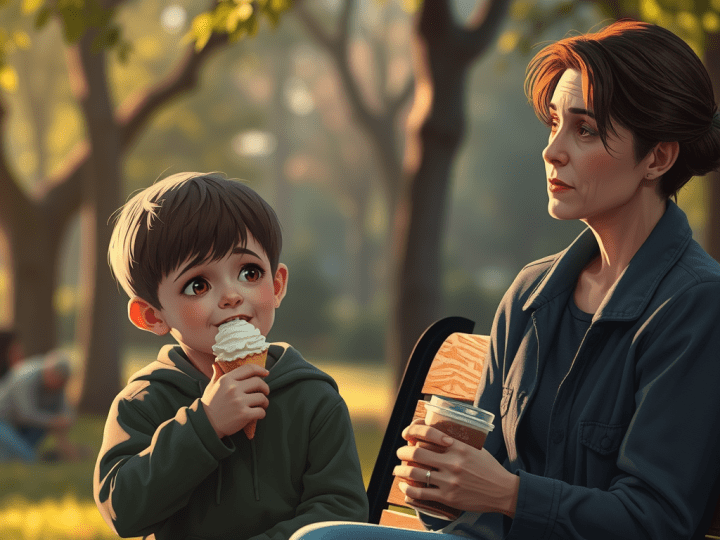
De regreso al parque, la madre mira a su hijo saboreando el segundo helado. Él sonríe. Ella también, pero en su mirada se adivina una pregunta que tal vez se responderá con el tiempo: ¿lo estoy haciendo bien?
Back in the park, the mother watches her son savoring the second ice cream. He smiles. She does too, but in her gaze, a question can be sensed that perhaps will be answered with time: am I doing it right?
Y quizás esa sea la pregunta más honesta de la crianza: aprender a equilibrar el amor con el límite, el sí con el no, la dulzura con la firmeza. Porque educar no es evitar que los hijos lloren, sino prepararlos para que, cuando la vida los haga llorar, sepan levantarse.
And maybe that’s the most honest question in parenting: learning to balance love with limits, the yes with the no, sweetness with firmness. Because educating isn’t about preventing children from crying, but preparing them so that, when life makes them cry, they know how to get back up.
Descubre más desde LA AGENCIA MUNDIAL DE PRENSA
Suscríbete y recibe las últimas entradas en tu correo electrónico.
