
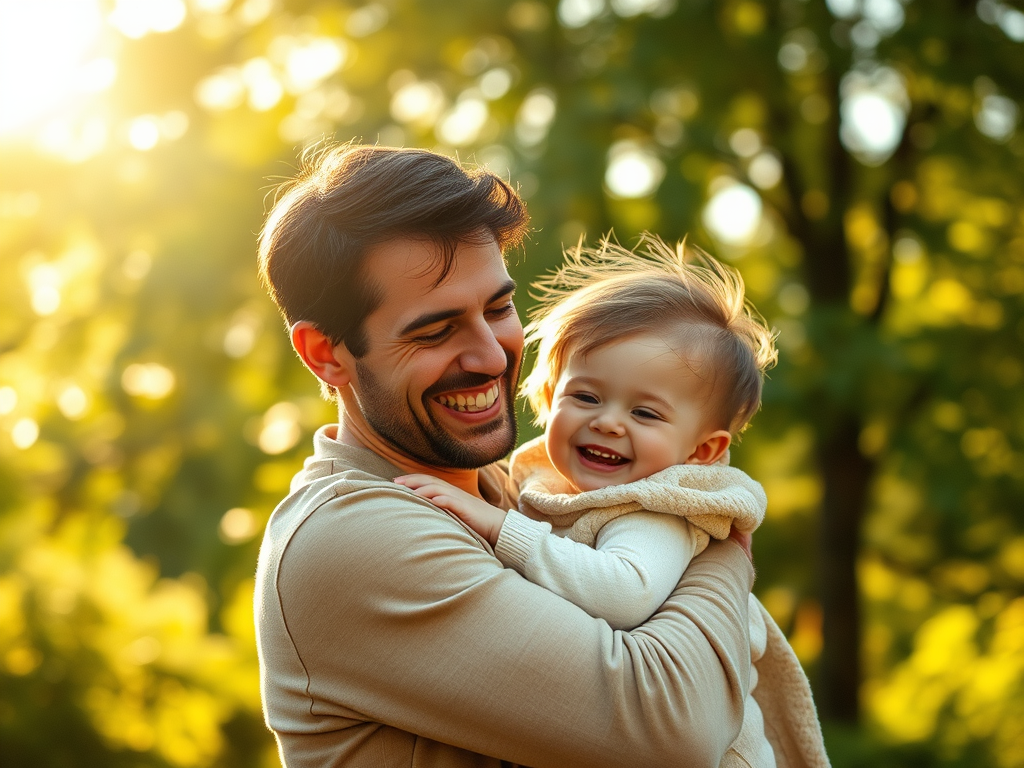
IMPORTANCE OF THE FATHER IN BUILDING ATTACHMENT

Ramon Morcillo López.
Doctor en Psicología,
 Lcdo. en Filosofía y
Ciencias de la Educación.
Escritor
Prensa Especializada
El psiquiatra John Bowlby (1907-1990) lo describe como “La tendencia innata de los humanos a crear vínculos afectivos estables.” Tendencia que presenta dos puestos básicos:
Psychiatrist John Bowlby (1907-1990) describes it as “The innate tendency of humans to create stable emotional bonds.” Trend that presents two basic positions:
- Biológico: consistente en la búsqueda de protección para asegurarse la supervivencia. Biological: consisting of the search for protection to ensure survival.
- Psicológico: obtener la seguridad necesaria para alcanzar la necesaria salud mental de cara a la convivencia. Psychological: obtaining the necessary security to achieve the necessary mental health for coexistence.
Ocurre que cuando el apego es estable y duradero en el tiempo, genera en el niño seguridad y confianza para su desarrollo personal. Hasta mediados del pasado siglo XX, el espíritu del tiempo marcado por los científicos sociales y literatura, afirmaban que la figura paterna carecía de un impacto significativo en el desarrollo emocional de los hijos. Fue a partir del nuevo siglo XXI, a raíz del impulso de la neurociencia cuando se empezaron a demostrar a través de neuroimágenes “los efectos negativos de la ausencia del padre tanto en el cerebro del niño como en el del padre”.
It happens that when the attachment is stable and lasting over time, it generates security and confidence in the child for his or her personal development. Until the middle of the last 20th century, the spirit of the time marked by social scientists and literature, affirmed that the father figure lacked a significant impact on the emotional development of children. It was from the new 21st century, as a result of the impulse of neuroscience, that “the negative effects of the absence of the father on both the child’s brain and the father’s brain” began to be demonstrated through neuroimaging.

A día de hoy ya una gran parte de la psicología reconoce que “asumir el rol de padre puede ser una de las experiencias más transformadoras de la vida de un hombre y que renunciar a la responsabilidad de cuidar a la madre limita sus posibilidades de construir una relación sana y cercana a los hijos”. Su importancia debe colocarse sobre todo en el apego y en la crianza, más que en su capacidad de proveedor, ya que son estos dos aspectos los que explican los efectos tanto en la salud física como emocional del niño.
Today, a large part of psychology recognizes that “assuming the role of father can be one of the most transformative experiences in a man’s life and that renouncing the responsibility of caring for the mother limits his possibilities of building a healthy and close relationship with the children.” Its importance should be placed above all on attachment and parenting, rather than on its capacity as a provider, since it is these two aspects that explain the effects on both the physical and emotional health of the child.
Y es que la paternidad además de ser un hecho biológico, también entraña una tarea, al ser el padre el que también participa en el proceso de guiar a los hijos hacia la plena madurez. En la tesis doctoral llevado a cabo por la Dra. Kristin Berg Nordahl. (2014) constató el hecho de que, si el padre tiene un contacto positivo con sus hijos, estos presentan menos signos de comportamiento descontrolado e indeseado.
Today, a large part of psychology recognizes that “assuming the role of father can be one of the most transformative experiences in a man’s life and that renouncing the responsibility of caring for the mother limits his possibilities of building a healthy and close relationship with the children.” Its importance should be placed above all on attachment and parenting, rather than on its capacity as a provider, since it is these two aspects that explain the effects on both the physical and emotional health of the child. And fatherhood, in addition to being a biological fact, also entails a task, as the father is the one who also participates in the process of guiding his children toward full maturity. In the doctoral thesis carried out by Dr. Kristin Berg Nordahl. (2014) confirmed the fact that, if the father has positive contact with his children, they show fewer signs of uncontrolled and unwanted behavior.
Confirmando que la paternidad en ningún momento puede entenderse solo desde su dimensión biológica, sino que conlleva una responsabilidad, que no es otra que la protección, sustento y educación. https://kjonnsforskning.no/en/2015/09/dad-important-his-childrens-development
Confirming that parenthood at no time can be understood only from its biological dimension, but rather entails a responsibility, which is none other than protection, sustenance and education. https://kjonnsforskning.no/en/2015/09/dad-important-his-childrens-development
Pero ¿Cómo descubrimos el apego? El bebé desde que nace, muestra un repertorio de tres conductas innatas: llanto, balbuceo y sonrisa, realidad que motivan a las figuras de apego a aproximarse a él y le respondan, interacción que genera en el bebé los mapas cognitivos encargados de configurar el apego en su mente y ser la base de los distintos estilos de apego que. John Bowlby (1969) clasifica de la siguiente manera:
But how do we discover attachment? From birth, the baby shows a repertoire of three innate behaviors: crying, babbling and smiling, a reality that motivates attachment figures to approach him and respond, an interaction that generates in the baby the cognitive maps responsible for configuring attachment. in your mind and be the basis of the different attachment styles that. John Bowlby (1969) classifies as follows:
- Seguro. El niño sabe que puede confiar con su padre. Sure. The boy knows he can trust his father.
- Inseguro ansioso/ambivalente. El niño no confía en su padre. Sensación constante de inseguridad. Insecure anxious/ambivalent. The boy does not trust his father. Constant feeling of insecurity.
- Inseguro evitativo. El niño no puede contar con su padre, situación que le provoca sufrimiento. Precursor del: maltrato infantil, discordias maritales, traumas de los padres no resueltos, insensibilidad parental, disociación de la personalidad. Insecure avoidant. The child cannot count on his father, a situation that causes him suffering. Precursor to: child abuse, marital discord, unresolved parental trauma, parental insensitivity, personality dissociation.
- Inseguro desorganizado. Es el apego de mayor riesgo. Es caótico y violento. Toda respuesta es impredecible. Unsafe disorganized. It is the highest risk attachment. It is chaotic and violent. Every response is unpredictable.

Por lo expuesto debemos tener presente como la mayoría de “las batallas” se organizan en la experiencia que se ha tenido en el marco familiar, y que el estilo de apego que llevaron a cabo los padres termina por replicarse en los hijos. Este se establece en los primeros meses de vida y sabemos que guarda una estrecha relación con el sistema inmune, siendo los sujetos pertenecientes a los dos últimos estilos los más indefensos ante enfrentamientos estresantes y mayor predisposición a romperse psicológicamente ante una situación de crisis (Bowlby, 1988), repercutiendo negativamente en el cerebro del niño dañándole en su desarrollo, en cuanto a capacidad para mantener relaciones personales, saber enfrentarse a las dificultades y regular sus emociones (Schore, 2000).
For this reason, we must keep in mind how the majority of “battles” are organized in the experience that has been had in the family framework, and that the attachment style carried out by the parents ends up being replicated in the children. This is established in the first months of life and we know that it has a close relationship with the immune system, with subjects belonging to the last two styles being the most defenseless in the face of stressful confrontations and the greatest predisposition to psychologically break down in a crisis situation (Bowlby, 1988), negatively impacting the child’s brain, damaging their development, in terms of their ability to maintain personal relationships, knowing how to face difficulties and regulating their emotions (Schore, 2000).
En relación al apego inseguro desorganizado, al niño le dificulta el surgimiento de un vínculo sano, pudiendo iniciar una dependencia malsana y falta de control de los impulsos (Simons, Paternite y Shore, 2001), que como constató en su investigación Louis Cozolino (2006), afecta a la psique y al sistema neurobiológico, dificultando en su salud mental y comportamental.
In relation to disorganized insecure attachment, it makes it difficult for the child to form a healthy bond, and may initiate an unhealthy dependency and lack of impulse control (Simons, Paternite & Shore, 2001), which, as Louis Cozolino (2006) found in his research, ), affects the psyche and the neurobiological system, making it difficult for your mental and behavioral health.
A tenor de lo expuesto y dado el incremento exponencial en temas relacionados con la salud mental, ¿Qué pasos debe llevar a cabo el padre para que surja un vínculo seguro? Son “Reconocimiento”, “amor en la pareja”, “Responsabilidad” y “Cercanía”. Reconocimiento, al ser el gran estimulador de autonomía permitiendo al niño ser. Crecer en sus aptitudes, aceptación y alcanzar sus pequeñas/grandes metas. Metas que puede alcanzar porque su padre lo cree. Creer es la llave que transforma “Efecto Pigmalión” (Rosenthal, R., Jacobson, L. 1980).
Given the above and given the exponential increase in issues related to mental health, what steps should the father take for a secure bond to emerge? They are “Recognition”, “love in the couple”, “Responsibility” and “Closeness”. Recognition, being the great stimulator of autonomy, allowing the child to be. Grow in your skills, acceptance and achieve your small/big goals. Goals he can achieve because his father believes it. Believing is the key that transforms the “Pygmalion Effect” (Rosenthal, R., Jacobson, L. 1980).
El niño tiene que sentir que lo necesitamos, qué es imprescindible. Haga lo que haga es importante. Reconocer es uno de los vínculos más potentes que puede tener el niño en la interacción con su padre. Pero ¿que entendemos por reconocimiento? Nuestro diccionario de la RAE lo define como acción o efecto de reconocer o reconocerse. Gratitud. Dice de gratitud: sentimiento por el cual nos consideramos obligados a reconocer, valorar el beneficio que recibimos y a corresponder a él de alguna manera. Como estamos viendo reconocer es un todo, es la clave del apego. Siempre una mirada de adhesión y aceptación. Ya hablamos en un anterior artículo de las neuronas espejo. Que sientan este reconocimiento es el gran paso determinante. Reconocer también es creer en el otro, re-conocerse; volverlo/volverse a conocer una y otra vez, redescubrir, y todo porque la mirada del padre va más allá. Está viendo, contemplando al ser que “es”. Lo está viendo como en esencia es; un ser único. Que ha venido a este mundo para su misión y usted como padre le va a ayudar a que sea una realidad. El “re” es su visión hecha con simpatía que lo va a imprimir todo. El reconocimiento es respeto, admiración y confianza. No solo hacia el otro, sino a todo lo que nos rodea. Lo sabemos, si queremos estimular la convergencia creativa, hay que reconocer al hijo, debemos aceptar su realidad para poder ser cambiada. Si él no existiera, usted no tendría la dicha de ser llamado padre. El cambio solo puede entrar, cuando somos capaces de aceptar la realidad. Estamos obligados antes que nada a dar valor al beneficio que recibimos. Estamos obligados a corresponder.
The child has to feel that we need him, that he is essential. Whatever you do is important. Recognition is one of the most powerful bonds that a child can have in interaction with his father. But what do we understand by recognition? Our RAE dictionary defines it as the action or effect of recognizing or recognizing oneself. Gratitude. It says gratitude: a feeling by which we consider ourselves obliged to recognize, value the benefit we receive and to respond to it in some way. As we are seeing, recognizing is a whole, it is the key to attachment. Always a look of adhesion and acceptance. We already talked about mirror neurons in a previous article. That they feel this recognition is the great decisive step. To recognize is also to believe in the other, to re-know oneself; rediscover it/reknow oneself again and again, rediscover, and all because the father’s gaze goes further. He is seeing, contemplating the being that “is”. You are seeing it as it essentially is; a unique being. He has come to this world for his mission and you as a father are going to help him make it a reality. The “re” is his vision made with sympathy that will print everything. Recognition is respect, admiration and trust. Not only towards each other, but towards everything around us. We know, if we want to stimulate creative convergence, we must recognize the child, we must accept his reality in order to be changed. If he did not exist, you would not have the joy of being called father. Change can only come when we are able to accept reality. We are obliged above all to give value to the benefit we receive. We are obliged to reciprocate.
Reconocer es conseguir que al final de cada jornada se encuentre campante, sin dudas ni miedos. Cuajado de pensamientos positivos. No es un estorbo. Esto también es salud. Reconocer al hijo también es verbalizar lo que hace, repetir sus pequeños o grandes hechos que cotidianamente lleva a cabo. Decirle; ¡Qué bien! con un gesto y una mirada que tranquilice. Transmitirle qué nos gusta cuanto hace. Qué estamos satisfechos y agradecidos. Confiar. Reconocer –recordemos a Rizzolatti, a Masaru Emoto – es favorecer conductas encaminadas a mantener sus puntos fuertes. Es motivar, realidad que se va a traducir en un aporte de valor, de ideas. Qué el hijo sepa que usted quiere que sepa, qué es feliz sintiéndose trampolín para el mantenimiento de su autonomía. Reconocer es realizar el seguimiento de aquellas tareas necesarias. El control es necesario para mejorar, lo contrario es ignorar al hijo. Es perderlo. Es vacío.
To recognize is to ensure that at the end of each day you are confident, without doubts or fears. Filled with positive thoughts. It’s not a hindrance. This is also health. Recognizing your child also means verbalizing what he or she does, repeating his small or large actions that he carries out daily. Tell him; Excellent! with a gesture and a look that reassures. Tell him what we like and how much he does. We are satisfied and grateful. Rely. To recognize – let us remember Rizzolatti, Masaru Emoto – is to favor behaviors aimed at maintaining their strengths. It is motivating, a reality that will translate into a contribution of value, of ideas. Let the child know that you want him to know, what makes him happy, feeling like a springboard for maintaining his autonomy. To recognize is to keep track of those necessary tasks. Control is necessary to improve, the opposite is ignoring the child. It’s losing it. It is empty.
Que el niño pueda sentir que se encuentra dentro de una “base segura” para explorar el mundo que le rodea, porque sabe que tiene de forma permanente la confianza y cariño de sus padres. El apego seguro le hará creer que es valioso, que merece ser amado y que su mundo es seguro. Con un abrazo, por ejemplo, el padre puede lograr sostener las emociones del niño, permitiendo canalizar sus emociones desbocadas. En el caso de inseguro, crecerá pensando que es malo, que no merece ser amado y que su mundo es inseguro (Levy y Orlans, 2014).
That the child can feel that he is within a “safe base” to explore the world around him, because he knows that he permanently has the trust and affection of his parents. Secure attachment will make you believe that you are valuable, that you deserve to be loved, and that your world is safe. With a hug, for example, the father can manage to support the child’s emotions, allowing his runaway emotions to be channeled. In the case of insecure, he will grow up thinking that he is bad, that he does not deserve to be loved and that his world is unsafe (Levy and Orlans, 2014).
El segundo punto para construir un apego seguro consiste en que el niño sienta y vea que sus padres se quieren, se apoyan “viviendo tiempo” trascurriendo con ellos, aprovechando estos espacios para revivir experiencias.
The second point to build a secure attachment is for the child to feel and see that his parents love each other, they support each other by “living time” spent with them, taking advantage of these spaces to relive experiences.

En cuanto a la responsabilidad paterna, el reconocido experto en el papel del padre, el Dr. Michael Lamb (2010), señala que el proceso de responsabilidad debe incluir cinco aspectos fundamentales: 1) participar en la vida del hijo, 2) darle cariño, 3) participar en el control en la toma de decisiones de los aspectos importantes para el niño, 4) ofrecerle lo necesario para su bienestar, 5) llevar a cabo el reconocimiento para que lo dicho sea cubierto.
Regarding paternal responsibility, the renowned expert on the role of the father, Dr. Michael Lamb (2010), points out that the responsibility process must include five fundamental aspects: 1) participate in the child’s life, 2) give affection , 3) participate in the control and decision-making of important aspects for the child, 4) offer him what is necessary for his well-being, 5) carry out the recognition so that what was said is covered.
Y es que las consecuencias emocionales que pueden aparecer ante la ausencia paterna es lo que se denomina “hambre del padre”, término que fue introducido por el psiquiatra James M. Herzog en 1980. Hambre emocional no satisfecha que con los años tiende a aumentar. En este sentido la psicóloga Margo Maine (2004) señala que el adulto que no ha podido encontrar la forma de relacionarse con su padre, o no ha resuelto sus sentimientos de pérdida, podría sufrir de esta hambre “por siempre”, siendo probable que, al casarse y tener hijos, traslade sus vacíos a nuevas relaciones. Si a esto añadimos que, por los motivos laborales que desde mediados del pasado siglo mantenemos, la mayoría de los hombres adultos hoy en día han tenido padres ausentes, el patrón va a continuar, dado que los hombres que fueron criados sin padres, acaban haciendo lo mismo con sus hijos. En el caso de los varones, esta ausencia les va a generar inseguridad y desconfianza, y en el caso de las mujeres, relaciones amorosas dependientes, “dentro del corazón roto de una niña, hay un padre ausente”.
And the emotional consequences that can appear due to paternal absence is what is called “father hunger”, a term that was introduced by psychiatrist James M. Herzog in 1980. Unsatisfied emotional hunger that tends to increase over the years. In this sense, the psychologist Margo Maine (2004) points out that the adult who has not been able to find a way to relate to his father, or has not resolved his feelings of loss, could suffer from this hunger «forever», and it is likely that, When you get married and have children, transfer your voids to new relationships. If we add to this that, due to the work reasons that we have maintained since the middle of the last century, the majority of adult men today have had absent fathers, the pattern will continue, given that men who were raised without fathers end up doing the same with your children. In the case of men, this absence will generate insecurity and distrust, and in the case of women, dependent love relationships, “within the broken heart of a girl, there is an absent father.”

Margo Maine. Los pasos a seguir para alcanzar un desarrollo armónico están en el comentado “reconocimiento” “responsabilidad” y “la cercanía” por parte de los padres, siendo el manejo de lenguaje pieza necesaria. Todos los que somos padres, hemos podido experimentar como al decir a nuestros hijos “esta noche vendrá el ratoncito Pérez apor tu diente” “acuéstate ya porque si vienen los Reyes Magos y te encuentran despierto, pasarán de largo sin dejarte los regalos” ellos durmieron convencidos porque era su padre el que se lo había dicho.
Margo Maine. The steps to follow to achieve harmonious development are in the aforementioned “recognition”, “responsibility” and “closeness” on the part of the parents, with language management being a necessary piece. All of us who are parents have been able to experience how when we told our children “tonight the tooth fairy will come for your tooth” “go to bed now because if the Three Wise Men come and find you awake, they will pass by without leaving you the gifts” they slept convinced because it was their father who had told them.
Por ello el juego de palabras como: “Eres único” “Te quiero hijo”, “Estoy orgulloso de ti” “Eres increíble, hijo” “Ha sido extraordinario lo que acabas de hacer” “Siempre he sabido que podías hacerlo” “Eres libre de decidir” “Amo a tu madre” “Tu madre es muy buena mujer”. Estas frases dichas al hijo le van a ayudar a una consistente identificación. En cuanto a las hijas, permitirles desarrollar una personalidad fuerte, autoestima alta, imagen corporal positiva, mayor competencia social y más confianza en su trato con los varones. Recordemos que “Un padre es la medida que la hija utiliza para juzgar a los hombres”.
That is why the play on words like: “You are unique” “I love you son”, “I am proud of you” “You are incredible, son” “What you just did was extraordinary” “I have always known you could do it” “You are free to decide” “I love your mother” “Your mother is a very good woman.” These phrases said to the child will help him to make consistent identification. As for daughters, allow them to develop a strong personality, high self-esteem, positive body image, greater social competence and more confidence in their dealings with men. Let us remember that “A father is the measure that a daughter uses to judge men.”
Referencias.
- Berg Nordahl, K (2014) Early father-child interaction in a father-friendly contex. (Doctoral Thesis) Faculty of Psychology, University of Bergen, Norway.
- Bowlby, J. (1969) Attachment and loss: Vol 1. Attachment. Nueva York:Basic.
- ____1988). A secure base: Clinical applications of attachment theory. Nueva York: Basic.
- Cozolino, L. (2002). The neuroscience of psychotherapy: Building and rebuilding the human brain. Nueva York: W.W. Norton and Company.
- ______. (2006). The neuroscience of human relationships: Attachment and the developing social brain. Nueva York: W.W. Norton and Company.
- Geary, D.C. (2000). Evolution and proximate expresión of human paternal investment. Psychological Bulletin, 126(1), 55-57.
- Lamb, M.E. (2010) The role of the father in child development. (5ª ed.) Nueva Jersey: John Wiley and Sons, Inc.
- Levy, T. y Orlans, M. (2014) Attachment, trauma, and healing: Understanding and treating attachment disorder in children, families and adults. Londres y Filadelfia: Jessica Kingsley Publisher.
- Maine, M. (2004). Father hunger: The impact of fathers on daughter. Nueva York. Gurze Books.
- Rosenthal, R., Jacobson, L. (1980) Pygmalion en la escuela. Expectativas del maestro y desarrollo intelectual de alumno. Editorial Marova, Madrid.
- Schore, A (2000). Attachment and the regulation of the right brain. Attachment and Human Development, 2(1), 23-47.
- _____. (2003). Affect dysregulation and disorders of the self. Nueva York y Londres: W.W. Norton and Company.
- _____. (2012). The science of the art of psychotherapy. Nueva York y Londres: W.W. Norton and Company.
- _____. (2017). All Our Sons: The developmental neurbiology and neuroendocrinology of boys at risk. Infant Mental Health Journal, 38(1), 15-52.
- Simons, K. J., Paternite, C.E. y Shore, C. (2001). Quality of parent/adolescent attachment and aggression in Young adolescents. Journal of Early Adolescence, 21, 182-203.
Descubre más desde LA AGENCIA MUNDIAL DE PRENSA
Suscríbete y recibe las últimas entradas en tu correo electrónico.

