

Botanical Nights: Farru, Michel Camilo and Tomatito
Cover Photo: Michel Camilo y Tomatito.

Periodista – Prensa Especializada
Primero el recinto. Un lugar de ensueño para conciertos de verano. En plena Ciudad Universitaria de Madrid, en la avenida Complutense, el Real Jardín Botánico Alfonso XIII, es ajeno a la terrible ola de calor de este mes de julio con una temperatura ideal en esta noche de finales de mes.
First the enclosure. A dream place for summer concerts. In the heart of the University City of Madrid, on Avenida Complutense, the Alfonso XIII Royal Botanical Garden, is oblivious to the terrible heat wave of this month of July with an ideal temperature on this night at the end of the month.
Comienza la actuación con el primer artista del cartel, el bailaor de ilustre dinastía bailaora sevillana, Antonio Fernández Montoya, El Farru, que se presenta en escena vestido de negro, lejos de momento de su estilo multicolor personalísimo. De momento. Baila solo, uno de sus clásicos zapateados para introducirnos a la percusión.
The performance begins with the first artist on the bill, the dancer from the illustrious Sevillian bailaora dynasty, Antonio Fernández Montoya, El Farru, who appears on stage dressed in black, far from his highly personal multicolored style. For now. Baila solo, one of his classic tap dances to introduce us to percussion.
Su elenco: La gran protagonista fue sin duda la música y la guitarra de Josemi Carmona, uno de los grandes del flamenco jazz, gran compositor del último Ketama. Para mi subjetiva opinión lo mejor de esta primera parte. La voz profunda de Joni Cortés. Al teclado José Fernández y José Vidal a cargo de la batería y cajón.
Your cast: The great protagonist was undoubtedly the music and the guitar of Josemi Carmona, one of the greats of flamenco jazz, a great composer of the latest Ketama. For my subjective opinion the best of this first part. The deep voice of Joni Cortés. On the keyboard José Fernández and José Vidal in charge of the drums and cajón.
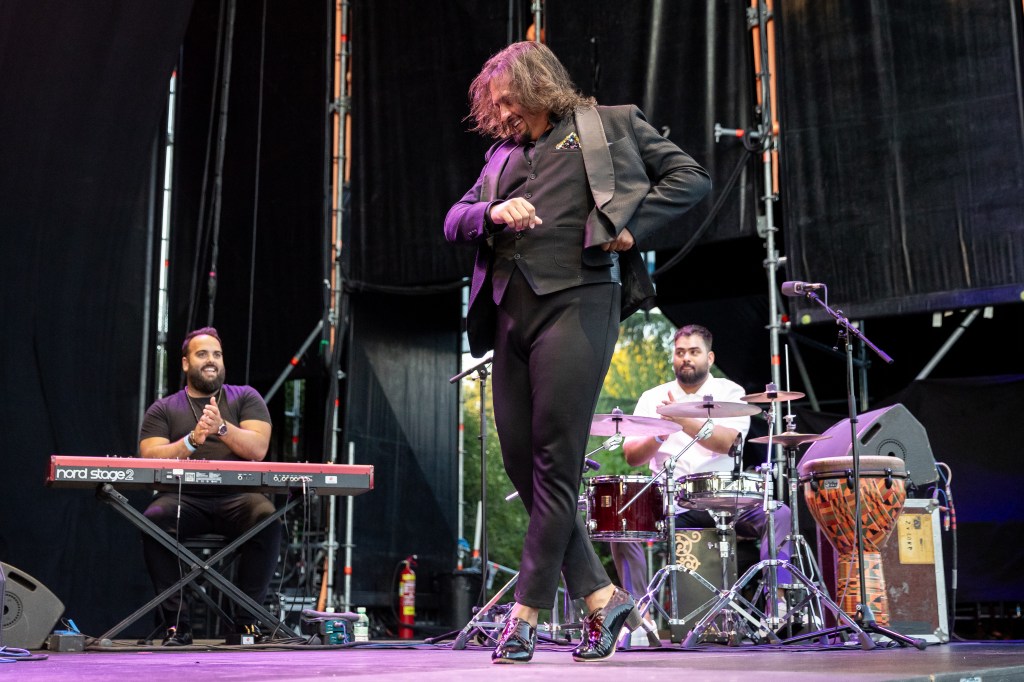
No se prodigó mucho El Farru. Tres actuaciones incluido ese final, ahora sí, tan suyo, con chaqueta roja y adornos de plata en hombros y omóplatos, tocando la guitarra en un concierto de jazz, para después terminar bailando por fandangos, jazz latino al rojo vivo.
El Farru did not lavish much. Three performances including that ending, now yes, so much his, with a red jacket and silver ornaments on the shoulders and shoulder blades, playing the guitar in a jazz concert, to later end up dancing fandangos, red-hot Latin jazz.
Antes de ese final apoteósico, bailó por soleá y por bulerías. No es posible desprender la mirada de los pies del bailaor. Bordan filigranas increíbles, son de un virtuosismo difícil de lograr, pero él ha hecho posible lo casi imposible. Por ese casi imposible es reconocido mundialmente, por ese casi imposible ha dejado de ser hermano de, hijo y nieto de, para alzarse con su personalidad artística inigualable. El Farru es El Farru por mérito propio. La dinastía le viene por añadidura. La buena esencia en frasco pequeño.
Before that tremendous finale, he danced por soleá and bulerías. It is not possible to take your eyes off the bailaor’s feet. They embroider incredible filigree, their virtuosity is difficult to achieve, but he has made the almost impossible possible. For that almost impossible he is recognized worldwide, for that almost impossible he has ceased to be the brother of, son and grandson of, to rise up with his incomparable artistic personality. El Farru is El Farru on his own merit. The dynasty comes in addition. The good essence in a small bottle.
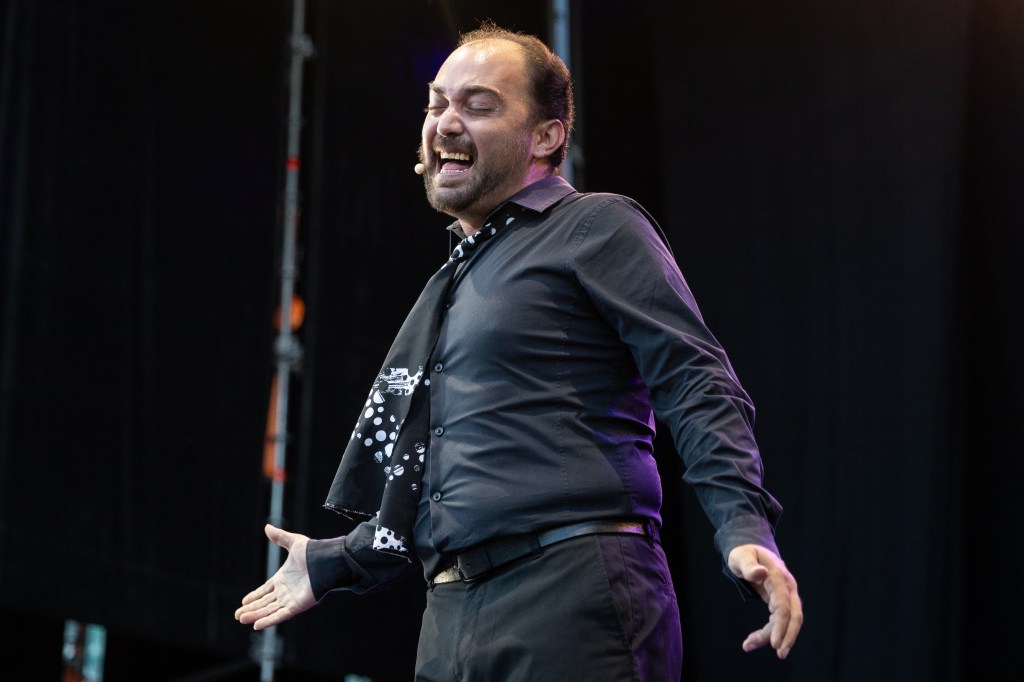
Tras el baile por soleá del protagonistas, hubo un concierto instrumental de jazz, marca Josemi Carmona; un cante por bulerías en clave protagonista de Joni Cortés; un sensacional tango “Viviré” por instrumentos y voz. Otro concierto de jazz. Y el final con El Farru guitarrista y bailaor. ¡Lolailo!
After the soleá dance by the protagonists, there was an instrumental jazz concert by Josemi Carmona; a cante for bulerías in the lead key of Joni Cortés; a sensational tango “Viviré” for instruments and voice. Another jazz concert. And the finale with El Farru guitarist and bailaor. lolailo!
Los grandes protagonistas de la noche: Michel Camilo y Tomatito.
The great protagonists of the night: Michel Camilo and Tomatito.
Tomatito, José Fernández Torres, gitano de Almería, 64 años ¡y ya tiene biznietos! Su historia con la guitarra le ha convertido en un icono mundial del instrumento flamenco por excelencia y con él, en icono del jazz, clásica; premios nacionales e internacionales. A día de hoy, su currículo ocupa varias páginas, de la trayectoria que solo puede ser la de un genio construido a base de vocación, trabajo, amor por la música y por la guitarra.
Tomatito, José Fernández Torres, a gypsy from Almería, 64 years old, and he already has great-grandchildren! His history with the guitar has made him a world icon of the flamenco instrument par excellence and with him, an icon of jazz, classical; national and international awards. To this day, his curriculum occupies several pages, of the trajectory that can only be that of a genius built on vocation, work, love for music and for the guitar.
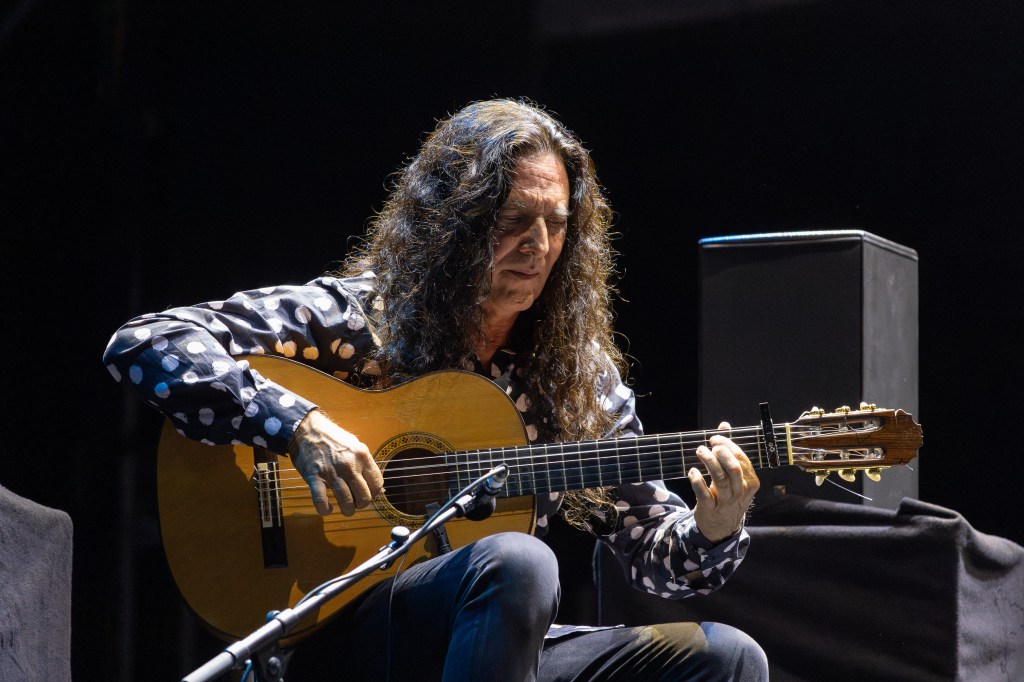
Estuvo dieciocho años acompañando a Camarón de la Isla, a quién por confesión propia “hubiera acompañado toda la vida”. Pero Camarón se fue en 1992 y creo que siguió guiando a su compañero de tantos años desde el más allá. Ya antes, había grabado cosas como concertista y con Camarón, pero a partir de la triste fecha, Tomatito comenzó a crecer como compositor, como concertista en solitario y con otros grandes de la música. Con Michel Camilo, ese excelso pianista de jazz latino dominicano, comenzó su historia hace más de veinticinco años y desde entonces no pierden ocasión de reencontrarse. Se sienten bien juntos, se compenetran, se entienden, se quieren, son virtuosamente cómplices.
He spent eighteen years accompanying Camarón de la Isla, whom by his own confession “he would have accompanied all his life”. But Camarón left in 1992 and I think he continued to guide his companion of so many years from the afterlife. Before, he had recorded things as a soloist and with Camarón, but from that sad date, Tomatito began to grow as a composer, as a solo soloist and with other great musicians. Their story began more than twenty-five years ago with Michel Camilo, that sublime Dominican Latin jazz pianist, and since then they have not missed an opportunity to meet again. They feel good together, they get along, they understand each other, they love each other, they are virtuously accomplices.

Esa noche de julio en los Jardines del Botánico Alfonso XIII, hicieron cosas maravillosas. Dieron comienzo con una versión tanguera del maestro Astor Piazzola, que ya está incorporado al flamenco por múltiples artistas; después, de su álbum conjunto Spain forever, esa memorable Our Spanish Love Song; emocionaron luego con esa bulería compuesta por Tomatito, A mi niño José, único hijo varón del maestro, heredero suyo a la guitarra, el ya conocido por méritos propios, José del Tomate.
That July night in the Alfonso XIII Botanical Gardens, they did wonderful things. They began with a tango version by maestro Astor Piazzola, who is already incorporated into flamenco by multiple artists; then, from their joint album Spain forever, that memorable Our Spanish Love Song; They moved later with that bulería composed by Tomatito, To my child José, the maestro’s only son, his heir to the guitar, the already well-known on his own merits, José del Tomate.
Siguiendo sus rutas internacionales llegó Agua e Vinho del compositor, guitarrista y pianista brasileño Egberto Gismonti; Armando’s Rhumba, emocionante homenaje a Chick Corea, autor de la canción; no podía faltar la conocidísima Gnossiennes nº 1 de Eric Satie. Nunca pudo imaginar Satie los diversos caminos y versiones que seguiría su impresionismo musical; Manha de Carnaval, composición del guitarrista brasileño Luiz Bonfá, otro grande de la música. Interpretación fuera de serie de Tomatito.
Following his international routes came Agua e Vinho by the Brazilian composer, guitarist and pianist Egberto Gismonti; Armando’s Rhumba, an emotional tribute to Chick Corea, author of the song; I couldn’t miss the well-known Gnossiennes No. 1 by Eric Satie. Satie could never imagine the various paths and versions that his musical impressionism would follow; Manha de Carnaval, composition by the Brazilian guitarist Luiz Bonfá, another great musician. Outstanding interpretation of Tomatito.
Lo más grande: Michel y Tomatito invitan a escena a El Farru, Josemi Carmona, Joni Cortés al cajón, para marcarse unos fandangos a ritmo de jazz latino – piano, guitarras, cajón, baile – indescriptibles, de máxima belleza. ¡El aforo completo de las Noches del Botánico, en pie!
The greatest: Michel and Tomatito invite El Farru, Josemi Carmona, Joni Cortés on the cajón to stage some fandangos to the rhythm of Latin jazz – piano, guitars, cajón, dance – indescribable, of maximum beauty. The full capacity of the Botanical Nights, standing!
Y aún faltaba lo que todos esperábamos, de nuevo solos los dos protagonistas de esta inolvidable noche de verano madrileña: Una introducción al Concierto de Aranjuez del maestro Joaquín Rodrigo, donde se encontraron en fascinante cruce de caminos el piano de Michel Camilo y la versión de Tomatito, transcripta para guitarra flamenca en 2019. Un encuentro en un cruce que une sus dos universos, el flamenco y el jazz.
And what we all expected was still missing, again alone the two protagonists of this unforgettable summer night in Madrid: An introduction to the Concierto de Aranjuez by maestro Joaquín Rodrigo, where Michel Camilo’s piano and Tomatito’s version, transcribed for flamenco guitar in 2019, met at a fascinating crossroads. A meeting at a crossroads that unites their two universes, flamenco and jazz.
Un encuentro para la historia.
A meeting for history.
Todas las fotografías cortesía Fer González
All photographs courtesy Fer González
Descubre más desde LA AGENCIA MUNDIAL DE PRENSA
Suscríbete y recibe las últimas entradas en tu correo electrónico.
