

HEALTH: THE PLACEBO AND NOCEBO EFFECT
Existe una línea muy fina que separa la mente del cuerpo ya que la mayor parte de las sensaciones que experimenta nuestro organismo vienen precedidas por la mente, en otras palabras es decir que: «lo que la mente cree, el cuerpo lo experimenta«.
There is a very fine line that separates the mind from the body since most of the sensations experienced by our organism are preceded by the mind, in other words, what the mind believes, the body experiences.
Muchos afirman de que todas las enfermedades parten de la mente por lo que a través de ella se pueden curar o aliviar. Por ello sabemos que el efecto PLACEBO se basa en la mejora o la desaparición de los síntomas de una enfermedad en un paciente llevando a cabo un tratamiento SIN PROPIEDADES CURATIVAS REALES, en que los pacientes llegan a experimentar mejoría de los síntomas al ingerir sustancias o pastillas sin efectos que puedan relacionarse directamente con esa enfermedad, de tal modo QUE ES «LA MENTE» quien se encarga de convencer al cuerpo de esos efectos positivos de lo que ingiere y que son inexistentes.
Many affirm that all diseases start from the mind, so through it they can be cured or alleviated. That is why we know that the PLACEBO effect is based on the improvement or disappearance of the symptoms of a disease in a patient carrying out a treatment WITHOUT REAL CURATIVE PROPERTIES, in which patients experience improvement in symptoms by ingesting substances or pills without effects that can be directly related to that disease, in such a way that IT IS «THE MIND» who is in charge of convincing the body of those positive effects of what it ingests and that they are non-existent.
El EFECTO PLACEBO / THE PLACEBO EFFECT
El efecto placebo actúa principalmente sobre los síntomas más que sobre la enfermedad real.
The placebo effect primarily acts on the symptoms rather than the actual illness.
Este efecto puede tener un efecto terapéutico cuando el paciente que la ingiere cree que se trata de un medicamento realmente efectivo. Esta acción curativa o de mejoría resultante es lo que se denomina efecto placebo. Lo contrario del efecto placebo recibe el nombre de efecto nocebo.
This effect can have a therapeutic effect when the patient who ingests it believes that it is a really effective medicine. This healing or improvement action resulted in what is called the placebo effect. The opposite of the placebo effect is called the nocebo effect.
En estos casos, los pacientes desconocen que están siendo tratados con sustancias sin efecto, pero tienden a mejorar en una proporción similar a la mejora ocasionada por un medicamento real. A través de estos estudios, se ha comprobado que los circuitos de dolor y la secreción de opioides se modifican realmente ante la expectativa del placebo.
In these cases, patients are unaware that they are being treated with substances without effect, but they tend to improve in a similar proportion to the improvement caused by a real medicine. Through these studies, it has been proven that the pain circuits and the secretion of opioids are actually modified in the expectation of placebo.
En cuanto a la identificación del efecto placebo, existen cuatro tipos de estudios:
When it comes to the identification of the placebo effect, there are four types of studies:
- Grupo paralelo: este es el diseño más común en la práctica clínica; se establecen tres grupos, uno con la droga activa, otro con placebo, y otro sin tratamiento Parallel group: this is the most common design in clinical practice; three groups are established, one with the active drug, one with placebo, and one without treatment;
- Grupo abierto versus oculto: la droga y el placebo son administradas con o sin conocimiento del paciente; incluso, a veces los pacientes cruzan de un grupo a otro Open label vs. hidden: the drug and placebo are administered with or without the patient’s knowledge; sometimes, patients even cross over from one group to another;
- Condicionamiento basado en respuesta: este diseño utiliza varias fases; en la primera los investigadores enfatizan los beneficios del placebo y minimizan los de la droga activa; en la segunda, un estímulo doloroso menor se aplica en quienes reciben placebo comparado con quienes reciben la droga activa, aunque los participantes lo desconocen; en la fase final, se aplica el mismo estímulo doloroso a ambos grupos y se observa la respuesta Response-based conditioning: this design involves multiple phases; in the first phase, researchers emphasize the benefits of the placebo and minimize those of the active drug; in the second phase, a minor painful stimulus is applied to those receiving placebo compared to those receiving the active drug, although the participants are unaware of it; in the final phase, the same painful stimulus is applied to both groups, and the response is observed;
- Condicionamiento farmacológico: un grupo recibe la droga activa y placebo y es comparado con otro que recibe solo placebo. Pharmacological conditioning: one group receives the active drug and placebo and is compared to another group that receives only placebo.
Para que este efecto placebo funcione, es necesario dos mecanismos en la mente de la persona: el condicionamiento clásico y las expectativas que es cuando el paciente tiene justamente la expectativa de curarse mediante algo en concreto, lo que condiciona la respuesta de su organismo al tratamiento. A mayor expectativa de mejora, mayor resulta el efecto placebo, siendo a su vez el condicionamiento cada vez mayor y para que tenga éxito TRANSITORIO, pero la persona no lo sabe claro esta, entra en juego la percepción de la persona o paciente.
For this placebo effect to work, two mechanisms are necessary in the person’s mind: classical conditioning and expectations, which is when the patient has precisely the expectation of being cured by something in particular, which conditions the response of his body to the treatment . The greater the expectation of improvement, the greater the placebo effect, being in turn the increasing conditioning and for it to be successful TRANSIENT, but the person does not know this clearly, the perception of the person or patient comes into play.
Por ejemplo, en estos casos la mente de la persona tiende a medir la sensación de profesionalismo y competencia del profesional que lo tenga a cargo, como puede ser igualmente un masajista, un rehabilitador, un farmacéutico que administra el tratamiento.
For example, in these cases the person’s mind tends to measure the feeling of professionalism and competence of the professional in charge, such as a masseur, a rehabilitator, a pharmacist who administers the treatment.
Así mismo es determinante la sensación que el propio placebo crea en el paciente, y que tendrá que ver con su tamaño, precio, presentación, apariencia, etc. Y para entender este funcionamiento del efecto placebo se realizaron varias investigaciones psicológicas que compruebas cómo reacciona el cuerpo en relación al cerebro cuando se administran estas sustancias inocuas, demostrado en pacientes con enfermedades a largo plazo, que generan diversos niveles de dolor, como Parkinson, demencia o epilepsia, que han visto mejorar sus síntomas gracias al efecto placebo y su gran poder de sugestión.
Likewise, the sensation that the placebo itself creates in the patient is decisive, and that will have to do with its size, price, presentation, appearance, etc. And to understand this functioning of the placebo effect, several psychological investigations were carried out that check how the body reacts in relation to the brain when these innocuous substances are administered, demonstrated in patients with long-term diseases that generate various levels of pain, such as Parkinson’s, dementia or epilepsy, which have seen their symptoms improve thanks to the placebo effect and its great power of suggestion.
En ocasiones el placebo se utiliza con fines terapéuticos, pero siempre y cuando se cumplan dos condiciones básicas:
Sometimes the placebo is used for therapeutic purposes, but as long as two basic conditions are met:
- Si no es posible recurrir a un tratamiento farmacológico eficaz. If it is not possible to resort to effective pharmacological treatment.
- Si se considera que puede ser útil para el desarrollo de una psicoterapia.se considera que puede ser útil para el desarrollo de una psicoterapia. If it is considered that it may be useful for the development of psychotherapy, it is considered that it may be useful for the development of psychotherapy.
Teniendo esto en cuenta, conviene tener claro que el placebo no cura la enfermedad primaria real, sino que sirve fundamentalmente para aliviar síntomas superficiales. El placebo puede ser muy útil en el tratamiento de pacientes hipocondríacos, en los que es muy frecuente que no exista una patología real y sí un problema psicológico.
Taking this into account, it should be clear that the placebo does not cure the actual primary disease, but rather serves primarily to relieve superficial symptoms. Placebo can be very useful in the treatment of hypochondriacal patients, in which it is very common that there is no real pathology and there is a psychological problem.
Por otra parte, el placebo o, mejor dicho, el efecto placebo, constituye el argumento fundamental que la medicina tradicional esgrime en contra de las terapias alternativas, que en la mayoría de los casos carecen de estudios clínicos concluyentes que demuestren su eficacia.
On the other hand, the placebo or, better said, the placebo effect, constitutes the fundamental argument that traditional medicine wields against alternative therapies, which in most cases lack conclusive clinical studies that demonstrate their efficacy.
El placebo que se utiliza en medicina suelen estar compuestos por azúcar (píldoras) o sueros carentes de actividad (líquidos). Sin embargo, cabe decir que su principal componente es el convencimiento del paciente de que está tomando un medicamento real.
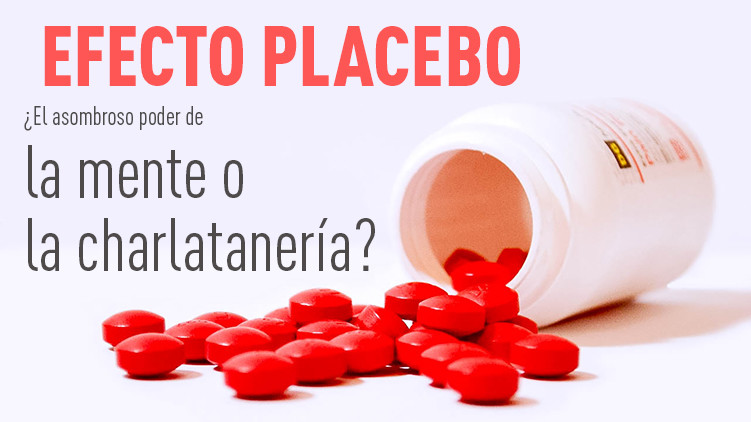
The placebo that is used in medicine is usually composed of sugar (pills) or serums lacking in activity (liquids). However, it can be said that its main component is the patient’s conviction that he is taking a real drug.
Si bien se desconoce aún mucho acerca de este proceso, o cualquier otro que se base en una creencia y que tenga resultados tangibles, es un fenómeno muy interesante SI, como objeto de estudio, en el que el pensamiento llega a influir en procesos mentales básicos, hasta llegar a la modificación en el organismo, pero no cura y puede que como dice aquel viejo refran a lo mejor te salga más cara la lavada que la camisa.
Although much is still unknown about this process, or any other that is based on a belief and that has tangible results, it is a very interesting phenomenon YES, as an object of study, in which thought comes to influence basic mental processes , up to the change in the body, but it does not cure and maybe, as that old saying goes, maybe the washing will be more expensive than the shirt.
EL EFECTO NOCEBO / THE NOCEBO EFFECT
El efecto nocebo: “el lado oscuro” del efecto placebo
The nocebo effect: «the dark side» of the placebo effect
El concepto de efecto nocebo se engloba entre aquellos efectos inespecíficos de un tratamiento que son perjudiciales, como por ejemplo este seria un efecto que trata la influencia que tendría el internet sobre la salud de los pacientes ya que es mucha la gente que al sentirse algo mal ingresan al internet y van a su navegador de Google ponen que son esos síntomas que aprecias y ¡voilá! aparecen a continuación posibles enfermedades y muy a menudo nada esperanzador, produciendo angustia en quien consulto. Irónicamente, el tema se hace tan repetitivo y tan convincente para quien consultó que termina enfermando de verdad: eso es el Efecto Nocebo, fenómeno totalmente opuesto al Efecto Placebo.
The concept of nocebo effect is included among those unspecific effects of a treatment that are harmful, such as this would be an effect that deals with the influence that the internet would have on the health of patients since many people feel something bad they enter the internet and go to their Google browser, put that they are those symptoms that you appreciate and voila! possible illnesses appear next and very often nothing hopeful, producing anguish in whoever consults. Ironically, the topic becomes so repetitive and so convincing for those who consulted that they end up getting really sick: that is the Nocebo Effect, a phenomenon totally opposite to the Placebo Effect.
Los mecanismos involucrados en el efecto nocebo se clasifican en:
The mechanisms involved in the nocebo effect are classified as follows:
- Factores relacionados con el paciente: son importantes las diferencias de género (ej., mayor en mujeres que en hombres), presentar patología psiquiátrica previa (ej., mayor en ansiedad, depresión y somatizaciones), la personalidad de base (ej., mayor en personalidades pesimistas), el ambiente cultural (ej., concepto cultural de enfermedad) y la información que dispone el paciente acerca de su tratamiento (ej., formas de entregar información por parte del equipo tratante).
- Factores psicológicos: son importantes el condicionamiento conductual, las expectativas negativas y la sugestión, entre otros factores psicológicos.
- Factores neurobiológicos: varias substancias endógenas han sido identificadas, como involucradas. Entre ellas, colecistocinina (hiperalgesia nocebo), corticoides y el eje hipotálamo-hipófisis-adrenérgico, los opioides endógenos y la dopamina. La ansiedad anticipatoria producida por las sugestiones nocebo serían las desencadenantes de estos cambios neurobiológicos.
Finalmente, el reconocimiento de la importancia del efecto nocebo nos plantea numerosos desafíos tales como:
Finally, the recognition of the importance of the nocebo effect poses numerous challenges such as:
- Pensar en nocebo como la respuesta a efectos adversos a un tratamiento sólo una vez que se hayan descartado otras explicaciones. Think of nocebo as the response to adverse effects of a treatment only after other explanations have been ruled out.
- Estar atentos a como entregamos la información a nuestros pacientes respecto de los eventuales efectos adversos, teniendo en cuenta las expectativas que tienen éstos del tratamiento y tendiendo siempre a mejorar la relación terapéutica. Be attentive to how we deliver information to our patients regarding eventual adverse effects, taking into account their expectations of treatment and always tending to improve the therapeutic relationship.
- Todos los profesionales en salud deberíamos familiarizarnos con técnicas de información y comunicación apropiadas para enfrentar mejor el desafío de minimizar la respuesta nocebo y al mismo tiempo entregar información confiable acerca de los riesgos del tratamiento. All health professionals should familiarize themselves with appropriate information and communication techniques to better face the challenge of minimizing the nocebo response and at the same time providing reliable information about the risks of treatment.

Un grupo de científicos de la Health Sciences Center de Toronto, publicaron un estudio en el que dicen lo que creen los MÉDICOS sobre los efectos nocivos de internet sobre la medicina ya que cada vez se van convenciendo que la gente mientras más lee sobre tratamientos en internet, menos efectivos resultan ser debido al factor psicólogo de poca creencia en la efectividad del procedimiento médico que tiene en la realidad.
A group of scientists from the Health Sciences Center in Toronto, published a study in which they say what DOCTORS believe about the harmful effects of the internet on medicine since they are becoming increasingly convinced that the more people read about treatments on the internet , less effective turn out to be due to the psychological factor of little belief in the effectiveness of the medical procedure that it has in reality.
Debido a estas informaciones que pululan en el internet, los médicos hoy coinciden en la importancia de hablarle al paciente sobre los efectos secundarios de las medicinas que recetan, después de todo, la existencia del Efecto Nocebo es perfectamente discutible como preocupante debido a la interpretación que se da en dichos temas.
Due to this information that swarms on the internet, doctors today agree on the importance of talking to the patient about the side effects of the medicines they prescribe, after all, the existence of the Nocebo Effect is perfectly debatable as worrying due to the interpretation that occurs in these topics.
Descubre más desde LA AGENCIA MUNDIAL DE PRENSA
Suscríbete y recibe las últimas entradas en tu correo electrónico.


Reblogueó esto en ESPECIALISTAS EN ROPA DEPORTIVA & FITNESS.
Me gustaMe gusta