
XPLORALYA: ¡ESLOVENIA, Un destino sorprendente!

The Republic of Slovenia is in Central Europe between Austria, Hungary, Croatia, and Italy. With a small coastline leading up to the Adriatic Sea by the Gulf of Trieste in the Istrian Peninsula, this small yet picturesque country is considered a fantastic tourist destination for its innumerable natural attractions offered to visitors. It is also known for the best wines and its delicious, traditional food. To speak of Slovenia is to speak of people with big hearts with unique charisma and top tier hospitality.
La República de Eslovenia se encuentra en Europa Central, entre Austria, Hungría, Croacia e Italia. Con una pequeña costa que llega hasta el Mar Adriático, en el Golfo de Trieste, en la Península de Istria, este pequeño pero pintoresco país es considerado un destino turístico fantástico por sus innumerables atracciones naturales que ofrece a los visitantes. También es conocido por sus mejores vinos y su deliciosa comida tradicional. Hablar de Eslovenia es hablar de personas con grandes corazones, con un carisma único y una hospitalidad de primer nivel.
Becoming independent from Yugoslavia in 1991 following the Ten-Day War, it was one of the first ten countries to join the European Union in 2004. Furthermore, Slovenia adopted the Euro as its official currency in 2007.
Al independizarse de Yugoslavia en 1991 después de la Guerra de los Diez Días, fue uno de los primeros diez países en unirse a la Unión Europea en 2004. Además, Eslovenia adoptó el Euro como su moneda oficial en 2007.
With a surface area of 20,273km and predominately extensive areas of forests and mountains that cover more than half of its territory, Slovenia is considered as the third most forested country in Europe. Mount Triglav, standing at 9,396 ft with three peaks, is the symbol of Slovenia.
Con una superficie de 20,273 km y predominantemente extensas áreas de bosques y montañas que cubren más de la mitad de su territorio, Eslovenia es considerada como el tercer país más boscoso de Europa. El monte Triglav, que se alza a 9,396 pies con tres picos, es el símbolo de Eslovenia.

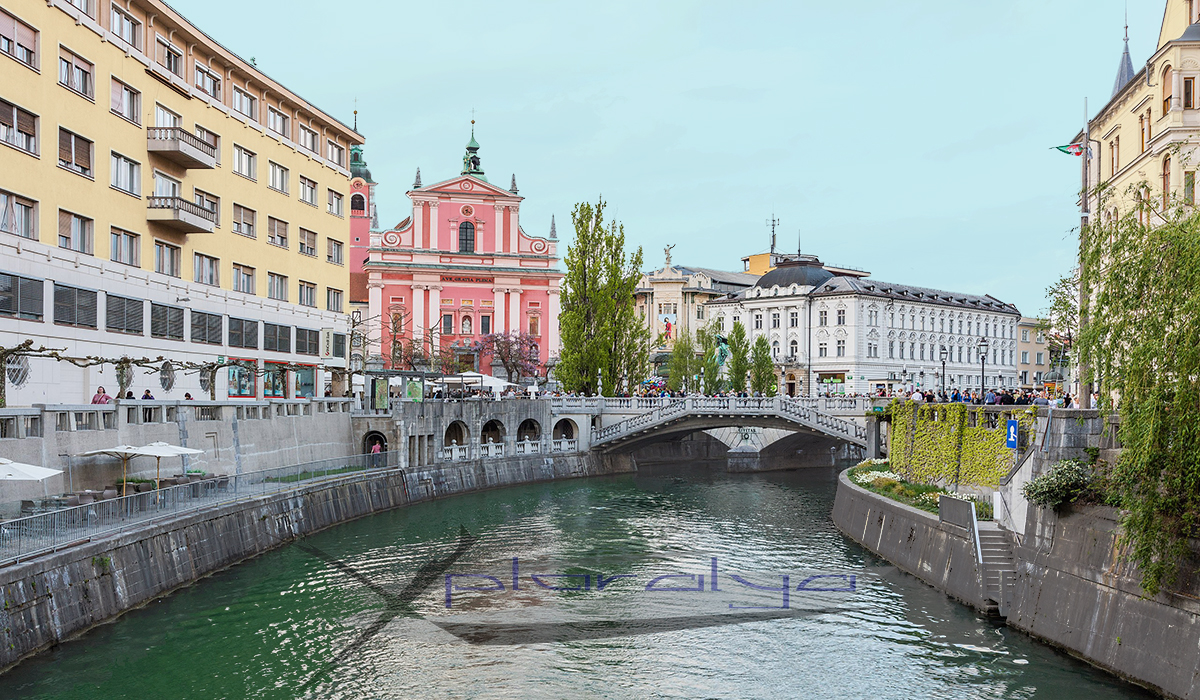
Its welcoming capital, Ljubljana, located on the banks of the Ljubljanica River, is a city full of joy. The architecture that mixes old and modern design gives it the air of a great metropolis. It is a city of culture, theaters, museums, and galleries. It is home to the oldest Philharmonic Academy in the world. More than 10,000 cultural events and 14 international music festivals take place in Ljubljana every year. During the summer, numerous cafes and restaurants dot the city and the banks of the Ljubljanica River, decorating the environment and making a visit mandatory and relaxing for its inhabitants and visitors. Also considered the city of youth, more than 50,000 students from different parts of the world study at the city’s universities and institutes that have an international reputation for their high academic standards. In addition, due to its geographical location, Ljubljana is the ideal starting point to discover this beautiful country.
Su acogedora capital, Ljubljana, ubicada a orillas del río Ljubljanica, es una ciudad llena de alegría. La arquitectura que mezcla el diseño antiguo y moderno le otorga el aire de una gran metrópolis. Es una ciudad de cultura, teatros, museos y galerías. Es hogar de la Academia Filarmónica más antigua del mundo. Más de 10,000 eventos culturales y 14 festivales internacionales de música tienen lugar en Ljubljana cada año. Durante el verano, numerosas cafeterías y restaurantes salpican la ciudad y las orillas del río Ljubljanica, decorando el entorno y haciendo que una visita sea obligatoria y relajante para sus habitantes y visitantes. También considerada la ciudad de la juventud, más de 50,000 estudiantes de diferentes partes del mundo estudian en las universidades e institutos de la ciudad que tienen una reputación internacional por su alto nivel académico. Además, debido a su ubicación geográfica, Ljubljana es el punto de partida ideal para descubrir este hermoso país.
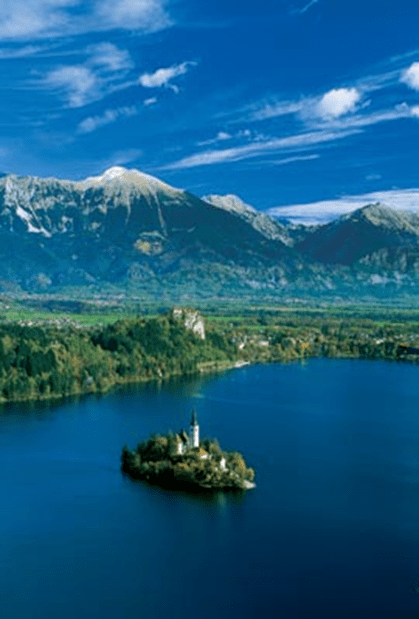
BLED… The only island native to Slovenia. Nestled in the middle of Lake Alpine surrounded by picturesque mountains, the island features a church from the seventeenth century that is considered a symbol for Slovenia and a popular tourist paradise. Due to its moderate climate, the thermal waters surrounding the island have been classified as an excellent resource for health and well-being. In addition to its natural beauty, it offers visitors relaxation, inspiration and tranquility. A hike around this wonderful lake is a magical experience.
BLED… La única isla nativa de Eslovenia. Ubicada en el centro del Lago Alpine rodeado de pintorescas montañas, la isla cuenta con una iglesia del siglo XVII que es considerada un símbolo de Eslovenia y un paraíso turístico popular. Debido a su clima moderado, las aguas termales que rodean la isla han sido clasificadas como un excelente recurso para la salud y el bienestar. Además de su belleza natural, ofrece a los visitantes relajación, inspiración y tranquilidad. Una caminata alrededor de este maravilloso lago es una experiencia mágica.
Walking from the coast to the «Region of Karst» is a real surprise: olive groves, extensive vineyards, cherry trees, and peach orchards make up the framework for an enchanting landscape. Below its roots lies an underground world— the most beautiful on the planet.
Caminar desde la costa hasta la «Región de Karst» es una verdadera sorpresa: olivares, extensos viñedos, cerezos y huertos de duraznos conforman el marco de un paisaje encantador. Debajo de sus raíces se encuentra un mundo subterráneo, el más hermoso del planeta.

It is said that there are more than 8,000 grottos and karst pits in Slovenia that were created by the disappearance of rivers. Twenty of these calcareous treasures have been opened and adapted for tourism.The famous Grottos of Postónia are considered as natural and cultural heritage. Today, you can visit by taking a train; the lights will allow you to admire the splendid underground world and its geological past. These grottos are considered the most visited caves in Europe. A guided tour is the best option.
Se dice que hay más de 8.000 grutas y pozos kársticos en Eslovenia que fueron creados por la desaparición de ríos. Veinte de estos tesoros de calcáreo han sido abiertos y adaptados para el turismo. Las famosas Grutas de Postojna se consideran patrimonio natural y cultural. Hoy en día, se pueden visitar tomando un tren; las luces te permitirán admirar el espléndido mundo subterráneo y su pasado geológico. Estas grutas son consideradas las cuevas más visitadas de Europa. Una visita guiada es la mejor opción.
The caves of Sckocjan are composed of a chain of eleven caves featuring submerged wells, natural bridges and hollows along with many other geological and natural features. This landmark has been considered by UNESCO as a worldwide natural and cultural patrimony since 1986. The caves can be visited throughout the year.
Las cuevas de Sckocjan están compuestas por una cadena de once cuevas que cuentan con pozos sumergidos, puentes y cavidades naturales, junto con muchas otras características geológicas y naturales. Este hito ha sido considerado por la UNESCO como un patrimonio natural y cultural mundial desde 1986. Las cuevas se pueden visitar durante todo el año.

The picturesque towns along the Adriatic coast such as Piran, Izola, Koper and Portoroz offer a unique beauty with a variety of first-class accommodations, a fully equipped marina, thermal baths and casinos. In the summer, the towns host an abundance of cultural events, outdoor entertainment and sporting events. Located not too far from the coast, the beauties of Istria with quaint and hospitable villages are waiting for you.
Las pintorescas ciudades a lo largo de la costa adriática como Piran, Izola, Koper y Portoroz ofrecen una belleza única con una variedad de alojamientos de primera clase, un puerto deportivo totalmente equipado, balnearios y casinos. En verano, las ciudades acogen una abundancia de eventos culturales, entretenimiento al aire libre y eventos deportivos. Situadas no muy lejos de la costa, las bellezas de Istria con sus encantadores y hospitalarios pueblos te esperan.

LIPICA… Did you know that the Lipizzan horse originated from the Karst region? Lípica has been the home for the Lipizzan breed for more than four centuries. Noble, intelligent, and easy to train, the Lippizaner differs from other breeds by its extraordinary abilities. Lipizzaner’s have a unique characteristic: they are born black or dark brown, but over the years their coats become lighter. Eventually, between the ages of 5-10, they are completely white. You can visit the stables and admire the breed’s unique characteristics and skills. Today, Lípica is the most popular tourist attraction, including recreational centers with riding schools, hotels, golf courses, swimming pools and casinos. Additionally, it is known as the most important region for riding events.
LIPICA… ¿Sabías que el caballo lipizzano se originó en la región de Karst? Lípica ha sido el hogar de la raza lipizzana durante más de cuatro siglos. Nobles, inteligentes y fáciles de entrenar, los lipizzanos se diferencian de otras razas por sus habilidades extraordinarias. Los lipizzanos tienen una característica única: nacen de color negro o marrón oscuro, pero a lo largo de los años su pelaje se aclara. Eventualmente, entre las edades de 5 a 10 años, son completamente blancos. Puedes visitar las cuadras y admirar las características y habilidades únicas de la raza. Hoy en día, Lípica es la atracción turística más popular, incluyendo centros recreativos con escuelas de equitación, hoteles, campos de golf, piscinas y casinos. Además, es conocida como la región más importante para eventos ecuestres.
Slovenia offers a variety of accommodation from expensive luxury hotels to moderately priced ones. Slovenian gastronomy is characterized by an abundance of traditional Slovenia dishes, always accompanied by the excellent wines of the three wine regions. Due to the influence of neighboring countries, you can taste a strudel or wiener schnitzel from Austria, risotto or ravioli from Italy and goulash from Hungary.
Eslovenia ofrece una variedad de alojamientos que van desde hoteles de lujo caros hasta los de precio moderado. La gastronomía eslovena se caracteriza por la abundancia de platos tradicionales de Eslovenia, siempre acompañados de los excelentes vinos de las tres regiones vinícolas. Debido a la influencia de los países vecinos, podrás degustar un strudel o wiener schnitzel de Austria, risotto o ravioli de Italia y goulash de Hungría.

«Come to feel the charm and the Slovenian hospitality. The person who visits it once wants to return again and again.»
«Ven a sentir el encanto y la hospitalidad eslovena. La persona que la visita una vez quiere volver una y otra vez.»
Descubre más desde LA AGENCIA MUNDIAL DE PRENSA
Suscríbete y recibe las últimas entradas en tu correo electrónico.

