
Exclusive interview with Maestro Luis Ernesto Ortiz: «Art as destiny, research as vocation, and light as legacy».

Hablar con el Maestro Luis Ernesto Ortiz es adentrarse en un universo donde la pasión, la disciplina y la espiritualidad dialogan con la historia del arte.
To speak with Maestro Luis Ernesto Ortiz is to enter a universe where passion, discipline, and spirituality intertwine with art history.
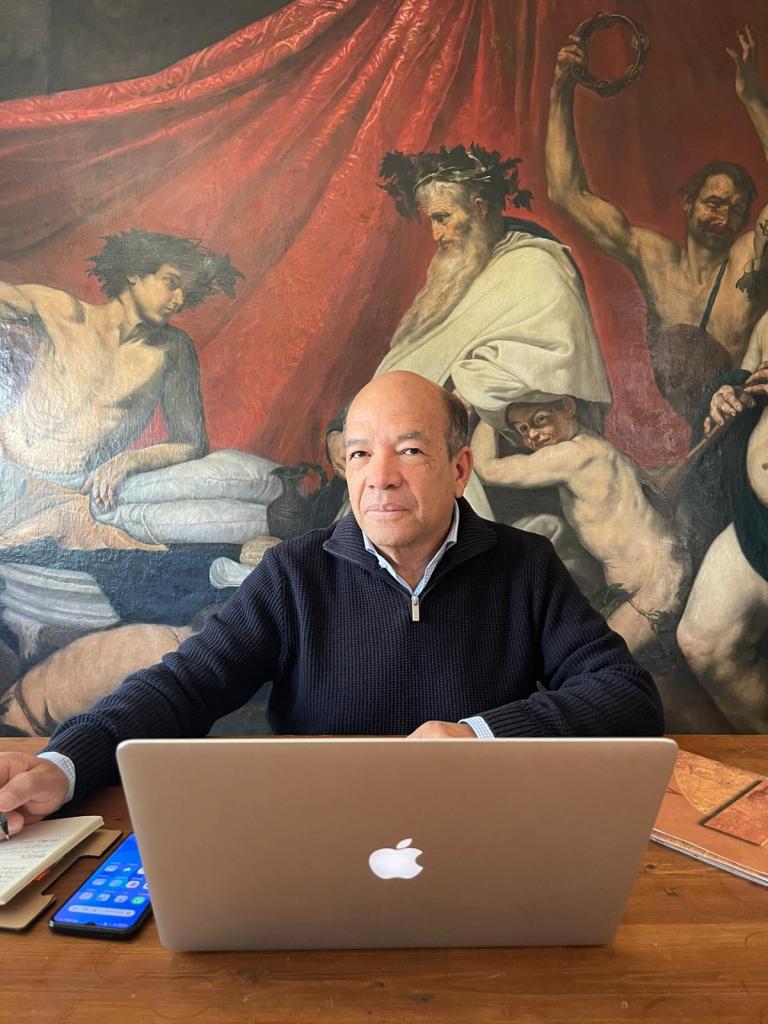
Pintor, investigador, galerista, conservador y broker internacional de los Old Masters, y sobre todo, un hombre de fe y familia. Su palabra es testimonio vivo de la pasión por el arte y la verdad histórica.”Ortiz ha dedicado su vida a un propósito único: dar voz a las obras y devolverles su lugar en la historia.
A painter, researcher, gallery owner, curator, and international broker of Old Masters, and above all, a man of faith and family, Ortiz’s words are a living testament to his passion for art and historical truth. Ortiz has dedicated his life to a single purpose: to give voice to works of art and restore them to their place in history.
Desde sus inicios en la Universidad de la Sabana, pasando por la docencia, la pintura paisajista y la investigación de atribuciones, hasta convertirse en un referente en los circuitos artísticos de Nueva York, París, Ginebra o Nápoles, su trayectoria es la de un hombre que nunca dejó de aprender, explorar y arriesgarse. Y hoy con la humildad del investigador y la grandeza del maestro, nos comparte en esta entrevista su visión del arte, su legado y la fuerza espiritual que impregna cada uno de sus lienzos.
From his early days at the Universidad de la Sabana, through teaching, landscape painting, and attribution research, to becoming a leading figure in the art circles of New York, Paris, Geneva, and Naples, his career is that of a man who never stopped learning, exploring, and taking risks. And today, with the humility of a researcher and the grandeur of a master, he shares with us in this interview his vision of art, his legacy, and the spiritual power that permeates each of his canvases.
Trayectoria y formación / Career and training
CB ¿Luis, cómo recuerdas esos primeros años en la Universidad de la Sabana y qué huellas te dejaron como artista y ser humano? Luis, how do you remember those early years at the University of La Sabana and what mark did they leave on you as an artist and human being?
Mis años universitarios fueron muy edificantes. Curse bellas artes en la Universidad de la Sabana, la cual acababa de constituirse y buscaba tener el mejor profesorado. La educación fue excelente. No sólo buscaban formar artistas, sino también docentes. Nos decían que la docencia era la manera de mantenernos mientras nuestra carrera artística despegaba. Al principio éramos escépticos al respecto, ya que veíamos materias que para nosotros eran innecesarias. Pero estas materias luego nos ayudaron en nuestra carrera como profesores, gracias a ellas podíamos comunicar nuestros conocimientos a nuestros alumnos, desde niños hasta ancianos, con éxito. Los años que ejercí la docencia fueron igual de valiosos que los universitarios, aprendí muchas cosas mientras enseñaba.
My college years were very edifying. I studied fine arts at the University of La Sabana, which had recently been established and sought to have the best faculty. The education was excellent. They not only sought to train artists, but also teachers. They told us that teaching was the way to support ourselves while our artistic careers took off. At first, we were skeptical about it, as we saw subjects that we considered unnecessary. But these subjects later helped us in our careers as teachers; thanks to them, we were able to successfully communicate our knowledge to our students, from children to the elderly. The years I taught were just as valuable as my university years; I learned many things while teaching.
CB ¿En qué momento supiste que el arte sería el centro de tu vida y que dedicarías décadas a esta vocación? At what point did you know that art would be the center of your life and that you would dedicate decades to this vocation?
Creo que mi vocación hacia el arte comenzó gracias a mi abuelo Luis Alejandro. Éste era un gran dibujante, y tenía como hobby hacer bajorrelieves de madera. En estas láminas de madera, reproducía cuadros de Rembrandt y Rubens. Mientras que él los dibujaba, creció mi admiración por los grandes maestros, y mi gusto por las artes plásticas. En la secundaria ya pintaba, y gané todos los concursos de la escuela en la que estaba. Los premios solían ser materiales para dibujar y pintar y gracias a eso nunca me faltaron herramientas para hacer mis obras. También me influyó que en mi casa hubiera muchas pinturas de buenos artistas, entre ellos de pintores de la Escuela de la Sabana. Mi tío abuelo también se preocupó porque tuviéramos interés y conocimiento del arte. Nos llevaba a museos, como el Museo Nacional, y a conciertos de música clásica.
I think my vocation for art began thanks to my grandfather Luis Alejandro. He was a great draftsman, and his hobby was making wooden bas-reliefs. On these wooden sheets, he reproduced paintings by Rembrandt and Rubens. While he was drawing them, my admiration for the great masters and my love for the visual arts grew. In high school, I was already painting and won every competition at the school I attended. The prizes were usually drawing and painting materials, and thanks to that, I never lacked the tools to create my works. I was also influenced by the fact that there were many paintings by good artists in my house, including painters from the Escuela de la Sabana. My great-uncle also made sure that we had an interest in and knowledge of art. He took us to museums, like the Museo Nacional, and to classical music concerts.
Durante este periodo me surgió una oportunidad única. Pude aprender de una artista, que se formó con la Escuela del RIo Hudson, la técnica al óleo. Desde entonces he utilizado esa técnica para mis cuadros.
During this period, I had a unique opportunity. I was able to learn the oil painting technique from an artist who trained at the Hudson River School. I’ve used that technique in my paintings ever since.
CB ¿Cómo nació tu pasión paralela por la Historia del Arte y de qué manera esa mirada académica nutre tu pintura? How did your parallel passion for art history begin, and how does that academic approach inform your painting?
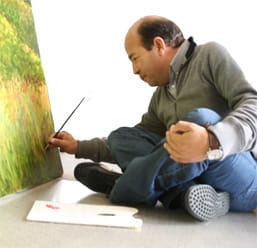
La pasión por la historia del arte creo que se debe a que tuve un magnífico profesor en la universidad. Admiraba ese conocimiento y cómo conducía la clase, era casi un relato bien contado; hacía énfasis en lo fundamental de cada artista o periodo de la historia del arte pero lo explicaba con pasión y gran talento. Era una inmersión en el conocimiento.
I think my passion for art history stems from having a wonderful professor at university. I admired his knowledge and how he conducted the class; it was almost like a well-told story. He emphasized the fundamentals of each artist or period in art history, but he explained it with passion and great talent. It was an immersion in knowledge.
Con el estudio de la historia del arte uno se relaciona con las técnicas de las composiciones, de las obras de los grandes maestros. Para mí fue fundamental conocer y admirar a los artistas que especialmente manejaron la luz con la aplicación y dominio del color. Me interesó muchísimo la teoría del color y su desarrollo, como la de Kandinsky, que es un teórico de la composición y del dominio del color. Tuve la oportunidad de estudiar a William Turner , Ivan Aivazovsky, los impresionistas como Monet y más contemporáneos a Mark Rothko, que han sido los que más han influido en mi pintura. Ya en lo que corresponde a Colombia me influenció inicialmente la escuela de la Sabana con pintores como Santamaria, Eugenio Peña y el gran Maestro Ariza. Del Maestro Eugenio Peña por la cercanía y amistad de su familia con la mía, uno de sus herederos y nieto Alfonso Villà, que me enseñó muchísimo, de él aprendí técnicas interesantisimas del paisaje.
By studying art history one becomes familiar with the techniques of composition, with the works of the great masters. For me it was essential to know and admire artists who especially handled light with the application and mastery of color. I was very interested in color theory and its development, such as that of Kandinsky, who is a theorist of composition and color mastery. I had the opportunity to study William Turner, Ivan Aivazovsky, the Impressionists like Monet and more contemporary ones like Mark Rothko, who have been the ones who have most influenced my painting. In what corresponds to Colombia, I was initially influenced by the Sabana school with painters like Santamaria, Eugenio Peña and the great Maestro Ariza. From Maestro Eugenio Peña, due to the closeness and friendship of his family with mine, one of his heirs and grandson Alfonso Villà, who taught me a lot, from him I learned very interesting landscape techniques.
CB: Tu recorrido va de pintor a galerista, de galerista a conservador, de conservador a broker, y de allí a investigador. ¿Cuál de esas facetas ha sido la más desafiante y cuál la más enriquecedora? Your journey spans from painter to gallery owner, from gallery owner to curator, from curator to broker, and from there to researcher. Which of these facets has been the most challenging and which the most rewarding?
Yo siempre he creído que todo lo que se aprenda lo edifica a uno y como siempre he estado inmerso en lo relacionado con el arte hay etapas que se van presentando. Siempre surge algo inesperado y como mi interés ha sido no dejar pasar lo que puede aportar al trabajo he explorado y desarrollado muchas actividades, siempre relacionadas con el arte; ganando o perdiendo, pero haciendo.
Yo siempre he creído que todo lo que se aprenda lo edifica a uno y como siempre he estado inmerso en lo relacionado con el arte hay etapas que se van presentando. Siempre surge algo inesperado y como mi interés ha sido no dejar pasar lo que puede aportar al trabajo he explorado y desarrollado muchas actividades, siempre relacionadas con el arte; ganando o perdiendo, pero haciendo.
Así empecé, por ejemplo, cuando estaba en la Universidad. Había que enmarcar una obra, me pareció fácil hacerlo; así que averigüé cómo se hacía, dónde se compraban los materiales y resulte enmarcando, luego montando una galería donde se prestaban esos servicios y se vendían cuadros míos o de muchos compañeros de la Universidad. Más adelante como pintor aprendí técnicas de conservación de obras y también ya me llamaban para arreglar obras de arte. Así surge una etapa interesante donde me llegaban obras para conservación. Un dia me llaman de un importante Banco, que tuvo un grandísimo problema con la bóveda donde guardaban las obras de arte, se les había inundado, ellos tenían un gran problema, pues había obras de gran valor. Me dieron el trabajo y a raíz de ello me llaman para conservar la colección de la Presidencia de ese mismo banco, y allí conozco a una persona que manejaba todo lo relacionado con el Protocolo de la presidencia. Esta Sra resultó ser una Condesa de una casa Europea. Ella tenía una gran colección de arte con artistas importantes europeos. Ahí entre en contacto directo con grandes obras.
That’s how I started, for example, when I was at university. A work needed to be framed, and it seemed easy to do; so I found out how it was done, where the materials were purchased, and I ended up framing, then setting up a gallery where those services were provided and paintings of mine or those of many of my university colleagues were sold. Later, as a painter, I learned conservation techniques, and they also called me to fix works of art. This is how an interesting stage arose where works of art came to me for conservation. One day, they called me from an important bank, which had a huge problem with the vault where they kept the works of art; it had flooded. They had a huge problem, because there were works of great value. They gave me the job and as a result, they called me to preserve the collection of the Presidency of that same bank, and there I met a person who handled everything related to the Protocol of the presidency. This woman turned out to be a Countess of a European house. She had a large art collection with important European artists. There I came into direct contact with great works.
Old Masters Art Brokers y el mundo del corretaje internacional / Old Masters Art Brokers and the world of international brokerage
CB ¿Luis, que sentiste al tener en tus manos por primera vez un Veronés, un Rubens o un Rembrandt para investigarlos o negociarlos? Luis, what did you feel when you held a Veronese, a Rubens, or a Rembrandt in your hands for the first time, to research or negotiate with them?
Cuando conocí a la Condesa ella muy amablemente me comentó que si yo podría ver su colección, pensé que sería para conservación pero con gran sorpresa me comentó que si me interesaría organizarla, investigarla y quizás vender alguna obra, a lo que dije que si; me dio mucha emoción.
When I met the Countess, she very kindly asked me if I could see her collection. I thought it would be for conservation, but to my great surprise, she asked me if I would be interested in organizing it, researching it, and perhaps selling some works, to which I said yes; I was very excited.
Hice alguna gestión en Europa y surge otra sorpresa: me entrega una obra de Paolo Cagliari el Veronés en la mano sin recibo ni nada, absoluta confianza en mí. Así me inicié en el negocio de las obras de arte antiguo, La experiencia fue muy constructiva por que así conocí otro mundo totalmente desconocido en mi país, entrando al circuito de los museos, expertos casas de subasta y lo que se relaciona con ese mercado desconocido para mi en ese momento.
I did some paperwork in Europe and another surprise arose: he handed me a work by Paolo Cagliari the Veronese without a receipt or anything, he trusted me completely. That’s how I got started in the business of ancient works of art. The experience was very constructive because it gave me insight into another world completely unknown in my country, entering the circuit of museums, expert auction houses and everything related to that market unknown to me at that time.
Mi primera venta importante de arte antiguo fue un Rubens, precioso.
My first major sale of old art was a Rubens, beautiful.
CB: Old Masters Art Brokers ha tejido vínculos con ciudades como Nueva York, Ginebra, París y Nápoles. ¿Cuál ha sido la enseñanza más valiosa de moverse en estos circuitos internacionales? Old Masters Art Brokers has forged links with cities like New York, Geneva, Paris, and Naples. What has been the most valuable lesson from working in these international circles?
Para la presentación de las obras antiguas en los mercados había que organizar la documentación e investigar lo que faltaba, de allí surge el área de la investigación que es interesantísima por que está muy vinculada a la historia del arte en todos los casos. En los primeros trabajos recuerdo que había que consultar muchísimo. El Internet estaba iniciando, por lo que había que desplazarse a las bibliotecas que en mi país eran limitadas. Había que tomar apuntes, transcribir y enviar por correo postal los folios que eran paquetes pesados y tomaban muchísimos días en llegar y luego esperar la respuesta otro tanto de tiempo. Podría ser más de un mes. Eso lo soluciono la tecnología de hoy en dia que es instantánea y demora lo que tardemos en leer; qué cambios .
For the presentation of old works at markets, it was necessary to organize the documentation and investigate what was missing, from there arises the area of research, which is extremely interesting because it is closely linked to the history of art in all cases. In the first jobs I remember that I had to consult a lot. The Internet was just starting, so I had to go to libraries, which in my country were limited. I had to take notes, transcribe and send by postal mail the pages that were heavy packages and took many days to arrive and then wait for a response for the same amount of time. It could be more than a month. That is solved by today’s technology, which is instantaneous and takes as long as it takes to read; what changes!
Yo recuerdo en los inicios del corretaje y buscando la certificación de las obras lo difícil que era llegar a los máximos expertos de cada artista. Ellos por lo general atienden a los que ya están vinculados dentro del circuito del arte pero tocar la puerta sin recomendación era difícil, me imagino que como son académicos tienen poco tiempo disponible. Fue un trabajo duro buscar el reconocimiento y aceptación que se dio con el tiempo. Actualmente tenemos en investigación obras importantes como una de Santa Caterina del Carracci entre otras. Y establecido vínculos con expertos, Institutos para la investigación de las artes o artistas con Docentes de Universidades y galerías de gran trayectoria.
I remember, at the beginning of the brokerage and seeking certification of the works, how difficult it was to reach the top experts of each artist. They generally attend to those who are already linked within the art circuit, but knocking on the door without a recommendation was difficult. I imagine that since they are academics, they have little time available. It was hard work seeking the recognition and acceptance that came with time. Currently, we have important works under research, such as one of Santa Caterina by the Carracci, among others. And we have established links with experts, Institutes for art research, or artists with professors from universities and galleries with extensive experience.
CB ¿Qué significa para ti, la confianza que te han depositado coleccionistas e instituciones al entregar piezas de tanto valor histórico y económico? What does the trust collectors and institutions have placed in you by donating pieces of such historical and economic value mean to you?
La confianza y la credibilidad se gana con el tiempo, este circuito es muy pequeño y cualquier error te puede afectar enormemente; por eso yo pienso que siendo correcto y diciendo la verdad es la base para el éxito y más en este campo donde las cifras son importantes pero no solo las cifras si no lo que puede incidir una obra en la historia del arte.
Trust and credibility are earned over time. This circuit is very small, and any mistake can have a huge impact. That’s why I believe that being honest and telling the truth is the foundation for success, especially in this field where numbers are important, but not just numbers, but also the impact a work can have on art history.
CB ¿Cómo se logra un equilibrio entre el rigor académico y la sensibilidad estética al momento de autenticar o reatribuir una obra maestra? How do you strike a balance between academic rigor and aesthetic sensibility when authenticating or reattributing a masterpiece?
El rigor académico debe primar sobre la sensibilidad estética ya que el método científico nos acerca más a obtener mejores resultados.
Academic rigor must prevail over aesthetic sensitivity, since the scientific method brings us closer to achieving better results.
Labor como investigador en atribuciones / Work as a researcher in attributions
CB: Luis, tu también eres investigador especializado en atribuciones. ¿Cómo empiezas el proceso cuando llega a tus manos una obra que se cree es de un gran maestro? Luis, you’re also a researcher specializing in attributions. How do you begin the process when a work believed to be by a great master comes into your hands?
Inicialmente es cómo resolver un acertijo tienes unos elementos que yo diría que son como hilos conductores de los cuales debes ir jalando, recopilando, entrelazando y con estos vas tejiendo un bello tapiz . A veces estos hilos están rotos, otros están enredados y con nudos, y mi labor es ver qué hilos sirven, y saber como quitarle los nudos a los otros para poder seguir tejiendo.
Initially, it’s like solving a riddle. You have some elements that I would say are like threads that you must pull, collect, and intertwine, and with these you weave a beautiful tapestry. Sometimes these threads are broken, others are tangled and knotted, and my job is to see which threads work and know how to unknot the others so I can continue weaving.
Es muy interesante esa parte de traer a la luz una obra “dormida” como le dicen hoy en día, y que por lo general la propiedad tiene grandes ilusiones, así como muchas veces no tienen idea alguna de lo que poseen.
It’s very interesting to bring to light a «dormant» work, as they say nowadays, and the owners generally have great hopes, and often have no idea what they own.
Lo primero es ver la obra. Revisar que estudios científicos tienen, estudios técnicos, radiografías, IFR, estudios de la tela, etc. Luego la recopilación de documentos que se tengan, herencias, historia posible de donde ha estado, publicaciones, exposiciones.
The first step is to see the work. Review what scientific studies it has, technical studies, X-rays, IFR, fabric studies, etc. Then, gather any documents you have, inheritances, possible history of where it has been, publications, exhibitions.
Con base en ello empezamos a corroborar lo existente y esto nos va llevando al pasado. Son horas de biblioteca y libros, consultas, viajes, para al final presentarsela al Instituto especializado o el estudioso experto en el artista para corroboración y certificación. Se debe tener mucha paciencia y dedicación .
Based on this, we begin to corroborate what already exists, and this takes us back to the past. It takes hours of library and books, consultations, and travel, to finally present it to a specialized institute or expert scholar on the artist for corroboration and certification. It requires a lot of patience and dedication.
CB: Has retribuido obras, como un Ribera que antes se creía de Giordano. ¿Qué se siente al devolverle la identidad a una pieza? You’ve returned works, like a Ribera painting previously thought to be Giordano. How does it feel to restore a piece’s identity?
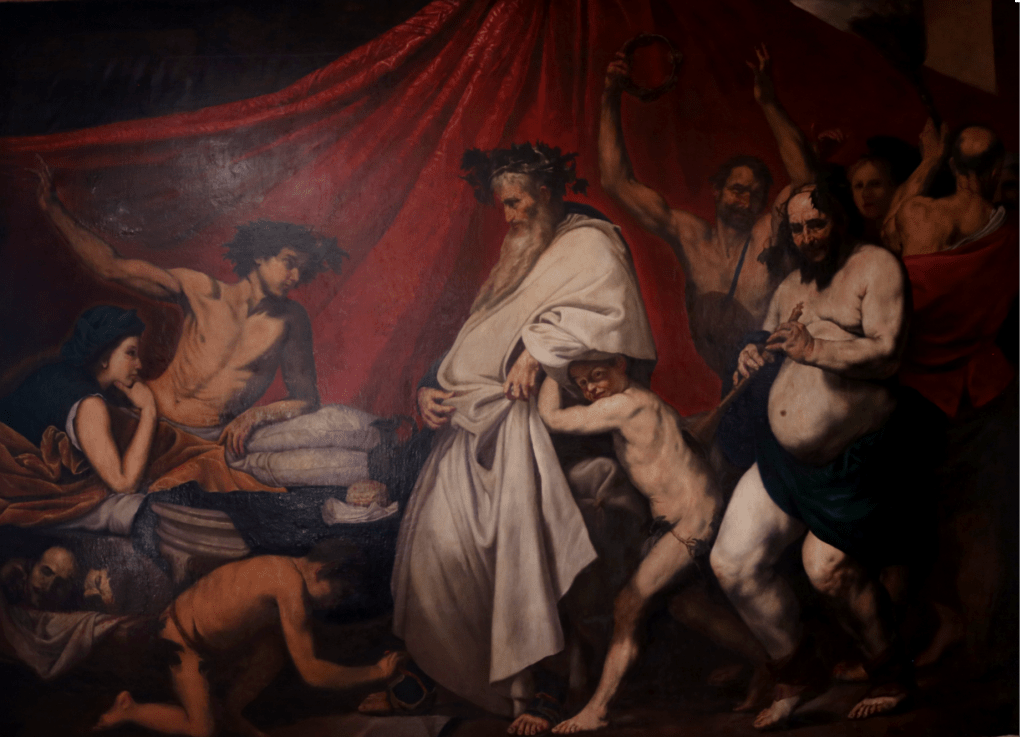
Es gratificante profesionalmente con base en documentos y rigor científico. Lograr corregir un error histórico que, sin juzgar a nadie, había afectado una obra de gran importancia histórica. Nos referimos a la obra de José de Ribera “Visita de Baco al poeta Icario”. Los expertos sólo tenían referencia de la obra por los inventarios de la obra que se había quemado en el incendio del Alcazar Real en 1734, de la cual habían sobrevivido 4 fragmentos. La obra de nuestra investigación en 1925, fue presentada al experto para su evaluación sobre una mala fotografía e información errada acerca de sus medidas; este conceptuó que era una copia de Giordano; concepto que quedó equivocado en libros de historia. Gracias a la investigación se pudo corregir la información, encontramos en la Biblioteca Nacional de Francia dos publicaciones del año 1953. La primera de Claire Gilbert, publicación en La Revue archéologique, Presses Universitaires de France. Esta publicación surge de la la revisión física de la obra, en ella pública puntos que desvirtúan la atribución de Augusto L Mayer a Luca Giordano e identifica los personajes basada en el conocimiento que tiene de un bajorrelieve en mármol del periodo Alejandrino; Gilbert dice que si Giordano hubiese copiado la del alcázar este tendría cinco años y sería un superdotado, en el mismo artículo hace referencias a la hija de Ribera y su esposa, lo mismo hace un análisis comparativo del color y los pigmentos concluyendo que la obra es de José de Ribera. La segunda publicación es en el Bulletin De L’INSTITUT FRANÇAIS EN ESPAGNE Nov. 1953 de Charles Picard (1883- 1965) gran historiador del arte y antropólogo quien en ese momento dirigía el Instituto de arte y de arqueología de Francia; ratifica lo expuesto por Claire Gilbert .
It is professionally rewarding, based on documents and scientific rigor. To correct a historical error that, without judging anyone, had affected a work of great historical importance. We are referring to José de Ribera’s work «Visit of Bacchus to the poet Icario.» The experts only had reference to the work from the inventories of the work that had burned in the fire at the Alcazar Real in 1734, of which 4 fragments had survived. The work of our research in 1925 was presented to the expert for evaluation based on a poor photograph and erroneous information about its measurements; he concluded that it was a copy by Giordano; a concept that was mistaken in history books. Thanks to the research it was possible to correct the information, we found two publications from 1953 in the National Library of France. The first by Claire Gilbert, published in La Revue archéologique, Presses Universitaires de France. This publication arose from the physical review of the work, in it she publishes points that contradict the attribution of Augusto L Mayer to Luca Giordano and identifies the characters based on her knowledge of a marble bas-relief from the Alexandrian period; Gilbert says that if Giordano had copied the one from the alcázar he would be five years old and would be gifted, in the same article he makes references to Ribera’s daughter and his wife, he also makes a comparative analysis of the color and pigments concluding that the work is by José de Ribera. The second publication is in the Bulletin De L’INSTITUT FRANÇAIS EN ESPAGNE Nov. 1953 by Charles Picard (1883-1965) great art historian and anthropologist who at that time directed the Institute of art and archaeology of France; it confirms what was stated by Claire Gilbert.
En la investigación encontramos que el estudio de la tela y su preparación es de origen Italiano. Las pruebas estratigráficas dan como resultado que los pigmentos utilizados son similares a los de las obras de Ribera.
In the investigation, we found that the study of the fabric and its preparation is of Italian origin. Stratigraphic tests show that the pigments used are similar to those in Ribera’s works.
Pero la mejor información de más de un año de investigación en la parte técnica se encontró a luz rasante que la obra está firmada. Lo anterior da la autoría sin discusión alguna. Por todo lo anterior se despierta una gran obra dormida que por errores o por diferentes circunstancias había quedado en el lugar equivocado de la historia del arte, siendo esta de gran importancia al ser la obra de tema mitológico más grande del periodo barroco como lo afirmó Claire Gilbert en 1953.
But the best information from more than a year of research in the technical part was found in plain light that the work is signed. The above gives the authorship without any discussion. For all the above, a great dormant work is awakened that due to errors or due to different circumstances had been left in the wrong place in the history of art, being this of great importance as it is the greatest work of mythological theme of the Baroque period as stated by Claire Gilbert in 1953.
CB: También has rescatado obras olvidadas como la de Eugène Pavy. ¿Qué te motivo a buscar esas “joyas dormidas” del arte? You’ve also rescued forgotten works, like those of Eugène Pavy. What motivated you to seek out these «sleeping gems» of art?
Para mí son retos que asumo y que me emocionan. Cuando uno ve una obra de gran calidad uno piensa que no puede ser que esté siendo ignorada, pero en el arte a veces prima más el nombre del autor que la misma obra. En el caso de Eugene Pavy al propietario se la subvalora la casa de subastas y la compañía de seguros, siendo ésta de altísima calidad y de un tema interesantísimo. Nos pusimos a la búsqueda y encontramos que la obra fue expuesta en la Royal Academy y publicada a doble página en el London News.. El coleccionista inmediatamente tuvo argumentos para que le diesen el valor y el lugar que le corresponde en la historia del arte.
For me, these are challenges that I take on and that excite me. When you see a work of great quality, you think that it can’t be that it’s being ignored, but in art, sometimes the name of the author is more important than the work itself. In the case of Eugene Pavy, the owner is undervalued by the auction house and the insurance company, although the work is of very high quality and deals with a very interesting subject. We started searching and found that the work had been exhibited at the Royal Academy and published on a double-page spread in the London News. The collector immediately had arguments to give it the value and place it deserves in the history of art.
Es gratificante hacer estos hallazgos para que las obras de grandes artistas tengan el lugar que les corresponde.
It is gratifying to make these discoveries so that the works of great artists have their rightful place.
CB ¿Qué criterios consideras fundamentales para determinar si una obra es auténtica o no corresponde al autor famoso que se cree? What criteria do you consider essential for determining whether a work is authentic or not from the famous author it is believed to be?
La parte científica no miente. La información documental como soporte a los expertos también es determinante en el momento de llegar a una atribución correcta.
The scientific evidence doesn’t lie. Documentary information supporting experts is also crucial in arriving at a correct attribution.
CB ¿Cuánto pesa la documentación histórica frente al análisis técnico y visual en tus investigaciones? How much weight does historical documentation have over technical and visual analysis in your research?
La documentación sirve como apoyo en las atribuciones, la parte científica es determinante ya que con la información se logran grandes resultados. Hoy en día existen bases de datos de muchos autores para ser confrontados con lo investigado técnicamente. La acertada revisión visual por lo general se obtiene con la experiencia, que al momento de revisar una obra se podría conceptuar que es mejor no dedicarle tiempo.
Documentation serves as support for attributions; the scientific aspect is crucial, since information can achieve great results. Today, there are databases of many authors that can be compared with technical research. A successful visual review is usually obtained through experience, which, when reviewing a work, might lead one to believe that it is better not to spend time on it.
CB ¿Podrías compartirnos un caso donde la investigación le haya permitido confirmar con certeza la autoría de una obra importante? Could you share with us a case where research has allowed you to confirm with certainty the authorship of an important work?
Si la obra de José de Ribera el Españoleto titulada “Visita de Baco al poeta Icario” es un logro profesional.
If the work of José de Ribera el Españoleto entitled “Visit of Bacchus to the poet Icario” is a professional achievement.
CB ¿Y algún otro caso donde la evidencia te haya llevado a concluir que no pertenecía al autor atribuido? And any other cases where the evidence has led you to conclude that it did not belong to the attributed author?
Una obra de Miró que presentaron con documentos donde supuestamente había estado expuesta en una exposición con un número específico y nombre; al revisar la documentación de las exposiciones encontré que supuestamente había sido exhibida pero el catálogo de la exposición no lo encontraba; me fui a la Biblioteca del Museo Reina Sofía por que alli tienen todo lo referente a Miro, Picasso y muchos contemporáneos. Busque en la colección de publicaciones el catálogo de la supuesta exposición pero el número que tenía la obra citada describe otra cosa completamente diferente en cuanto a nombre, medidas, etc. La conclusión es que lo que estaban tratando de presentar para certificar era una obra falsa. La fundación Miro tiene muy buena base de datos, pero hay gente que quiere presentar obras a la fundación para certificarlas con argumentos falsos. Aquel pequeño detalle como una posible publicación expuso la obra como falsa.
A work by Miró that they presented with documents showing that it had supposedly been exhibited in an exhibition with a specific number and name; when reviewing the exhibition documentation I found that it had supposedly been exhibited but I couldn’t find the exhibition catalogue; I went to the Library of the Reina Sofía Museum because they have everything related to Miro, Picasso and many contemporaries. I looked in the collection of publications for the catalogue of the supposed exhibition but the number that the cited work had describes something completely different in terms of name, measurements, etc. The conclusion is that what they were trying to present for certification was a false work. The Miro Foundation has a very good database, but there are people who want to present works to the foundation to certify them with false arguments. That small detail like a possible publication exposed the work as false.
CB ¿Qué caso de investigación consideras el más emocionante de tu carrera? Y o ¿Qué caso te marcó emocionalmente por la historia humana detrás de la obra investigada? Which research case do you consider the most exciting of your career? And which case left an emotional mark on you because of the human story behind the work you investigated?

Hace aproximadamente cinco años un coleccionista que tiene varias obras de Kandinsky me pidió documentar sus obras. Encontré que una de ellas es una gran pieza del arte moderno; Kandinsky hizo todo un estudio compositivo de la obra refiriéndose a la parte espiritual y la terrenal. El descubrimiento y la documentación de esta obra titulada “Himmlische und irdische trauer” (Dolor celestial dolor terrenal), de la que solo existía una mala fotografía en los catálogos razonados, hoy se ha corregido gracias a la investigación.
About five years ago, a collector who owns several works by Kandinsky asked me to document his work. I found one of them to be a great piece of modern art; Kandinsky made a whole compositional study of the work, referring to the spiritual and earthly aspects. The discovery and documentation of this work entitled “Himmlische und irdische trauer” (Heavenly Pain, Earthly Pain), of which only a poor photograph existed in the catalogues raisonnés, has now been corrected thanks to research.
Con esta también aprecie la parte humana de su creador. El 25 de abril de 1904, Kandinsky escribió una carta a Gabriele Münter relatando la «nueva forma en el desarrollo de su pintura» acababa de “encontrarse así mismo” , refiriéndose a esta pintura y a partir de ese momento Kandinsky da un giro total a su pintura. Las cartas son un elemento de gran importancia documental en esta obra; Kandinsky describe cómo se desarrollan los colores, su significado, su valor ante la teoría y la idea que desea expresar.
With this one, you also appreciate the human side of its creator. On April 25, 1904, Kandinsky wrote a letter to Gabriele Münter describing the «new way in the development of his painting» he had just «found himself», referring to this painting and from that moment on, Kandinsky took a complete turn in his painting. The letters are an element of great documentary importance in this work; Kandinsky describes how the colors develop, their meaning, their value in theory and the idea he wishes to express.
La obra se basa en dos bocetos, uno teórico y otro más figurativo; bocetos existentes en la Gabriele Münter- und Johannes Eichner-Stiftung.
The work is based on two sketches, one theoretical and the other more figurative; these sketches are available at the Gabriele Münter- und Johannes Eichner-Stiftung.
CB ¿Qué se siente al tener la responsabilidad de devolver o negar la identidad a una pieza que podría estar en un museo o colección privada? What does it feel like to have the responsibility of returning or denying the identity of a piece that could be in a museum or private collection?
Se siente qué al darle la correcta atribución a una obra podemos contribuir a que el legado del artista no quede vulnerado así como si la pieza no es de él se verá afectada por una mala atribución. El rigor científico y la verdad deben primar ante cualquier argumento o emoción. Hoy en día existen muchísimas herramientas científicas para llegar a la correcta atribución sin desconocer el altísimo valor que tienen los expertos que dedican su vida al estudio de un artista determinado. Ellos son los que tienen la última palabra como debe ser. Nosotros como investigadores aportamos lo mejor que se puede obtener para llegar a la verdad.
It feels like by giving the correct attribution to a work we can contribute to ensuring that the artist’s legacy is not violated, just as if the piece is not his, it will be affected by a wrong attribution. Scientific rigor and truth must prevail over any argument or emotion. Today there are many scientific tools to arrive at the correct attribution without ignoring the extremely high value of the experts who dedicate their lives to the study of a particular artist. They are the ones who have the last word, as it should be. We as researchers contribute the best that can be obtained to reach the truth.
CB ¿Cuál ha sido el desafío más complejo que has enfrentado en este campo? What has been the most complex challenge you have faced in this field?
La Provenance de José de Ribera el Españoleto titulada “Visita de Baco al poeta Icario”
The Provenance of José de Ribera the Spaniard entitled “Visit of Bacchus to the poet Icarius”
Esta obra ha sido un reto ya que siendo impecable la tradición reciente solo tenía referencia desde el año de 1925 , al ser una réplica de autor tenía un punto de partida con fecha de 1634. Existía un vacío de 291 años en la provenance; La investigación encontró una cita de A.L .Mayer que en 1925 una persona de apellido Viaud de Poitiers Francia le presentó la obra. Encontramos que M.Viaud se había casado con un Sr. de apellido Viaud. M.Viaud resultó ser de nacimiento Bruant . Comencé a indagar el apellido Bruant y resultó que era hija de Georges Bruant descendiente del famoso Arquitecto Liberal Bruant (1636-1697) que su hijo François Bruand (París, 22 de julio de 1679 –1732; fue el arquitecto que propuso la reconstrucción del Palacio Real de Madrid después del incendio y fue quien adquirió la obra en Italia, quizás con miras a colocarla donde estaba la que se quemó en la destrucción del Alcázar; El Trabajo no se lo dieron; -fue dado al arquitecto portugues Filippo Juvara (1678 -1736)- quedando la obra en Poitiers francia en manos de la familia Bruant.
This work has been a challenge since, although recent tradition is impeccable, it only had a reference from the year 1925, being an author’s replica it had a starting point dated 1634. There was a gap of 291 years in the provenance; The research found a quote from A.L. Mayer that in 1925 a person with the surname Viaud from Poitiers, France, presented him with the work. We found that M.Viaud had married a Mr. with the surname Viaud. M.Viaud turned out to be born Bruant. I began to investigate the surname Bruant and it turned out that she was the daughter of Georges Bruant, descendant of the famous Liberal Architect Bruant (1636-1697) and his son François Bruand (Paris, July 22, 1679 -1732; was the architect who proposed the reconstruction of the Royal Palace of Madrid after the fire and was the one who acquired the work in Italy, perhaps with a view to placing it where the one that burned in the destruction of the Alcázar was; The job was not given to him; -it was given to the Portuguese architect Filippo Juvara (1678 -1736)- leaving the work in Poitiers, France, in the hands of the Bruant family.
CB: Como colombiano que te mueves en círculos internacionales, ¿qué crees que aporta tu mirada latinoamericana a la investigación del arte europeo? As a Colombian who moves in international circles, what do you think your Latin American perspective contributes to the study of European art?
Personalmente es un sí se puede lograr cuando se propone llegar a una meta. ya que para mi era un objetivo profesional.
Personally, it is a yes, it can be achieved when you set out to reach a goal, since for me it was a professional objective.
Hoy en día muchos Jóvenes en mi país estudian Bellas artes por qué los motiva su vocación, la belleza, la estética; quizás quieren llegar a ser reconocidos como artistas, transformar y aportar algo al mundo del arte . Recomendaría mucho estudio y dedicación.
Today, many young people in my country study fine arts because they are motivated by their vocation, beauty, and aesthetics; perhaps they want to become recognized as artists, to transform and contribute something to the art world. I would recommend a lot of study and dedication.
CB: En tus estudios, ¿qué importancia tienen las nuevas tecnologías (análisis de pigmentos, radiografías, etc.) frente al ojo entrenado del experto? In your studies, how important are new technologies (pigment analysis, X-rays, etc.) compared to the trained eye of an expert?
Las nuevas tecnologías son apoyo científico; por ejemplo hay obras importantes no certificadas que al revisarlas se les encuentra información determinante que en muchos casos desvirtúan el examen del experto. Ejemplo los bocetos o trazos, pentimentos, , la forma de preparar la tela, moler el pigmento o el mismo tejido y la urdimbre hablan del autor y su lugar de creación. Se sabe de casos en Leonardo da Vinci que una huella generó toda una polémica que llegó a la corte. Estas son cosas que nos ayudan a desgranar la autoría y la historia de un cuadro. Sin ellas nos sería mucho más complicado y nos podríamos equivocar con mayor facilidad. El ojo experto ayuda, hay veces en las que solamente viendo una obra, puedes intuir que es falsa. Pero el que tengas detrás un estudio científico para corroborar o negar lo que tu intuición y tu ojo entrenado te ha dicho, nos facilita a la hora de dar atribuciones.
New technologies provide scientific support; for example, there are important uncertified works that, when reviewed, reveal crucial information that, in many cases, undermines the expert’s examination. For example, sketches or lines, pentimentos, the way the fabric is prepared, the grinding of the pigment, or the fabric and warp itself all speak of the author and its place of creation. There are known cases, such as Leonardo da Vinci’s fingerprint, where a print generated a controversy that reached court. These are things that help us unravel the authorship and history of a painting. Without them, it would be much more complicated, and we could make mistakes more easily. An expert eye helps; sometimes, just by looking at a work, you can sense that it is a fake. But having a scientific study behind you to corroborate or deny what your intuition and trained eye have told you makes it easier for us when attributing works.
CB ¿Cómo imaginas el futuro de la investigación en atribución de obras: más tecnológico, más académico o una mezcla inseparable de ambos? How do you envision the future of attribution research: more technological, more academic, or an inseparable blend of both?
Yo pienso que unidas, ambas deben complementarse para el bien de la historia del Arte. La academia acepta la parte científica como un elemento más que aporta para una buena atribución.
I think that together, both should complement each other for the benefit of art history. The Academy accepts the scientific component as another element that contributes to a proper attribution.
CB ¿Consideras que hoy en día se da más valor al mercado que a la investigación rigurosa, o aún prevalece la seriedad académica en este campo? Do you think that today more value is placed on the market than on rigorous research, or does academic seriousness still prevail in this field?
Pienso que el mercado sigue rigurosamente a la academia pero la academia también tiene en cuenta la parte científica. Los inversionistas no quieren riesgos.
I think the market closely follows academia, but academia also takes the scientific side into account. Investors don’t want risk.
CB ¿Cuál crees que es el mayor riesgo para un investigador al emitir un dictamen: el error, la presión del mercado o la falta de información documental? What do you think is the biggest risk for a researcher when issuing an opinion: error, market pressure, or a lack of documentary information?
Cuando existe la falta de información documental es muy difícil emitir un concepto; es preferible tardar en la investigación que equivocarse ya que es mucho lo que está en juego.
When there is a lack of documentary information, it is very difficult to issue an opinion; it is better to delay the investigation than to make a mistake, since much is at stake.
CB ¿Qué opinión tienes sobre el futuro de la investigación en arte en América Latina? What do you think about the future of art research in Latin America?
En Colombia por ejemplo ya están se realizando pruebas científicas; la estratigrafía, los IFR, Rayos X; se pueden saber los elementos que componen una estratigrafía pero la gran diferencia con Europa son las bases de datos obtenidas de cada artista en su periodo de creación; los laboratorios llevan muchísimos años reuniendo esta información para emitir un concepto acertado. En América Latina creo que hay interés en ser excelentes y seguir los pasos de la academia y la ciencia.
In Colombia, for example, scientific tests are already being carried out: stratigraphy, IFR, X-rays; you can know the elements that make up a stratigraphy, but the big difference with Europe is the databases obtained from each artist during their creative period; laboratories have been gathering this information for many years to issue an accurate concept. In Latin America, I believe there is interest in being excellent and following in the footsteps of academia and science.
CB: ¿Qué le dirías a los coleccionistas privados que dudan si vale la pena invertir en una investigación seria sobre la autenticidad de sus piezas? What would you say to private collectors who are unsure whether it’s worth investing in serious research into the authenticity of their pieces?
Es de muchísima importancia si quiere tener la certeza en la autenticidad de una obra de arte, esta debe estar bien documentada, es parte esencial de una buena pieza. Lo fundamental debe ser buscar asesoría antes de invertir
It is of utmost importance if you want to be certain of the authenticity of a work of art, it must be well documented, it is an essential part of a good piece. The fundamental thing should be to seek advice before investing.
CB ¿Hoy, que te motiva a seguir investigando después de tantos años y tantas obras? Today, what motivates you to continue researching after so many years and so many works?
Es parte de la pasión por el arte, cada obra es una historia, un reto y una experiencia positiva. El poder aportar al arte con el trabajo es edificante.
It’s part of the passion for art; each piece is a story, a challenge, and a positive experience. Being able to contribute to art through work is uplifting.
Su obra como pintor / His work as a painter

12 Almendros de primavera 13 Atardecer 14 Horizonte del llano
CB: Tus paisajes han sido descritos como “encuentros con la creación de Dios”. ¿Cómo entiende esa dimensión espiritual en tu trabajo? Your landscapes have been described as “encounters with God’s creation.” How do you understand this spiritual dimension in your work?
Para mí existe una conexión entre lo que observamos y nuestro interior. Cuando observamos un paisaje, este nos puede afectar emocionalmente, por su belleza, por su grandiosidad, por lo sublime que llega a ser. Cuando vemos un cuadro de un paisaje podemos llegar a sentir estas cosas. Creo que el reflejo de Dios está en su creación, y veo en los paisajes lo que es Dios. Veo belleza, calma, balance y a veces tengo sentimientos que las palabras no me dejan describir. Por eso mi obra es paisajista, porque quiero esparcir esa sensación que tengo al observar y deleitarme con la creación de Dios. Yo cuando veo un bello paisaje siempre digo que Dios es el mejor pintor.
For me, there’s a connection between what we observe and our inner selves. When we look at a landscape, it can affect us emotionally, because of its beauty, its grandeur, its sublime nature. When we see a painting of a landscape, we can feel these things. I believe God is reflected in his creation, and I see in landscapes what God is. I see beauty, calm, balance, and sometimes I have feelings that words can’t describe. That’s why my work is a landscape, because I want to spread that feeling I get when observing and delighting in God’s creation. When I see a beautiful landscape, I always say that God is the best painter.
CB: La luz es protagonista en tu pintura, casi un personaje central. ¿Cómo la concibes y cómo logras atraparla en el lienzo? Light is the protagonist in your painting, almost a central character. How do you conceive it and how do you capture it on the canvas?
Al concebir una obra no podemos estar ajenos a la teoría del color ; la escala cromática tiene valores que van del frío al cálido y ahí es donde acorde a lo que queremos manifestar en la obra le utilizamos. En este caso hacemos que por ejemplo para que la luz vibre en su máximo esplendor la paleta debe estar en torno al violeta o el rosa suave; como manifestaba Monet, en su momento, que no podía concebir un reflejo sin algo de violeta.
When conceiving a work we cannot be oblivious to color theory; the chromatic scale has values that go from cold to warm and that is where we use it according to what we want to express in the work. In this case, for example, so that the light vibrates in its maximum splendor, the palette must be around violet or soft pink; as Monet stated, at the time, that he could not conceive a reflection without some violet.
CB: Luis, sé de críticos que te han te han vinculado con Corot, Monet y Rembrandt. ¿Con qué tradición artística te sientes más cercano y qué lo diferencia de ella? Luis, I know critics have linked you to Corot, Monet, and Rembrandt. Which artistic tradition do you feel most connected to, and what differentiates you from them?
Yo pienso que me acerco más a los impresionistas, ellos buscaron la luz como un elemento que atrapa al espectador transmitiendo sensaciones al observar la obra; en el manejo del color en cuanto a la teoría lo que hicieron los impresionistas liderados por Monet es magistral no dejando de apreciar lo que hace con el color Mark Rothko que influye mucho en mi obra en la etapa de las atmósferas.
I think I am closer to the Impressionists, they sought light as an element that captures the viewer, transmitting sensations when observing the work; in the use of color in terms of theory, what the Impressionists led by Monet did is masterful, while I also appreciate what Mark Rothko does with color, which greatly influences my work in the atmospheres stage.
CB ¿Qué mensaje esperas que transmitan tus paisajes a las nuevas generaciones que los contemplan? What message do you hope your landscapes convey to the new generations who contemplate them?
Me gustaría que las personas en su cotidianidad en el ir y venir, se detengan un instante y vean lo que les rodea; la vida no es solo la selva de concreto, hay que observar la naturaleza; sentir y deleitarse en la belleza de la creación va más allá de lo que hoy en día se piensa que es vivir.
I would like people, in their daily lives of coming and going, to stop for a moment and look at what surrounds them; life is not just a concrete jungle; you have to observe nature; feeling and delighting in the beauty of creation goes beyond what is thought of today as living.
Exposiciones y gestión cultural / Exhibitions and cultural management
CB ¿Qué recuerdos guardas de la exposición en Colombia de Los desastres de la guerra de Goya? What memories do you have of the exhibition in Colombia of Goya’s The Disasters of War?
Eso fue un gran reto profesional; siempre pensaba ¿por qué en Colombia no se hacen exposiciones como lo hacen en Europa ? Dio la casualidad que por el tema de las obras antiguas hice una amistad con quien en su momento estaba comisariando la obra de Francisco De Goya, y surge el proyecto de llevar la colección de la serie de los desastres de la Guerra a Colombia. Nos propusimos realizar en dos ciudades importantes Bogota y Medellin. Se hizo con gran despliegue publicitario en hoteles, en las calles, en todo lado, como se debe hacer. Editamos un precioso libro hasta con CD multimedia. Lo hicimos con recursos propios . Infortunadamente a los pocos días de inaugurada se robaron una de las obras, lo que nos afectó muchísimo a la compañía y a todos los involucrados; al mes exacto se recupera la obra quedando ese sin sabor. Más adelante lo consideramos experiencia por lo vivido; no fue fácil ese mes. Lo positivo es que mucha gente visitó la exposición teniendo la oportunidad de conocer una faceta de Goya como grabador.
That was a great professional challenge; I always thought, why aren’t exhibitions held in Colombia like they are in Europe? It so happened that, due to the subject of old works, I became friends with the person who was curating the work of Francisco Goya at the time, and the project arose to bring the collection of the War Disasters series to Colombia. We planned to hold them in two important cities, Bogota and Medellin. It was done with great publicity in hotels, on the streets, everywhere, as it should be done. We published a beautiful book, even with a multimedia CD. We did it with our own resources. Unfortunately, a few days after the opening, one of the works was stolen, which greatly affected the company and everyone involved. Exactly a month after the work was recovered, leaving that bitter taste in our mouths. Later, we considered it an experience because of what we had experienced; it wasn’t an easy month. The positive thing was that many people visited the exhibition, having the opportunity to learn about a side of Goya as an engraver.
CB: A pesar del robo de una obra en esa muestra, se logró llevar a cabo la exposición más grande de tu trayectoria. ¿Cómo sobreviviste a un golpe así y qué enseñanzas te dejó? Despite the theft of a work from that exhibition, the largest exhibition of your career was still possible. How did you survive such a robbery, and what lessons did it teach you?
La enseñanza es que se debe ser más exigente respecto a las personas que se involucran en un proyecto así. Las pérdidas no solo fueron económicas si no en imagen, pues, aunque uno piense que no, por ejemplo Patrimonio Español y el Museo de Goya tenían plena confianza en nosotros; afortunadamente la obra apareció.
The lesson is that we need to be more demanding with the people involved in a project like this. The losses were not only financial but also in image, because, although one might think otherwise, for example, Spanish Heritage and the Goya Museum had complete confidence in us; fortunately, the work was published.
CB: También has representado artistas colombianos en París. ¿Qué significa para ti abrir puertas a talentos nacionales en escenarios internacionales? You’ve also represented Colombian artists in Paris. What does it mean to you to open doors to Colombian talent on international stages?
Esa es otra aventura pero si se hizo alguna labor que dejó algo positivo para los artistas que se involucraron en el proyecto. Los artistas que participaron nunca imaginaron lo que significa participar en un evento de dimensión internacional como es el Salon Comparaisons. Yo digo aventura por toda la experiencia vivida en esas exposiciones.
That’s another adventure, but some work was done that left something positive for the artists involved in the project. The artists who participated never imagined what it meant to participate in an international event like the Salon Comparaisons. I call it an adventure because of the entire experience gained at those exhibitions.
CB: Como editor de libros y catálogos, ¿qué papel crees que cumple la escritura y la documentación en la preservación del arte? As a book and catalog editor, what role do you think writing and documentation play in art preservation?
El tema de los libros surge de mi interés por dar a conocer la evolución de la ciudad de Bogotá, donde nací. Existían muchas pinturas antiguas de los sitios emblemáticos de la ciudad de Bogotá del siglo XIX o antes en ilustraciones de viajeros. La idea era colocar esa imagen contra la fotografía actual del sitio con una descripción histórica del mismo. Es así como se hace el libro titulado “De Santa fe a Bogotá”. El libro se agotó al poco tiempo de salir al público. Más adelante editamos el libro de la exposición de Goya en Colombia y otros como Mentiras del Arte, Paisaje y paisajismo, del profesor F.Gil Tovar; y muchos catálogo de exposiciones. Se hizo una gran labor cultural.
The theme of the books arose from my interest in raising awareness about the evolution of Bogotá, where I was born. There were many old paintings of iconic sites in Bogotá from the 19th century or earlier, illustrated by travelers. The idea was to place that image against a current photograph of the site with a historical description. This is how the book, “De Santa Fe a Bogotá,” was created. The book sold out shortly after its release. Later, we published the book on the Goya exhibition in Colombia, as well as others such as Mentiras del Arte (Lies of Art), Paisaje y paisajismo (Landscape and Landscaping), by Professor F. Gil Tovar, and many exhibition catalogs. A great deal of cultural work was done.
El mural Siempre Avante y su vínculo con la Armada / The Siempre Avante mural and its connection to the Navy

CB: Como ex-cadete naval, ¿qué significó para ti volver al Buque ARC Gloria convertido en artista y donar un mural a la Escuela Naval? As a former naval cadet, what did it mean to you to return to the ARC Gloria as an artist and donate a mural to the Naval Academy?
La exposición es bellísima y se cuenta con todo el apoyo de la Armada y su comandante de ese momento el Almirante Roberto Garcia Marquez dando a conocer la biodiversidad del paisaje colombiano al mundo. La exposición fue un éxito vista por muchísima gente en donde hizo escala el Buque escuela Gloria. El regresar al Alma mater como artista lo llena a uno de orgullo ya que quien pasa por la Escuela Naval no deja de amarla. Como decimos sus alumnos “Honor y tradición”. La idea de la obra surge con motivo de la celebración de los cincuenta años del ingreso a la escuela y que coincide con los noventa años de la fundación de la misma; agradezco a mis compañeros que tuvieron el gesto de contar con mi aporte a la celebración y que la obra quedó en un bellísimo sitio de la Escuela Naval. Siempre recordaran nuestro curso cada vez que la vean.
The exhibition is beautiful and has the full support of the Navy and its commander at that time, Admiral Roberto Garcia Marquez, making the biodiversity of the Colombian landscape known to the world. The exhibition was a success, seen by many people wherever the training ship Gloria stopped. Returning to the Alma mater as an artist fills one with pride because whoever passes through the Naval School never stops loving it. As its students say, «Honor and tradition.» The idea for the work arose on the occasion of the celebration of the fiftieth anniversary of entering the school, which coincides with the ninetieth anniversary of its founding. I thank my classmates who had the gesture of counting on my contribution to the celebration and that the work was left in a beautiful place at the Naval School. They will always remember our course every time they see it.
CB ¿Qué simboliza Siempre Avante y cómo se refleja tu experiencia marinera en esa obra? What does Siempre Avante symbolize and how is your seafaring experience reflected in that work?
Avante significa hacia adelante en el lenguaje marinero; allí en la obra plasmamos un mar agitado donde el Buque escuela Gloria desafía la tormenta que se avecina. las velas estan cazadas, que en el lenguaje marinero significa velas recogidas, para así enfrentar y superar las dificultades; eso lo hace la experiencia en la navegación, con ello podríamos hacer un paralelo a la vida; con la experiencia seguimos un derrotero, podremos enfrentar hacia avante las dificultades de la vida cotidiana. Es toda una enseñanza práctica de la vida.
Avante means forward in nautical language; there in the work we capture a rough sea where the training ship Gloria defies the approaching storm. The sails are set, which in nautical language means furled sails, in order to face and overcome difficulties; that is what experience in navigation does, with it we could draw a parallel to life; with experience we follow a course, we will be able to face forward the difficulties of everyday life. It is a practical lesson in life.
CB: Recorriste el mundo a bordo del Gloria con tus exposiciones. ¿Qué recuerdo más vívido conservas de esas travesías culturales? You traveled the world aboard the Gloria with your exhibitions. What are your most vivid memories of those cultural voyages?
La emoción que mucha gente pudo apreciar la obra y la imagen del paisaje colombiano que para muchos es desconocido.
The emotion that many people were able to appreciate the work and the image of the Colombian landscape that is unknown to many.
CB: ¿Qué te gustaría que un cadete joven sienta al mirar tu mural en la Escuela Naval? What would you like a young cadet to feel when looking at your mural at the Naval Academy?
El reto que significa estar a bordo del Gloria cuando se aproxima la tormenta. el sentir la inmensidad del mar y que nosotros somos pequeños ante la naturaleza pero grandes para vencer las circunstancias.
The challenge of being aboard the Gloria when the storm approaches. Feeling the immensity of the sea and how small we are in the face of nature, but great in overcoming circumstances.
El ser humano detrás del artista / The human being behind the artist
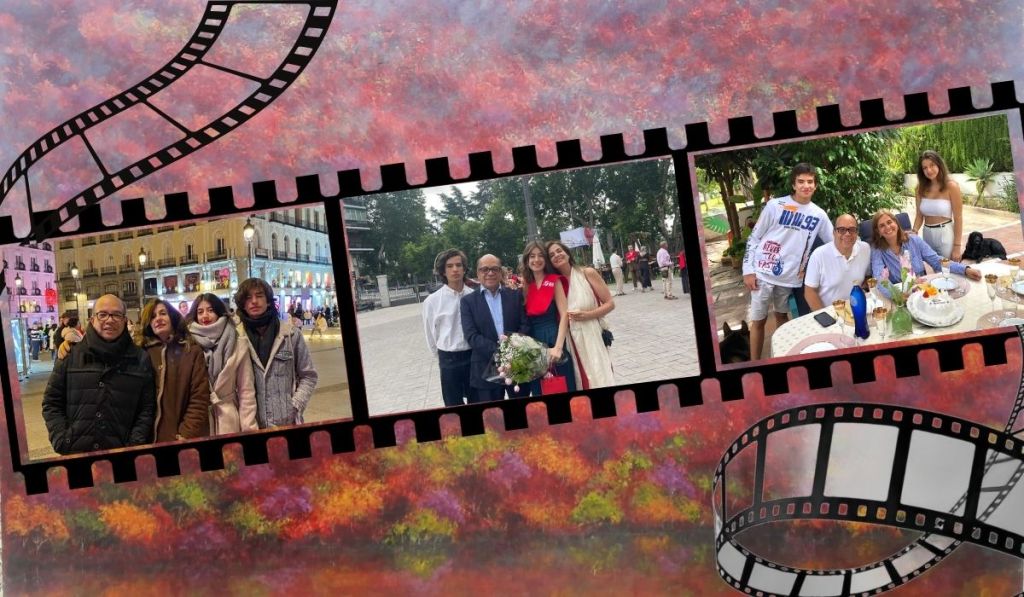
CB: Luis, ¿Qué papel ha jugado tu familia en tu trayectoria artística y profesional? Luis, what role has your family played in your artistic and professional career?
Apoyo total. Desde niño hasta hoy en día la familia ha sido el eje fundamental en todo. Al fallecer mi padre cuando era niño Mi madre, mi tía Leonor y mis tías abuelas, se convirtieron en el apoyo incondicional en todo lo que quería emprender me dieron animo y consejo cuando erraba. Hoy en día mi esposa Maria Carolina, Laura y Santiago, mis hijos somos un equipo.
Total support. From childhood until today, family has been the fundamental axis in everything. When my father passed away when I was a child, my mother, my aunt Leonor and my great-aunts became my unconditional support in everything I wanted to undertake, they encouraged me and gave me advice when I failed. Today, my wife, Maria Carolina, Laura and Santiago, and my children, we are a team.
CB: ¿Cómo equilibras la vida de esposo, padre y profesional en medio de tantas responsabilidades y viajes? How do you balance life as a husband, father, and professional amidst so many responsibilities and travel?
Como ya he dicho, la familia ha sido algo fundamental en mi vida. Debido al papel tan importante que tiene nunca la he dejado de lado. Mis dos hijos han desarrollado intereses artísticos y han estudiado cosas relacionadas con el arte. Cuando necesitan ayuda, mi esposa y yo estamos dispuestos a hacer cualquier cosa. Mi hija estudió diseño de interiores y la he ayudado a hacer incontables maquetas. Mi hijo estudia cine, y he actuado en diferentes cortos que ha hecho. Una vez tuve que hacer 17 tomas de una escena, fueron dos horas de hacer la misma acción. Termine muy cansado. Pero ellos también me ayudan. Laura ha maquetado varios trabajos de investigación que he hecho. Gracias a ella los clientes tienen un trabajo que no tan solo es bueno, sino que tienen una buena presentación. Santiago me ha ayudado a hacer fotos a los cuadros o vídeos. También me ayuda leyendo los trabajos y diciéndome si hay algún error. Mi esposa también me ayuda en el día a día. No tan solo apoyándome emocionalmente, sino que lleva la parte financiera de la empresa, algo que yo no podría hacer. Creo que el equilibrio está ahí, no tan solo en estar presente en el día a día, sino en el ayudarnos en nuestros proyectos. En ese apoyo incondicional es donde realmente está la familia.
As I’ve already said, family has been fundamental in my life. Because of the important role it plays, I’ve never left it aside. My two children have developed artistic interests and have studied art-related subjects. When they need help, my wife and I are willing to do anything. My daughter studied interior design, and I’ve helped her make countless models. My son studies film, and I’ve acted in several short films he’s made. Once, I had to do 17 takes of a scene; it took two hours of doing the same action. I ended up very tired. But they also help me. Laura has designed several research projects I’ve done. Thanks to her, clients get work that’s not only good, but also well presented. Santiago has helped me take photos of the paintings or videos. He also helps me by reading the work and telling me if there are any mistakes. My wife also helps me on a daily basis. Not only by supporting me emotionally, but she also manages the financial side of the business, something I couldn’t do myself. I think the balance lies not only in being present in our daily lives, but also in helping each other with our projects. That unconditional support is where family truly lies.
CB ¿Qué valores procuras transmitir a tus hijos y nietos a través del arte y de tu ejemplo de vida? What values do you try to pass on to your children and grandchildren through art and your life example?
La rectitud , la verdad y el amor por Dios y todo lo que representa , el amor por el trabajo y las ganas de hacer cosas .
Righteousness, truth and love for God and everything he represents, love for work and the desire to do things.
CB: ¿Qué recuerdos de tu infancia en Bogotá te marcaron y todavía te inspiran al pintar? What memories from your childhood in Bogotá left their mark on you and still inspire you when you paint?
La Sabana de Bogotá es insuperable; todo el año está verde, matizada de azules, colores rosas. Los colores de la infancia de trigales color oro que se pierde en los verdes azulados, los eucaliptos con fondos de montañas color azul turquesa que se pierde con cielos fríos o cálidos de acuerdo con la época del año.
The Bogotá savannah is unbeatable; it’s green year-round, tinged with blues and pinks. The childhood colors of golden wheat fields that fade into blue-greens, eucalyptus trees against turquoise-blue mountain backdrops that fade into cool or warm skies depending on the time of year.
CB: ¿Qué significa para ti la palabra “hogar”? What does the word “home” mean to you?
El Hogar es ese sitio donde se juntan en un solo sentir la paz, la tranquilidad , el amor, los recuerdos de familia, las tradiciones, el conocimiento, los libros, el aroma de la cocina en navidad o los cumpleaños, es esa calidez que no se puede adquirir con dinero.
Home is that place where peace, tranquility, love, family memories, traditions, knowledge, books, the aroma of the kitchen at Christmas or birthdays come together in a single feeling, it is that warmth that cannot be acquired with money.
Reflexión y legado / Reflection and legacy
CB ¿Qué consejo le darías a los jóvenes artistas que hoy sueñan con una carrera internacional? What advice would you give to young artists today who dream of an international career?
Que intenten y aprovechen las oportunidades que se presentan; todo es posible cuando se quiere. Que se dejen guiar y busquen buenos asesores culturales como Olga Villegas que son personas que tienen gran experiencia como lo hice hace más de 30 años.
Let them try and take advantage of the opportunities that arise; anything is possible when you want it. Let them be guided and seek out good cultural advisors like Olga Villegas, who are highly experienced, just as I was more than 30 years ago.
CB ¿Qué lugar ocupa la fe, la espiritualidad o la filosofía en tu trabajo creativo? What place does faith, spirituality, or philosophy have in your creative work?
Pienso que cuando uno hace una obra uno no piensa en eso, solo se quiere realizar un paisaje bien hecho pero lógicamente como el paisaje transmite sensaciones y sentimientos bien sea por el color frío o cálido el espectador termina sintiendo la obra. Cuando el espectador ya siente algo más podríamos decir que quedó bien hecho. La temática es la que nos acerca a la parte espiritual ya que la sensación de inmensidad de recogimiento se vuelve espiritual como decía Kandinsky la «necesidad interior» del artista, era un medio por el que los pensamientos y las emociones se podían transmitir directamente al espectador.
I think that when one makes a work one doesn’t think about that, one only wants to make a well done landscape but logically as the landscape transmits sensations and feelings whether through the cold or warm color the spectator ends up feeling the work. When the spectator already feels something more we could say that it was well done. The theme is what brings us closer to the spiritual part since the sensation of immensity of recollection becomes spiritual as Kandinsky said the «inner need» of the artist, was a means by which thoughts and emotions could be transmitted directly to the spectator.
CB ¿Cómo te gustaría que te recuerden los críticos de arte dentro de 50 o 100 años? How would you like to be remembered by art critics in 50 or 100 years?
Es difícil pensar en ello pero quizás si se lograse hacer ver que la cotidianidad nos hace perder de vista la belleza de la creación; lo que nos estamos perdiendo es de muchísimo mayor valor que miles de cosas juntas.
It’s hard to think about, but perhaps if we could make it clear that everyday life makes us lose sight of the beauty of creation, what we’re missing is of far greater value than thousands of things put together.
CB: Finalmente, para terminar Mi querido Maestro Luis, después de tantos logros, ¿qué sueño te queda por cumplir? Finally, to finish, my dear Master Luis, after so many achievements, what dream do you have left to fulfill?
Las exposiciones de formato grande que quiero hacer en Bogotá, Madrid y New York. Esa es una meta para la que ya estamos trabajando para el año 2026. Seguir investigando obras antiguas.
The large-format exhibitions I want to do in Bogotá, Madrid, and New York. That’s a goal we’re already working toward for 2026. I’ll continue researching older works.
Como hemos podido apreciar, el Maestro Luis Ernesto Ortiz es mucho más que un gran profesional del arte, es un constructor de memoria artística, un guardián de la verdad histórica y un creador que, con cada trazo y cada hallazgo, nos recuerda que el arte es luz, verdad y trascendencia.
As we have seen, Maestro Luis Ernesto Ortiz is much more than a great art professional; he is a builder of artistic memory, a guardian of historical truth, and a creator who, with every stroke and every discovery, reminds us that art is light, truth, and transcendence.
Su legado no se mide solo en los cuadros que firma ni en las obras que rescata del olvido, sino en la manera en que inspira a nuevas generaciones a mirar el arte con respeto, con pasión y con fe en la belleza que nos rodea.
His legacy is not measured only in the paintings he creates or the works he rescues from oblivion, but in the way he inspires new generations to view art with respect, passion, and faith in the beauty that surrounds us.
La vida y la obra del Maestro Luis Ernesto Ortiz nos invitan a detenernos, a contemplar y a reconocer que, como él mismo nos afirma: “Dios es el mejor pintor.”

The life and work of Maestro Luis Ernesto Ortiz invite us to pause, contemplate, and recognize that, as he himself tells us, «God is the greatest painter.»
Instagram @lortize_art
Facebook https://www.facebook.com/lortize.art
 correo lortizeo@yahoo.es
correo oldmastersartresearch@gmail.com
LinKedin Lortize ART
Ver más en: https://opensea.io/collection/lortize
Descubre más desde LA AGENCIA MUNDIAL DE PRENSA
Suscríbete y recibe las últimas entradas en tu correo electrónico.

