

THE RESISTANCE AGAINST THE MOROCCAN GOVERNMENT: “Half a Century of the Misfortune of the Sahrawi People”

Periodista, Escritora, Editorialista. Gerente de Norteamérica de LaAmpd
PRENSA ESPECIALIZADA
La resistencia y lucha contra el gobierno marroquí está presente en la memoria del Pueblo Saharaui, tras aquella multitudinaria Marcha Verde, el 6 de noviembre de 1975 como el inicio de la ocupación de Marruecos al Sahara Occidental, medio siglo de la desgracia del Pueblo Saharaui.
The resistance and struggle against the Moroccan government remains in the memory of the Sahrawi People, following that massive Green March on November 6, 1975, as the beginning of Morocco’s occupation of Western Sahara—half a century of misfortune for the Sahrawi People.
Bachir Ahmed Aomar, economista, escritor y activista saharaui, quien radica en Islas Canarias, en esta entrevista detalla sus recuerdos y lo que piensa de la ocupación marroquí.
Bachir Ahmed Aomar, an economist, writer, and Sahrawi activist who resides in the Canary Islands, details his memories and thoughts on the Moroccan occupation in this interview.
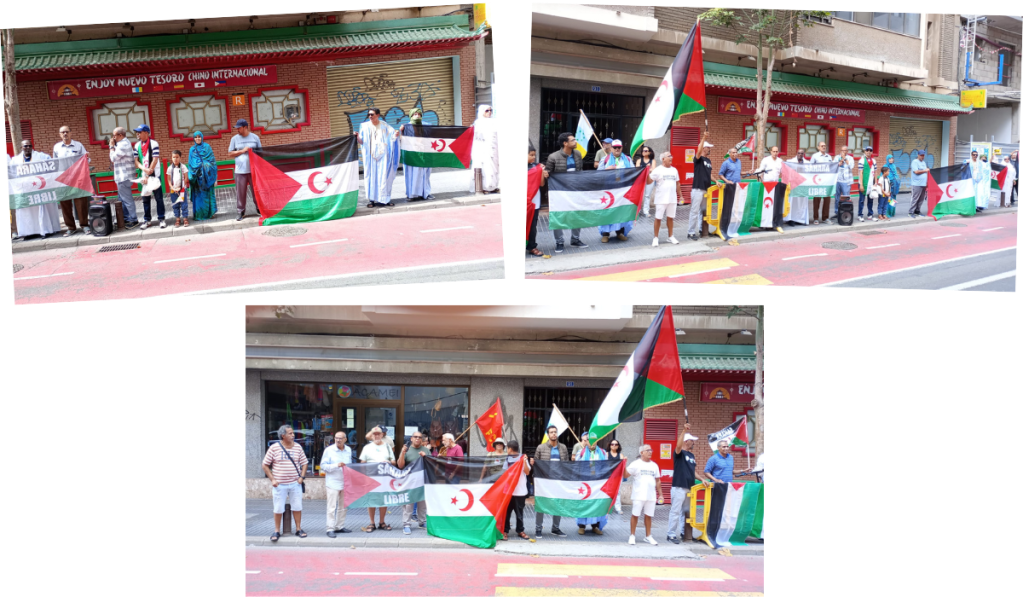
Es en Islas Canarias que desde octubre y noviembre comenzaron las concentraciones de saharauis y simpatizantes de la causa frente al consulado marroquí.
It is in the Canary Islands where, since October and November, concentrations of Sahrawis and supporters of the cause have begun in front of the Moroccan consulate.
Nuestro invitado se abre a la situación actual, afirma que Ceuta y Melilla siempre han sido una reivindicación histórica de Marruecos, que en los años 70 reclamaba el Sahara. No reclaman las Islas Canarias, pero reivindican en sí las Islas Canarias que es un archipiélago, donde se da una circunstancia extraña, porque son ocho islas y los canarios solo tienen poder en 12 millas náuticas, entre isla e isla, no son aguas españolas o canarias, son aguas internacionales.
Our guest opens up about the current situation, affirming that Ceuta and Melilla have always been a historical claim by Morocco, which in the 1970s claimed Western Sahara. They do not claim the Canary Islands, but they do claim the Canary Islands archipelago itself, where a strange circumstance occurs, because there are eight islands and the Canarians only have power over 12 nautical miles between island and island; between islands, they are not Spanish or Canarian waters, but international waters.
Bachir está seguro que Marruecos reclama las aguas, todavía no han dado el paso de reclamar el territorio y aprovechan cualquier momento para extender la posición económica, han pedido las 200 millas donde ellos pueden tener poder económico, extender sus líneas marítimas. Marruecos hace todo esto porque al final es una presión sobre las Islas Canarias y sobre el gobierno español, para que éstos reconozcan la soberanía marroquí sobre las aguas saharauis, porque las aguas no pertenecen a Marruecos que es un país ocupante.
Bachir is certain that Morocco claims the waters; they have not yet taken the step to claim the territory and take advantage of any moment to extend their economic position. They have requested the 200-mile zone where they can have economic power, extending their maritime lines. Morocco does all this because, in the end, it is pressure on the Canary Islands and on the Spanish government, so that they recognize Moroccan sovereignty over Sahrawi waters, because the waters do not belong to Morocco, which is an occupying country.
Siempre he sostenido que Marruecos, explica Bachir, es un peligro para la región porque además de reivindicarse (apropiarse) Ceuta y Melilla, reivindica el Sahara Occidental, que lo tiene ocupado, lo hace con parte de Argelia, tienen el sueño del gran Marruecos y dentro de esas ambiciones hacen presión de una manera u otra para conseguir sus objetivos. El país que más sufre esa presión es España, entonces cada vez que España toma una postura que a Marruecos no le guste, llegan muchas pateras o barquitas sin control o de repente aparecen lanchas con droga, siempre tienen un método para presionar al gobierno español, y España tiene miedo de Marruecos para dar la sensación de que es un país amigo afirma que la relación es buena, pero los hechos hablan.
I have always maintained that Morocco, explains Bachir, is a danger to the region because, in addition to claiming (appropriating) Ceuta and Melilla, it claims Western Sahara, which it has occupied; it does so with part of Algeria; they have the dream of Greater Morocco, and within those ambitions, they exert pressure in one way or another to achieve their objectives. The country that suffers this pressure the most is Spain; so every time Spain takes a stance that Morocco doesn’t like, many small boats or dinghies arrive without control, or suddenly boats with drugs appear; they always have a method to pressure the Spanish government, and Spain is afraid of Morocco to give the impression that it is a friendly country, claiming that the relationship is good, but the facts speak for themselves.
Al aterrizar de fondo en el tema del Sahara, destaca que el gobierno español se ha puesto del lado de Marruecos, el presidente del gobierno español Pedro Sánchez, reconoció que la única solución que hay es que el Sahara Occidental sea parte de Marruecos.
Delving deeper into the topic of Western Sahara, he highlights that the Spanish government has sided with Morocco; the Spanish Prime Minister Pedro Sánchez recognized that the only solution is for Western Sahara to be part of Morocco.
Nuestro invitado, agrega: “Si miramos al responsable de lo que está pasando en el Sahara es España, porque el Sahara era una colonia española, la administración, española, el ejército, español, y nosotros los saharauis éramos españoles, teóricamente con los mismos derechos, que no es verdad porque en una colonia el colonizador y el colonizado no tienen los mismos derechos, y no solo esto, sino que administrativamente el gobierno español de la época había reconocido el Sahara no como una colonia sino una provincia más del Estado Español, y lo que hicieron fue entregar a esa provincia a un país extranjero. ¡Esto es una ilegalidad brutal! ”.
Our guest adds: “If we look at who is responsible for what is happening in Western Sahara, it is Spain, because Western Sahara was a Spanish colony, the administration was Spanish, the army was Spanish, and we Sahrawis were Spanish, theoretically with the same rights—which is not true because in a colony, the colonizer and the colonized do not have the same rights—and not only that, but administratively, the Spanish government at the time had recognized Western Sahara not as a colony but as another province of the Spanish State, and what they did was hand over that province to a foreign country. This is a brutal illegality!”
EL ORIGEN DEL PROBLEMA / THE ORIGIN OF THE PROBLEM
Bachir regresa el tiempo y comenta: “Los problemas entre la población saharaui y el gobierno español comenzaron cuando los saharauis piden al gobierno español que reconozca que el Sahara es una colonia, ya que anteriormente la Organización de las Naciones Unidas había proclamado que el Sahara Occidental era una colonia y que tenía derecho a su autodeterminación en el año 1963, ocurre que España siempre sostuvo que no, que el Sahara no tenía derecho a la autodeterminación porque era una provincia más de España, lo mismo que Barcelona, Madrid o Sevilla (por decir) y no es verdad”.
Bachir goes back in time and comments: “The problems between the Sahrawi population and the Spanish government began when the Sahrawis asked the Spanish government to recognize that Western Sahara was a colony, since previously the United Nations Organization had proclaimed that Western Sahara was a colony and that it had the right to self-determination in 1963. It happened that Spain always maintained that no, Western Sahara did not have the right to self-determination because it was just another province of Spain, the same as Barcelona, Madrid, or Seville (for example), and that is not true.”
“Le doy muchísima importancia a lo que sucedió el 17 de junio de 1970 en El Aaiún (capital del entonces Sahara Español), hay que partir de ahí. Ese día el gobierno español en el Sahara proclama o prepara una manifestación para que el pueblo saharaui se reafirme que desea ser siempre parte de España, es lo que pretende el gobierno español, pero sucede que al mismo tiempo el pueblo saharaui prepara una contramanifestación para reivindicar lo contrario, decir no, nosotros somos una colonia y lo que pedimos a España es que partiendo de esa base, prepare a la población, invierta en el territorio y que el Sahara Occidental pudiera ser un país gobernado por los saharauis. Era una manifestación pacífica, y ahí viene el choque, el gobierno español reacciona, envía a su ejército para que dispare contra la población civil. Los saharauis despiertan conciencia y se dan cuenta del mensaje claro: Ustedes no tienen derecho a reclamarle a España”.
“I attach a great deal of importance to what happened on June 17, 1970, in El Aaiún (capital of the then Spanish Sahara); we have to start from there. That day, the Spanish government in Western Sahara proclaimed or prepared a demonstration so that the Sahrawi people would reaffirm their desire to always be part of Spain; that is what the Spanish government intended. But at the same time, the Sahrawi people prepared a counter-demonstration to claim the opposite, to say no, we are a colony, and what we ask of Spain is that, starting from that basis, it prepare the population, invest in the territory, and that Western Sahara could be a country governed by Sahrawis. It was a peaceful demonstration, and that’s where the clash came; the Spanish government reacted, sending its army to shoot at the civilian population. The Sahrawis awakened their consciousness and realized the clear message: You do not have the right to demand anything from Spain.”
“El resultado es que muere y desaparece gente. Llega la ruptura entre los saharauis y la administración española, fue un episodio violento porque dispara contra jóvenes desarmados, tras la ruptura tres años después aparece el Frente Polisario, un movimiento de liberación, que viene con otra mentalidad, mientras en los años 70´ se pedía pacíficamente una evolución de las relaciones para que el Sahara Occidental fuera independiente. En 1973 con el Frente Polisario, dice no, quien nos quita con las armas nuestros derechos, tenemos el derecho a defendernos. Desde mayo de 1973 hasta 1975 hay escaramuzas, muertos, no es una guerra como tal, pero hay disparos, el gobierno español está en otra situación, el pacifismo que hubo hasta el año 1970 ya no existe”.
“The result is that people died and disappeared. The rupture between the Sahrawis and the Spanish administration arrived; it was a violent episode because they shot at unarmed young people. After the rupture, three years later, the Polisario Front appeared, a liberation movement that came with a different mentality. While in the 1970s, a peaceful evolution of relations was requested so that Western Sahara would be independent, in 1973 with the Polisario Front, it said no, whoever takes away our rights with arms, we have the right to defend ourselves. From May 1973 until 1975, there were skirmishes, deaths; it was not a war as such, but there were shots. The Spanish government was in another situation; the pacifism that existed until 1970 no longer existed.”
“La ONU presiona para que haya un referéndum de autodeterminación. Es la resolución 1514 de la ONU para saber qué piensan los saharauis. Todos los pueblos colonizados tienen el derecho de su autodeterminación a elegir libremente su futuro, que era lo que pedían los saharauis, que España estuvo apoyando esa iniciativa, pero en noviembre hubo un giro. Empieza la presión internacional y se apoya de sus amigos Estados Unidos y Francia, España se rinde y por eso entrega el territorio”.
“The UN pressured for a self-determination referendum. It is UN Resolution 1514 to know what the Sahrawis think. All colonized peoples have the right to self-determination to freely choose their future, which is what the Sahrawis were asking for. Spain was supporting that initiative, but in November there was a turnaround. International pressure began, supported by its friends the United States and France; Spain surrendered and that’s why it handed over the territory.”
“¿Por qué España entrega el territorio?. Para entender lo de la Marcha Verde que nosotros los saharauis no le llamamos así, fue Marruecos el que la bautizó como Marcha Verde, porque los que participaban en la ocupación venían con El Corán verde en la mano, para nosotros es lo contrario, la Marcha Negra porque fue la invasión, la ocupación del territorio”.
“Why did Spain hand over the territory? To understand the Green March, which we Sahrawis do not call that; it was Morocco that baptized it as the Green March, because those participating in the occupation came with the green Quran in hand. For us, it is the opposite: the Black March because it was the invasion, the occupation of the territory.”
“Hay movimientos históricos por parte de España y Marruecos, aunque se dice que España estaba presionada, hay pistas que nos indican que todo estaba preparado. La Marcha Verde fue el 6 de noviembre de 1975. El Ejército marroquí comenzó a ocupar territorio saharaui el 31 de octubre, siete días antes de la Marcha Verde, instalándose en puestos militares en el Sahara, y el 2 de noviembre, Juan Carlos I de Borbón que era príncipe, no tenía el poder todavía, visitó a los militares españoles en el Sahara, tres días antes de la marcha, es como si el plan se fuera haciendo por capítulos, Juan Carlos I, tenía la jefatura del Estado, fue a apoyar a los militares españoles en el Sahara, porque Franco, el dictador, estaba enfermo. En su discurso dice defenderemos a los saharauis hasta la última gota de sangre, saldremos con honor, palabras que ocultan la traición”.
“There are historical movements by Spain and Morocco, although it is said that Spain was pressured; there are clues that indicate that everything was prepared. The Green March was on November 6, 1975. The Moroccan Army began to occupy Sahrawi territory on October 31, seven days before the Green March, settling in military posts in Western Sahara, and on November 2, Juan Carlos I of Bourbon, who was prince and did not yet have power, visited the Spanish military in Western Sahara, three days before the march; it is as if the plan was being carried out in chapters. Juan Carlos I had the head of state position; he went to support the Spanish military in Western Sahara because Franco, the dictator, was ill. In his speech, he said we will defend the Sahrawis to the last drop of blood, we will leave with honor—words that hide the betrayal.”
“La Marcha Verde fue como una cortina de humo, porque si miramos el mapa, esta marcha viene por la parte más occidental, por el lado del mar, la cantidad de gente eran 350 mil marroquíes, se habla de gente desarmada que acumularon de la calle y la cárcel para integrarlos a la marcha, pero mezclados con ellos estaban 35 mil soldados marroquíes. El rey Hasán II de Marruecos dice si encontramos a nuestros hermanos españoles los saludaremos, pero si hallamos a otros hostiles, se refería a los saharauis, podían tomarse la justicia por sus propias manos”.
“The Green March was like a smokescreen, because if we look at the map, this march came from the westernmost part, by the sea side; the number of people was 350,000 Moroccans. It is said that they were unarmed people gathered from the streets and prisons to integrate them into the march, but mixed among them were 35,000 Moroccan soldiers. King Hassan II of Morocco said if we find our Spanish brothers, we will greet them, but if we find other hostiles, referring to the Sahrawis, they could take justice into their own hands.”
“El gobierno español había dicho públicamente que los soldados españoles fueron a la frontera de Marruecos y anunció que todo el territorio estaba minado y no se hacía responsable de las posibles muertes de la Marcha Verde, pero resulta que la marcha entró dentro del territorio saharaui, ese espacio que teóricamente estaba minado, entonces no era verdad, y el ejército español que estaba en la frontera empezó a retirarse hacia atrás, abriéndole paso a la marcha, fue extraño. Ya se hablaba de que iba a ver una guerra entre España y Marruecos, llegaron periodistas de todo el mundo para hacer la cobertura”.
“The Spanish government had publicly said that the Spanish soldiers went to the Moroccan border and announced that the entire territory was mined and they were not responsible for possible deaths from the Green March, but it turns out that the march entered Sahrawi territory, that space that was theoretically mined, so it wasn’t true, and the Spanish army that was at the border began to withdraw backward, opening the way for the march; it was strange. There was already talk of a war between Spain and Morocco; journalists from all over the world arrived to cover it.”
“En la Marcha Verde, el ejército marroquí seguía entrando en territorio saharaui, iba ocupando lugares estratégicos que les entregaba el ejército español, pudo haber presión internacional, lo cierto es que había intereses de Estados Unidos y Francia. No podemos dejarnos engañar. Después de 50 años pienso que todo estaba preparado”.
“In the Green March, the Moroccan army continued entering Sahrawi territory, occupying strategic places that the Spanish army handed over to them. There could have been international pressure; the truth is that there were interests from the United States and France. We cannot be deceived. After 50 years, I think everything was prepared.”
“¿Cuál fue el próximo paso? El rey de Marruecos dice vamos a retirarnos hemos conseguido todos nuestros objetivos y se retira. Días después es cuando se reúnen en Madrid invitados por España. Se dan cita representantes de Marruecos, Mauritania y España, firman Los Acuerdos Tripartitos de Madrid. Ahí se firma la entrega del Sahara a Marruecos y Mauritania, teóricamente España dice que era un paso administrativo, pero no es verdad, porque Marruecos entró con toda la fuerza del Ejército, bombardeando a la gente, utilizando napalm y fósforo blanco”.
“What was the next step? The King of Morocco says we are going to withdraw; we have achieved all our objectives, and he withdraws. Days later is when they meet in Madrid, invited by Spain. Representatives from Morocco, Mauritania, and Spain meet; they sign the Madrid Tripartite Agreements. There, the handover of Western Sahara to Morocco and Mauritania is signed. Theoretically, Spain says it was an administrative step, but it is not true, because Morocco entered with the full force of the Army, bombing the people, using napalm and white phosphorus.”
“Hay que destacar que el napalm y el fósforo blanco están prohibidos internacionalmente. Ellos atacaron a la población civil saharaui con productos explosivos, lo utilizaron los norteamericanos en Vietnam, es la bomba que incendia todo”.
“It must be highlighted that napalm and white phosphorus are internationally prohibited. They attacked the Sahrawi civilian population with explosive products; the Americans used them in Vietnam; it is the bomb that incinerates everything.”
“Hay una administración tripartita, yo no sé por qué, el Sahara Occidental era parte de España, y desde el 14 de noviembre de 1975 hasta el 26 de febrero de 1976, Marruecos invadió bombardeó, asesinó, torturó y desapareció gente”.
“There is a tripartite administration; I don’t know why, Western Sahara was part of Spain, and from November 14, 1975, until February 26, 1976, Morocco invaded, bombed, murdered, tortured, and disappeared people.”
Con cierta nostalgia, el activista Bachir expresa: “Si los saharauis éramos españoles ¿por qué España permitió que Marruecos asesinara a sus ciudadanos españoles?. No nos queda duda que fuimos traicionados por España y 50 años después seguimos afirmando lo mismo, porque nos siguen traicionando, con la última acción del gobierno español, cómo va a reconocer que el Sahara es una autonomía de Marruecos, y algunas veces se ha llegado más lejos, afirmando que el Sahara Occidental nunca fue parte de España. Hay muchos intereses ocultos, geoestratégicos y personales”.
With a certain nostalgia, the activist Bachir expresses: “If the Sahrawis were Spanish, why did Spain allow Morocco to murder its Spanish citizens? We have no doubt that we were betrayed by Spain, and 50 years later we continue to affirm the same, because they continue to betray us, with the latest action of the Spanish government: how is it going to recognize that Western Sahara is an autonomy of Morocco, and sometimes it has gone further, affirming that Western Sahara was never part of Spain. There are many hidden interests, geostrategic and personal.”
“Un ejemplo es José Luis Rodríguez Zapatero, que fue presidente de España ahora dirige un lobby promarroquí e imparte conferencias, visita los territorios ocupados y dice que el Sahara es marroquí, está claro que España no está por una solución para el pueblo saharaui, ni con su sufrimiento, está con los intereses de Marruecos”.
“An example is José Luis Rodríguez Zapatero, who was President of Spain and now directs a pro-Moroccan lobby, gives conferences, visits the occupied territories, and says that Western Sahara is Moroccan; it is clear that Spain is not for a solution for the Sahrawi people, nor with their suffering; it is with Morocco’s interests.”
“Un papel importante ha jugado Juan Carlos I, el rey emérito le llaman, y los sucesivos gobiernos españoles Rodríguez Zapatero, Felipe González, Pedro Sánchez”.
“An important role has been played by Juan Carlos I, the king emeritus they call him, and the successive Spanish governments: Rodríguez Zapatero, Felipe González, Pedro Sánchez.”
¿CUÁNTAS PERSONAS HAN MUERTO DESDE QUE INICIÓ LA OCUPACIÓN? / HOW MANY PEOPLE HAVE DIED SINCE THE OCCUPATION BEGAN?
Hubo una guerra durante 16 años, aunque ahora hay conflictos, la primera guerra fue en el año 1975 hasta 1991. No tengo cifras sobre los saharauis que murieron en ella, ejército contra ejército, las autoridades militares sabrán, pero yo no lo sé. Lo que sí sé es que no puedes trasladar a tu población a un país ocupado, está prohibido por el derecho internacional”.
There was a war for 16 years, although now there are conflicts; the first war was in 1975 until 1991. I do not have figures on the Sahrawis who died in it, army against army; the military authorities will know, but I do not. What I do know is that you cannot transfer your population to an occupied country; it is prohibited by international law.”
“La población saharaui está dividida con la situación de guerra. Hay personas que viven en los territorios ocupados, no sé la cantidad porque Marruecos ha trasladado a muchos marroquíes al Sahara Occidental, son más marroquíes que viven en el Sahara Occidental ocupado que los saharauis”.
“The Sahrawi population is divided due to the war situation. There are people who live in the occupied territories; I don’t know the number because Morocco has transferred many Moroccans to Western Sahara; there are more Moroccans living in the occupied Western Sahara than Sahrawis.”
“La cifra aproximada de desaparecidos saharauis hasta este momento son 500. Para nosotros los desaparecidos son las personas que la policía marroquí se los llevó y no se ha sabido más o las personas que se han empezado a descubrir en fosas comunes, personas que estaban en el desierto con su ganado y que desaparecieron, y en los últimos años se han encontrado fosas con personas enterradas en el desierto”.
“The approximate figure of disappeared Sahrawis up to this moment is 500. For us, the disappeared are the people whom the Moroccan police took away and nothing more has been heard of, or the people who have begun to be discovered in mass graves, people who were in the desert with their livestock and disappeared, and in recent years, graves with people buried in the desert have been found.”
“Hallaron una fosa con tres restos óseos y uno de ellos tenía la documentación española, descubrieron a un pastor, lo mataron durante la guerra y lo enterraron en pleno desierto. Esa persona identificada al haber sido enterrada con documentos estaba en la lista de desaparecidos. Está además la gente que estuvo desaparecida durante los años 80, pero en 1991 cuando acabó la guerra, aparecieron, estaban retenidos por las autoridades marroquíes, otros en cárceles secretas del Sahara Occidental. Ellos pudieron contar un poco de la situación de los presos, aportaron datos de algunas personas que murieron”.
“They found a grave with three skeletal remains, and one of them had Spanish documentation; they discovered a shepherd, killed him during the war, and buried him in the middle of the desert. That identified person, having been buried with documents, was on the list of disappeared. There are also the people who were disappeared during the 1980s, but in 1991 when the war ended, they appeared; they had been held by the Moroccan authorities, others in secret prisons in Western Sahara. They were able to tell a bit about the situation of the prisoners, providing data on some people who died.”
“Hay un caso terrible que quiero contar. Detuvieron a un anciano, a su mujer y a sus dos hijas, lo hicieron porque uno de sus hijos era ministro del gobierno saharaui, los llevaron a la misma cárcel. Se murió la madre, luego el padre, y las hijas siendo testigos. Historias brutales cuando se violan los derechos de las personas”.
“There is a terrible case that I want to tell. They arrested an elderly man, his wife, and his two daughters; they did it because one of their sons was a minister in the Sahrawi government; they took them to the same prison. The mother died, then the father, and the daughters were witnesses. Brutal stories when people’s rights are violated.”
“Dejas de ser persona, simplemente eres del otro bando (no hay conciencia)”.
“You stop being a person; you are simply from the other side (there is no conscience).”
“Actualmente hay más de 40 presos políticos, hay un grupo, algunos están condenados a cadena perpetua simplemente por acusar a Marruecos de país ocupante y decir que ellos no se sienten marroquíes, que son saharauis, otros a pasar encarcelados 30 o 25 años”.
“Currently, there are more than 40 political prisoners; there is a group, some are sentenced to life imprisonment simply for accusing Morocco of being an occupying country and saying that they do not feel Moroccan, that they are Sahrawis; others to spend 30 or 25 years in prison.”
“Marruecos se vende como país democrático, como amigo de occidente, lo cierto es que viola los derechos humanos hasta de sus ciudadanos”.
“Morocco sells itself as a democratic country, as a friend of the West; the truth is that it violates human rights even of its own citizens.”
Descubre más desde LA AGENCIA MUNDIAL DE PRENSA
Suscríbete y recibe las últimas entradas en tu correo electrónico.
