
Europe Reinvents Its Borders: Changes in Travel Rules – The New EES System and the Challenges of Controlled Mobility

Europa vive un cambio histórico en su forma de viajar. Desde el 12 de octubre de 2025, el Sistema de Entrada y Salida (EES) ha comenzado a transformar los controles fronterizos en el espacio Schengen. Este proyecto de la Unión Europea (UE), largamente planificado, sustituye los sellos en pasaportes por registros digitales y biométricos que buscan reforzar la seguridad, reducir la migración irregular y agilizar el tránsito de millones de viajeros cada año.
Europe is undergoing a historic shift in its travel practices. As of October 12, 2025, the Entry/Exit System (EES) has begun transforming border controls in the Schengen Area. This long-planned European Union (EU) project replaces passport stamps with digital and biometric records aimed at enhancing security, reducing irregular migration, and streamlining the transit of millions of travelers each year.
Sin embargo, su debut no ha sido tan fluido como se esperaba. A pocas semanas de su lanzamiento, el sistema enfrenta retrasos, colas y controversias, especialmente tras la pausa en su implementación en el puerto británico de Dover, un punto crítico para el tránsito turístico post-Brexit. El EES promete eficiencia, pero abre también un debate profundo sobre privacidad, vigilancia y libertad de movimiento en un continente que se replantea sus fronteras digitales.
However, its debut has not been as smooth as anticipated. Just weeks after its launch, the system is facing delays, queues, and controversies, particularly following the pause in its implementation at the British port of Dover—a critical hub for post-Brexit tourist traffic. The EES promises efficiency, but it also sparks a profound debate on privacy, surveillance, and freedom of movement in a continent rethinking its digital borders.
De la Teoría a la Realidad: La Transformación de un Continente en Movimiento / From Theory to Reality: The Transformation of a Continent on the Move
Con más de una década de preparación, el EES surge como respuesta a la explosión del turismo tras la pandemia. Aeropuertos españoles como Madrid-Barajas, Barcelona-El Prat y Málaga-Costa del Sol baten récords de pasajeros, y la UE busca equilibrar ese auge con controles más precisos.
With over a decade of preparation, the EES emerges as a response to the post-pandemic tourism boom. Spanish airports like Madrid-Barajas, Barcelona-El Prat, and Málaga-Costa del Sol are breaking passenger records, and the EU seeks to balance this surge with more precise controls.
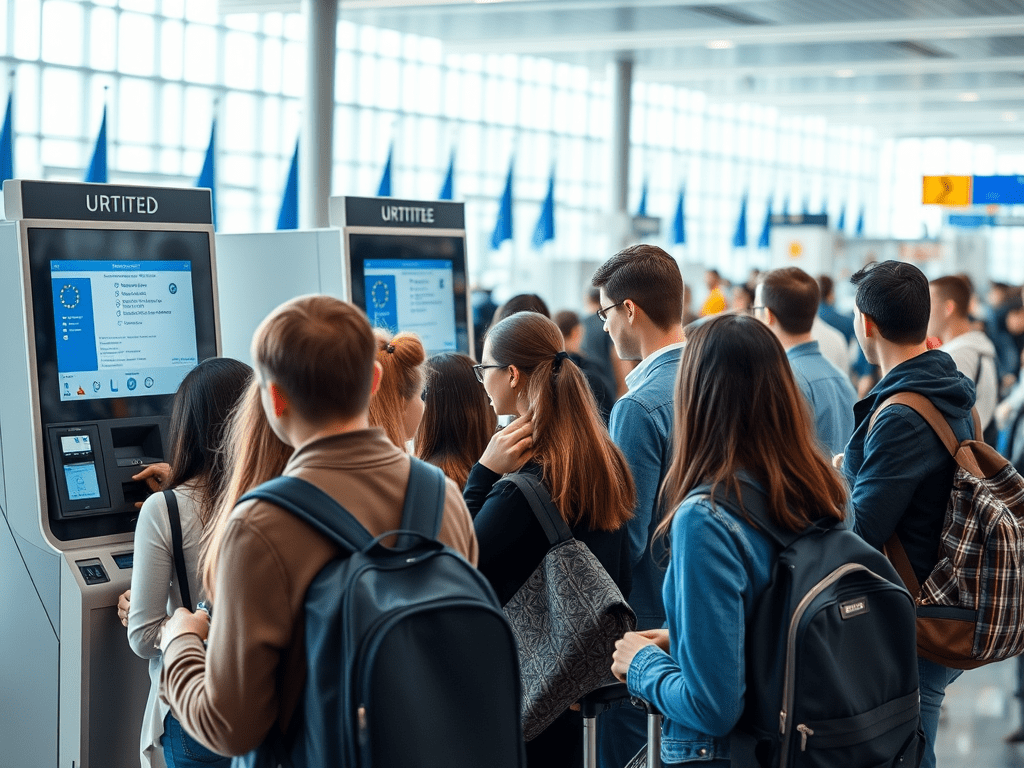
Bajo la supervisión de la agencia eu-LISA, el sistema comenzó su despliegue en los 29 países del espacio Schengen, con plena operatividad prevista para abril de 2026. El proceso es sencillo, pero disruptivo: los viajeros no europeos —británicos, estadounidenses, latinoamericanos, entre otros— deben registrar su entrada mediante kioscos automáticos que capturan sus huellas dactilares y una imagen facial. La información se guarda en una base de datos centralizada junto con las fechas de entrada, salida y posibles rechazos.
Under the supervision of the eu-LISA agency, the system began its rollout in the 29 Schengen Area countries, with full operability expected by April 2026. The process is straightforward but disruptive: non-European travelers—Britons, Americans, Latin Americans, among others—must register their entry via automated kiosks that capture their fingerprints and a facial image. This information is stored in a centralized database along with entry and exit dates, as well as any potential rejections.
Para los ciudadanos de la UE o del EEE, la transición apenas se nota: basta con un escaneo electrónico del pasaporte. La diferencia, sin embargo, es enorme para quienes vienen de fuera. Europa se digitaliza, pero también se distancia.
For EU or EEA citizens, the transition is barely noticeable: a simple electronic passport scan suffices. The difference, however, is stark for those coming from outside. Europe is digitizing, but it’s also creating distance.
Seguridad y Datos: Las Promesas del Nuevo Sistema / Security and Data: The Promises of the New System
La Comisión Europea defiende el EES como una herramienta de seguridad inteligente frente al antiguo modelo basado en sellos físicos, propenso a errores y falsificaciones. Entre sus beneficios destacan:
The European Commission defends the EES as an intelligent security tool compared to the old model based on physical stamps, which was prone to errors and forgeries. Among its benefits are:
- Control automatizado de estancias irregulares (overstays), que podría reducir la migración irregular hasta un 30 %. Automated control of irregular stays (overstays), which could reduce irregular migration by up to 30%.
- Mayor verificación de identidades, clave en un contexto de tensiones geopolíticas y aumento de flujos migratorios mixtos. Greater identity verification, crucial in a context of geopolitical tensions and increasing mixed migratory flows.
- Procesos más rápidos: tras el registro inicial, los viajeros frecuentes podrán usar e-gates con tiempos de control reducidos a segundos. Faster processes: after the initial registration, frequent travelers can use e-gates with control times reduced to seconds.
- Datos en tiempo real que facilitan la gestión de flujos turísticos, especialmente valiosos para países dependientes del turismo, como España. Real-time data that facilitates the management of tourist flows, especially valuable for tourism-dependent countries like Spain.
Aeropuertos como Milán-Malpensa y Ámsterdam-Schiphol ya promocionan el sistema como un paso hacia el “viaje del futuro”. En España, AENA invierte en infraestructura tecnológica para garantizar una adaptación ordenada y mantener la competitividad de su industria turística.
Airports like Milan-Malpensa and Amsterdam-Schiphol are already promoting the system as a step toward the «travel of the future.» In Spain, AENA is investing in technological infrastructure to ensure an orderly adaptation and maintain the competitiveness of its tourism industry.
Turbulencias en la Frontera: Retos, Pausas y Polémicas / Turbulences at the Border: Challenges, Pauses, and Controversies
No obstante, el camino hacia la modernización no ha sido fácil. El 3 de noviembre de 2025, las autoridades del puerto de Dover anunciaron una pausa temporal en la aplicación del EES debido a “problemas operativos” y riesgo de congestión. Este episodio, ampliamente difundido por Euronews, reveló un punto débil: la dependencia de infraestructuras aún desiguales y la presión de un sistema en fase de aprendizaje.
Nevertheless, the path to modernization has not been easy. On November 3, 2025, authorities at the port of Dover announced a temporary pause in the application of the EES due to «operational issues» and the risk of congestion. This episode, widely reported by Euronews, exposed a weak point: the reliance on still-uneven infrastructures and the pressures of a system in its learning phase.
La situación ha generado preocupación en países turísticos como España, donde el 15 % del PIB depende del turismo. El temor a retrasos o experiencias negativas podría afectar la percepción del viajero internacional.
The situation has raised concerns in tourism-heavy countries like Spain, where 15% of GDP depends on tourism. Fears of delays or negative experiences could impact the perception of international travelers.
Al mismo tiempo, surgen cuestionamientos sobre la privacidad y el uso de datos biométricos. Los registros se conservarán hasta tres años, o incluso cinco si se detectan irregularidades, lo que ha encendido alertas entre defensores de derechos digitales. En plataformas como X (antes Twitter), usuarios denuncian una “vigilancia encubierta” y un trato desigual a los viajeros no europeos.
At the same time, questions arise about privacy and the use of biometric data. Records will be retained for up to three years, or even five if irregularities are detected, which has triggered alarms among digital rights advocates. On platforms like X (formerly Twitter), users are denouncing «covert surveillance» and unequal treatment of non-European travelers.
Compañías como P&O Ferries y asociaciones de transporte han advertido de potenciales demoras en puertos y aeropuertos, instando a los pasajeros a planificar con antelación. La UE asegura que el proceso tarda entre uno y dos minutos por persona, aunque las pruebas iniciales muestran variaciones.
Companies like P&O Ferries and transport associations have warned of potential delays at ports and airports, urging passengers to plan ahead. The EU assures that the process takes between one and two minutes per person, though initial tests show variations.
Hacia ETIAS: El Futuro de los Viajes Digitales en Europa / Toward ETIAS: The Future of Digital Travel in Europe
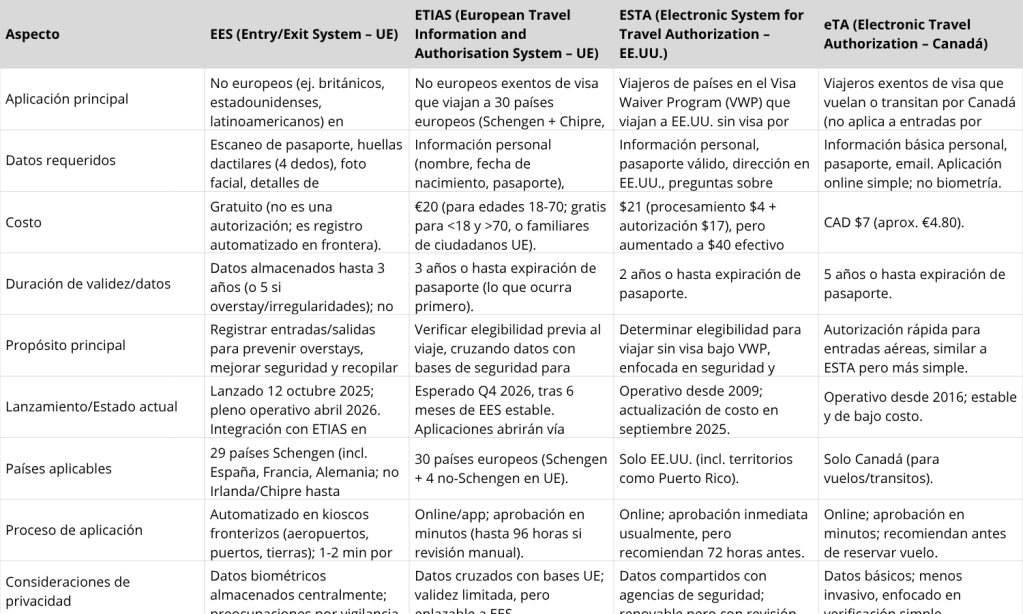
El EES es solo el primer paso. Para abril de 2026, se integrará con el ETIAS (European Travel Information and Authorisation System), un permiso electrónico similar al ESTA de Estados Unidos, que costará €7 y será obligatorio para los no europeos antes de viajar.
The EES is just the first step. By April 2026, it will integrate with ETIAS (European Travel Information and Authorisation System), an electronic permit similar to the U.S. ESTA, costing €7 and mandatory for non-Europeans before traveling.
Esta doble capa de control promete agilizar el tránsito y reforzar la seguridad, pero también introduce más trámites para millones de turistas. Europa avanza hacia una movilidad “inteligente”, aunque más vigilada, en la que la identidad digital será la nueva llave de entrada.
This dual layer of control promises to streamline transit and bolster security, but it also introduces more procedures for millions of tourists. Europe is advancing toward «smart» mobility, albeit more monitored, where digital identity will be the new key to entry.

La Nueva Frontera Europea / The New European Frontier
El lanzamiento del EES marca el fin de una era de viajes sin fricciones. Europa se adentra en una etapa donde el control y la tecnología definen la movilidad, y donde la seguridad se impone —a veces— sobre la simplicidad.
The launch of the EES marks the end of an era of frictionless travel. Europe is entering a stage where control and technology define mobility, and where security sometimes prevails over simplicity.
Los defensores lo ven como una herramienta indispensable ante un mundo volátil; los críticos, como una amenaza a la privacidad y la inclusión turística. En cualquier caso, el sistema redefine no solo cómo cruzamos fronteras, sino qué significa viajar en el siglo XXI.
Supporters see it as an indispensable tool in a volatile world; critics view it as a threat to privacy and tourism inclusion. In any case, the system redefines not only how we cross borders, but what it means to travel in the 21st century.
En una Europa hiperconectada pero fragmentada, el reto será encontrar el equilibrio entre innovación, derechos individuales y competitividad económica. El EES es más que un sistema de control: es el espejo de una Europa que busca protegerse… sin perder su alma abierta al mundo.
In a hyperconnected yet fragmented Europe, the challenge will be to find the balance between innovation, individual rights, and economic competitiveness. The EES is more than a control system: it’s a mirror of a Europe seeking to protect itself… without losing its open soul to the world.
Descubre más desde LA AGENCIA MUNDIAL DE PRENSA
Suscríbete y recibe las últimas entradas en tu correo electrónico.

