

Conversation with Joaquín Zapata

TERESA FERNANDEZ HERRERA. Periodista, Escritora, Editorialista. CDG de CULTURA.
COLUMNISTA
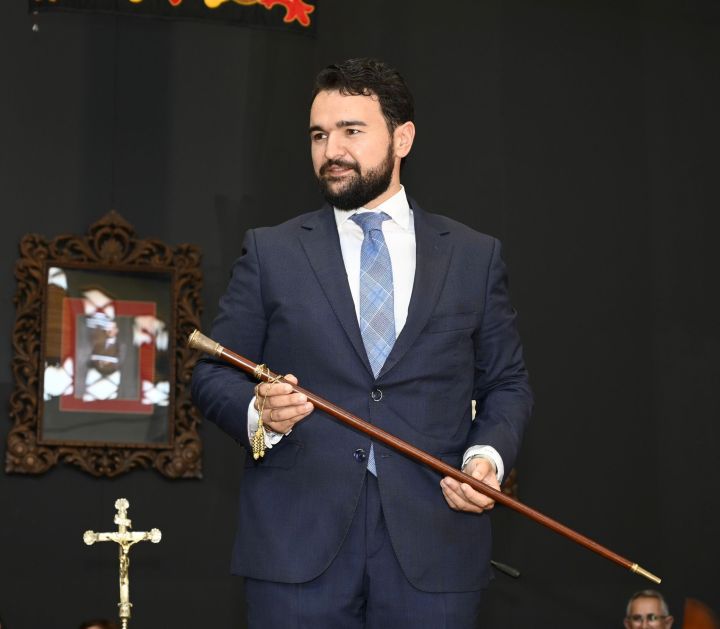
Joaquín Zapata es desde hace dos años Alcalde de La Unión y Presidente de la Fundación del Cante de las Minas. Dos ámbitos, al que van dirigidas mis preguntas. Estoy segura de que sus respuestas, muy valientes, incluso a veces arriesgadas, no van a dejar a nadie indiferente. Empezamos.
Joaquín Zapata has been the Mayor of La Unión for two years and President of the Cante de las Minas Foundation. These are two areas to which my questions are directed. I’m sure his very courageous, sometimes even daring, answers will leave no one indifferent. Let’s begin.
Teresa Fernández. ¿Eres un periodista dedicado a la política? ¿Ves la política como servicio y el periodismo como profesión? Are you a journalist dedicated to politics? Do you view politics as a service and journalism as a profession?
Joaquín Zapata. En primer lugar, aclarar que aunque yo he ejercido el periodismo, yo no soy periodista. Yo soy abogado. He ejercido el periodismo, siempre especializado en el flamenco, como una actividad complementaria a la abogacía. Por tanto, mi profesión es la de abogado y así lo consideraré siempre, incluso durante el tiempo que ejerza la política.
Joaquín Zapata. First of all, let me clarify that although I have worked as a journalist, I am not a journalist. I am a lawyer. I have worked as a journalist, always specializing in flamenco, as a complementary activity to law. Therefore, my profession is that of a lawyer, and I will always consider it so, even while I am in politics.
TF. Aclarado. Como yo te conocí en el palco de prensa de la Catedral del Cante, aquí en La Unión, no podía pensar otra cosa. Clarified. Since I met you in the press box at the Cathedral of Cante, here in La Unión, I couldn’t think otherwise.
JZ. Me gano la vida como abogado. Lo del periodismo flamenco es una afición, es verdad que tuve esa suerte de ser remunerado por un hobby, pero nunca he sido profesional de la comunicación. Pero tu pregunta es igualmente válida, y sí, considero que cuando uno está en política, en primer lugar está con carácter temporal, gracias a los ciudadanos que te ponen y te quitan. No es por ser más guapo o más listo, es por una decisión consciente expresada por la ciudadanía en las urnas. Por tanto, .la forma de conducirse en la política no puede ser otra que la del servicio público. Es cierto que no encuentro gran diferencia entre el ejercicio de mi profesión de abogado y la de alcalde, porque al fin y al cabo los alcaldes estamos aquí para ayudar a los ciudadanos, y la labor de un abogado es la de ayudar a sus clientes. Por eso, se me hace un poco difícil entender a los políticos que no se han licenciado en Derecho, no sé cómo lidian con la aplicación de la ley, porque las administraciones son, ante todo, sujetos de derecho y de derecho público.
JZ. I make my living as a lawyer. Flemish journalism is a hobby. It’s true that I was lucky enough to be paid for it, but I’ve never been a communications professional. But your question is equally valid, and yes, I believe that when you’re in politics, first of all you’re there temporarily, thanks to the citizens who appoint you and remove you. It’s not because you’re more handsome or smarter; it’s because of a conscious decision expressed by the citizens at the ballot box. Therefore, the way you conduct yourself in politics can only be that of public service. It’s true that I don’t see much difference between my profession as a lawyer and that of a mayor, because at the end of the day, mayors are here to help citizens, and a lawyer’s job is to help their clients. That’s why I find it a little difficult to understand politicians who don’t have a law degree. I don’t know how they deal with the application of the law, because administrations are, above all, subjects of law and public law.
TF. Totalmente de acuerdo contigo, la política es servicio y no debe ser otra cosa. Cambiemos de tema. El nuevo Museo Minero, entiendo que es un edificio de nueva planta, pero que está situado donde estuvo un Liceo de Obreros. I completely agree with you, politics is service and should be nothing else. Let’s change the subject. The new Mining Museum, I understand, is a new building, but it’s located where a Workers’ High School used to be.
JZ. Más bien es la restauración de un edificio existente. El edificio se desmontó por completo, se construyó la planta sótano donde está el Museo y después todos los elementos se repusieron en su sitio, incluida la fachada original. Es un edificio emblemático para la Unión y para toda la región de Murcia, por lo que está declarado Bien de Interés Cultural. A finales del siglo XIX, cuando en España aún no existía la educación pública, un grupo de empresarios mineros con conciencia social, pese a lo que se ha dicho muchas veces de los empresarios mineros, decidieron que los hijos de los obreros tenían el derecho de poder acceder a una educación pública gratuita y universal, conforme a los mismos principios que después rigieron la educación pública en España. Lo que en España sucedió en los años treinta del siglo pasado, aquí en la Unión ya había sucedido a finales del siglo anterior.
JZ. Rather, it’s the restoration of an existing building. The building was completely dismantled, the basement floor where the Museum is located was built, and then all the elements were replaced in their original place, including the original façade. It’s an emblematic building for the Union and for the entire region of Murcia, which is why it was declared a Site of Cultural Interest. At the end of the 19th century, when public education did not yet exist in Spain, a group of mining entrepreneurs with a social conscience, despite what has often been said about mining entrepreneurs, decided that the children of workers had the right to access free and universal public education, in accordance with the same principles that later governed public education in Spain. What happened in Spain in the 1930s had already happened here in the Union at the end of the previous century.
TF. Entonces, ¿crees que la creación de un Liceo de Obreros fue un caso único en la historia de la minería española? So, do you think that the creation of a Workers’ Lyceum was a unique case in the history of Spanish mining?
JZ. No sé si es único, pero sin duda fuimos los primeros. Ignoro si este modelo se reprodujo o no en otros lugares. Lo cierto es que eso habla muy bien de la conciencia social que en aquel momento tenían los empresarios mineros y también de la importancia que se le daba a lo que en aquel momento se llamó instrucción. Aquellos empresarios fueron conscientes de que si los hijos de los obreros no se formaban, ellos tendrían peores obreros, ni técnicos capacitados. Supongo que a lo que aspiraban era a que aquellos niños con formación fueran algo más que picadores, pudieran ser ingenieros.
JZ: I don’t know if it’s unique, but we were certainly the first. I don’t know if this model was replicated elsewhere. What’s certain is that it speaks volumes about the social awareness of the mining owners at the time, and also about the importance placed on what was then called education. Those owners were aware that if the workers’ children didn’t receive training, they would have worse workers and no trained technicians. I suppose what they hoped for was for those trained children to be more than just miners; they could be engineers.
TF. ¿Era una especie de formación profesional? Was it a kind of vocational training?
JZ. No, era una instrucción básica. Se les enseñaba a leer, a escribir, aritmética, y se les daban los rudimentos para poder manejarse por el mundo. Pero un niño que tuviera talento, indudablemente, una vez adquiría esos conocimientos, podía seguir estudiando. No es casualidad que la primera mujer perito química de España, fuera María Cegarra, de la Unión, ni es casualidad de que buena parte de la intelectualidad de principios del siglo XX fuera de la Unión. Estoy pensando por ejemplo en Juan Pujol, estoy pensando en el autor de las coplas españolas más famosas, las de Ramón Perelló y Ródenas. Estoy pensando en Asensio Sáez, que escribía en las terceras de ABC. Buena parte de la intelectualidad española de aquel tiempo y de la región de Murcia eran unionenses y eran unionenses por ese florecer económico que también fue un florecer cultural y científico.
JZ: No, it was basic instruction. They were taught reading, writing, arithmetic, and were given the rudiments to be able to navigate the world. But a child who had talent, once they acquired that knowledge, could undoubtedly continue studying. It’s no coincidence that the first female chemical expert in Spain was María Cegarra, from La Unión, nor is it a coincidence that a good part of the intellectuals of the early 20th century were from La Unión. I’m thinking, for example, of Juan Pujol; I’m thinking of the author of the most famous Spanish coplas, those of Ramón Perelló y Ródenas. I’m thinking of Asensio Sáez, who wrote for ABC. A good part of the Spanish intellectuals of that time and of the region of Murcia were from La Unión, and they were from La Unión because of that economic flourishing that was also a cultural and scientific flourishing.
TF. Hablemos de la gestación del nuevo museo, que anteriormente estuvo en la Casa del Piñón. Let’s talk about the creation of the new museum, which was previously located in the Casa del Piñón.
JZ. Este museo surge en el año 2010, en el que el Gobierno regional concede una subvención al Ayuntamiento para la construcción del nuevo museo, cuando era alcalde Francisco Bernabé. Entonces, se hizo el proyecto de construcción de una planta sótano como zona de exposición permanente, una planta superior, como ahora vemos, donde están las exposiciones temporales y la construcción del auditorio. Hubo que expropiar unas viviendas en ruina, que es donde ahora se ubica la parte del escenario y los camerinos. Se inauguró en febrero o marzo de 2023.
JZ. This museum was founded in 2010, when the regional government granted a grant to the City Council for the construction of a new museum, during the mayorship of Francisco Bernabé. At that time, a project was launched to build a basement floor as a permanent exhibition area, an upper floor, as we see now, for temporary exhibitions, and the construction of the auditorium. Some derelict housing had to be expropriated, which is where the stage and dressing rooms are now located. It was inaugurated in February or March 2023.
TF. Bueno, vamos a hablar ahora de lo más importante que se puede hablar en una entrevista con el Presidente de la Fundación del Cante de las Minas, de los cambios que ha habido contigo en el Festival del Cante de las Minas. Por ejemplo, el aumento de los patrocinios del festival en tu etapa. Well, let’s now talk about the most important thing that can be discussed in an interview with the President of the Cante de las Minas Foundation: the changes that have occurred with you at the Cante de las Minas Festival. For example, the increase in festival sponsorship during your time.
JZ. Para nosotros era fundamental implicar a toda la sociedad en el festival y, concretamente, en este caso, al tejido empresarial. No era concebible que el mejor festival de flamenco del mundo estuviera sustentado única y exclusivamente por las administraciones. La cultura no es una cosa cara, contrariamente a lo que mucha gente cree. Pero lo que sí hay que tener es capacidad para gestionarla. A mi llegada en 2023 creamos un club de empresas que se llama las Minas Business, al cual cada vez se quieren sumar más empresas interesadas en patrocinar el mejor festival flamenco del mundo. Es una oportunidad para ellos, también porque procuramos que ellos tengan su espacio dentro de todas las actividades del festival. La cultura es un gran elemento para cultivar las relaciones interprofesionales, las relaciones con tus clientes, con tus proveedores o incluso con tus propios empleados. Ellos disponen de bases VIP, incluso de eventos privados que se celebran durante todo el año, todo enfocado en el flamenco y como elemento de conexión, el cante de las minas. Resultado, a mi llegada los patrocinios privados rondaban los 20.000 euros y este año ya hemos superado los 130.000. Los patrocinadores privados ya tienen el rango de patronos privados. Eso ha significado un gran avance, ya que como patronos privados están aportando 200.000 euros al año cada uno a la Fundación.
JZ. For us, it was essential to involve the entire society in the festival, and specifically, in this case, the business community. It was inconceivable that the best flamenco festival in the world would be supported solely and exclusively by the authorities. Culture is not an expensive thing, contrary to what many people believe. But what you do need is the ability to manage it. When I arrived in 2023, we created a business club called Las Minas Business, which is increasingly being joined by companies interested in sponsoring the best flamenco festival in the world. It’s an opportunity for them, also because we ensure that they have their space within all the festival’s activities. Culture is a great element for cultivating interprofessional relationships, relationships with your clients, with your suppliers, and even with your own employees. They have VIP bases, even private events held throughout the year, all focused on flamenco and, as a connecting element, the cante de las minas. As a result, when I arrived, private sponsorships were around 20,000 euros, and this year we’ve already surpassed 130,000. Private sponsors now have the status of private patrons. This has been a major step forward, since as private patrons, each of them contributes 200,000 euros a year to the Foundation.

TF. Bueno, como yo no estuve el año pasado, me he encontrado con este evento nuevo que son las madrugás, una idea excelente. Well, since I wasn’t there last year, I came across this new event, the madrugás (dawn gatherings), an excellent idea.
JZ. Las madrugás, sí, es una aportación de nuevo cuño, que inauguramos el año pasado. El enfoque es el homenaje a ese flamenco que se produce en un espacio íntimo, cercano, donde hay lugar para una copa, para una improvisación, para que un espontáneo también se suba a las tablas. Ese es el festival que yo viví en mi infancia y en mi juventud, donde todos los artistas se quedaban después de sus actuaciones en la Catedral del Cante, incluso venían varios días antes de su actuación o se quedaban varios días después para disfrutar del ambiente. Hemos querido reproducirlo en diversos escenarios, a veces en locales de hostelería, esos tablaos para recibir artistas de muy buen nivel. Son actuaciones que incluso podríamos ver en la Catedral del Cante, pero con ánimo de compartir de cerca el flamenco, en su forma más pura, como lo vivimos en las reuniones de amigos o en las celebraciones familiares También es una forma de ayudar al tejido empresarial hostelero, cuando más a gusto se está en agosto en la Unión, en la madrugada cuando se está más fresco.
JZ. Las madrugás, yes, is a new addition, which we inaugurated last year. The focus is on paying homage to that flamenco that takes place in an intimate, close space, where there’s room for a drink, for an improvisation, for a spontaneous person to also take to the stage. That’s the festival I experienced in my childhood and youth, where all the artists would stay after their performances at the Catedral del Cante, even coming several days before their performance or staying several days afterward to enjoy the atmosphere. We wanted to reproduce it in various settings, sometimes in hospitality venues, those tablaos to host very high-level artists. They are performances that we could even see at the Catedral del Cante, but with the aim of sharing flamenco up close, in its purest form, as we experience it at gatherings of friends or at family celebrations. It’s also a way of helping the hospitality industry, when it’s most comfortable in August in La Unión, in the early morning when it’s cooler.
TF. En la Catedral del Cante observo que el sonido sería manifiestamente mejorable. No sé qué habría que hacer, pero… In the Cathedral of Singing, I notice that the sound could clearly be improved. I don’t know what would have to be done, but…
JZ. Eso se debe a la especial configuración del edificio. Piensa que este edificio fue concebido en 1907, no como un auditorio, sino como un mercado. Tiene grandes cúpulas asimétricas. Tiene una gran cúpula central, y unas cúpulas laterales que sí son simétricas. Tiene una nave central asimétrica, de cristal, hierro y elementos que producen muchos rebotes. Habrás observado que este año estamos en mitad de una obra de remodelación del mercado bastante importante. La única parte de la obra que ya está ejecutada son las cubiertas, que han sustituido a un material anterior muy antiguo. Ahora hay unos paneles que han mejorado el sonido, y mucho más mejorará cuando instalemos también los paneles acústicos que ya estaban, pero que no ha dado tiempo a reinstalar. En el momento que se cieguen las celosías exteriores, inútiles con el nuevo sistema de climatización, el sonido no va a salir, va a estar más recogido. También está previsto un suelo nuevo de hormigón, que es poroso, que también va a absorber mejor el sonido.
JZ. That’s due to the building’s unique configuration. This building was designed in 1907, not as an auditorium, but as a market. It has large asymmetrical domes. It has a large central dome, and symmetrical side domes. It has an asymmetrical central nave, made of glass, iron, and elements that produce a lot of bounce. You’ll have noticed that this year we’re in the middle of a fairly major renovation of the market. The only part of the work that’s already been completed is the roofing, which has replaced a very old previous material. There are now some panels that have improved the sound, and it will improve even more when we also install the acoustic panels that were already there, but which we haven’t had time to reinstall. When the exterior lattices are blinded, which are useless with the new air conditioning system, the sound won’t escape; it will be more contained. A new concrete floor is also planned, which is porous, and will also absorb sound better.
TF. Buena noticia, y ya que se va a sustituir el suelo, ¿se puede hacer un poco en rampa para que desde todas las filas se vean mejor los espectáculos? Good news, and since the floor is going to be replaced, can it be made into a little ramp so that the shows can be seen better from all rows?
JZ. Claro, esa es una de las cosas que vamos a procurar. No podemos hacer grandes modificaciones en el edificio, porque al ser Bien de Interés Cultural tenemos que mantenerlo en su integridad. Todos los elementos que ves, escenario, camerinos, sillas, tienen que ser desmontables, no pueden ser fijos, porque la legislación lo impone. Pero sí que es verdad que ahora con esta primera fase que estamos ejecutando, que supone una inversión de tres millones de euros, más cerca de otro millón para el año que viene, aunque esa financiación aún no está asegurada, y otro millón para el año siguiente, ya con cinco millones de euros, el edificio va a cambiar radicalmente sin dejar de ser el mismo, claro, pero sus prestaciones van a mejorar muchísimo. Por ejemplo, albergará el Museo del Cante de las Minas en las celdillas interiores que ahora mismo sirven como almacenes y oficinas, que se transformarán en unas capillas dedicadas a ser el Museo del Festival. Va a tener climatización durante todo el año, una mejor zona de entrada con un pequeño hall. La verdad es que en 2028, al mercado público no lo reconocerían ni sus diseñadores, aunque repito, va a ser el mismo.
JZ: Of course, that’s one of the things we’re going to strive for. We can’t make major modifications to the building, because as an Asset of Cultural Interest, we have to maintain it in its entirety. All the elements you see—the stage, dressing rooms, chairs—have to be removable; they can’t be fixed, because the law requires it. But it’s true that now, with this first phase we’re carrying out, which involves an investment of three million euros, with another million for next year, although that funding isn’t yet secured, and another million for the following year, already with five million euros, the building will change radically without ceasing to be the same, of course, but its features will improve dramatically. For example, it will house the Museo del Cante de las Minas in the interior cells that currently serve as warehouses and offices, which will be transformed into chapels dedicated to serving as the Festival Museum. It will have air conditioning year-round, and a better entrance area with a small hall. The truth is that in 2028, even its designers wouldn’t recognize the public market, although I repeat, it will be the same.
TF. Fantástico. ¿Se corregirá también con la nueva climatización el frío siberiano que sufrimos en la zona de espectadores? Fantastic. Will the new air conditioning also correct the Siberian cold we experienced in the spectator area?
JZ. Claro, esa es una de las cosas que se van a corregir con una climatización en condiciones. Los artistas en el escenario pasan calor y el público pasa frío. Eso se va a solucionar con dos sistemas de climatización, uno para el escenario y otro distinto para el público, aunque al ser un local tan grande hay que meter muchas frigorías para climatizarlo y al final puede haber momentos en los que haya un poco de frío, precisamente para que el artista esté cómodo y no pase calor.
JZ. Of course, that’s one of the things that will be corrected with proper air conditioning. The artists on stage get hot and the audience gets cold. That will be solved with two air conditioning systems, one for the stage and a separate one for the audience, although as it’s such a large venue, a lot of cooling capacity has to be added to air condition it and in the end there may be moments when it’s a bit cold, precisely so that the artist is comfortable and doesn’t get hot.
TF. Un tema clave, en el que me consta que estás muy implicado: Portmán. Yo ya he visto tu activismo en torno a este triste tema de una bahía que podía ser extraordinaria. Antes de venir aquí, como sabía que te iba a hacer esta pregunta, he investigado la historia de esa minería a cielo abierto que hoy en día está prohibidísima en España. Vayamos a lo que tú quieres hacer aquí y ahora para tratar de recuperar, si es posible, al menos parte de lo que fue la bahía. A key issue, one I know you’re deeply involved in: Portmán. I’ve already seen your activism around this sad topic of a bay that could have been extraordinary. Before coming here, as I knew I was going to ask you this question, I researched the history of open-pit mining, which is now strictly prohibited in Spain. Let’s get to what you want to do here and now to try to recover, if possible, at least part of what the bay once was.
JZ. Yo soy un apasionado del tema de Portmán, es la gran espina que llevamos todos clavada, pero también supone la gran oportunidad para que este municipio tenga un cambio radical en cuanto a la industria turística sobre todo. La cuestión de la bahía de Portmán, como bien dices, entre 1960 y 1990 se vertieron sobre la bahía y el mar, entre sesenta y ochenta millones de toneladas de residuos mineros de los lavaderos, y eso supuso la colmatación de una bahía que era una joya del Mediterráneo y la pérdida de un puerto natural que venía utilizándose desde el tiempo de los romanos. De ahí el nombre de Portmán, de Portus Magnus. Después del cese de los vertidos y con él la finalización de la industria minera, Portmán y el municipio de la Unión, entraron en una gravísima crisis económica. Nunca tuvimos un plan de reindustrialización ni de reconversión de la actividad económica. Esa ausencia de reconversión siempre vino justificada por el hecho de que la Administración General del Estado, el Ministerio de Medio Ambiente, la entidad que concedió la autorización para esos vertidos iba a reparar el problema. Desde 1990 hasta el año 2006, lo que hubo fue prácticamente parálisis. Intentos de proyecto, visitas de la Comisión Europea a España una vez que estuvo dentro de la Unión Europea, pero no hubo ningún trabajo material. En el año 2006 por fin hubo un consenso histórico, se firmó un convenio de colaboración entre el Ayuntamiento de la Unión, el Gobierno regional y el Gobierno de España, en el que se establecían las obligaciones de cada uno de ellos. El Gobierno de España debía regenerar ambientalmente la bahía, es decir, sacar el residuo de ahí y devolver al mar al lugar en que estuvo su origen, con una salvedad, y es que por cuestiones económicas lo que se pactó en aquel momento fue una regeneración parcial y no total. No 600 metros, sino 250 metros, pero una solución que satisfacía a los vecinos y al resto de administraciones. El Gobierno regional construiría el puerto, pero para construir el puerto, el mar tiene que llegar al lugar donde el puerto siempre estuvo, y el Ayuntamiento de la Unión ordenaría el territorio. Año 2006, eso fructifica en un proyecto con declaración de impacto ambiental favorable. Las obras no se licitaron hasta el año 2016. Pero con el cambio del Gobierno Zapatero al de Mariano Rajoy, el proyecto se mantuvo. En el 2016 empezaron las labores de restauración ambiental. A finales de 2018, recién entrado el actual presidente del Gobierno, incomprensiblemente se paralizaron esas obras, aduciendo una serie de causas jurídicas que yo, como abogado digo que no son ciertas, porque el único problema que había era una pugna entre los licitadores, quién debía ser quién se quedara con la obra. Pero ni la Audiencia Nacional, ni el Tribunal Supremo, ni antes el Tribunal Central de Recursos Contractuales paralizaron la obra. La paralizó el Ministerio, no la paralizó la Justicia. Y después hubo una serie de impedimentos técnicos que tampoco eran para tanto, porque evidentemente se trataba de una obra singular, no era como hacer una carretera, sino que era una obra singular que en cualquier momento podía plantear problemas. Esa paralización nos lleva hasta el año 2024 con una serie de excusas, una tras otra, del porqué se paraliza. El gobierno actual de España decide no hacer nada. El auto llamado gobierno progresista decide que hay que enterrar la bahía. Hasta que, tristemente, en marzo de este mismo año, el Secretario de Estado por fin comunica algo que yo llevaba denunciando desde junio de 2023, que tomé posesión como alcalde, y es que su intención era destruir todo lo que ya está hecho. Todo lo que ya se ha recuperado del mar es volver a enterrarlo y enterrar la bahía de Portmán con el temido sellado. Desde entonces, lo que estamos haciendo es efectivamente activismo político, activismo ambiental y activismo social, para conseguir frenar esa decisión del sellado adoptada ya por el Gobierno de España, lo que nos parece intolerable, porque es la sentencia de muerte para este territorio y para el municipio de La Unión. No lo vamos a consentir, no lo voy a consentir. Ellos lo saben, el Ministerio lo sabe, la Ministra lo sabe porque se lo he dicho, el Secretario de Estado también lo sabe porque se lo he dicho. ¿Y qué es lo que te dicen cuando hablas con ellos? Bueno, ellos dicen que existen causas técnicas y medioambientales que justifican la decisión del sellado. Pero eso es falso, porque hay decenas de estudios de universidades, del propio CEDEX, que depende de la Administración General del Estado, que decía hasta hace poco que lo que había que hacer era regenerar la bahía. Sin embargo, ahora se han inventado un informe nuevo, que no dudo yo de la capacidad técnica del CEDEX, pero tú como periodista bien sabes que no hay mala respuesta sino preguntas mal formuladas. La pregunta estuvo mal formulada y, por tanto, la respuesta no podía ser otra sino la que el CEDEX dio. Por tanto, ese es el punto en el que nos encontramos.
JZ. I’m passionate about Portmán. It’s a huge thorn in our side, but it also represents a great opportunity for this municipality to radically change its tourism industry in particular. The issue of Portmán Bay, as you rightly say, between 1960 and 1990, between sixty and eighty million tons of mining waste from the mines were dumped into the bay and the sea, and this meant the clogging of a bay that was a jewel of the Mediterranean and the loss of a natural harbor that had been used since Roman times. Hence the name Portmán, from Portus Magnus. After the dumping stopped and with it the end of the mining industry, Portmán and the municipality of La Unión entered a very serious economic crisis. We never had a plan for reindustrialization or reconversion of economic activity. This lack of conversion was always justified by the fact that the General State Administration, the Ministry of the Environment, the entity that granted the authorization for these discharges, was going to repair the problem. From 1990 to 2006, there was virtually no progress. Projects were attempted, and the European Commission visited Spain once it was in the European Union, but no material work was done. In 2006, a historic consensus was finally reached; a collaboration agreement was signed between the City Council of La Unión, the regional government, and the Spanish government, which established the obligations of each. The Spanish government was to environmentally regenerate the bay, that is, remove the waste from there and return it to the sea where it originated. With one caveat, and that is that for economic reasons, what was agreed at that time was a partial, not total, regeneration. Not 600 meters, but 250 meters, but a solution that satisfied the residents and the other administrations. The regional government would build the port, but to build the port, the sea has to reach the place where the port always was, and the City Council of La Unión would organize the territory. In 2006, this resulted in a project with a favorable environmental impact declaration. The works were not put out to tender until 2016. But with the change from the Zapatero government to Mariano Rajoy’s, the project was continued it continued. In 2016, environmental restoration work began. At the end of 2018, just after the current Prime Minister took office, these works were incomprehensibly halted, citing a series of legal reasons that I, as a lawyer, say are untrue, because the only problem there was was a dispute between the bidders over who should be awarded the project. But neither the National Court, nor the Supreme Court, nor before that the Central Court of Contractual Appeals halted the work. The Ministry halted it, not the Courts. And then there were a series of technical impediments that weren’t that serious either, because it was obviously a unique project; it wasn’t like building a road, but rather a unique project that could cause problems at any moment. This halt takes us to 2024 with a series of excuses, one after another, as to why it’s being halted. The current Spanish government decides to do nothing. The self-proclaimed progressive government decided that the bay had to be buried. Until, sadly, in March of this year, the Secretary of State finally announced something I had been denouncing since June 2023, when I took office as mayor: that his intention was to destroy everything that had already been done. Everything that has already been recovered from the sea is being reburied and Portmán Bay is being buried with the dreaded sealing. Since then, what we have been doing is effectively political activism, environmental activism, and social activism, to stop this decision to seal, which has already been adopted by the Spanish Government, which we find intolerable, because it is the death sentence for this territory and for the municipality of La Unión. We are not going to allow it, I am not going to allow it. They know it, the Ministry knows it, the Minister knows it because I have told her so, the Secretary of State also knows it because I have told him so. And what do they tell you when you speak to them? Well, they say that there are technical and environmental reasons that justify the decision to seal it. But that is false, because there are dozens of studies from universities, from CEDEX itself, which depends on the General State Administration, which said until recently that what had to be done was to regenerate the bay. However, they’ve now invented a new report, and I don’t doubt CEDEX’s technical capacity, but as a journalist you know very well that there are no bad answers, just poorly worded questions. The question was poorly worded, and therefore the answer could only be the one CEDEX gave. So, that’s where we are.

TF. Tremendo. Y para terminar, ¿qué perspectivas ves de éxito? Tremendo. Y para terminar, ¿qué perspectivas ves de éxito?
JZ. Bueno, yo la única perspectiva que contemplo con cierta esperanza, es poder remover a este Gobierno y así conseguir la regeneración de la Bahía.
JZ: Well, the only prospect I see with any hope is being able to remove this government and thus achieve the regeneration of the Bay.
TF. Vamos terminando. ¿Quieres añadir algo a todo lo que se ha dicho, que no es poco?
We’re wrapping up. Do you have anything else to add to what’s been said, which isn’t a small thing?
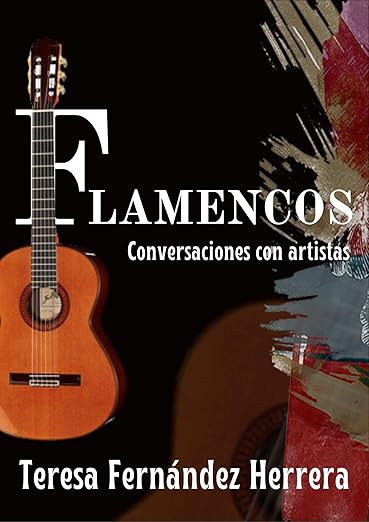
JZ. Agradecerte la entrevista. Nos conocemos de hace muchos años de aquí del festival y para mí es un placer ser entrevistado por ti, que me consta tu afición al flamenco. Tengo ahí precisamente tu libro “FLAMENCOS, Conversaciones con artistas”, estuve encantado de recibirlo.
JZ. Thank you for the interview. We’ve known each other for many years, from here at the festival, and it’s a pleasure for me to be interviewed by you, as I know your passion for flamenco. I have your book «FLAMENCOS, Conversations with Artists» here, and I was delighted to receive it.
TF. Gracias a ti, Joaquín. Thanks to you, Joaquín.
Descubre más desde LA AGENCIA MUNDIAL DE PRENSA
Suscríbete y recibe las últimas entradas en tu correo electrónico.
