

«Thinking to Learn Philosophy as a Compass in the Classroom»
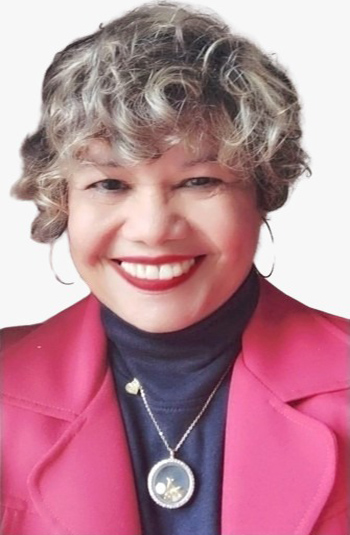
COLUMNISTA
Comenzamos este artículo con la siguiente pregunta: ¿Es el aula un espacio para responder preguntas o para aprender a hacerlas?»
We begin this article with the following question: «Is the classroom a space for answering questions or for learning how to ask them?»
Podríamos reflexionar que el aula tiene la capacidad de ser ambas cosas, un espacio para responder preguntas y para aprender a formularlas, dependiendo de cómo se enfoque la enseñanza y el aprendizaje. Por un lado, responder preguntas promueve el acceso al conocimiento, permitiendo a los estudiantes satisfacer su curiosidad y adquirir información concreta. Esto está vinculado al aprendizaje tradicional, donde el docente actúa como fuente de respuestas.
We could reflect that the classroom has the capacity to be both, a space for answering questions and for learning how to formulate them, depending on how teaching and learning are approached. On the one hand, answering questions promotes access to knowledge, allowing students to satisfy their curiosity and acquire concrete information. This is linked to traditional learning, where the teacher acts as a source of answers.
Por otro lado, aprender a hacer preguntas fomenta el pensamiento crítico, la creatividad y la autonomía intelectual. La habilidad de formular preguntas relevantes abre las puertas al descubrimiento y a una comprensión más profunda del mundo. En este enfoque, el aula se transforma en un laboratorio de exploración y diálogo. De manera ideal, el aula debería equilibrar ambos aspectos. Responder preguntas ayuda a consolidar conocimientos, pero aprender a plantearlas estimula un aprendizaje activo y significativo. Así, los estudiantes no solo memorizan datos, sino que también desarrollan las herramientas para investigar, cuestionar y construir nuevas ideas.
On the other hand, learning to ask questions fosters critical thinking, creativity, and intellectual autonomy. The ability to formulate relevant questions opens the door to discovery and a deeper understanding of the world. In this approach, the classroom becomes a laboratory for exploration and dialogue. Ideally, the classroom should balance both aspects. Answering questions helps consolidate knowledge, but learning how to ask them stimulates active and meaningful learning. Thus, students not only memorize facts but also develop the tools to investigate, question, and construct new ideas.
Otro aspecto importante que debemos considerar es la conceptualización que es aprender para pensar, desde una Visión general creada por IA y según la literatura académica y pedagógica, se refiere a un enfoque educativo que busca desarrollar la capacidad de los estudiantes para pensar de manera crítica, reflexiva y creativa, no solo para adquirir conocimientos. En otras palabras, se trata de aprender a aprender, a utilizar el pensamiento como herramienta para resolver problemas, tomar decisiones y construir su propio aprendizaje.
Another important aspect to consider is the conceptualization of learning to think. From an AI-created overview and according to academic and pedagogical literature, it refers to an educational approach that seeks to develop students’ ability to think critically, reflectively, and creatively, not just to acquire knowledge. In other words, it’s about learning how to learn, how to use thinking as a tool to solve problems, make decisions, and construct their own learning.
Como el suelo, por rico que sea, no puede dar fruto, si no se cultiva, la mente sin cultivo tampoco puede producir.
 Just as the soil, however rich it may be, cannot bear fruit if it is not cultivated, the mind without cultivation cannot produce either.
Séneca.
Aprender a pensar tiene que ver con el pensamiento eficaz puede ayudarnos a alcanzar los más altos niveles en nuestro anhelo de conocer y comprender el mundo que nos rodea, así como de actuar con sensatez, apoyándonos en ese conocimiento y esa comprensión.
Learning to think is about effective thinking; it can help us reach the highest levels in our quest to know and understand the world around us, as well as to act sensibly, based on that knowledge and understanding.
Efectivamente, que aplicar la filosofía en las aulas significa enseñar a los estudiantes a reflexionar, cuestionar y pensar de manera profunda sobre diferentes temas. Es ayudarles a desarrollar habilidades como la lógica, el análisis crítico y la capacidad de argumentar ideas. En lugar de simplemente memorizar información, los alumnos aprenden a entender el “por qué” y el “cómo” detrás de las cosas. Así, se fomenta un aprendizaje más activo, autónomo y conectado a la vida real, que tiene que ver con un pensamiento eficaz.
Indeed, applying philosophy in the classroom means teaching students to reflect, question, and think deeply about different topics. It helps them develop skills such as logic, critical analysis, and the ability to argue ideas. Instead of simply memorizing information, students learn to understand the «why» and «how» behind things. This fosters more active, autonomous, and real-life learning, which is essential for effective thinking.
Esta forma de pensar no se “recoge” ni se “descubre”, sino que ha de aprenderse.
This way of thinking is not “picked up” or “discovered,” but rather it must be learned.
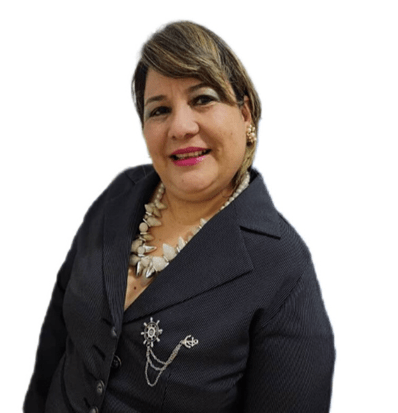
Para aclararnos un poco sobre la temática tenemos invitada a la Dra. Raquel Peña Peinado
sino a construir mundos a través de las ideas,
despertando la curiosidad y el potencial infinito
de cada mente.»
Nació un 29 de junio en la capital del estado Anzoátegui, Venezuela. Esta destacada profesional desde temprana edad mostró una pasión innata por educar. A través de los juegos infantiles, donde las muñecas eran sus alumnas, anticipaban la vocación que marcaría su vida. Decidida a transformar su talento en una carrera, obtuvo el título en educación marcando el inicio de un camino dedicado al aprendizaje y la formación integral. Su compromiso con la excelencia la llevó a especializarse con dos maestrías orientación de la conducta y orientación en educación para padres. posteriormente, alcanzó el nivel más alto de preparación académica al realizar un doctorado en ciencias de la educación. Su búsqueda del conocimiento la motivó a completar múltiples postdoctorados en campos como investigación emergente, epistemología e innovaciones educativas, sistemas y corrientes filosóficas, profundización filosófica e investigación transcompleja,
Born on June 29th in the capital of Anzoátegui State, Venezuela, this distinguished professional displayed an innate passion for education from an early age. Through childhood games, where dolls were her pupils, she anticipated the vocation that would define her life. Determined to transform her talent into a career, she earned a degree in education, marking the beginning of a path dedicated to learning and comprehensive training. Her commitment to excellence led her to specialize with two master’s degrees in behavioral guidance and guidance in parenting education. Later, she achieved the highest level of academic preparation by completing a doctorate in educational sciences. Her pursuit of knowledge motivated her to complete multiple postdoctoral degrees in fields such as emerging research, epistemology and educational innovations, philosophical systems and currents, philosophical deepening, and transcomplex research.
Enriqueció su formación con diplomados en áreas innovadoras como filosofía para niños y docencia en la era digital, auspiciado por la comunidad colombiana. Como académica, ha compartido su conocimiento en artículos y ensayos publicados en revistas científicas y libros colectivos, consolidando su lugar como una autora respetada en el ámbito de la educación. Reconocida internacionalmente, recibió una nominación por su aporte a la difusión de artículos científicos y colaboraciones académicas en ecuador. es miembro activo de prestigiosas organizaciones como la red de investigadores de la transcomplejidad (REDIT), la Fundación universitaria Dr. José Abreu (fuja) y posee membresía en la GCF global coaching federación. actualmente, se desempeña como docente en el instituto universitario de tecnología en el área de salud.
She enriched her education with diplomas in innovative areas such as philosophy for children and teaching in the digital age, sponsored by the Colombian community. As an academic, she has shared her knowledge in articles and essays published in scientific journals and collective books, consolidating her place as a respected author in the field of education. Internationally recognized, she received a nomination for her contribution to the dissemination of scientific articles and academic collaborations in Ecuador. She is an active member of prestigious organizations such as the Transcomplexity Researchers Network (REDIT) and the Dr. José Abreu University Foundation (FUJA), and holds a membership in the GCF Global Coaching Federation. She currently works as a professor at the University Institute of Technology in the health field.
Su amor por las letras la ha llevado a convertirse en escritora de cuentos y sagas infantiles y juveniles disponibles en Amazon, incluyendo títulos como la montaña jardín, las aventuras de Celupín y el planeta Neurón, y mundo de dragones. su obra más reciente, reescribiendo las leyendas del oriente venezolano, colabora activamente en la revista digital española el tintero de oro, contribuyendo con relatos y microrrelatos. su compromiso con la educación, la literatura y la innovación la convierte en un verdadero referente en su campo, inspirando a generaciones presentes y futuras.
Her love of literature has led her to become a writer of children’s and young adult stories and sagas available on Amazon, including titles such as Garden Mountain, The Adventures of Celupín and the Planet Neuron, and World of Dragons. Her most recent work, retelling the legends of eastern Venezuela, is an active contributor to the Spanish digital magazine El Tintero de Oro, contributing stories and microfiction. Her commitment to education, literature, and innovation makes her a true leader in her field, inspiring present and future generations.
YA. Para empezar: ¿Cómo definiría «Filosofía en el aula» y por qué es relevante hoy? To start: How would you define «Philosophy in the Classroom» and why is it relevant today?
– Invitada: Filosofía en el aula no es sólo una asignatura, sino un antivirus mental contra el ruido del mundo digital. Se trata de entrenar a los estudiantes para que diseccionen ideas, no con bisturíes, sino con preguntas incómodas: ¿Quién programa a las IA que nos programan? ¿Es un algoritmo neutral o un espejo de nuestros sesgos? No hablamos de memorizar a Kant, sino de usar su imperativo categórico para juzgar si ChatGPT debería tener código ético o quién responde cuando un coche autónomo elige entre atropellar a un peatón o sacrificar al pasajero. Hoy, con la IA colonizando aulas (desde chatbots que «explican» ética hasta apps que corrigen ensayos en segundos), la filosofía se vuelve el contrapeso humano. No es casual que sistemas educativos como Corea del Sur ya integren debates sobre IA y conciencia en primaria: saben que, sin pensamiento crítico, las nuevas generaciones serán meros usuarios de tecnología, no sus arquitectos.
– Guest: Philosophy in the classroom is not just a subject, but a mental antivirus against the noise of the digital world. It’s about training students to dissect ideas, not with scalpels, but with uncomfortable questions: Who programs the AI that programs us? Is it a neutral algorithm or a mirror of our biases? We’re not talking about memorizing Kant, but about using his categorical imperative to judge whether ChatGPT should have an ethical code or who responds when a self-driving car chooses between running over a pedestrian or sacrificing its passenger. Today, with AI colonizing classrooms (from chatbots that «explain» ethics to apps that correct essays in seconds), philosophy becomes the human counterweight. It’s no coincidence that educational systems like South Korea already integrate debates about AI and consciousness in primary school: they know that, without critical thinking, the new generations will be mere users of technology, not its architects.
Por tanto, en un mundo donde las IA generan respuestas perfectas pero vacías de propósito, la filosofía es el GPS existencial. No para dar soluciones, sino para mantener viva la pregunta más peligrosa: ¿Qué nos hace humanos en la era de las máquinas que aprenden? La respuesta, si existe, nacerá de aulas donde se enseñe a pensar, no a repetir. Por tanto, en cuanto a su relevancia, entonces.
Therefore, in a world where AI generates perfect but purposeless answers, philosophy is the existential GPS. Not to provide solutions, but to keep alive the most dangerous question: What makes us human in the age of learning machines? The answer, if it exists, will come from classrooms where we are taught to think, not to repeat. Therefore, in terms of its relevance, then
- Desenmascarar la ilusión de neutralidad tecnológica: Un algoritmo de TikTok no «piensa», pero sí prioriza contenidos que moldean percepciones. ¿Cómo cuestionar lo que no se ve? Filosofando: analizando causas, intenciones y consecuencias. Debunking the illusion of technological neutrality: A TikTok algorithm doesn’t «think,» but it does prioritize content that shapes perceptions. How can we question what we can’t see? Philosophizing: analyzing causes, intentions, and consequences.
- Ética en tiempo real: La IA avanza más rápido que las leyes. ¿Permitimos que un software decida becas estudiantiles basándose en datos históricos llenos de sesgos? Sin aulas que practiquen el diálogo socrático, ni siquiera notaremos el sesgo. Real-Time Ethics: AI advances faster than the law. Do we allow software to decide student scholarships based on historical data riddled with bias? Without classrooms that practice Socratic dialogue, we won’t even notice the bias.
- Creatividad post-IA: Cuando GPT-4 escribe mejores ensayos que muchos alumnos, la educación necesita algo que las máquinas no repliquen: capacidad de asombro, duda metódica y construcción de sentido. Justo lo que Platón hacía en su Academia. Post-AI Creativity: When GPT-4 writes better essays than many students, education needs something machines can’t replicate: a capacity for wonder, methodical doubt, and meaning-making. Just what Plato did in his Academy.
"En el aula, la filosofía no es solo un tema,
es un camino hacia el conocimiento."
«In the classroom, philosophy is not just a subject, it’s a path to knowledge.»
Y.A. ¿Qué beneficios aporta la filosofía a los estudiantes fuera del aula? What benefits does philosophy bring to students outside the classroom?
-Invitada: La filosofía en el aula es el bootcamp para sobrevivir a la distopía digital. No solo enseña a pensar, sino a desobedecer algoritmos: 1. Pensamiento crítico 2.0: Entrena a los estudiantes para hackear noticias falsas, detectar sesgos en ChatGPT o cuestionar si un fi ltro de belleza en Instagram es inocuo o un manual de auto explotación. 2. Ética con WiFi: Los prepara para decidir si vender NFTs de dudoso valor ecológico, usar deepfakes «inocentes» o trabajar en empresas que monetizan la ansiedad adolescente con likes. 3. Creatividad post-IA: Cuando las máquinas generan textos y diseños perfectos, la filosofía cultiva lo único irreplicable: preguntas incómodas (¿Por qué existimos si la IA puede sustituirnos? ¿El metaverso nos conecta o nos evade?). 4. Resiliencia mental: En una era de scroll infinito, enseña a tolerar la incertidumbre, a no clicar en respuestas rápidas y a debatir sin convertir Twitter en su modelo de diálogo.
-Guest: Philosophy in the classroom is the bootcamp for surviving the digital dystopia. It teaches not only how to think, but also how to disobey algorithms: 1. Critical Thinking 2.0: It trains students to hack fake news, detect biases in ChatGPT, or question whether an Instagram beauty filter is harmless or a self-exploitation manual. 2. Ethics with WiFi: It prepares them to decide whether to sell NFTs of dubious ecological value, use «innocent» deepfakes, or work in companies that monetize teenage anxiety with likes. 3. Post-AI Creativity: When machines generate perfect texts and designs, philosophy cultivates the only thing that cannot be replicated: uncomfortable questions (Why do we exist if AI can replace us? Does the metaverse connect us or evade us?). 4. Mental Resilience: In an era of infinite scrolling, it teaches students to tolerate uncertainty, not to click on quick replies, and to debate without turning Twitter into their model of dialogue.
Descolonización digital: Revela que tras cada «recomendación» de YouTube hay intereses, que los influencers filosóficos venden humo y que la «neutralidad» de un algoritmo es un mito tan viejo como el de la caverna de Platón. No es solo una materia: es el manual de una batalla cognitiva para no ser carne de cañón de la economía de la atención. Mientras la IA aprende a imitar voces, la filosofía les recuerda que su valor no está en lo que producen, sino en lo que cuestionan.»
Digital Decolonization: It reveals that behind every YouTube «recommendation» there are vested interests, that philosophical influencers are selling smoke, and that the «neutrality» of an algorithm is a myth as old as Plato’s Cave. It’s not just a subject: it’s the manual for a cognitive battle to avoid becoming cannon fodder in the attention economy. While AI learns to imitate voices, philosophy reminds them that their value lies not in what they produce, but in what they question.
Y.A. ¿Qué desafíos enfrentan los docentes al incluir filosofía? What challenges do teachers face when including philosophy?
– Invitada: Enseñar filosofía hoy es como sembrar en cemento digital, y los desafíos varían por continente como códigos maliciosos, por tanto, la filosofía exige tiempo lento en un mundo de respuestas rápidas. Los docentes no solo enseñan a pensar: son técnicos de mantenimiento de la humanidad en un planeta cada vez más operado por IA. Su mayor logro: que un alumno prefiera debatir ¿Qué es justicia?
– Guest: Teaching philosophy today is like sowing seeds in digital cement, and the challenges vary by continent, like malicious code. Therefore, philosophy demands slow time in a world of rapid-fire responses. Teachers don’t just teach how to think: they are maintenance technicians for humanity on a planet increasingly powered by AI. Their greatest achievement: getting a student to prefer debating: What is justice?
«La filosofía en el aula: un espacio para la curiosidad, la crítica y la creación de ideas.»
«Philosophy in the classroom: a space for curiosity, criticism, and the creation of ideas.»

Y.A. ¿Cómo integrar en otras materias, como matemáticas o ciencias? How to integrate into other subjects, such as math or science?
-Invitada: Integrar filosofía en matemáticas o ciencias es hackear el sistema educativo para que cada fórmula cuestione el statu quo: usar ecuaciones de álgebra para debatir si un algoritmo que distribuye vacunas es justo o clasista, convertir el CRISPR en un dilema ético (¿jugar a ser dios?), o explicar el principio de incertidumbre de Heisenberg para entender que hasta la física confirma que las fake news son inevitables. No es añadir «píldoras de pensamiento», sino demostrar que detrás de cada número «neutral» hay sesgos (como el 0, prohibido por hereje en culturas antiguas).
-Guest: Integrating philosophy into mathematics or science is like hacking the educational system so that every formula questions the status quo: using algebraic equations to debate whether an algorithm that distributes vaccines is fair or classist, turning CRISPR into an ethical dilemma (playing God?), or explaining Heisenberg’s uncertainty principle to understand that even physics confirms that fake news is inevitable. It’s not about adding «thought pills,» but about showing that behind every «neutral» number there are biases (like 0, banned as heretical in ancient cultures).
Te hablaré un poco sobre esto, el cero fue el hereje matemático que sacudió los cimientos de civilizaciones enteras. En la antigua Grecia, los pitagóricos lo prohibieron porque creían que el universo se basaba en números enteros y el vacío era una blasfemia (¡imagina su crisis existencial al descubrir números irracionales!). En la Europa medieval, cuando los mercaderes empezaron a usar números arábigos (con el 0 incluido), la Iglesia los acusó de ser «símbolos del diablo»: en 1299, Florencia prohibió el 0 en transacciones, argumentando que un dígito que representaba «nada» podía usarse para fraudes contables. Hasta en la India, donde se formalizó su concepto, generó debates filosóficos: ¿cómo algo que no es puede afectar los cálculos que son?
I’ll tell you a little about this: zero was the mathematical heretic that shook the foundations of entire civilizations. In ancient Greece, the Pythagoreans banned it because they believed the universe was based on integers and a void was blasphemous (imagine their existential crisis upon discovering irrational numbers!). In medieval Europe, when merchants began using Arabic numerals (with the 0 included), the Church accused them of being «symbols of the devil.» In 1299, Florence banned the number 0 in transactions, arguing that a digit representing «nothing» could be used for accounting fraud. Even in India, where its concept was formalized, it sparked philosophical debates: how can something that isn’t affect calculations that are?
Así, el cero no era solo un número: era una bomba lógica contra sistemas de creencias. Su historia es un recordatorio de que hasta lo «obvio» (como contar) está plagado de prejuicios. Hoy, cuando los algoritmos deciden quién merece un crédito o una libertad condicional, el fantasma del 0 resurge: ¿qué «verdades matemáticas» aceptamos sin cuestionar? La filosofía en el aula serviría para desenterrar esos sesgos enterrados en código, igual que el cero desenterró el miedo humano al vacío. Entonces se tiene que entrenar un modelo de IA sin cuestionar sus sesgos es criar Frankenstein con código. La meta: que los estudiantes no resuelven integrales como robots, sino como saboteadores del copy-paste mental, capaces de ver en una gráfica de desempleo no solo datos, sino dramas humanos.
Thus, zero wasn’t just a number: it was a logic bomb against belief systems. Its story is a reminder that even the «obvious» (like counting) is riddled with bias. Today, when algorithms decide who deserves credit or parole, the ghost of zero resurfaces: what «mathematical truths» do we accept without question? Philosophy in the classroom would serve to unearth those biases buried in code, just as zero unearthed the human fear of emptiness. So training an AI model without questioning its biases is like breeding Frankenstein with code. The goal: that students don’t solve integrals like robots, but like mental copy-paste saboteurs, capable of seeing in an unemployment graph not just data, but human dramas.
"Con la filosofía, el aula se transforma en un laboratorio de pensamiento,
donde la duda es el motor de la innovación."
«With philosophy, the classroom becomes a laboratory of thought, where doubt is the engine of innovation.»
Y.A. ¿Qué estrategias recomienda para fomentar el pensamiento crítico en jóvenes? What strategies do you recommend to encourage critical thinking in young people?
-Invitada:
-Guest:
- Convertir el aula en un sandbox de dilemas tech: Usar casos reales: «Discutamos el algoritmo de Instagram: ¿te muestra lo que quieres ver o lo que te engancha?». Roleplay con personajes: «Hoy eres el CEO de Meta: ¿cambiarías el feed para priorizar salud mental sobre ganancias?». Turn the classroom into a tech dilemma sandbox: Use real-life cases: «Let’s discuss the Instagram algorithm: Does it show you what you want to see or what engages you?» Role-play with characters: «Today you are the CEO of Meta: Would you change your feed to prioritize mental health over profits?»
- Filosofía embedded en plataformas que usan: Crear memes filosóficos (ej: «Descartes en Tinder: Pienso, luego existo'»). Retos tipo TikTok challenge: «Graba un video explicando por qué los filtros de belleza son la nueva caverna de Platón». Philosophy embedded in platforms they use: Create philosophical memes (e.g., «Descartes on Tinder: I think, therefore I am»). TikTok challenge-type challenges: «Record a video explaining why beauty filters are the new Plato’s cave.»
- Enseñar a debuggear creencias: Mapear sesgos cognitivos como si fueran malware: «El sesgo de confirmación es el cookie que te hace ver solo lo que ya crees». Analizar fake news con lupa socrática: «¿Quién gana si compartes esto sin verificar?». Teaching belief debugging: Mapping cognitive biases like malware: «Confirmation bias is the cookie that makes you see only what you already believe.» Analyzing fake news with a Socratic magnifying glass: «Who wins if you share this without verifying it?»
- Ética aplicada a IA y algoritmos: Debatir «¿Debería un bot tener derechos si pasa el test de Turing?». Ethics applied to AI and algorithms: Debate «Should a bot have rights if it passes the Turing test?»
- Filosofía de la inquietud Pegar stickers en la escuela con preguntas incómodas: «¿Tu celular te usa o lo usas tú?». Usar ChatGPT para generar falacias y que las desmonten como cazadores de mitos. Philosophy of Concern: Putting up stickers at school with awkward questions: «Does your phone use you, or do you use it?» Using ChatGPT to generate fallacies and have them debunked like mythbusters.
Y. A. ¿Nos comparte un ejemplo concreto de filosofía aplicada en clase? Can you share with us a specific example of philosophy applied in class?
– Invitada: Lo he utilizado a partir del cuento como herramienta filosófica, por ejemplo El Caballero de la armadura oxidadaesto permitió que los estudiantes entre 8 a 9 años pudieran identificarse con los personajes y destacar una discusión sobre el miedo, apegos o emociones, también con mis estudiantes en el área de la salud en Fisioterapia hacemos uso del Diálogo socrático, esto permite trabajar las socializaciones sobre casos clínicos , es lo que también llamaría Paulo Freire la pedagogía de la pregunta o el filósofo argentino David Sumiacher la Didáctica filosófica la cual consiste en suministrar la clase en 3 fases haciendo uso de las preguntas literales, problematizadoras y filosóficas. Ya que el instituto donde trabajo se tiene como unidad curricular en Fisioterapia la asignatura: Pensamiento Crítico y reflexivo ya que se promueve el razonamiento clínico en nuestros estudiantes.
– Guest: I have used it from the story as a philosophical tool, for example The Knight in Rusty Armor, this allowed students between 8 and 9 years old to identify with the characters and highlight a discussion about fear, attachments or emotions, also with my students in the health area in Physiotherapy we use the Socratic Dialogue, this allows us to work on socializations about clinical cases, it is what Paulo Freire would also call the pedagogy of the question or the Argentine philosopher David Sumiacher the Philosophical Didactics which consists of providing the class in 3 phases making use of literal, problematizing and philosophical questions. Since the institute where I work has as a curricular unit in Physiotherapy the subject: Critical and Reflective Thinking since clinical reasoning is promoted in our students.
Y.A. ¿Y herramientas tecnológicas útiles? And useful technological tools?
– Invitada: PADLET/EDUCAPLAY /GENIALLY /CANVA CON SUS NUEVAS APLICACIONES DE PROGRAMACIÓN
– Guest: PADLET/EDUCAPLAY /GENIALLY /CANVA WITH ITS NEW PROGRAMMING APPS
Y.A. Para finalizar: ¿Tiene proyectos próximos que quiera compartir? Finally, do you have any upcoming projects you’d like to share?
-Invitada: Actualmente tengo un Proyecto en el que formará a docentes universitarios haciendo énfasis en el desarrollo del pensamiento crítico y la propuesta de un nuevo constructo TRANSINCLUSIÓN EDUCATIVA, el que no veamos como señala Confucio, no se trata de nombres o palabras sin sentidos, porque la inclusión no es una mera integración de estudiantes, sin considerar las necesidades individuales desde la estructura arquitectónica de la sociedad hasta su currículo. También formé una Comunidad de indagación filosófica de docentes en el que los participantes comparten sus experiencias, y construimos en colectivo, se tiene en proceso la construcción de un libro colectivo sobre la Amazonía.
Guest: I currently have a project that will train university professors, emphasizing the development of critical thinking and proposing a new construct: EDUCATIONAL TRANSINCLUSION. We don’t see, as Confucius points out, as meaningless names or words, because inclusion is not a mere integration of students, without considering individual needs from the architectural structure of society to its curriculum. I also formed a Philosophical Inquiry Community for teachers, in which participants share their experiences, and we build collectively. A collective book on the Amazon is in the works.
Y para este año pretendo publicar el volumen 2 de la Saga Mundo de Dragones en el que haré un abordaje sobre el MAL/ODIO GUERRA desde un enfoque fantasioso utilizando como escenario principal la Gran Sabana en Venezuela.
And this year, I plan to publish volume 2 of the World of Dragons Saga, in which I will address the EVIL/HATE WAR from a fantasy perspective, using the Gran Sabana in Venezuela as the main setting.
"En el aula, la filosofía nos ayuda a encontrar respuestas
a las preguntas que nos hacemos sobre nosotros mismos y el mundo."
«In the classroom, philosophy helps us find answers to the questions we ask about ourselves and the world.»
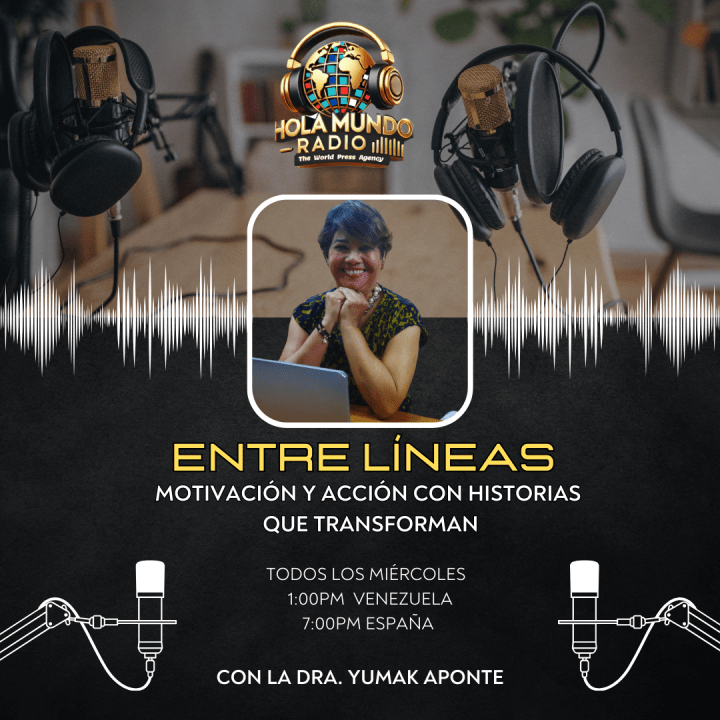
Nota: También estamos en radio. Sintoniza todos los Miércoles en HOLA MUNDO online radio este gran programa, haciendo click aqui: https://holamundoonlineradio.wixsite.com/holamundoonlineradio «Entre Líneas: Motivación en acción con Historias que transforman» a las 19:00 PM HORAS ESPAÑA.
Note: We are also on the radio. Tune in every Wednesday to HOLA MUNDO online radio for this great program by clicking here: https://holamundoonlineradio.wixsite.com/holamundoonlineradio «Between the Lines: Motivation in Action with Transforming Stories» at 7:00 PM Spanish Time.
Descubre más desde LA AGENCIA MUNDIAL DE PRENSA
Suscríbete y recibe las últimas entradas en tu correo electrónico.

