

In Prehistory

Amigos lectores de Culturas del Mundo. Aburrida e impotente de ver como solo tres hombres han puesto el mundo del revés y de que nadie hace nada contundente para desactivarlos, por el contrario, hablando de lo que me es más cercano, la Unión Europea, por toda respuesta a presiones como poco vejatorias, ha decidido rearmarse. El gobierno de mi país, España, ha anunciado que incrementará en varios miles de millones de euros su contribución a la OTAN. Como estoy radical, total y rotundamente en desacuerdo con tal decisión, he decidido marcharme a la Prehistoria.
Dear readers of Cultures of the World, bored and powerless to watch how just three men have turned the world upside down and how no one is doing anything decisive to stop them. On the contrary, speaking of what is closest to me, the European Union, in response to pressure that is at least humiliating, has decided to rearm. The government of my country, Spain, has announced that it will increase its contribution to NATO by several billion euros. Since I radically, totally, and emphatically disagree with this decision, I have decided to go back to Prehistory.
Muy cerca, aquí mismo en la llamada piel de toro, he seleccionado dos yacimientos arqueológicos: Los Millares, Sierra de Gádor, (Almería), asentamiento prehistórico de la Edad del Cobre, (3.200 – 2.200 a.C.), es decir hace más de cinco mil años y Atapuerca, (Burgos) donde se han encontrado evidencias de presencia humana de más de millón y medio de años, información sobre migraciones de homínidos a Europa desde África, donde la familia Leakey encontró entre otros un fósil de Homo Habilis de unos dos millones de años. Aún hay negacionistas que sin ningún rigor científico discrepan de que los homínidos más antiguos procedan de Kenia y Tanzania. Ya ven, del África negra.
Very close by, right here in the so-called bull’s hide, I have selected two archaeological sites: Los Millares, Sierra de Gádor, (Almería), a prehistoric settlement from the Copper Age (3,200 – 2,200 BC), that is, more than five thousand years ago; and Atapuerca, (Burgos), where evidence of human presence dating back more than a million and a half years has been found, along with information on hominid migrations to Europe from Africa, where the Leakey family found, among others, a Homo Habilis fossil about two million years old. There are still deniers who, without any scientific rigor, disagree that the oldest hominids come from Kenya and Tanzania. You see, from black Africa.
Los Millares. Bien de interés cultural / Los Millares. Site of cultural interest.

Demostrado que fue la primera ciudad de la Península Ibérica hace unos 5.000 años y uno de los asentamientos más importantes de esta cultura en el mundo. Un poblado con cuatro líneas de muralla y una ciudadela interior donde se ubicaba el poblado y una necrópolis exterior a las murallas.
It has been proven that it was the first city on the Iberian Peninsula, some 5,000 years ago, and one of the most important settlements of this culture in the world. A settlement with four lines of walls and an inner citadel where the settlement was located, and a necropolis outside the walls.
Vivían en cabañas circulares construidas con una mezcla de barro y ramajes, con zócalos de mampostería de piedras y barro y cubiertas vegetales. En el interior tenían hogares, bancos de piedra adosados a las paredes, recintos para almacenamiento de vasijas, molienda de cereal. Fosas que pudieron ser silos y cisternas.
They lived in circular huts built with a mixture of mud and branches, with stone and mud masonry plinths and vegetal roofs. Inside, they had hearths, stone benches attached to the walls, enclosures for storing vessels, and grain mills. Pits that could have been silos and cisterns.
Un horno de fundición, una fosa con restos de mineral de cobre. Un edificio singular en el centro de la explanada, la mayor estructura documentada, quizá palacio o almacén o edificio religioso. Pero lo más relevante, restos de conducciones de agua o especie de canal y cisternas para su almacenamiento.
A smelting furnace, a pit with remains of copper ore. A unique building in the center of the esplanade, the largest documented structure, perhaps a palace, warehouse, or religious building. But most importantly, remains of water pipes or some kind of canal and cisterns for storage.
Todo esto entre las líneas de murallas. En el poblado interior de la ciudadela, otra cisterna para abastecimiento directo de agua al poblado.
All of this within the lines of walls. In the inner settlement of the citadel, there is another cistern for the direct supply of water to the settlement.
Según las dataciones radiocarbónicas, Los Millares empezó siendo un lugar funerario, hacia el 3.220 a. C. Doscientos años más tarde, hacia el 3.090 aparecería el poblado. En los siglos posteriores al tercer milenio este poblado alcanzó la mayor concentración de población y monumentos, algo desconocido hasta entonces en la Península Ibérica.
According to radiocarbon dating, Los Millares began as a burial site, around 3220 BC. Two hundred years later, around 3090 BC, the settlement itself would appear. In the centuries following the third millennium, this settlement reached its highest concentration of population and monuments, something previously unknown on the Iberian Peninsula.
La aridez actual del zona no se corresponde con el paisaje del IV y III milenio, que tuvo una gran diversidad arbórea y vegetal, cursos de agua, pastoreo intensivo, riqueza de minerales que activó la industria metalúrgica, tanto para ornamentos decorativos como estratégicos. Es decir, armas. Industrias artesanales de cordelería, cestería, herramientas agrícolas, cerámica decorada, alfarería, sistemas de riego. Es decir, una sociedad muy avanzada en sistemas de producción.
The current aridity of the area does not correspond to the landscape of the 4th and 3rd millennia, which had a great diversity of trees and plants, waterways, intensive grazing, and a wealth of minerals that activated the metallurgical industry, both for decorative and strategic ornaments. That is, weapons. Craft industries of rope-making, basketry, agricultural tools, decorated ceramics, pottery, and irrigation systems. In other words, a society highly advanced in production systems.
También surgió el comercio, incluso la exportación e importación con el norte de África, lo que demuestra la capacidad de movilidad de estas gentes, tanto por mar, como por tierra.
Trade also emerged, including exports and imports with North Africa, which demonstrates the mobility of these people, both by sea and by land.
Y estamos hablando como poco de hace unos 4.500 años. Había sí, desigualdades sociales, acceso restringido a las élites.
And we are talking about at least 4,500 years ago. There were, yes, social inequalities, restricted access for the elites.
Es decir, como ahora.
That is, just like now.
Atapuerca. Patrimonio Mundial UNESCO 2000 / Atapuerca. UNESCO World Heritage Site 2000.

La información que tengo de la Fundación Atapuerca es impresionante. Hace 1.800.000 años la humanidad salió de África y hace 1.500.000 ya había alcanzado los confines de Eurasia, en el conocido como Pleistoceno inferior. En Europa aparece una especie nueva denominada Homo Antecesor, derivada del Homo Erectus.
The information I have from the Atapuerca Foundation is impressive. 1,800,000 years ago, humanity left Africa and by 1,500,000 years ago had already reached the borders of Eurasia, in the so-called Lower Pleistocene. A new species called Homo Antecessor, derived from Homo Erectus, appeared in Europe.
En Atapuerca, entre 2007 y 2008 se recuperaron restos humanos datados en alrededor de 1.200.000 años. También restos de fauna y algunas herramientas de piedra. En 2022 se recuperó un fósil aún más antiguo.
In Atapuerca, between 2007 and 2008, human remains dating back around 1,200,000 years were recovered. Also found were faunal remains and some stone tools. An even older fossil was recovered in 2022.
La información de la Fundación es extensísima, abarca diversas fases y fósiles del Pleistoceno Inferior y una del Superior, pero sintetizando al máximo para no aburrirme ni aburrir a mis lectores con datos exhaustivos que no son materia de este escrito, que sí quiere en esta ocasión poner en primer plano de dónde venimos y qué hacían estos antepasados de millones de años, antes de ayer como quién dice en comparativa con la edad de la Tierra, están clasificados como Anteneandertales los del Pleistoceno medio y Neandertales los del Pleistoceno superior, (entre 120.000 y 11.000 años). El Homo Sapiens desde hace unos 45.0000 años. Con el Holoceno, (unos 11.000) años, el clima se templó, lo que cambió el tipo de sociedad, ahí surgen la agricultura y ganadería. Es el Neolítico.
The information from the Foundation is extensive, covering various phases and fossils from the Lower Pleistocene and one from the Upper Pleistocene, but summarizing it as much as possible so as not to bore myself or my readers with exhaustive data that are not the subject of this writing, which does want on this occasion to put in the foreground where we come from and what these ancestors of millions of years did, before yesterday as who says in comparison with the age of the Earth, they are classified as Anteneanderthals those of the Middle Pleistocene and Neanderthals those of the Upper Pleistocene, (between 120,000 and 11,000 years). Homo Sapiens since about 45,0000 years ago. With the Holocene, (about 11,000) years, the climate tempered, which changed the type of society, there arise agriculture and livestock. It is the Neolithic.
Todas estas fases están representadas en Atapuerca. El Calcolítico es el que se corresponde con Stonehenge, en Inglaterra; es el comienzo de la metalurgia que hemos visto con bastante detalle en la Edad del Cobre de Los Millares.
All of these phases are represented in Atapuerca. The Chalcolithic corresponds to Stonehenge in England; it is the beginning of metallurgy, which we have seen in considerable detail in the Copper Age of Los Millares.
La Edad del Bronce es la de la construcción de las pirámides más antiguas de Egipto y esto es aún Prehistoria. Los yacimientos de la Sierra de Atapuerca han proporcionado una valiosísima información sobre la organización social, la economía y la cultura de sus pobladores durante la última fase de la Prehistoria.
The Bronze Age is the period of the construction of the oldest pyramids in Egypt, and this is still Prehistory. The sites in the Sierra de Atapuerca have provided invaluable information about the social organization, economy, and culture of its inhabitants during the final phase of Prehistory.
Por establecer comparativas me he ido a la China pre dinástica y no van más allá de culturas Neolíticas, ejemplo la de Hongshan, (4.700 – 2.900 a.C.) Se distingue por la producción de bronce, cerámica elaborada y arquitectura avanzada en asentamientos urbanos.
To establish comparisons, I have looked at pre-dynastic China, and they do not go beyond Neolithic cultures, such as that of Hongshan (4700–2900 BC). It is distinguished by the production of bronze, elaborate pottery, and advanced architecture in urban settlements.
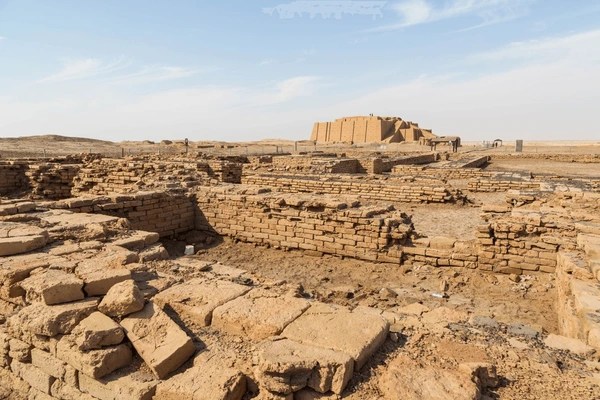
También me he ido a Ur, actual Iraq, la ciudad presuntamente más antigua de Mesopotamia, entre el 3.800 y el 500 a.C. Lo más importante de la cultura de Ur es la escritura cuneiforme en tablillas, las más antiguas datadas hacia el 3.300 a.C. Fue la ciudad más importante de la civilización Sumeria, considerada la más antigua conocida por el hombre.
I’ve also been to Ur, present-day Iraq, supposedly the oldest city in Mesopotamia, dating back to between 3,800 and 500 BC. The most important aspect of the Ur culture is the cuneiform writing on tablets, the oldest dating back to around 3,300 BC. It was the most important city of the Sumerian civilization, considered the oldest known to man.
No íbamos a dejar América fuera de esta crónica. ¿Llegaron los primeros pobladores a través del estrecho de Bering en época de glaciaciones, entre 30.000 y 10.000 años a.C.?
We weren’t going to leave America out of this chronicle. Did the first settlers arrive across the Bering Strait during the Ice Age, between 30,000 and 10,000 BC?
En México, restos del “Hombre de Tedexpan” los fósiles más antiguos de presencia humana en América, se calculan en unos 10.000 años de antigüedad. Eran cazadores.
In Mexico, remains of the «Tedexpan Man,» the oldest fossils of human presence in the Americas, are estimated to be about 10,000 years old. They were hunters.
Fascinante, ¿no?
Fascinating, isn’t it?
En todas ellas hubo guerras, de distintos modos. El violento ADN del animal humano se remonta hasta la más remota Prehistoria.
In all of them, there were wars, in different forms. The violent DNA of the human animal dates back to the most remote Prehistory.
Descubre más desde LA AGENCIA MUNDIAL DE PRENSA
Suscríbete y recibe las últimas entradas en tu correo electrónico.
