

Swami Satyananda Saraswati: The profound wisdom of India
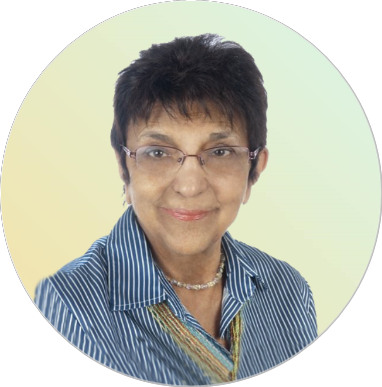
Esta es una crónica obligada por varias razones, la más inmediata es la presentación hoy, 19 de septiembre 2024, en la Casa Asia de Madrid, del último libro de Swami Satyananda Saraswati, “Llenaré los tres mundos de dicha divina”.
This is a must-see chronicle for several reasons, the most immediate being the presentation today, September 19, 2024, at Casa Asia in Madrid, of Swami Satyananda Saraswati’s latest book, “I will fill the three worlds with divine bliss.”
La razón más remota es cómo conocí en octubre de 2002 a Swami Satyananda, en un seminario internacional de Mística medieval hindú, promovido y dirigido por él y organizado por el Centro Internacional de Estudios Místicos de Ávila.
The remotest reason is how I met Swami Satyananda in October 2002, at an international seminar on Medieval Hindu Mysticism, promoted and directed by him and organized by the International Center for Mystical Studies of Ávila.
Las razones intermedias, mi seguimiento intermitente de Swamiji, en España, en años en los que aún no tenía un ashram, pero era invitado a dar retiros en Cataluña y en Madrid. Más tarde, el año que hice mi inolvidable peregrinación a Arunachala, la montaña de Shiva y sede del ashram del maestro Ramana Maharshi, otro personaje que nadie debería desconocer y del que recomiendo el libro “Sé lo que eres”, obra imprescindible sobre la indagación del Yo. En esa época, Swami Satyananda residía en el niketan Gnanananda Thapovanam, no lejos de Arunachala. Allí lo visité en una jornada inolvidable.
The intermediate reasons, my intermittent following of Swamiji, in Spain, in years when I did not yet have an ashram, but I was invited to give retreats in Catalonia and Madrid. Later, the year I made my unforgettable pilgrimage to Arunachala, the mountain of Shiva and headquarters of the ashram of Master Ramana Maharshi, another character that no one should ignore and of whom I recommend the book “I know what you are”, an essential work on inquiry. of the Self. At that time, Swami Satyananda was residing in the Gnanananda Thapovanam niketan, not far from Arunachala. I visited him there on an unforgettable day.

Luego perdí su rastro, hasta hace un año, que en una conversación casual, supe de su Ashram Kailash, (la morada de Shiva) en el municipio de Brandilanes, comarca de Aliste, Zamora, ejemplo de España vaciada y reserva natural de la Biosfera. Allí ya he asistido a dos retiros, el último este pasado mes de agosto, dedicado a las enseñanzas contenidas en varias de las Upanisad, la primera fuente de las enseñanzas filosóficas de la sagrada India.
Then I lost track of him, until a year ago, when in a casual conversation, I learned about his Kailash Ashram, (Shiva’s abode) in the municipality of Brandilanes, Aliste region, Zamora, an example of emptied Spain and a Biosphere natural reserve. . There I have already attended two retreats, the last this past August, dedicated to the teachings contained in several of the Upanisads, the first source of the philosophical teachings of sacred India.
¿Quién es Swami Satyananda Saraswati? Pues es un catalán de Barcelona, que con veinte años viajó a India y allí conoció a quien le cambió la vida, su maestro Swami Muktananda Paramahamsa, en el famoso ashram de Ganeshpuri en el estado de Maharashtra, sede del samadhi de otro gran maestro, Bhagavan Nityananda. Con él comenzó su iniciación hacia el autoconocimiento, la meditación, la esencia de Brahman.
Who is Swami Satyananda Saraswati? Well, he is a Catalan from Barcelona, who at the age of twenty traveled to India and there he met the person who changed his life, his teacher Swami Muktananda Paramahamsa, in the famous Ganeshpuri ashram in the state of Maharashtra, seat of the samadhi of another great teacher, Bhagavan Nityananda. With him began his initiation towards self-knowledge, meditation, the essence of Brahman.
Cinco años más tarde accedió a la dignidad de Swami, monje renunciante, de la orden de Sri Shánkara.
Five years later he acceded to the dignity of Swami, renounced monk, of the order of Sri Shankara.
Poco más le duró su maestro y mentor. Dos años después, 1982, el maestro Muktananda dejó este mundo. Él se alejó de Ganeshpuri y se dirigió a los pies de Arunachala, a la sombra de Ramana Maharshi. Se instaló en Gnanananda Thapovanan Niketan, cerca del ashram Ramana, donde residió más de dos décadas, con estancias intermitentes en España, dando retiros en lugares alquilados por sus seguidores. Siempre regresaba a India, su auténtica patria, donde encontró sus verdaderas raíces. Hasta su instalación definitiva en España.
His teacher and mentor lasted little longer. Two years later, 1982, Master Muktananda left this world. He left Ganeshpuri and went to the feet of Arunachala, in the shadow of Ramana Maharshi. He settled in Gnanananda Thapovanan Niketan, near the Ramana ashram, where he lived for more than two decades, with intermittent stays in Spain, giving retreats in places rented by his followers. He always returned to India, his true homeland, where he found his true roots. Until its final installation in Spain.
Kailash Ashram, es un lugar ideal para la meditación y la escucha de enseñanzas para el crecimiento interior. Porque como dice Swami, “escuchar antes de leer”, enseñanzas que fueron transmitidas oralmente durante siglos. Las escrituras son muy posteriores a la fuente.
Kailash Ashram is an ideal place for meditation and listening to teachings for inner growth. Because as Swami says, “listen before reading”, teachings that were transmitted orally for centuries. The writings are much later than the source.
Allí fui conociendo otras cosas. El creciente número de discípulos, la fundación de la asociación y ediciones Advaitavidya, que en pocos años se ha asentado como una editorial muy sólida, dedicada a autores de temática hinduista. De Swami Satyananda, Mauna, la enseñanza del silencio; Viveka, el discernimiento entre lo real y lo no real; Vairagya, o el desapego; (2018) Sádhana, el camino a la plenitud; Mente, meditación y silencio; Las bases del yoga. (2021)
There I learned other things. The growing number of disciples, the founding of the Advaitavidya association and editions, which in a few years has established itself as a very solid publishing house, dedicated to authors with Hindu themes. From Swami Satyananda, Mauna, the teaching of silence; Viveka, the discernment between what is real and what is not real; Vairagya, or detachment; (2018) Sadhana, the path to plenitude; Mind, meditation and silence; The bases of yoga. (2021)
Y en 2024, el libro objeto de esta crónica, Llenaré los tres mundos de dicha divina, un compendio de doce ensayos, en los que de forma amena y documentada por grandes maestros, nos va envolviendo en las percepciones del tiempo, una concepción cíclica muy lejos de la dimensión temporal occidental. La filosofía de la no dualidad, Advaita Vedanta, la unidad de seres en el Brahman, el todo absoluto de la creación del universo. El creador y lo creado, todo uno. Las enseñanzas de los Mahatmas o maestros, desde el siglo VII hasta hoy, entre otros Sri Shánkara, autor del mayor legado de la tradición de la no dualidad. Qué profunda síntesis hace en la frase “a aquel que por su sabiduría, ya no diferencia entre el jiva y el Brahman, ni tampoco entre el universo y el Brahman, se le reconoce como un jivanmukta” (liberado en vida) . Sri Jñanadeva, Sri Ramana Maharshi, Swami Ramdas, un imprescindible contemporáneo, cuyas obras son una joya de la espiritualidad viva. Imprescindible su obra Peregrinaje de un yogui, un clásico muy poco corriente.
And in 2024, the book that is the subject of this chronicle, I will fill the three worlds with divine happiness, a compendium of twelve essays, in which, in an entertaining way and documented by great masters, it involves us in the perceptions of time, a very cyclical conception. far from the western temporal dimension. The philosophy of non-duality, Advaita Vedanta, the unity of beings in Brahman, the absolute whole of the creation of the universe. The creator and the created, all one. The teachings of the Mahatmas or teachers, from the 7th century to today, among others Sri Shankara, author of the greatest legacy of the tradition of non-duality. What a profound synthesis he makes in the phrase “he who, due to his wisdom, no longer differentiates between the jiva and Brahman, nor between the universe and Brahman, is recognized as a jivanmukta” (liberated in life). Sri Jñanadeva, Sri Ramana Maharshi, Swami Ramdas, an essential contemporary, whose works are a jewel of living spirituality. His work Pilgrimage of a Yogi is essential, a very unusual classic.
Siento un orgullo agradecido por haber realizado ese peregrinaje en Tamil Nadu: Rameshwaran, Kanchipuram, Madurai, Chidambaram, Pondicherry, el hogar de Sri Aurobindo, y Tiruvanamalai, la gran ciudad que nació a los pies de Arunachala.
I feel grateful pride in having made that pilgrimage in Tamil Nadu: Rameshwaran, Kanchipuram, Madurai, Chidambaram, Pondicherry, the home of Sri Aurobindo, and Tiruvanamalai, the great city that was born at the foot of Arunachala.
Llenaré los tres mundos de dicha divina, facilita al lector occidental, sean cuales sean sus creencias o no creencias, un viaje tanto real como metafísico a una visión cosmológica del mundo. Nos acerca a una cultura que ya ha penetrado occidente, en términos tan cotidianos como la meditación, el yoga, los mantras, la expansión del vegetarianismo, el creciente respeto a los animales. Una penetración silenciosa pero más asentada cada día, aunque no se la relacione con sus orígenes. Aunque como dice Swamiji y tiene mucha razón, en el yoga occidental predomina lo físico y se ignoran sus principios espirituales.
I will fill the three worlds with divine bliss, facilitates the Western reader, whatever his beliefs or non-beliefs, a journey both real and metaphysical to a cosmological vision of the world. It brings us closer to a culture that has already penetrated the West, in such everyday terms as meditation, yoga, mantras, the expansion of vegetarianism, the growing respect for animals. A silent but more established penetration every day, although it is not related to its origins. Although as Swamiji says and he is very right, in Western yoga the physical predominates and its spiritual principles are ignored.
Occidente siempre ha estado fascinado por las mitologías, por algo somos hijos directos de la madre Grecia. Precisamente esta fascinación le hace muy proclive al conocimiento y aceptación de la riqueza incomparable de la mitología hindú, que como en el caso de la griega es inseparable de la historia y del carácter de sus gentes. En nuestro libro, encontramos una expresión completa de esta rica mitología en todas sus formas y desde todas sus fuentes.
The West has always been fascinated by mythologies, there is a reason we are direct children of mother Greece. Precisely this fascination makes him very inclined to know and accept the incomparable richness of Hindu mythology, which, as in the case of Greek mythology, is inseparable from the history and character of its people. In our book, we find a complete expression of this rich mythology in all its forms and from all its sources.
La exposición sobre la irrealidad de todo pensamiento que atraviesa por la mente, incluso los conceptos, de tiempo y espacio, que solo existen bajo la influencia de la mente, invita a una constatación basada en nuestra propia experiencia. Dicho así, puede considerarse difícil, pero no lo es, cuando aprendemos a conocer la naturaleza de la mente, a no permitirla que construya realidades inexistentes, que condicionan negativamente nuestras vidas. Como dice, en uno de entre muchos ejemplos, el maestro Gaudapada, en la Mandukya Upanisad: “Este mundo, con todos sus seres animados y objetos inanimados, todo lo que es percibido por la mente, es solamente mente. Cuando la mente cesa, la dualidad desaparece.”
The exposition of the unreality of every thought that passes through the mind, including the concepts of time and space, which only exist under the influence of the mind, invites a verification based on our own experience. Said like this, it can be considered difficult, but it is not, when we learn to know the nature of the mind, to not allow it to construct non-existent realities, which negatively condition our lives. As Master Gaudapada says, in one of many examples, in the Mandukya Upanisad: “This world, with all its animate beings and inanimate objects, whatever is perceived by the mind, is only mind. When the mind ceases, duality disappears.”
El capítulo dedicado a la mística medieval hindú y su contexto histórico, en una sucesión de poemas y leyendas de yoguis, sabios y mahatmas, pone ante los ojos de cualquier lector comprometido, el corazón vivo del hinduismo, la tradición más antigua de la tierra, que se mantiene viva y en vigor y cada vez con mayor potencia hasta nuestros días. No es arqueología, como las antiquísimas tradiciones sumerias, asirias y otras que se desarrollaron en la antigua Mesopotamia, entre los ríos Tigris y Eúfrates. Si es algo que ha perdurado a través de siglos y geografías, es porque penetra hasta el núcleo de la esencia humana, porque es algo que puede conducirnos hasta el estado de liberación en este ciclo de vida, al reconocimiento de que somos Brahman.
The chapter dedicated to medieval Hindu mysticism and its historical context, in a succession of poems and legends of yogis, sages and mahatmas, puts before the eyes of any committed reader, the living heart of Hinduism, the oldest tradition on earth, which remains alive and in force and with increasing power to this day. It is not archeology, like the very ancient Sumerian, Assyrian and other traditions that developed in ancient Mesopotamia, between the Tigris and Euphrates rivers. If it is something that has endured through centuries and geographies, it is because it penetrates to the core of the human essence, because it is something that can lead us to the state of liberation in this cycle of life, to the recognition that we are Brahman.
El libro dedica un capítulo a Ramana Maharshi, el maestro que en pleno siglo XX solo podía producirse en la India, concretando más, en el sur de India, más aún, en Arunachala, en presencia de Shiva, que se manifestó como columna de fuego para dar una lección de humildad a Brahma y Vishnu.
The book dedicates a chapter to Ramana Maharshi, the master who in the 20th century could only be produced in India, more specifically, in southern India, even more so, in Arunachala, in the presence of Shiva, who manifested himself as a column of fire. to teach a lesson in humility to Brahma and Vishnu.
“El primer paso hacia la liberación es experimentar un completo desapego por las cosas transitorias. Sigue a esto la práctica de la calma mental, el dominio de los sentidos y el recogimiento de los sentidos”. Sri Ramana Maharshi.
“The first step towards liberation is to experience complete detachment from transient things. This is followed by the practice of mental calm, mastery of the senses and recollection of the senses.” Sri Ramana Maharshi.
Para terminar esta crónica, haré una breve descripción de Kailash Ashrsm. Por el momento consta de tres edificios, pero está prevista una ampliación para alojamientos, porque los actuales no bastan para alojar a los cada vez más numerosos asistentes a retiros.
To finish this chronicle, I will give a brief description of Kailash Ashrsm. At the moment it consists of three buildings, but an expansion for accommodation is planned, because the current ones are not enough to accommodate the increasingly numerous retreat attendees.
El edificio principal, tiene en su planta baja, hall de entrada, habitaciones, comedores y cocinas. En la planta superior habitaciones. En el exterior un porche.
The main building has on its ground floor an entrance hall, bedrooms, dining rooms and kitchens. On the upper floor rooms. Outside a porch.
Otro edificio contiene la gran sala, aula y templo, con un largo muro acristalado que asegura luz natural y ventilación. Y el espacio para la tienda, principalmente de libros.
Another building contains the large hall, classroom and temple, with a long glass wall that ensures natural light and ventilation. And the space for the store, mainly for books.
El tercer edificio es la biblioteca, con más de quince mil volúmenes de espiritualidad, biografías de maestros y enseñanzas del hinduismo.
The third building is the library, with more than fifteen thousand volumes of spirituality, biographies of teachers and teachings of Hinduism.
La electricidad la generan cuarenta paneles solares.
The electricity is generated by forty solar panels.
La cocina, cien por cien vegetariana y con calidad de estrella Michelin, se nutre de los productos del huerto, como puede suponerse cien por cien ecológicos. Como también son ecológicos los que se compran fuera, en Fonfría o en Miranda do Douro, en el cercano Portugal, a tres kilómetros del ashram. El pan, las mermeladas, patés de oliva, etc., se hacen en el ashram. Es en un 80% aproximadamente autosuficiente.
The cuisine, 100% vegetarian and with Michelin star quality, is nourished by products from the garden, as can be assumed 100% organic. Just as those bought outside are also organic, in Fonfría or in Miranda do Douro, in nearby Portugal, three kilometers from the ashram. Bread, jams, olive pâtés, etc., are made in the ashram. It is approximately 80% self-sufficient.
Todo ello en una suave colina poblada de robles y otros árboles, en un espacio de silencio y naturaleza.
All this on a gentle hill populated by oaks and other trees, in a space of silence and nature.
Los libros publicados por ediciones Advaitavydia pueden adquirirse por internet.
Books published by Advaitavydia editions can be purchased online.
El sueño cumplido de Swami Satyananda Saraswati.
Swami Satyananda Saraswati’s dream fulfilled.
Llenaré los tres mundos de dicha divina.
I will fill the three worlds with divine joy.
Descubre más desde LA AGENCIA MUNDIAL DE PRENSA
Suscríbete y recibe las últimas entradas en tu correo electrónico.
