
Paralympics
Esta semana, Culturas del Mundo va a estar dedicada al Equipo Paralímpico de Refugiados que participará en París en los Juegos Paralímpìcos 2024, del 28 de agosto al 8 de septiembre. Nuestro homenaje a los ocho atletas, que pese a las condiciones extremas en las que más que vivir, sobreviven, ofrecen sus historias de superación.
This week, World Cultures will be dedicated to the Paralympic Refugee Team that will participate in Paris in the 2024 Paralympic Games, from August 28 to September 8. Our tribute to the eight athletes, who despite the extreme conditions in which they survive rather than live, offer their stories of overcoming.
El mundo en general no es muy consciente de la esclavitud que supone vivir como refugiado. Con esta historia queremos poner en el mapa una mayor concienciación, gracias al testimonio casi increíble de estos atletas y deportistas, que representan a los millones de refugiados por distintas causas, con los que convivimos, de cuya situación somos en mayor o menor grado responsables. Porque es vergonzoso que en este siglo XXI los refugiados existan.
The world in general is not very aware of the slavery of living as a refugee. With this story we want to put greater awareness on the map, thanks to the almost incredible testimony of these athletes and sportsmen, who represent the millions of refugees for different reasons, with whom we live, for whose situation we are to a greater or lesser extent responsible. Because it is shameful that refugees exist in this 21st century.

Para empezar recordemos el origen de estos juegos. Londres 1948. El 29 de julio de ese año, el doctor Ludwig Guttmann organizó la primera competición de atletas en sillas de ruedas. Guttmann es considerado el padre del movimiento paralímpico que, desafiando prejuicios y limitaciones de su época, consiguió que la percepción de las personas con discapacidad cambiara de manera radical. En aquella competición participaron 16 militares, tanto hombres como mujeres, en tiro con arco.
To begin, let’s remember the origin of these games. London 1948. On July 29 of that year, Dr. Ludwig Guttmann organized the first competition for wheelchair athletes. Guttmann is considered the father of the Paralympic movement who, challenging prejudices and limitations of his time, managed to radically change the perception of people with disabilities. 16 soldiers, both men and women, participated in that competition in archery.
Los primeros Juegos Paralímpicos se celebraron en Roma en 1960y participaron 400 atletas de 23 países. En 1976 en Suecia se celebraron los primeros Juegos de Invierno de la historia de los Paralímpicos.
The first Paralympic Games were held in Rome in 1960 and 400 athletes from 23 countries participated. In 1976 the first Winter Games in the history of the Paralympics were held in Sweden.
En 1989 se fundó el Comité Paralímpico Internacional (IPC) en Düsseldorf, Alemania, bajo el liderazgo del presidente fundador, el Dr. Robert Steadward. El IPC es un órgano rector internacional de los deportes practicados por atletas con discapacidades motrices y visuales. Su papel es fundamental para animar a sus miembros al desarrollo de deportes adaptados, a la inclusión social de las personas con discapacidad a través del deporte. Una organización sin ánimo de lucro formada por 184 Comités Paralímpicos Nacionales.
In 1989 the International Paralympic Committee (IPC) was founded in Düsseldorf, Germany, under the leadership of founding president Dr. Robert Steadward. The IPC is an international governing body for sports played by athletes with motor and visual disabilities. Its role is fundamental to encourage its members to develop adapted sports and the social inclusion of people with disabilities through sport. A non-profit organization made up of 184 National Paralympic Committees
A partir de los Juegos de Beijing 2008, los Juegos Paralímpicos se celebrarían siempre poco después de los Juegos Olímpicos y se utilizarían las mismas sedes e instalaciones deportivas.
Starting with the 2008 Beijing Games, the Paralympic Games would always be held shortly after the Olympic Games and would use the same venues and sports facilities.
París acogerá del 28 de agosto al 8 de septiembre de 2024, los Juegos Paralímpicos de Verano. Durante estos 11 días que durará la competición tendrán lugar 549 eventos con medalla (271 masculinos, 235 femeninos y 43 mixtos) en 22 deportes. Las disciplinas que forman parte del programa paralímpico son: atletismo, bádminton, baloncesto en silla de ruedas, boccia, ciclismo, esgrima en silla de ruedas, fútbol-5, goalball, judo, halterofilia, hípica, natación, piragüismo, remo, rugby en silla de ruedas, taekwondo, tenis de mesa, tenis en silla de ruedas, tiro con arco, tiro olímpico, triatlón y voleibol sentado.
Paris will host the Summer Paralympic Games from August 28 to September 8, 2024. During these 11 days that the competition will last, 549 medal events will take place (271 men’s, 235 women’s and 43 mixed) in 22 sports. The disciplines that are part of the Paralympic program are: athletics, badminton, wheelchair basketball, boccia, cycling, wheelchair fencing, 5-a-side football, goalball, judo, weightlifting, equestrian, swimming, canoeing, rowing, rugby wheelchair, taekwondo, table tennis, wheelchair tennis, archery, Olympic shooting, triathlon and sitting volleyball.
4.400 deportistas con discapacidad intelectual, física, visual y parálisis o lesión cerebral llegan de 182 países diferentes. En esta edición ha aumentado la participación femenina y se ha querido proteger a los deportistas con mayor discapacidad.
4,400 athletes with intellectual, physical, visual disabilities and paralysis or brain injury arrive from 182 different countries. In this edition, female participation has increased and the aim was to protect athletes with greater disabilities.
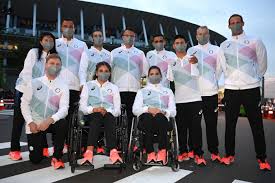
El Equipo Paralímpico de Refugiados que participará este año está formado por ocho atletas y un corredor guía. Este equipo representa a las más de 120 millones de personas desplazadas a la fuerza que hay en todo el mundo. Competirán en seis deportes distintos: atletismo adaptado, levantamiento de pesas adaptado, tenis de mesa adaptado, taekwondo adaptado, triatlón adaptado y esgrima en silla de ruedas.
The Paralympic Refugee Team that will participate this year is made up of eight athletes and one guide runner. This team represents the more than 120 million forcibly displaced people around the world. They will compete in six different sports: adapted athletics, adapted weightlifting, adapted table tennis, adapted taekwondo, adapted triathlon and wheelchair fencing.
Estos son los y las atletas que forman parte del equipo y sus historias de vida. Muchos viven en condiciones terribles, pero han perseverado y demostrado una determinación increíble para llegar a París 2024. El Equipo Paralímpico de Refugiados destaca el impacto transformador del deporte.
These are the athletes who are part of the team and their life stories. Many live in terrible conditions, but have persevered and shown incredible determination to reach Paris 2024. The Paralympic Refugee Team highlights the transformative impact of sport.
Zakia Khudadadi – Afganistán. Taewondo
Zakia tuvo que abandonar su país natal, Afganistán, en agosto de 2021 con la llegada de los talibanes. Actualmente reside y entrena en París. En 2023 llegó a ganar el Campeonato Para Europeo de Taekwondo, en la categoría de 47 kg. Ahora vuelve a competir en los Juegos Paralímpicos de París 2024.
Zakia had to leave her home country, Afghanistan, in August 2021 with the arrival of the Taliban. He currently resides and trains in Paris. In 2023 he won the European Para Taekwondo Championship, in the 47 kg category. Now he competes again at the Paris 2024 Paralympic Games.
Guillaume Junior Atangana – Camerún. Atletismo
Quería ser futbolista, pero desde que perdió la vista empezó practicar el atletismo. Este velocista competirá en París 2024 junto a su compañero refugiado y guía Donard Ndim Nyamjua. Quedó cuarto en los Juegos Paralímpicos de Tokio 2020 cuando compitió representando a Camerún y ahora lo hará en el equipo de refugiados. Vive en Reino Unido y competirá en las pruebas de 100 y 400 metros T11 en París.
He wanted to be a soccer player, but since he lost his sight he started practicing athletics. This sprinter will compete in Paris 2024 alongside fellow refugee and guide Donard Ndim Nyamjua. He came fourth at the Tokyo 2020 Paralympic Games when he competed representing Cameroon and will now do so on the refugee team. He lives in the United Kingdom and will compete in the 100 and 400 meter T11 events in Paris.
Ibrahim Al Hussein – Siria. Triatlón
Son los terceros Juegos Paralímpicos consecutivos en los que participa. Al Hussein perdió el pie derecho y la articulación del izquierdo en una explosión mientras intentaba salvar a un amigo durante la guerra civil en Siria en 2012. En 2014 decidió huir en un bote cruzando el mar Egeo hasta Grecia. Allí sin dinero y en silla de ruedas comenzó a trabajar y practicar deporte. Aunque ha competido anteriormente en natación este año lo hará en triatlón.
These are the third consecutive Paralympic Games in which he has participated. Al Hussein lost his right foot and the joint of his left in an explosion while trying to save a friend during the civil war in Syria in 2012. In 2014 he decided to flee in a boat across the Aegean Sea to Greece. There, without money and in a wheelchair, he began to work and play sports. Although he has previously competed in swimming, this year he will compete in triathlon.
Salman Abbariki – No consta. Vive en Londres. Atletismo
Estos juegos de París 2024 serán los segundos Juegos Paralímpicos de Salman, después de su participación en lanzamiento de bala en Londres 2012. En los Juegos Paralímpicos Asiáticos de 2010 ganó el oro y batió el récord asiático.Abbarikia asegura que el deporte le aporta alegría, vitalidad y confianza en sí mismo, que le ha dado esperanza y motivación a seguir luchando por sus sueños.
These Paris 2024 games will be Salman’s second Paralympic Games, after his participation in shot put in London 2012. At the 2010 Asian Paralympic Games he won gold and broke the Asian record. Abbarikia assures that sport brings him joy, vitality and self-confidence, which has given him hope and motivation to continue fighting for his dreams.
Hadi Darvish – Irán. Levantamiento de pesas
Se vio obligado a dejar su país, su familia y todo lo que tenía, para huir a Alemania donde pasó dos años en un campo de refugiados. Al principio tuvo problemas para encontrar un club deportivo que le permitiera entrenar. En 2012 vio los Juegos Paralímpicos de Londres por televisión y desde ese momento luchó por alcanzar el sueño de participar. En 2023 obtuvo el primer puesto en el Campeonato Nacional Alemán y fue invitado al Campeonato Mundial y Europeo de Powerlifting, pero no pudo participar porque no tenía patrocinador ni medios económicos.
He was forced to leave his country, his family and everything he had, to flee to Germany where he spent two years in a refugee camp. At first he had trouble finding a sports club that would allow him to train. In 2012 he watched the London Paralympic Games on television and from that moment on he fought to achieve his dream of participating. In 2023 he took first place in the German National Championship and was invited to the World and European Powerlifting Championships, but could not participate because he had no sponsor or financial means.
Sayed Amir Hossein Pour- Irán. Tenis de mesa
Hace dos años tuvo que salir de su país, Irán, separarse de su familia y vivir en varios campos de refugiados hasta que llegó a Alemania. Ha llegado a ganar dos medallas de oro en los Juegos Para Asiáticos Juveniles 2021 en Bahréin. Ahora participará en París 2024 y luchará por su sueño olímpico haciendo lo que más le gusta.
Two years ago he had to leave his country, Iran, separate from his family and live in several refugee camps until he arrived in Germany. He has gone on to win two gold medals at the 2021 Asian Youth Para Games in Bahrain. Now he will participate in Paris 2024 and fight for his Olympic dream doing what he likes most.
Amelio Castro Grueso – Colombia. Esgrima en sillas de ruedas
Con tan solo 16 años perdió a su madre y cuatro años después, tuvo un accidente en el que perdió la movilidad de sus piernas. Tuvo que abandonar su país por las amenazas que recibía y llegó a un país sin conocer a nadie ni hablar el idioma. Ahora vive en Italia y ha conseguido varios logros deportivos, como ganar el Campeonato Nacional Italiano de esgrima en silla de ruedas en 2024.
At just 16 years old, he lost his mother and four years later, he had an accident in which he lost the use of his legs. He had to leave his country due to the threats he received and arrived in a country without knowing anyone or speaking the language. He now lives in Italy and has achieved several sporting achievements, such as winning the Italian National Wheelchair Fencing Championship in 2024.
Hadi Hassanzada – Afganistán. Taekwondo
Nació en Afganistán, creció en Irán y regresó a su país natal, pero, finalmente, huyó de nuevo para poder vivir una vida pacífica. Se enfrentó a innumerables desafíos, uno de ellos la amputación de su mano derecha y su duro viaje como refugiado. El deporte le ha demostrado que los contratiempos se pueden convertir en oportunidades. En Austria conoció a su entrenador y empezó a practicar taekwondo.
He was born in Afghanistan, grew up in Iran, and returned to his native country, but eventually fled again so he could live a peaceful life. He faced countless challenges, one of them the amputation of his right hand and his tough journey as a refugee. Sports have shown him that setbacks can be turned into opportunities. In Austria he met his coach and started practicing taekwondo.
ACNUR.
Por tercera vez consecutiva, un equipo de atletas refugiados decididos e inspiradores mostrará al mundo lo que pueden lograr si se les da la oportunidad. En ACNUR estamos enormemente agradecidos al IPC en nuestra creciente asociación internacional para acercar el deporte a los refugiados. El deporte es vital para su bienestar físico y mental, así como para su inclusión e integración con las comunidades que los acogen»
For the third time in a row, a team of determined and inspiring refugee athletes will show the world what they can achieve if given the chance. At UNHCR we are enormously grateful to the IPC in our growing international partnership to bring sport to refugees. «Sport is vital for their physical and mental well-being, as well as for their inclusion and integration with the communities that welcome them.»
Después de leer esta comunicación, ¡no más quejas por tonterías sin realidad intrínseca, por favor!. Menos mirarse al ombligo y más ser conscientes de las tragedias que nos rodean y de cómo estos atletas refugiados son capaces de superar todas las adversidades.
After reading this communication, no more complaints about nonsense without intrinsic reality, please! Less navel-gazing and more being aware of the tragedies that surround us and how these refugee athletes are able to overcome all adversity.
Descubre más desde LA AGENCIA MUNDIAL DE PRENSA
Suscríbete y recibe las últimas entradas en tu correo electrónico.
