
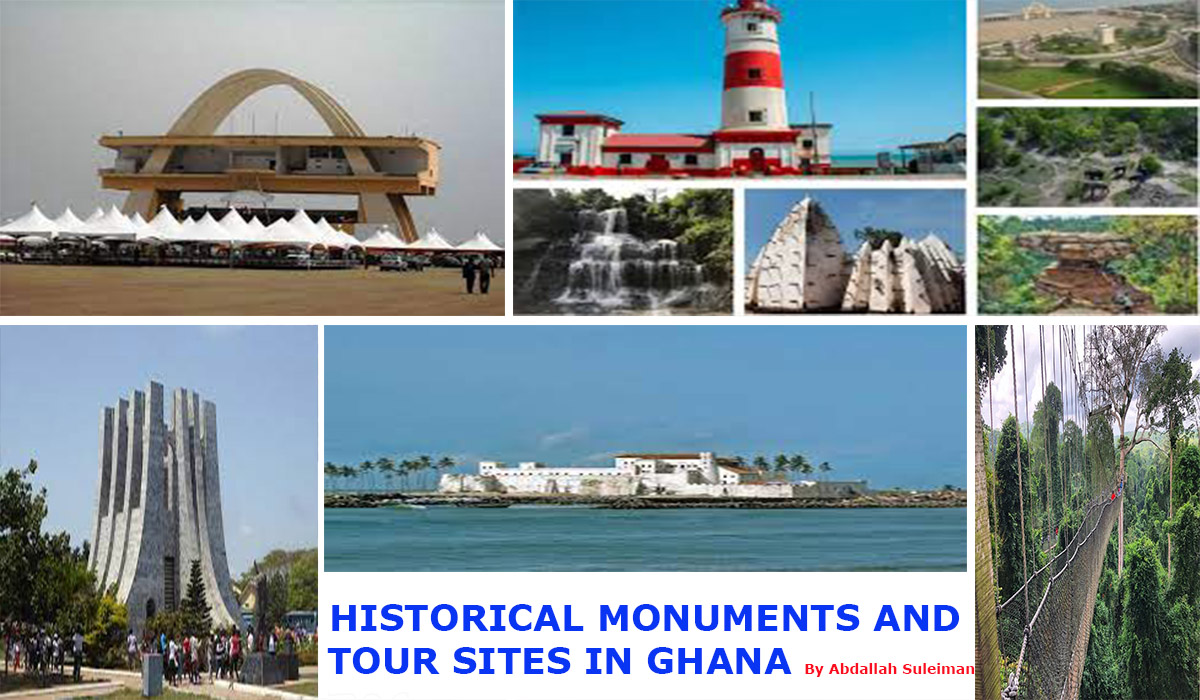
GHANA: MURO DE DEFENSA DE ESCLAVOS GWOLLU, HISTORIA DETRÁS DEL MURO..

Columnista
When Nalerigu’s famous wall was built in the 18th century, Gwollu’s was erected in the 19th century; this was decades after the slave trade was abolished in 1807 in the United States and England.
Cuando se construyó la famosa muralla de Nalerigu en el siglo XVIII, la de Gwollu se erigió en el siglo XIX; esto fue décadas después de que se aboliera la trata de esclavos en 1807 en Estados Unidos e Inglaterra.
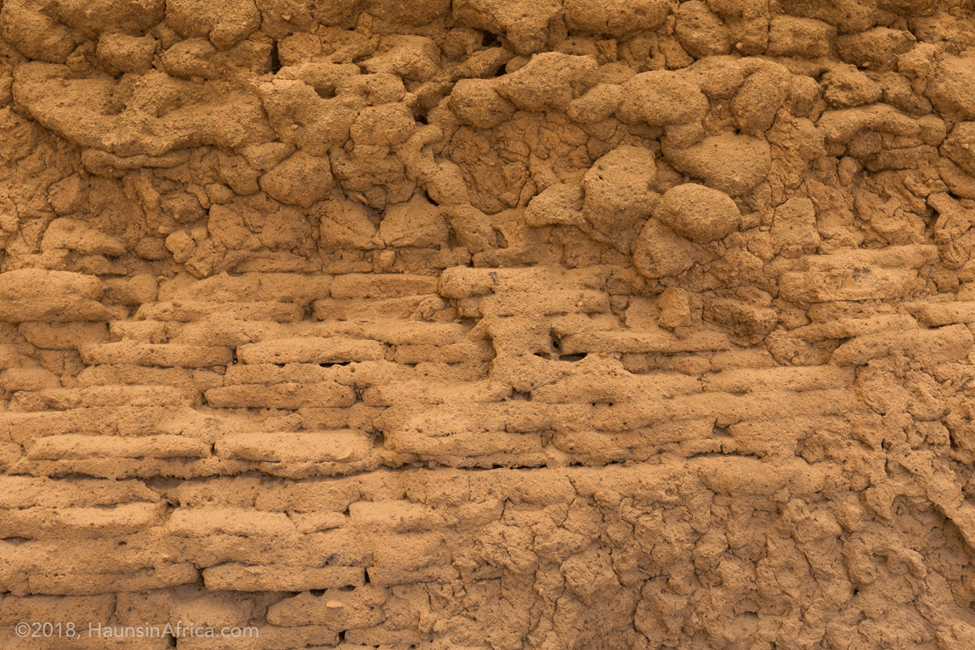
When the transatlantic slave trade came to a complete stop, there was still the demand within the West African and local slave raiders were still a problem. The regions that form today’s northern Ghana were plagued by raids from two particularly notorious war lords named Babatu and Samori. To respond to the unending attacks, the leader of the Sisalla Kuoro Tangia built the wall the actually double-ringed wall to protect the town. The thick inner wall protected the homes in the community and a second outer wall encircled their farms and water sources. The wall was built voluntarily by the community unlike Naa Jeringa’s slave wall in the Nalerigu which was built simple, yet sturdy, mud & grass bricks. There are triangular spaces which were left in the wall to allow lookouts to see through. According to oral tradition, each wall took two to three years to build and was a success a deterring the raids.
Cuando el comercio transatlántico de esclavos se detuvo por completo, todavía existía demanda dentro de África Occidental y los saqueadores de esclavos locales seguían siendo un problema. Las regiones que hoy forman el norte de Ghana estuvieron plagadas de incursiones de dos señores de la guerra particularmente notorios llamados Babatu y Samori. Para responder a los interminables ataques, el líder de Sisalla Kuoro Tangia construyó el muro (en realidad, de doble anillo) para proteger la ciudad. El grueso muro interior protegía las casas de la comunidad y un segundo muro exterior rodeaba sus granjas y fuentes de agua. El muro fue construido voluntariamente por la comunidad, a diferencia del muro de esclavos de Naa Jeringa en Nalerigu, que fue construido con ladrillos de barro y pasto simples pero resistentes. Hay espacios triangulares que se dejaron en la pared para permitir que los vigías pudieran ver a través. Según la tradición oral, cada muro tardó de dos a tres años en construirse y fue un éxito para disuadir las incursiones.
The first thing you will noticed that is favorable about Gwollu wall’s preservation is that it is located immediately next to the chief’s palace. This makes it constantly under the watch of the community leader. Nalerigu’s wall is located on the outskirts of town with very little traffic around it. Without watchful eyes, it has been susceptible to damage.
Lo primero que notará a favor de la preservación del muro de Gwollu es que está ubicado inmediatamente al lado del palacio del jefe. Esto hace que esté constantemente bajo la vigilancia del líder comunitario. El muro de Nalerigu está ubicado en las afueras de la ciudad con muy poco tráfico a su alrededor. Sin una mirada atenta, ha sido susceptible de sufrir daños.
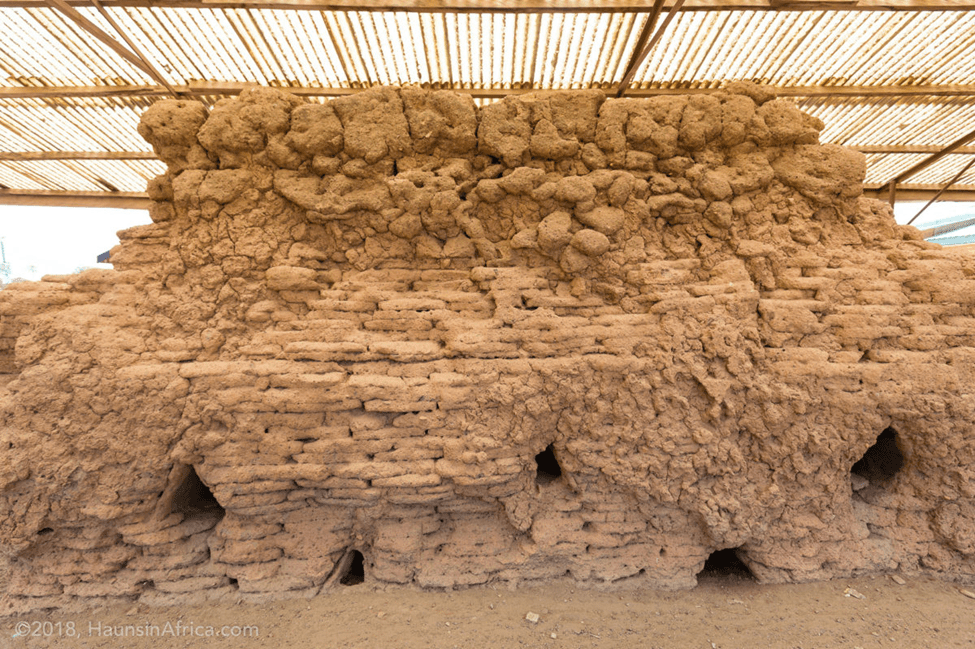
VISITING THE GWOLLU SLAVE DEFENCE WALL IN WEST SISSALA DISTRICT
VISITA AL MURO DE DEFENSA DE ESCLAVOS DE GWOLLU EN EL DISTRITO DE SISSALA OESTE
The biggest obstacle to tourism in Gwollu is its remote location and lack of infrastructure. It’s about as far north and close to the Burkina Faso border as you can get in Ghana.
El mayor obstáculo para el turismo en Gwollu es su ubicación remota y la falta de infraestructura. Es lo más al norte y cerca de la frontera con Burkina Faso que se puede encontrar en Ghana.
Only three of the other 253 districts capitals are farther north Paga, Bawku, and Pusiga. The easiest way to reach this town (“easiest” being a relative term) is from Navrongo to Tumu to Gwollu. That’s about 150km of driving and the roads are so bad that it will take 4-5 hours. If you aren’t in a private vehicle and take local buses and trotros, I imagine you’re looking at nearly eight hours (8hrs) of travel with all the stops, waiting and delays. When visiting, one must first greet the chief and request permission for a tour. If you’re lucky you can have a chat with the very amicable chief and learn a bit about the history and the community. A small donation is requested for the upkeep of the structure and a libation offering may be opined for the grave of the former president Dr. Hilla Limann located inside the chief’s compound.
Sólo tres de las otras 253 capitales de distrito están más al norte: Paga, Bawku y Pusiga. La forma más fácil de llegar a esta ciudad (“más fácil” es un término relativo) es desde Navrongo a Tumu y a Gwollu. Son unos 150 km de conducción y las carreteras están tan malas que tardará entre 4 y 5 horas. Si no estás en un vehículo privado y tomas autobuses y trotros locales, me imagino que estarás frente a casi ocho horas (8 horas) de viaje con todas las paradas, esperas y retrasos. Al visitar, primero hay que saludar al jefe y solicitar permiso para realizar un recorrido. Si tienes suerte, puedes charlar con el amable jefe y aprender un poco sobre la historia y la comunidad. Se solicita una pequeña donación para el mantenimiento de la estructura y se puede ofrecer una libación para la tumba de la ex presidenta Dra. Hilla Limann ubicada dentro del recinto del jefe.
PRESERVING THE SLAVE WALL
PRESERVANDO EL MURO DE LOS ESCLAVOS
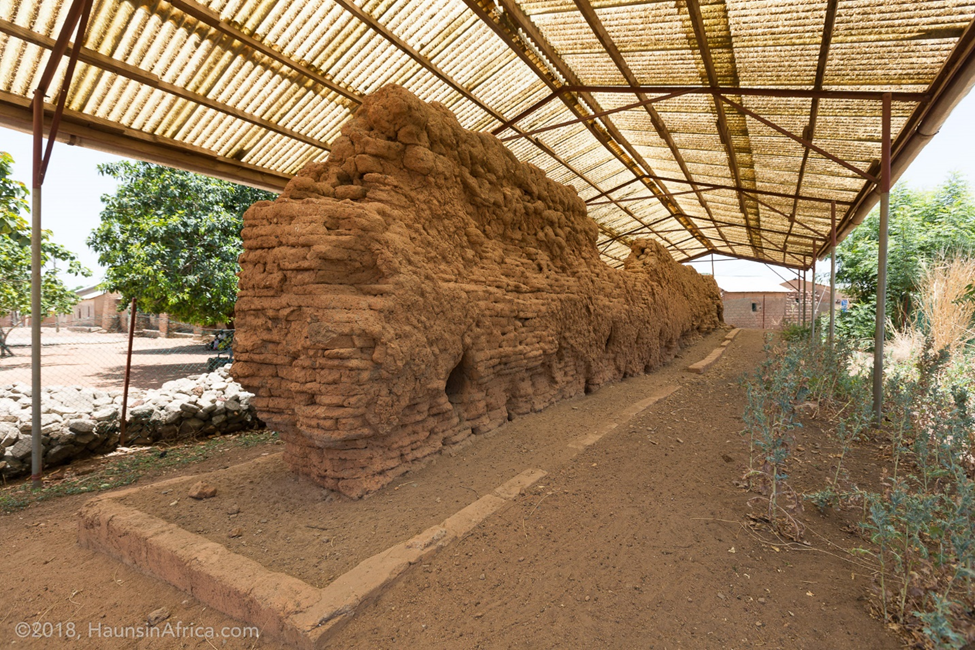
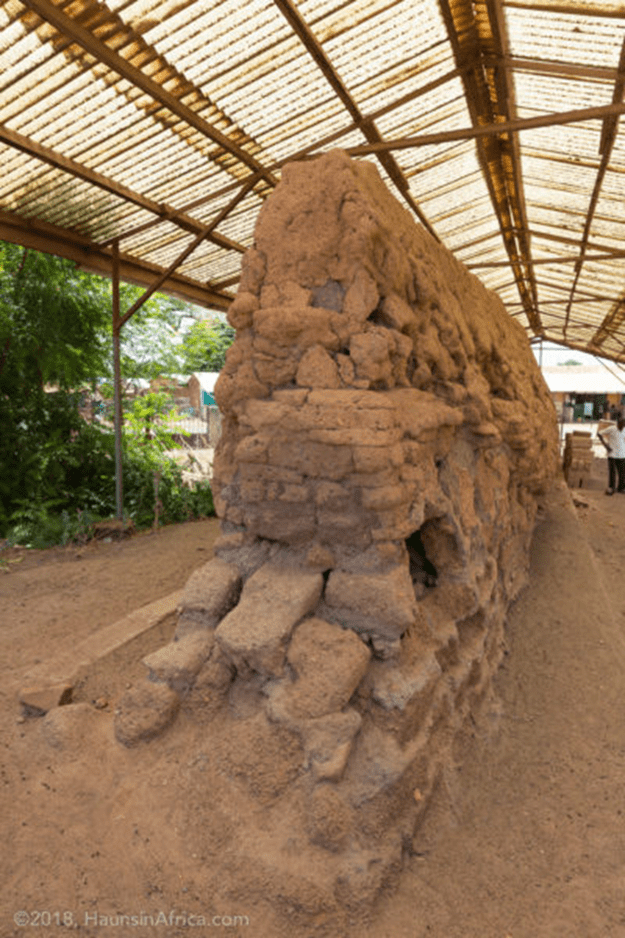
In addition to seeing and photographing this important historical site in Ghana’s north, I was also interested in finding out how the community came to protect it. As the images show, a portion of the wall is fenced and covered; protecting it from rain and animals and, frankly, humans too! Nalerigu’s own historic defense wall is crumbling and in ruin. I am very interested in duplicating the success of Gwollu to preserve Naa Gyɛriŋŋa wall. The first thing I noticed that is favorable to the Gwollu wall’s preservation is that it is located immediately next to the chief’s palace. That means it is constantly under the watch of the community leader. Nalerigu’s wall is located on the outskirts of town with very little traffic around it. Without watchful eyes, it has been susceptible to damage.
Además de ver y fotografiar este importante sitio histórico en el norte de Ghana, también me interesaba descubrir cómo llegó la comunidad a protegerlo. Como muestran las imágenes, una porción del muro se encuentra vallada y cubierta; protegiéndolo de la lluvia y de los animales y, francamente, ¡también de los humanos! El histórico muro de defensa de Nalerigu se está desmoronando y en ruinas. Estoy muy interesado en duplicar el éxito de Gwollu para preservar el muro de Naa Gyɛriŋŋa. Lo primero que noté que es favorable para la preservación del muro de Gwollu es que está ubicado inmediatamente al lado del palacio del jefe. Eso significa que está constantemente bajo la vigilancia del líder comunitario. El muro de Nalerigu está ubicado en las afueras de la ciudad con muy poco tráfico a su alrededor. Sin una mirada atenta, ha sido susceptible de sufrir daños.
The first thing you will noticed that is favorable about Gwollu wall’s preservation is that it is located immediately next to the chief’s palace. This makes it constantly under the watch of the community leader. Nalerigu’s wall is located on the outskirts of town with very little traffic around it. Without watchful eyes, it has been susceptible to damage.
Lo primero que notará a favor de la preservación del muro de Gwollu es que está ubicado inmediatamente al lado del palacio del jefe. Esto hace que esté constantemente bajo la vigilancia del líder comunitario. El muro de Nalerigu está ubicado en las afueras de la ciudad con muy poco tráfico a su alrededor. Sin una mirada atenta, ha sido susceptible de sufrir daños.
Descubre más desde LA AGENCIA MUNDIAL DE PRENSA
Suscríbete y recibe las últimas entradas en tu correo electrónico.

