
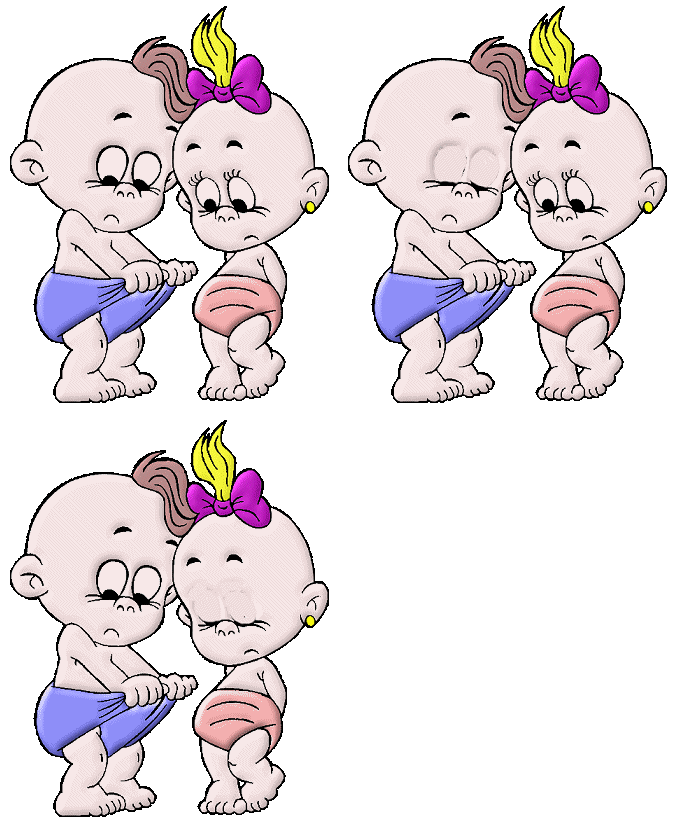
CHILDREN: SEXUALITY WHEN IS CURIOSITY BORN?
- A una edad muy temprana, los niños empiezan a explorar sus cuerpos, tocan, hurgan, frotan y tiran de partes de su cuerpo, incluidos sus genitales. At a very young age, children begin to explore their bodies, touching, poking, rubbing, and pulling on parts of their bodies, including their genitals.
- A medida que los niños crecen, se les debe orientar para que aprendan acerca de estas partes del cuerpo y sus funciones. As children grow older, they should be mentored in learning about these body parts and their functions.
- Puede ser fácil para los padres hablar con sus hijos acerca de las diferencias entre el bien y el mal, pero no es asi cuando se trata de hablar sobre la sexualidad. It may be easy for parents to talk to their children about the differences between right and wrong, but not when it comes to talking about sexuality.
Desde que el niño es capaz de tomar con sus manitas las cosas, es normal que comience a inspeccionar y tocar sus genitales. La sexualidad esta en la propia naturaleza del ser humano, por tanto mejor es prepararlos para que no se sientan perdidos, así como desarrollar conductas sexuales saludables, que hay límites y que se pueden tomar buenas decisiones que minimicen la probabilidad de tener conductas de riesgo y, a su vez, los capacite para detectar conductas abusivas.
Since the child is able to take things with his little hands, it is normal for him to start inspecting and touching his genitals. Sexuality is in the very nature of human beings, therefore it is better to prepare them so that they do not feel lost, as well as developing healthy sexual behaviors, that there are limits and that good decisions can be made that minimize the probability of engaging in risk behaviors and, in turn, enable them to detect abusive behaviors.
Desde el nacimiento la sexualidad esta presente en nosotros y esta tiene que ver con la afectividad, el placer, identidad de género. Los niños/as descubren su sexualidad tal como descubren otros aspectos de su ser: a partir de la curiosidad y a través de la observación, la imitación, el juego y la exploración individual y compartida. Por ejemplo con tan solo medio año de vida, los bebés comienzan a descubrir el mundo, su cuerpo y esto incluye la autoexplorase.
From birth sexuality is present in us and this has to do with affectivity, pleasure, gender identity. Children discover their sexuality just as they discover other aspects of their being: from curiosity and through observation, imitation, play and individual and shared exploration. For example, with only half a year of life, babies begin to discover the world, their body and this includes self-exploration.
Comportamiento, que se inicia a partir de los seis meses de edad, puede ser más frecuente alrededor de los dos años de edad y, en muchos casos, lleva al descubrimiento del placer mediante la masturbación. En la mayoría de los casos, esta conducta no es algo fuera de lo normal ni extraordinaria y, por tanto, se deben evitar las reprimendas y castigos a los niños.
Behavior, which starts from six months of age, can be more frequent around two years of age and, in many cases, leads to the discovery of pleasure through masturbation. In most cases, this behavior is not unusual or extraordinary, and therefore reprimands and punishments of children should be avoided.

El bebé descubre su cuerpo desde que es capaz de tomar o coger objetos (en torno a los 5 o 6 meses) y es normal que inspeccione y toque sus genitales. Durante los 2 o 3 primeros años de vida, la autoexploración genital forma parte del proceso que sigue el niño para conocer su propio cuerpo. Es normal que al explorarse pueda experimentar cierta excitación, que le lleve al descubrimiento del placer mediante la masturbación.
The baby discovers his body since he is able to pick up objects (around 5 or 6 months) and it is normal for him to inspect and touch his genitals. During the first 2 or 3 years of life, genital self-examination is part of the process that the child follows to get to know his own body. It is normal that when you explore yourself you may experience some excitement, which leads you to the discovery of pleasure through masturbation.
La autoestimulación de los genitales por placer es una actividad normal y frecuente en los niños, que puede practicarse a cualquier edad, «pero es muy rara antes de los seis meses». Cuando son más pequeños, los niños pueden frotar sus muslos con movimientos rítmicos de la cadera cuando están boca arriba o «moverse sobre las manos o las rodillas cuando están boca abajo». Más tarde, pueden aprender a frotarse contra algún objeto, como un muñeco, un peluche o el brazo de un sillón.
Self-stimulation of the genitals for pleasure is a normal and frequent activity in children, which can be practiced at any age, «but it is very rare before six months». When they are younger, children may rub their thighs with rhythmic hip movements when on their backs or «move on their hands or knees when on their stomachs.» Later, they can learn to rub against an object, such as a doll, a stuffed animal, or the arm of a chair.
A partir de los dos años, los niños son capaces de diferenciar entre los órganos genitales de los dos sexos y pueden comenzar la manipulación rítmica de los mismos. Este comportamiento en general provoca alarma entre los padres y les sorprende, puesto que no saben si esta actitud es normal a tan temprana edad o si es un signo de algún tipo de trastorno o problema de su hijo.
From the age of two, children are able to differentiate between the genital organs of the two sexes and can begin rhythmic manipulation of them. This behavior generally causes alarm among parents and surprises them, since they do not know if this attitude is normal at such an early age or if it is a sign of some kind of disorder or problem in their child.
Los pediatras señalan que la masturbación esporádica en niños preescolares es una conducta normal y apuntan que «hasta un tercio de los niños de esta edad descubren la masturbación mientras exploran su cuerpo». Esta actitud, tal como matizan estos especialistas, no responde a ninguna causa médica, la mayoría la mantiene porque le gusta, aunque «algunos pueden hacerlo de forma más frecuente si tienen algún problema o se les castiga o presiona para que dejen de hacerlo».
Pediatricians point out that sporadic masturbation in preschool children is normal behavior, noting that «up to a third of children this age discover masturbation while exploring their bodies.» This attitude, as these specialists point out, does not respond to any medical cause, most maintain it because they like it, although «some can do it more frequently if they have a problem or are punished or pressured to stop doing it».
¿Qué se considera un comportamiento sexual normal? What is considered normal sexual behavior?
Aproximadamente hoy ya se tiene claro que a partir de los tres años, los menores comienzan a tener conciencia de su cuerpo. Esto hace que tengan curiosidad por observarse desnudos, explorarse y estimularse. Y es que tanto los niños como las niñas pueden sentir curiosidad por descubrir y explorar el cuerpo de los demás, del mismo modo que exploran su entorno y su propio cuerpo. Si descubrimos a un grupo de niños/as explorando sus cuerpos mutuamente, debemos entender que son juegos naturales y forman parte de su aprendizaje.
Approximately today it is already clear that from the age of three, minors begin to be aware of their bodies. This makes them curious to see each other naked, explore and stimulate each other. And it is that both boys and girls can be curious to discover and explore the body of others, in the same way that they explore their environment and their own body. If we discover a group of children exploring their corporeal bodies, we must understand that they are natural games and are part of their learning.
La evaluación sobre el comportamiento sexual del niño, apunta los factores clave que determinan si el comportamiento sexual del niño es anómalo y, por tanto, requiere acudir a la consulta de un especialista, ya sea un pediatra o un psicólogo y estas particularidades son: la intensidad (conductas sexuales más prolongadas o más breves) y la frecuencia (número de veces que recurre a la conducta). En función de estos y otros factores, se puede clasificar el comportamiento sexual de los niños de dos a seis años en cuatro denominaciones, desde la normal hasta la que no lo es.
The evaluation of the child’s sexual behavior points out the key factors that determine whether the child’s sexual behavior is abnormal and, therefore, requires consulting a specialist, either a pediatrician or a psychologist, and these particularities are: intensity (longer or shorter sexual behaviors) and frequency (number of times the behavior is used). Based on these and other factors, the sexual behavior of children between the ages of two and six can be classified into four denominations, from normal to abnormal.
Según esta clasificación, el comportamiento normal incluye, con una frecuencia transitoria y no muy intensa están: tocarse los genitales y masturbarse en público o privado, mirar o tocar los genitales de otros niños y mostrar los propios, acercarse o sentarse muy cerca de alguien o intentar ver los cuerpos desnudos de adultos o compañeros. Por tanto si se encuentran en un contexto que favorece el descubrimiento sexual se puede establecer una relación sana con su cuerpo. Si por contra se encuentra con un ambiente hostil, el descubrimiento de la sexualidad se verá afectado. Los juegos de exploración sexual son juegos. La erótica se desarrolla con la llegada de la pubertad. Hay juegos y juegos y debemos asegurarnos de que sean seguros y adecuados a la edad. En caso de que la exploración sea compartida, también hay que comprobar que haya deseo por todas las partes y que las criaturas implicadas tengan la misma edad o semejante, y que estén en la misma etapa del desarrollo sexual.
According to this classification, normal behavior includes, with a transient and not very intense frequency: touching the genitals and masturbating in public or private, looking at or touching the genitals of other children and showing their own, approaching or sitting very close to someone or try to see the naked bodies of adults or peers. Therefore, if they are in a context that favors sexual discovery, a healthy relationship with their body can be established. If, on the other hand, he finds himself in a hostile environment, the discovery of sexuality will be affected. Sexual exploration games are games. The erotic develops with the arrival of puberty. There are games and games and we need to make sure they are safe and age appropriate. In the event that the exploration is shared, it must also be verified that there is desire by all parties and that the creatures involved are the same age or similar, and that they are at the same stage of sexual development.
A continuación detallaré una lista que los pediatras consideran un comportamiento sexual normal y común en niños de 2 a 6 años por lo que recomiendo que como padres veamos estos comportamientos se debe intentar redirigir la atención de su hijo hacia un comportamiento más adecuado diciendo cosas como «los adultos hacemos esto en privado y por tanto deberías hacer lo mismo» con la intención de reafirmar que los niños deben respetarse entre si y que no esta bien tocar las partes íntimas de otros así como de decirnos con total confianza si alguien les toca sus partes íntimas. .
Below I will detail a list that pediatricians consider normal and common sexual behavior in children from 2 to 6 years of age, so I recommend that as parents we look at these behaviors, we should try to redirect your child’s attention towards more appropriate behavior by saying things like » adults do this in private and therefore you should do the same» with the intention of reaffirming that children should respect each other and that it is not okay to touch the private parts of others as well as to tell us with total confidence if someone touches their parts intimate.
- Masturbarse o tocarse los genitales en público o en privado. Masturbating or touching your genitals in public or in private.
- Mirar o tocar los genitales de un amiguito o o un nuevo hermano. Looking at or touching the genitals of a friend or a new sibling.
- Mostrar los genitales a sus amigos. Show your genitals to your friends.
- Pararse o sentarse demasiado cerca a alguien. Standing or sitting too close to someone.
- Intentar ver a sus amigos o a los adultos desnudos Trying to see their friends or adults naked.
- It may be easy for parents to talk to their children about the differences between right and wrong, but not when it comes to talking about sexuality.
Tener en cuenta que, en ocasiones, la masturbación se dirige a liberar tensiones. En ese caso, los padres pueden ayudar a su hijo a buscar alternativas para que libere sus energías.
Keep in mind that sometimes masturbation is aimed at releasing tension. In that case, parents can help their child find alternatives to release their energies.
Pautas para los padres / Guidelines for parents

Los especialistas en pediatría insisten en que ante un comportamiento sexual normal del niño se deben evitar las reprimendas y los castigos. Es preciso que las familias actúen de acuerdo a sus valores y su estilo educativo e intenten evitar conductas, sobre todo en público, que pueden ser reprobatorias y humillantes. En paralelo, una excesiva atención sobre una acción que en principio sería normal, puede causar el efecto contrario y provocar que el niño se obsesione con ella.
Pediatric specialists insist that reprimands and punishments should be avoided in the face of normal sexual behavior by the child. Families must act according to their values and their educational style and try to avoid conduct, especially in public, which can be disapproving and humiliating. In parallel, excessive attention to an action that would be normal in principle, can cause the opposite effect and cause the child to become obsessed with it.
En los varones el pene está más a la vista y a mano, por lo que es común que se lo toquen y experimenten directamente con sus manos. En las niñas por ejemplo, la vulva, está menos accesible, por lo que es más habitual que se froten contra algún objeto.
In men, the penis is more visible and close at hand, so it is common for them to touch it and experience it directly with their hands. In girls, for example, the vulva is less accessible, so it is more common for them to rub against an object.
Los juegos sexuales infantiles son naturales en grupos homogéneos de edad desde la primera infancia. Solo deberíamos preocuparnos si alguno de los niños o niñas da muestras de no sentirse cómodo/a con el juego, o si estuvieran reproduciendo conductas concretas o movimientos típicos de las relaciones sexuales adultas. Queda claro entonces que del mismo modo que exploran el mundo, exploran su cuerpo, se tocan todo pies, nariz, orejitas, brazos y cuando llegan a sus genitales, de manera natural sienten placer al tocarlos.
Children’s sexual games are natural in homogeneous age groups from early childhood. We should only worry if any of the boys or girls show signs of not feeling comfortable with the game, or if they are reproducing specific behaviors or movements typical of adult sexual relations. Childhood sexual games are natural in homogeneous age groups from early childhood. We should only be concerned if any of the children show signs of not feeling comfortable with the game, or if they are reproducing specific behaviors or movements typical of adult sexual relations.
Para poder acompañar la sexualidad de nuestros niños es vital previamente revisar evolución sexual para no proyectar nuestras inseguridades, miedos, traumas, falsas creencias. Así mismo debemos hablar con ellos de la sexualidad en positivo y con naturalidad, nombrando las partes del cuerpo con los nombres adecuados sin apodos así como brindarles material de juego que visualice la diversidad de personas y de cuerpos. También es bueno poner al alcance de los niños/as cuentos que hablen sobre el tema y sobre todo respetar las decisiones en relación con su propio cuerpo, como por ejemplo no obligarles a dar besos o abrazos cuando no deseen hacerlo.
In order to accompany the sexuality of our children, it is vital to previously review sexual evolution so as not to project our insecurities, fears, traumas, false beliefs. Likewise, we must speak with them about sexuality in a positive and natural way, naming the parts of the body with the appropriate names without nicknames, as well as providing them with game material that visualizes the diversity of people and bodies. It is also good to make stories that talk about the subject available to children and, above all, to respect decisions regarding their own body, such as not forcing them to give kisses or hugs when they do not want to do so.
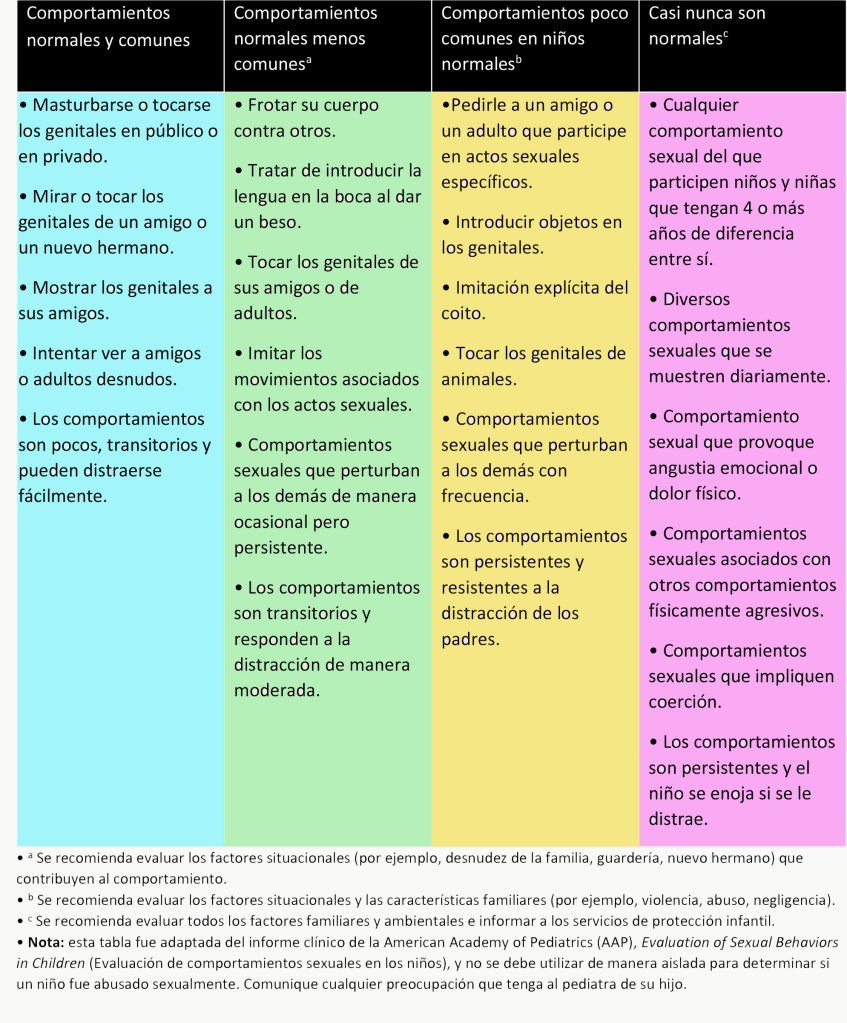
A continuación compartimos una tabla de comportamientos sexuales en niños de 2 a 6 añitos:
Below we share a table of sexual behaviors in children from 2 to 6 years old:
Es importante que los padres sepan cuando el comportamiento sexual de un niño es más que una curiosidad inofensiva. Los problemas de comportamiento sexual pueden representar un riesgo para la seguridad y el bienestar del niño como de otros niños, y pudiera significar así mismo una señal de abuso físico o sexual o de exposición a la actividad sexual, por lo que a continuación compartimos algunas señales de alarma de comportamiento sexual:
It is important for parents to know when a child’s sexual behavior is more than harmless curiosity. Sexual behavior problems can pose a risk to the safety and well-being of the child as well as other children, and could also mean a sign of physical or sexual abuse or exposure to sexual activity, so below we share some signs sexual behavior alarm:
- Ocurra con frecuencia y no se pueda desviar Occurs frequently and cannot be diverted
- Provoque dolor físico o emocional, o lesiones a sí mismos o a otros Cause physical or emotional pain, or injury to themselves or others
- Se asocie con agresión física Associated with physical aggression
- Implique coerción o fuerza Involves coercion or force
- Simule actos sexuales de adultos Simulate adult sexual acts
En Resúmen: Los padres deben empezar a enseñarles a sus hijos sobre la protección del cuerpo entre los 3 y 5 años.
Bottom Line: Parents should start teaching their children about body protection between the ages of 3 and 5.
- Enseñar los nombres correctos de todas las partes del cuerpo, como genitales, pene, vagina, pechos, nalgas y partes íntimas. Ponerles sobrenombres a las partes del cuerpo puede dar la idea de que hay algo malo con el nombre correcto. Averiguar si tu hijo usa un nombre especial para la parte del cuerpo. Además, explicar qué partes son íntimas. Teach the correct names of all parts of the body, such as genitalia, penis, vagina, breasts, buttocks, and private parts. Naming body parts can give the idea that there is something wrong with the correct name. Find out if your child uses a special name for the body part. Also, explain which parts are intimate.
- Evalúe el respeto de su familia por el pudor aunque no sea un concepto que los niños puedan comprender, todavía puede a esta edad sentar las bases para futuras conversaciones y ejemplos de buen comportamiento. Por ejemplo, si se tiene hijos de diferentes edades, es importante enseñarles a los más pequeños que respeten la privacidad de sus hermanos mayores Generalmente, los mayores les enseñarán a los menores que deben estar vestidos, por ejemplo, porque algunos de sus amigos podrían estar en la casa o porque están madurando y sienten pudor incluso delante de sus hermanos y hermanas menores. Assess your family’s respect for modesty, even though it’s not a concept children can understand, it can still set the stage for future conversations and examples of good behavior at this age. For example, if you have children of different ages, it is important to teach the younger ones to respect the privacy of their older siblings. Generally, the older ones will teach the younger ones that they should be dressed, for example, because some of their friends might be at home or because they are maturing and feel modest even in front of their younger brothers and sisters.
- No obligar al niño a dar abrazos o besos a la gente si no quiere hacerlo. Está en su derecho de decirles incluso a la abuela o al abuelo que no quiere darles un beso o un abrazo. El contacto inapropiado, especialmente de parte de un adulto de confianza, puede ser muy confuso para un niño. Reafirme constantemente la idea de que su cuerpo es suyo y puede protegerlo. Es muy importante que su hijo sepa que debe decirle a usted o a otro adulto de confianza si fue tocado. De ese modo, su hijo sabe que también es su deber protegerlo. Do not force the child to give hugs or kisses to people if they do not want to. It is your right to tell even grandma or grandpa that you don’t want to give them a kiss or a hug. Inappropriate touching, especially from a trusted adult, can be very confusing to a child. Constantly reinforce the idea that your body is yours and you can protect it. It is very important that your child knows that they should tell you or another trusted adult if they have been touched. That way, your child knows that it is also your duty to protect him.
- Diferencia entre contacto bueno y uno malo. El «contacto bueno» es una manera en que las personas demuestran su afecto por otras personas y se ayudan unas a otras (por ejemplo, abrazarse, tomarse de las manos, cambiarle el pañal al bebé). Un «contacto malo» es aquel que a uno no le gusta y desea que termine de inmediato (por ejemplo, golpear, dar patadas o tocar las partes íntimas). Asegurarle al niño que la mayoría de los contactos son buenos, pero que debe decir «NO» si un contacto es confuso o lo asusta y que es necesario que se lo cuente. Difference between good contact and a bad one. «Good touch» is a way that people show their affection for other people and help each other (for example, hugging, holding hands, changing a baby’s diaper). A «bad touch» is one that you don’t like and want to end immediately (for example, hitting, kicking, or touching private parts). Assure the child that most contacts are good, but to say «NO» if a contact is confusing or frightening and that it is necessary to tell him.
- Dar a los niños reglas sólidas, enseñarles que NO es bueno para nadie mirar o tocar sus partes íntimas, o las que cubren el traje de baño. Es más fácil para un niño seguir una regla y lo ayudará a reconocer inmediatamente un «contacto malo» si tiene en cuenta esta pauta. Asegúreles a sus hijos que los escuchará, les creerá y que desea protegerlos. Give children solid rules, teach them that it is NOT good for anyone to look at or touch their private parts, or the ones that cover the bathing suit. It is easier for a child to follow a rule, and it will help your child to immediately recognize «bad touch» if you keep this guideline in mind. Assure your children that you will listen to them, believe them, and that you want to protect them.
- Controle la exposición a los medios de comunicación, conocer los sistemas de clasificación de juegos de videos, películas y programas de televisión, y use los controles para padres disponibles por los proveedores de internet. Es importante ofrecer alternativas apropiadas para evitar la exposición a contenidos sexuales en los medios de comunicación. Tener en cuenta que los niños pueden ver comportamientos sexuales de adultos en persona o en pantallas, y quizá no se lo cuenten. Control media exposure, learn the ratings systems for video games, movies, and TV shows, and use parental controls available from Internet providers. It is important to offer appropriate alternatives to avoid exposure to sexual content in the media. Keep in mind that children may see adult sexual behavior in person or on screen, and may not be told about it.
- Algunos momentos adecuados para hablar con los niños sobre la seguridad personal son durante el baño, la hora de acostarse y antes de cualquier situación nueva. Los niños se encuentran e interactúan con distintos adultos y niños a diario. Some good times to talk to children about personal safety are during the bath, at bedtime, and before any new situation. Children meet and interact with different adults and children on a daily basis.
- Esperar las e preguntas que hacen los niños que las respuestas convenientes dependerán de la edad del niño y su capacidad de comprensión. A continuación algunos consejos para ese momento: Expect the e questions that children ask that the appropriate answers will depend on the age of the child and their ability to understand. Here are some tips for that moment:
- No se ría, incluso si la pregunta provoca ternura. No se enoje. Debe evitar que su hijo se sienta avergonzado de su curiosidad. Don’t laugh, even if the question provokes tenderness. Do not get mad. You need to prevent your child from being embarrassed by his curiosity.
- Ser breve y responder con palabras simples. Si el niño es pequeñito no necesita saber detalles de las relaciones sexuales. Be brief and answer with simple words. If the child is small, he does not need to know details of sexual relations.
- Si el niño necesita o desea saber más después de sus respuestas decirle: «¿Esto Responde esto a tu pregunta?». If the child needs or wants to know more after your answers say: «Does this Answer your question?».
- Escuche las respuestas y las reacciones del niño/a y prepararse para repetir lo mismo una y otra vez. Listen to the child’s responses and reactions and prepare to repeat the same thing over and over again.
Por cualquier eventualidad hablar con el pediatra de su hijo que puede colaborar para distinguir los comportamientos sexuales normales y adecuados para la edad de los comportamientos que son inapropiados para el desarrollo o una señal de un posible abuso.
In any event, talk to your child’s pediatrician who can help distinguish normal, age-appropriate sexual behaviors from behaviors that are developmentally inappropriate or a sign of possible abuse.
Descubre más desde LA AGENCIA MUNDIAL DE PRENSA
Suscríbete y recibe las últimas entradas en tu correo electrónico.

