

Unusual Malaga: A man named José Antonio Sierra Lumbreras

TERESA FERNANDEZ HERRERA. Periodista, Escritora, Editorialista. CDG de CULTURA.
Cuando llegué a Málaga el pasado mes de enero, me ocupé entre otras cosas en averiguar qué personas relacionadas conmigo de una forma u otra residían en la ciudad. Encontré varias, pero cuando vi que una de esas varias era José Antonio Sierra Lumbreras, el hombre que hermanó Irlanda con España, decidí que ese era mi hombre.
When I arrived in Málaga last January, I made it my mission, among other things, to find out which people connected to me in one way or another lived in the city. I found several, but when I saw that one of them was José Antonio Sierra Lumbreras, the man who twinned Ireland and Spain, I decided that he was the one.
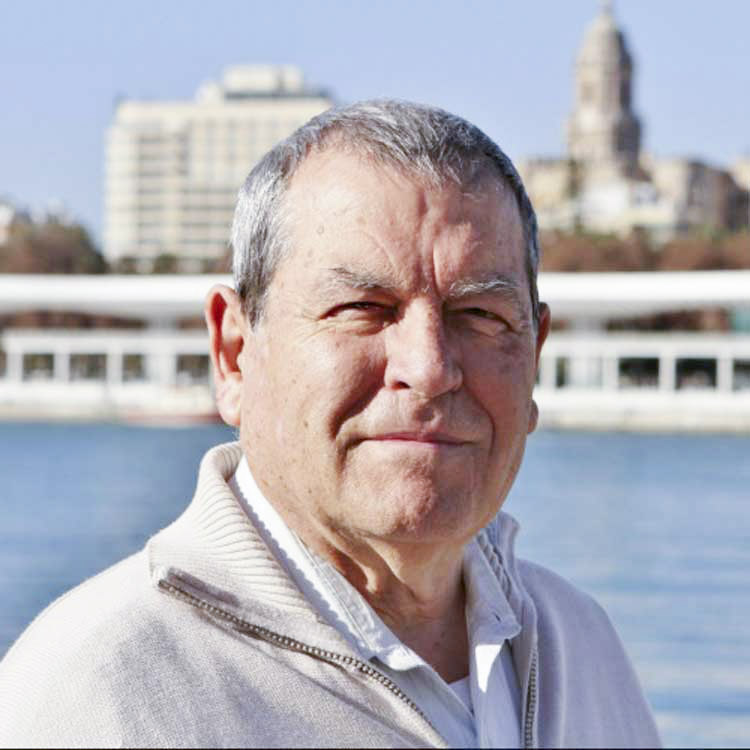
Nos vimos un par de veces, las suficientes para darme cuenta una vez más de que la edad no cuenta a la hora de ser un creativo, un humanista, alguien que ha vivido y vive para que el idioma y cultura españolas sean conocidos en Irlanda y viceversa. Por edad está en lo que se conoce como jubilación, que él vive con júbilo en su activismo hispano – irlandés. No hay salsa en la que José Antonio no esté metido en Málaga, en Dublín, donde haga falta.
We met a couple of times, enough to remind me once again that age is irrelevant when it comes to being a creative, a humanist, someone who has lived and continues to live to promote Spanish language and culture in Ireland and vice versa. He’s in what’s known as retirement age, which he embraces with joy through his Spanish-Irish activism. There’s no salsa scene José Antonio isn’t involved in—in Málaga, in Dublin, wherever his help is needed.
Pero, ¿quién es José Antonio Sierra Lumbreras?
But who is José Antonio Sierra Lumbreras?
Pues un tipo que nació hace muchos años en la provincia de Ávila, donde aún tiene familiares. Fue un estudiante comprometido, licenciado en Magisterio, en Filosofía y Letras, en Periodismo en la antigua Escuela Oficial, cuando aún no era una carrera universitaria. Fuera de España se interesó por los estudios de Psicología en Lyon. (Francia) Fue maestro de escuela por tierras abulenses, profesor de español en España, Francia, Reino Unido e Irlanda.
Well, he was a man born many years ago in the province of Ávila, where he still has family. He was a dedicated student, earning degrees in Education, Philosophy and Letters, and Journalism from the old Official School, back when it wasn’t yet a university degree. Outside of Spain, he pursued studies in Psychology in Lyon, France. He was a schoolteacher in the Ávila region and a Spanish teacher in Spain, France, the United Kingdom, and Ireland.
Irlanda. / Ireland
Allí vivió treinta y cuatro muy productivos años. Fundó el Centro Español de Documentación, el Instituto Cultural Español en Dublín, fue Director y Gestor Cultural del Instituto Cervantes, Lector de Español en el Trinity College de Dublín, Agregado Cultural, Responsable de Prensa y Delegado de Asuntos Sociales de la Embajada de España en la capital irlandesa. Corresponsal en Irlanda de la Agencia EFE, del Diario Informaciones, de Carta de España, de Crónicas de la Emigración, de La Región Internacional, de España Exterior y de Escuela Española.
There he lived for thirty-four very productive years. He founded the Spanish Documentation Center, the Spanish Cultural Institute in Dublin, and served as Director and Cultural Manager of the Cervantes Institute, Spanish Lecturer at Trinity College Dublin, Cultural Attaché, Press Officer, and Delegate for Social Affairs at the Spanish Embassy in the Irish capital. He was also the Irish correspondent for the EFE news agency, the newspaper Informaciones, Carta de España, Crónicas de la Emigración, La Región Internacional, España Exterior, and Escuela Española.
Como tantos otros, cuando se jubiló se instaló en Málaga y de eso ya hace bastante más de una década. Le llegó un Premio en 2020 de la Federación de Asociaciones de Mayores de Málaga. Es miembro del Grupo Málaga Seniors, cofundador del Club Demos78, un lugar de debate social y político en libertad y respeto por todas las ideas.
Like so many others, upon retirement he settled in Málaga, and that was well over a decade ago. In 2020, he received an award from the Federation of Senior Citizens’ Associations of Málaga. He is a member of the Málaga Seniors Group and co-founder of the Demos78 Club, a forum for social and political debate in freedom and with respect for all ideas.
Hasta aquí el relato sin matices de un currículo profesional. Pero ahora viene lo bueno. El relato del activismo humanista y cultural incansable que ha ejercido y seguirá ejerciendo mientras viva este personaje tan singular como carismático, que necesariamente sintetizamos.
So far, this has been the straightforward account of a professional résumé. But now comes the good part. The story of the tireless humanist and cultural activism that this unique and charismatic figure has practiced and will continue to practice as long as he lives, which we will necessarily summarize.
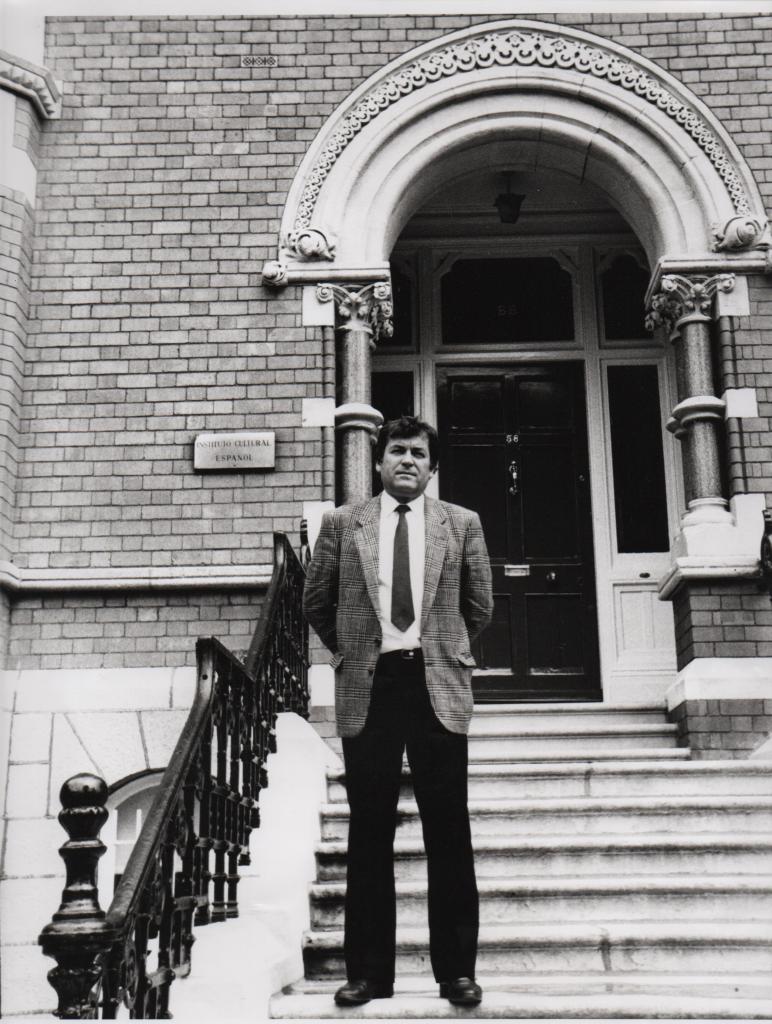
Ya mencionamos su labor como promotor y fundador del Centro Español de Documentación e Intercambios Culturales en 1971, que contó en su creación con el apoyo de Adolfo Suárez; fue la primera semilla de su activismo cultural a favor de la difusión internacional del español y de la cultura española, en cuanto puso pie en Irlanda. A esa primera semilla siguió, como ya hemos dicho, la fundación del Instituto Cultural Español, el precedente del actual Instituto Cervantes de Dublín, fruto de su lucha constante por hacerse oír en esas islas.
We have already mentioned his work as promoter and founder of the Spanish Center for Documentation and Cultural Exchange in 1971, which was created with the support of Adolfo Suárez. This was the first seed of his cultural activism in favor of the international dissemination of Spanish and Spanish culture, as soon as he set foot in Ireland. This first seed was followed, as we have already said, by the founding of the Spanish Cultural Institute, the precursor to the current Cervantes Institute in Dublin, the fruit of his constant struggle to make his voice heard in those islands.
Pero no se quedó ahí. No podía dejar fuera la cultura hispano americana en tierras irlandesas, para lo cual promovió el proyecto para la creación de un Latin American Cultural Institute of Dublin.
But he did not stop there. He could not leave Hispanic American culture out of Ireland, and to this end, he promoted the project for the creation of a Latin American Cultural Institute of Dublin.
Fue promotor de numerosos proyectos asociativos tanto en Dublín, como de regreso a España en Málaga. Entre ellos la Asociación Española de Profesores de Español como Segunda Lengua, (ASELE); de la Asociación Diversidad y Convivencia para la difusión de la enseñanza del español, catalán, gallego y euskera en Andalucía; de la Asociación Andalucía Seniors; del Círculo Cultural Irlandés George Campbell de Málaga *; del Círculo de Guitarra de Málaga; del proyecto de creación de la Casa de América o Instituto Cultural Latinoamericano de Málaga, aprobado por la ***Sociedad Económica de Amigos del País de Málaga.
He was a promoter of numerous association projects both in Dublin and upon his return to Spain in Málaga. Among them were the Spanish Association of Teachers of Spanish as a Second Language (ASELE); the Diversity and Coexistence Association for the promotion of the teaching of Spanish, Catalan, Galician, and Basque in Andalusia; and the Andalusia Seniors Association. of the George Campbell Irish Cultural Circle of Malaga*; of the Malaga Guitar Circle; of the project to create the House of America or Latin American Cultural Institute of Malaga, approved by the ***Economic Society of Friends of the Country of Malaga.
Pero hay muchas cosas más, entre otras la promoción, mecenazgo de premios, cursos, estudios, círculos culturales y delegaciones. Llegados aquí yo no encuentro, al menos en mi experiencia, otro caso en cantidad de proyectos de primer nivel como los de José Antonio Sierra Lumbreras. Veamos:
But there is much more, including the promotion and patronage of awards, courses, studies, cultural circles, and delegations. Having reached this point, I cannot find, at least in my experience, another case with such a large number of top-level projects as those of José Antonio Sierra Lumbreras. Let’s see:
Promotor, mecenas y asesor internacional de los Premios Irlanda del Aula María Zambrano; promotor del Premio Prudencia Gutíérrez García, en homenaje a la Mujer y a los Mayores; de Estudios Transatlánticos de la Universidad de Málaga. Iniciativa y creación en 2023 del Círculo de Amigos del Parque del Oeste y de La Térmica de Málaga **; iniciativa y promoción de los cursos para mayores de la Universidad de Málaga en el Centro de Cultura Contemporánea La Térmica.
Promoter, patron, and international advisor of the Ireland Awards of the María Zambrano Classroom; promoter of the Prudencia Gutiérrez García Award, in homage to Women and Seniors; and of Transatlantic Studies at the University of Málaga. Initiator and founder in 2023 of the Friends of the Parque del Oeste and La Térmica de Málaga Circle; and initiator and promoter of the University of Málaga’s courses for seniors at the La Térmica Contemporary Culture Center.
Premios / Awards
Premio Fundación Juan Cruzado de Málaga por su ayuda a los mayores; Premio de la Federación de Asociaciones de Mayores de Málaga.
Juan Cruzado Foundation Award from Malaga for his help to the elderly; Award from the Federation of Associations of the Elderly of Malaga.
Delegaciones / Delegations
Delegado en Irlanda del Patronato de Turismo Costa del Sol; Delegado Honorario en Dublín del Ayuntamiento de Benalmádena.
Delegate in Ireland for the Costa del Sol Tourism Board; Honorary Delegate in Dublin for the Benalmádena City Council.
No sé cuántos de los proyectos promocionados por José Antonio Sierra Lumbreras habrán llegado a buen fin; ya el solo hecho de estar ahí, siempre en la brecha, es un mérito loable. Pero de algunos logros nos ha dado noticia su autor; no me resisto a citarlos en sus propios términos:
I don’t know how many of the projects promoted by José Antonio Sierra Lumbreras have come to fruition; the mere fact of being there, always on the front lines, is a commendable achievement. But the author himself has informed us of some of his accomplishments; I can’t resist quoting them in his own words:
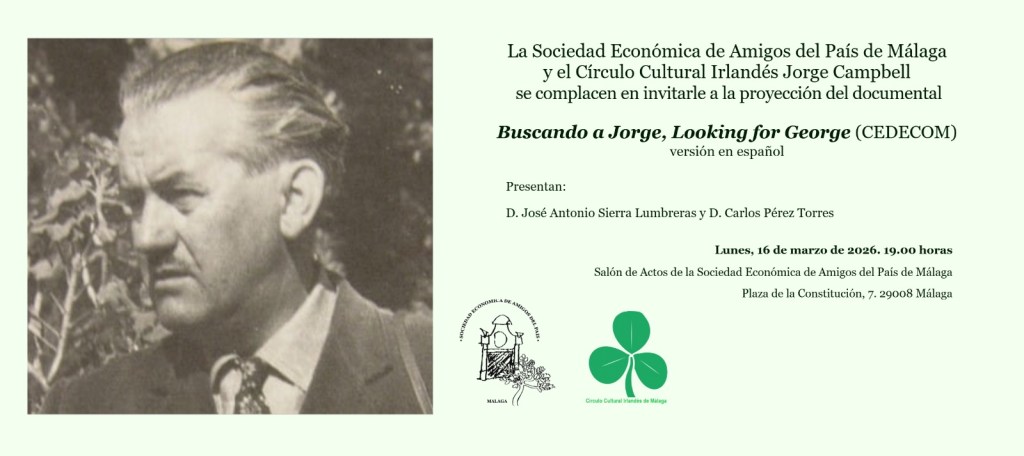
*Málaga, España.- El salón de actos de la Sociedad Económica de Amigos del País de Málaga se llenó de memoria y nostalgia el pasado lunes 16 de marzo. Bajo la luz tenue de la sala, no solo se proyectaron las imágenes del documental Buscando a Jorge / Looking for George (CEDECOM), sino que se reivindicó la figura de un artista que, pese a su inmensa talla humana y creativa, sigue siendo un gran desconocido para muchos malagueños de hoy.
*Málaga, Spain.- The auditorium of the Economic Society of Friends of the Country of Málaga was filled with memories and nostalgia last Monday, March 16th. Under the dim light of the room, not only were images from the documentary *Looking for George* (CEDECOM) projected, but the figure of an artist who, despite his immense human and creative stature, remains largely unknown to many people in Málaga today, was celebrated.
La mesa, compuesta por José Antonio Sierra Lumbreras, José Mª Ruiz Povedano y el escritor y profesor Carlos Pérez Torres, no solo analizó una obra pictórica, sino que trazó el perfil de un hombre que tendió puentes inquebrantables entre Belfast y la Costa del Sol.
The panel, composed of José Antonio Sierra Lumbreras, José Mª Ruiz Povedano and the writer and professor Carlos Pérez Torres, not only analyzed a pictorial work, but also traced the profile of a man who built unbreakable bridges between Belfast and the Costa del Sol.
Durante la presentación, los ponentes coincidieron en una nota común: el paradójico desconocimiento que rodea a George Campbell. A pesar de haber sido un miembro fundamental de la Generación del 50 y de haber capturado como pocos la luz y el duende de la bohemia malagueña, su legado corre el riesgo de quedar confinado a círculos especializados.
During the presentation, the speakers all agreed on a common theme: the paradoxical lack of awareness surrounding George Campbell. Despite being a key member of the Generation of ’50 and having captured the spirit and magic of Málaga’s bohemian scene like few others, his legacy risks being confined to specialized circles.
El acto sirvió también para poner en valor la trayectoria de José Antonio Sierra, cuya labor en Dublín fue mucho más allá de lo académico. Se recordó con especial énfasis su etapa como director del Instituto Cultural Español de Dublín, donde se convirtió en un defensor clave de los derechos de las mujeres españolas en Irlanda.
The event also served to highlight the career of José Antonio Sierra, whose work in Dublin extended far beyond academia. His time as director of the Spanish Cultural Institute in Dublin was particularly emphasized, where he became a key advocate for the rights of Spanish women in Ireland.
Sierra no solo promovió el español; luchó contra la explotación laboral de las au pair, logrando hitos históricos como el acceso a asistencia médica y farmacéutica gratuita y la creación para ellas de cursos de inglés accesibles. Esta faceta humanista de Sierra resonó en la sala, recordándonos que la cultura y la justicia social son, en última instancia, la misma tarea.
Sierra not only promoted the Spanish language; he fought against the exploitation of au pairs, achieving historic milestones such as access to free medical and pharmaceutical care and the creation of accessible English courses for them. This humanist side of Sierra resonated throughout the room, reminding us that culture and social justice are, ultimately, one and the same.
La proyección del documental de CEDECOM permitió a los asistentes redescubrir a ese Jorge que caminaba por las calles de Málaga buscando la esencia del Mediterráneo. La cinta mostró cómo Campbell logró una síntesis perfecta entre su origen irlandés y su destino andaluz, una dualidad que el Círculo Cultural Irlandés Jorge Campbell y la Sociedad Económica se han propuesto mantener viva.
The screening of the CEDECOM documentary allowed attendees to rediscover the Jorge who walked the streets of Málaga in search of the essence of the Mediterranean. The film showed how Campbell achieved a perfect synthesis between his Irish origins and his Andalusian destiny, a duality that the Jorge Campbell Irish Cultural Circle and the Economic Society are committed to keeping alive.
El evento concluyó con una reflexión sobre la identidad compartida. Figuras como Campbell o Robert Boyd no son solo nombres en el callejero; son los cimientos de una Málaga cosmopolita que, gracias a encuentros como este, se niega a olvidar a quienes la amaron con el pincel y la palabra.
The event concluded with a reflection on shared identity. Figures like Campbell and Robert Boyd are not just names on street signs; they are the foundation of a cosmopolitan Málaga that, thanks to gatherings like this, refuses to forget those who loved it with their brushes and words.
**CÍRCULO DE AMIGOS DEL PARQUE DEL OESTE Y DE LA TÉRMICA
**CIRCLE OF FRIENDS OF THE WEST PARK AND LA TÉRMICA
En el mes de abril de 2023 se creó el Círculo de Amigos del Parque del Oeste y de La Térmica para continuar lo que a Stefan von Reiswitz tanto le preocupaba y que cuidaba tanto: El Parque del Oeste.
In April 2023, the Circle of Friends of the West Park and La Térmica was created to continue what Stefan von Reiswitz cared for so deeply and cherished: the West Park.
El Círculo tiene entre sus fines: Difundir local, nacional e internacionalmente su historia y patrimonio artístico; promover actividades culturales, conferencias y charlas en colaboración con las asociaciones de mayores y de vecinos del Distrito 7 de Málaga para dar a conocer los artistas, arquitectos, ingenieros y personas que contribuyeron a la creación del Parque; organizar y promover visitas guiadas en español, alemán e inglés para dar conocer sus esculturas; solicitar que se cree la biblioteca pública del Parque del Oeste especializada en arte, medio ambiente y literatura infantil, así como el Club de Lectura del Parque del Oeste; cooperar con Limposam en su cuidado, mantenimiento y protección de sus esculturas; solicitar la organización de la Semana del Mayor, así como de la Feria Internacional del Mayor Andalucía Seniors de Málaga; solicitar la organización anual de la Semana Cultural Hispano-alemana; promover la organización de cursos de alemán así como intercambios de conversación español-alemán; creación del premio escolar Stefan von Reiswitz para trabajos escolares acerca de la historia del Parque, sus arquitectos y esculturas; Día de las Flores, Jardines, Huertos y Bellas Artes del Parque del Oeste; mercadillo mensual o quincenal sobre flores, plantas, jardines, bellas artes y publicaciones relacionadas con el medio ambiente. Colaborar con los centros de enseñanza del Distrito 7 para la organización de visitas guiadas para sus alumnos para que conozcan la importancia histórica del Parque del Oeste y de La Térmica; solicitar las instalación de paneles informativos sobre las personas que contribuyeron a la creación del parque y sobre el escultor Stefan von Reiswitz; material publicitario e informativo del parque en español, inglés y alemán.
The Circle’s aims include: disseminating its history and artistic heritage locally, nationally, and internationally; promoting cultural activities, conferences, and talks in collaboration with senior citizens’ and residents’ associations in District 7 of Málaga to raise awareness of the artists, architects, engineers, and other individuals who contributed to the Park’s creation; and organizing and promoting guided tours in Spanish, German, and English to showcase its sculptures. Request the creation of a public library in Parque del Oeste specializing in art, the environment, and children’s literature, as well as a Parque del Oeste Reading Club; cooperate with Limposam in the care, maintenance, and protection of its sculptures; request the organization of Senior Citizens’ Week, as well as the Andalucía Seniors International Fair in Málaga; request the annual organization of the Spanish-German Cultural Week; promote the organization of German courses and Spanish-German conversation exchanges; create the Stefan von Reiswitz School Prize for school projects about the history of the Park, its architects, and sculptures; a Day of Flowers, Gardens, Orchards, and Fine Arts in Parque del Oeste; a monthly or bi-weekly market featuring flowers, plants, gardens, fine arts, and publications related to the environment. Collaborate with schools in District 7 to organize guided tours for their students so they can learn about the historical importance of Parque del Oeste and La Térmica. Request the installation of information panels about the people who contributed to the creation of the park and about the sculptor Stefan von Reiswitz; advertising and informational material about the park in Spanish, English and German.
Esté o no esté conseguido todo lo propuesto, no resta valor como dije anteriormente al empeño de nuestro emprendedor Sierra Lumbreras. Algunas cosas no dejan de hacerme gracia, como la introducción del estudio del catalán, euskera y gallego en Andalucía. Yo, como dijo hace muchos años un famoso torero opinando sobre un famoso filósofo, una frase que ha quedado para la Historia: Hay gente pá tó. Pues eso. No faltarán andaluces, quizá de ascendencia catalana, vasca o gallega que prefieran estudiar esas lenguas minoritarias, de origen foráneo como la Langue d’Oc, paleo europeas, y simplemente un dialecto del portugués, en lugar de aprender lenguas que eliminen barreras cuando se viaja por el mundo, como por ejemplo el árabe, uno de los cinco idiomas más hablados internacionalmente.
Whether or not everything proposed is achieved, it doesn’t diminish, as I said before, the effort of our entrepreneur Sierra Lumbreras. Some things still amuse me, like the introduction of the study of Catalan, Basque, and Galician in Andalusia. As a famous bullfighter once said, commenting on a famous philosopher—a phrase that has gone down in history—»There’s all sorts of people in the world.» Well, there you have it. There will be no shortage of Andalusians, perhaps of Catalan, Basque, or Galician descent, who prefer to study these minority languages, of foreign origin like Occitan, Paleo-European languages, and simply a dialect of Portuguese, instead of learning languages that eliminate barriers when traveling the world, such as Arabic, one of the five most widely spoken languages internationally.
***Ecos irlandeses en Málaga. Por D. Salvador David Pérez González, historiador, Universidad de Málaga
***Irish Echoes in Malaga. By Salvador David Pérez González, historian, University of Malaga
Como es bien sabido un mágico, aunque olvidado, nexo histórico une Irlanda con las costas del Sur de España. Los azares de la Edad Moderna trazaron la ruta que a través de cartas marítimas siguieron muchas familias hasta Andalucía. Y, como en toda buena travesía, no faltaron los vientos para llevar cada barco a su destino. Especialmente durante el siglo XVIII.
As is well known, a magical, though forgotten, historical link connects Ireland with the southern coast of Spain. The vagaries of the Early Modern period charted the route that many families followed to Andalusia, guided by nautical charts. And, as with any good voyage, the winds were favorable, carrying each ship to its destination, especially during the 18th century.
La razón última de la emigración formaba parte del equipaje particular de cada viajero irlandés. En algunos casos, predominaban los intereses económicos. Se trataba de alcanzar la vieja aspiración de hacerse rico, encontrando El Dorado en una región que concentraba el comercio colonial con la América española. En otras ocasiones, respondía a la protección familiar brindada en comunidades de compatriotas establecidas ya durante los siglos XVI y XVII. Por último, se encontraban las facilidades que la corona española otorgaba a los católicos irlandeses, perseguidos por las tristemente célebres Penal Laws.
The ultimate reason for emigration was part of each Irish traveler’s personal baggage. In some cases, economic interests predominated. It was about fulfilling the age-old aspiration of getting rich, finding El Dorado in a region that concentrated colonial trade with Spanish America. On other occasions, it stemmed from the family protection offered by communities of compatriots already established during the 16th and 17th centuries. Finally, there were the opportunities that the Spanish Crown granted to Irish Catholics, persecuted by the infamous Penal Laws.
En un mundo que se transformaba por el avance de la Ilustración y el auge del comercio atlántico, muchos habitantes de la vieja Hibernia encontraron en Málaga, a tres mil kilómetros de su tierra natal, el nuevo hogar con el que soñaban. Su verdadera Ciudad del Paraíso, si me permiten utilizar la expresión acuñada muchos años después por el célebre poeta y premio Nobel, Vicente Aleixandre. Los más afortunados incluso llegarían a ser piezas clave de la burguesía comercial de la milenaria urbe que les dio cobijo.
In a world being transformed by the advance of the Enlightenment and the rise of Atlantic trade, many inhabitants of ancient Hibernia found in Málaga, three thousand kilometers from their homeland, the new home they had dreamed of. Their true City of Paradise, if I may use the expression coined many years later by the celebrated poet and Nobel laureate, Vicente Aleixandre. The most fortunate even became key figures in the commercial bourgeoisie of the ancient city that sheltered them.
Durante el reinado de Carlos III, Málaga vive una época de expansión. Se consolidan algunos de sus elementos más emblemáticos como la Manquita, su inacabada Catedral, el acueducto de San Telmo o la neoclásica aduana, hoy un notable museo de bellas artes. Mientras se levantaban los suntuosos palacios de la Alameda, en la periferia nacían nuevos barrios para alojar a una población en expansión. La vida económica se basaba en la exportación de los frutos del fértil hinterland de la ciudad. Desde los bulliciosos muelles del puerto, toneladas de uvas, limones, almendras y otros productos elaborados como las pasas, el pan de higo y, especialmente, los vinos, circulaban hacia los principales mercados del norte de Europa y del Nuevo Mundo. Era el célebre comercio marítimo malagueño, en el que el papel de la comunidad irlandesa resultaba fundamental, ya que aglutinaba a casi el 50 % de las casas que se dedicaban a esta actividad.
During the reign of Charles III, Málaga experienced a period of expansion. Some of its most emblematic landmarks were consolidated, such as the one-armed lady (La Manquita), its unfinished Cathedral, the San Telmo Aqueduct, and the neoclassical customs house, now a notable fine arts museum. While the sumptuous palaces of the Alameda were being built, new neighborhoods sprang up on the outskirts to house a growing population. The economy was based on the export of produce from the city’s fertile hinterland. From the bustling docks of the port, tons of grapes, lemons, almonds, and other processed goods such as raisins, fig bread, and especially wines, were shipped to the main markets of Northern Europe and the New World. This was Málaga’s renowned maritime trade, in which the Irish community played a fundamental role, as it comprised almost 50% of the houses engaged in this activity.
Por eso, cuando en noviembre de 1788, un grupo de habitantes de la ciudad solicitó al rey la creación de una Sociedad Económica de Amigos del País, ocho irlandeses no dudan en sumarse decididamente al proyecto. Eran Juan Galway, miembro de la Orden de Carlos III, y los comerciantes Juan Murphy, Diego y Timoteo Power, Diego y Tomás Quilty, Diego y Guillermo Terry. Apellidos extranjeros movidos por la misma intención que el resto de los ciento treinta y un fundadores de La Económica, promover proyectos beneficiosos y difundir los avances agrarios, científicos y técnicos que se estaban produciendo en el mundo.
Therefore, when in November 1788 a group of city residents petitioned the king for the creation of an Economic Society of Friends of the Country, eight Irishmen readily joined the project. They were John Galway, a member of the Order of Charles III, and the merchants John Murphy, Diego and Timothy Power, Diego and Thomas Quilty, and Diego and William Terry. These foreign surnames were driven by the same intention as the rest of the 131 founders of the Economic Society: to promote beneficial projects and disseminate the agricultural, scientific, and technical advances taking place around the world.
Hoy, doscientos treinta y siete años más tarde, la huella de aquellos inquietos y esforzados comerciantes permanece en esta bulliciosa y vibrante urbe mediterránea, que cuenta ya con casi seiscientos mil habitantes y que será testigo de la apertura, en los próximos meses, de un Consulado General de Irlanda. Si, como en aquellos tiempos que hemos querido rememorar hoy, los azares de la vida, o de un buen viaje, le llevan desde alguno de los treinta y dos condados de Eire a Málaga, la ciudad natal de Pablo Picasso, no dude en acercarse a la Plaza de la Constitución. Allí, en el corazón de un destino tan internacionalmente reconocido como la Costa del Sol, tómese un tiempo para contemplar el armonioso crisol de mármoles grises y blancos de la fachada de la Casa del Consulado, sede de la Sociedad Económica de Amigos del País.
Today, two hundred and thirty-seven years later, the legacy of those restless and hardworking merchants remains in this bustling and vibrant Mediterranean city, which now boasts nearly six hundred thousand inhabitants and will witness the opening, in the coming months, of an Irish Consulate General. If, as in those times we wish to recall today, the twists of fate, or perhaps a fortunate journey, take you from one of the thirty-two counties of Ireland to Málaga, the birthplace of Pablo Picasso, be sure to visit the Plaza de la Constitución. There, in the heart of such an internationally renowned destination as the Costa del Sol, take a moment to admire the harmonious blend of gray and white marble on the façade of the Casa del Consulado, headquarters of the Economic Society of Friends of the Country.
Con nuestro reconocimiento a José Antonio Sierra Lumbreras.
With our recognition to José Antonio Sierra Lumbreras.
Descubre más desde LA AGENCIA MUNDIAL DE PRENSA
Suscríbete y recibe las últimas entradas en tu correo electrónico.
