

Unusual Malaga: Pier One

Lo que más he frecuentado en mi aún reciente estancia en Málaga ha sido este Muelle Uno, a cinco minutos de mi residencia y tan lleno de motivos para frecuentarle. El mar Mediterráneo, los barcos suntuosos e históricos anclados en ese muelle destinado a embarcaciones de lujo; los centenares de establecimientos hosteleros y de tiendas de moda, que es lo que hace insólito a este histórico muelle, todo sea por el turismo, masivo en Málaga en el mes de enero, en buena parte afincado o de estancia invernal. O las muestras de arquitectura modernísima de gran calidad; o por estar en el centro de Málaga, a dos pasos del casco histórico y de los amplios paseos sombreados por árboles que constituyen un auténtico botánico. Y en mi caso la suerte de coincidir con la exposición temporal en recuerdo del hundimiento del buque alemán SMS Gneisenau.
What I’ve frequented most during my recent stay in Málaga has been Muelle Uno, just five minutes from my residence and so full of reasons to visit. The Mediterranean Sea, the sumptuous and historic ships anchored in this pier dedicated to luxury vessels; the hundreds of restaurants and fashion boutiques, which is what makes this historic pier so unique, all for the sake of tourism, which is massive in Málaga in January, much of it made up of residents or winter visitors. Or the examples of high-quality, cutting-edge architecture; or its location in the heart of Málaga, a stone’s throw from the historic center and the wide, tree-shaded promenades that form a veritable botanical garden. And in my case, I was lucky enough to be there during the temporary exhibition commemorating the sinking of the German ship SMS Gneisenau.
Vayamos con la hostelería. Desde el inicio hasta el cabo está rodeado de toda la gama posible de ofertas hosteleras, hay que decir que salvo excepciones la mayoría coinciden en ofertas turísticas para consumo rápido y muy parecidas, en las que la calidad no entra en sus estimaciones. Lo mejor de la oferta, las terrazas para disfrutar del sol y de la cercanía del mar. Entre las buenas excepciones de calidad, está la franquicia italiana La Tagliatella, excelente en todos sus establecimientos en las ciudades de España en las que está instalada. Y en mi experiencia, de lo mejor a lo peor, porque añade engaño a la precaria calidad. Casa Carmen, donde recalé porque el nombre me inspiró confianza de cocina local. De hecho pedí un “Rabo de toro con Parmentier”. Resultó que ni rabo de toro ni un puré de patata digno de tal nombre. El supuesto rabo de toro eran dos mini hamburguesas de carne deshilachada a saber de qué origen. Me pareció tan insultante para nuestro delicioso rabo de toro, que hace un par de semanas he vuelto a disfrutar en Jerez de la Frontera, en la Taberna de Jerez de la Plaza del Arenal, que pedí hoja de reclamaciones. El camarero que ni sabía lo que era, me ofreció ¡un folio en blanco!, después consultó por teléfono con alguien y la buscó en internet. No sé si llegaría a la OMIC local, pero lo dudo. De los que frecuenté hubo otro agradable y con buen servicio pero no recuerdo el nombre.
Let’s talk about the restaurants and bars. From beginning to end, the area is surrounded by every possible type of food and drink. It must be said that, with a few exceptions, most offer tourist-friendly, quick meals that are very similar, with quality not being a priority. The best thing about the options is the terraces, perfect for enjoying the sun and the proximity to the sea. Among the few exceptions is the Italian franchise La Tagliatella, excellent in all its locations in the Spanish cities where it operates. And in my experience, it’s a mixed bag, because it adds a layer of deception to the already poor quality. Casa Carmen, where I stopped because the name gave me the impression of local cuisine. In fact, I ordered «Oxtail with Parmentier.» It turned out to be neither oxtail nor a mashed potato worthy of the name. The supposed oxtail was actually two mini-burgers made of shredded meat of who-knows-where origin. I found it so insulting to our delicious oxtail, which I enjoyed again a couple of weeks ago in Jerez de la Frontera, at the Taberna de Jerez in Plaza del Arenal, that I asked for a complaint form. The waiter, who didn’t even know what it was, offered me a blank sheet of paper! Then he checked with someone on the phone and looked it up online. I don’t know if it even reached the local consumer protection office, but I doubt it. Of the places I frequented, there was another pleasant one with good service, but I can’t remember the name.
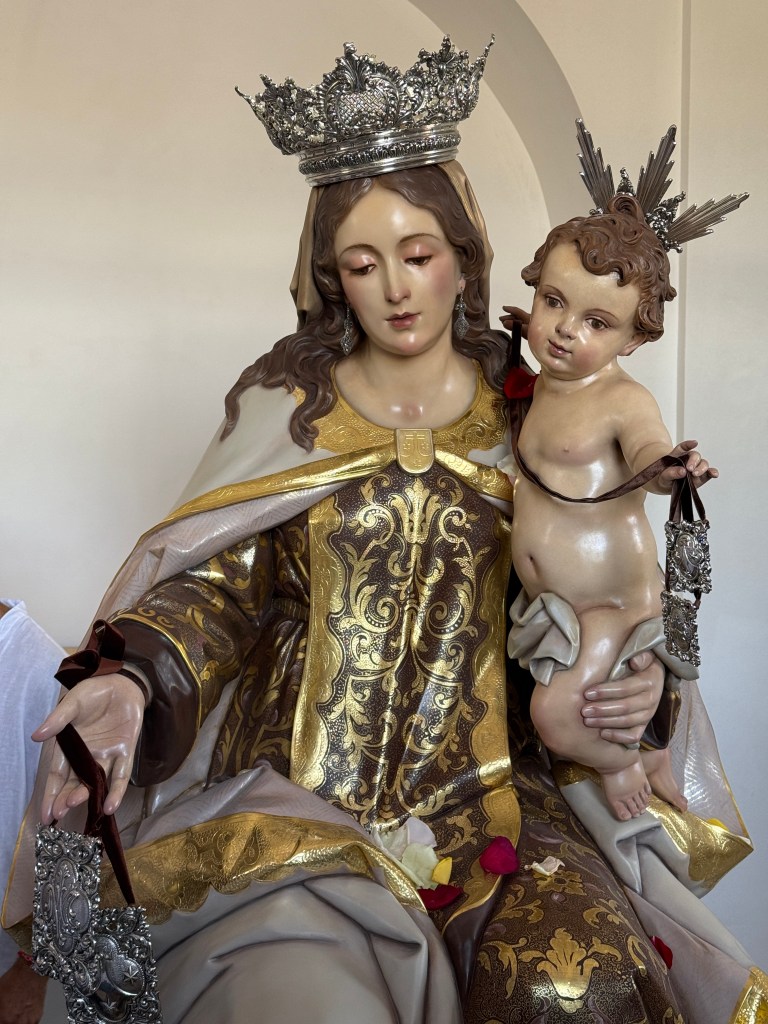
Entre la proliferación hostelera de la amplia zona comercial hay un precioso espacio, bien cuidado, con una entrada ajardinada y un estanque rectangular entre las plantas que conduce a la entrada de la Capilla de la Virgen del Carmen, la patrona marinera, inaugurada el pasado 15 de julio con la bendición de la nueva imagen, obra del imaginero malagueño Juan Vega, con gran asistencia de autoridades malagueñas, salve marinera al final y lo más importante, la financiación por parte de los trabajadores del puerto y empresas de la Comunidad Portuaria de Málaga. La campana de la capilla llevaba cincuenta y dos años sin sonar, por desplazamiento de la misma quince metros para ampliar el muelle en 1973. Vaya, parece que he llegado a tiempo. La imagen es preciosa.
Amidst the proliferation of restaurants and bars in the expansive commercial area lies a beautiful, well-maintained space with a landscaped entrance and a rectangular pond nestled among the plants. This leads to the entrance of the Chapel of Our Lady of Mount Carmel, the patron saint of sailors. The chapel was inaugurated on July 15th with the blessing of the new image, a work by the Malaga sculptor Juan Vega. The ceremony was attended by numerous Malaga authorities, concluded with a traditional sailors’ hymn, and most importantly, was funded by port workers and companies within the Malaga Port Community. The chapel bell had been silent for fifty-two years, having been moved fifteen meters in 1973 to widen the dock. Well, it seems I’ve arrived just in time. The image is beautiful.
La marquesina y el Centro Pompidou / The canopy and the Pompidou Centre.
Hablamos de arte grande. De la marquesina o cubierta ondulada con sus estructuras de pérgolas diseñada por el estudio de arquitectos L35, da sombra a la zona comercial y Paseo Marítimo e integra al puerto en la ciudad, entre la Farola y el centro. Sobre la Plaza de la Farola se encuentra el Cubo del Centro Pompidou, que tiene la entrada en el Muelle Uno. La zona de sombra fue diseñada como parte esencial de la transformación del puerto, iniciada alrededor del año 2000, creando arte en el espacio público.
We’re talking about grand art. The undulating canopy, with its pergola structures designed by the architectural firm L35, provides shade to the commercial area and the seafront promenade, integrating the port into the city between the lighthouse and the city center. Above the lighthouse square stands the Pompidou Centre Cube, whose entrance is located at Muelle Uno (Pier One). This shaded area was designed as an essential part of the port’s transformation, which began around the year 2000, creating art in the public space.
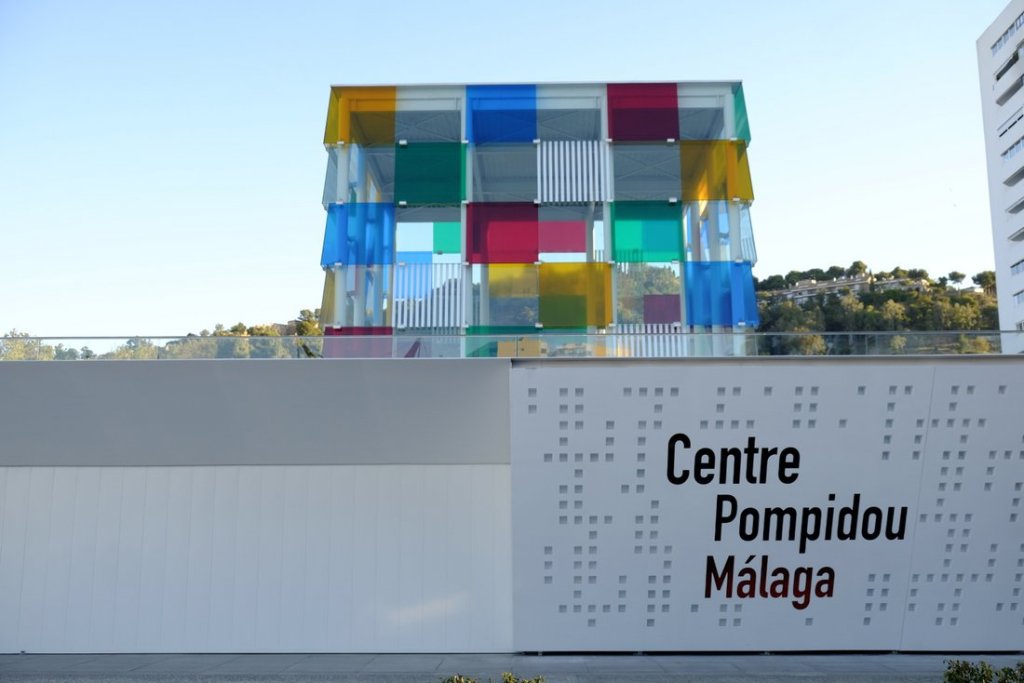
El Cubo del Centro Pompidou, creado en 2015 por los arquitectos Juan Antonio Marín Malavé y y Guillermo Vázquez Consuegra y tuneado por el artista conceptual francés David Buren con paneles translúcidos en colores azul, verde, amarillo y rojo. Es el sello distintivo con sus doce metros de lado de cristal sobre la entrada al edificio que alberga un museo de arte moderno y contemporáneo en el Muelle Uno. Un auténtico icono de la Málaga ciudad de museos, que conecta el arte con el paisaje marítimo. El museo está en un espacio subterráneo de más de seis mil metros cuadrados. Primera sede externa del Centro Nacional de Arte y Cultura Georges Pompidou de París, tiene función de faro o reloj solar con sus aspectos cambiantes según la hora del día y las estaciones del año.
The Pompidou Centre Cube, created in 2015 by architects Juan Antonio Marín Malavé and Guillermo Vázquez Consuegra and customized by French conceptual artist David Buren with translucent panels in blue, green, yellow, and red, is the distinctive feature of the building’s entrance, with its twelve-meter-wide glass face. Located on Muelle Uno, it houses a modern and contemporary art museum. A true icon of Málaga, a city of museums, it connects art with the maritime landscape. The museum itself is housed in an underground space of over six thousand square meters. The first external branch of the Centre National d’Art et de Culture Georges Pompidou in Paris, it functions as a lighthouse or sundial, its appearance changing with the time of day and the seasons.
Los barcos del Muelle Uno / The ships at Pier One
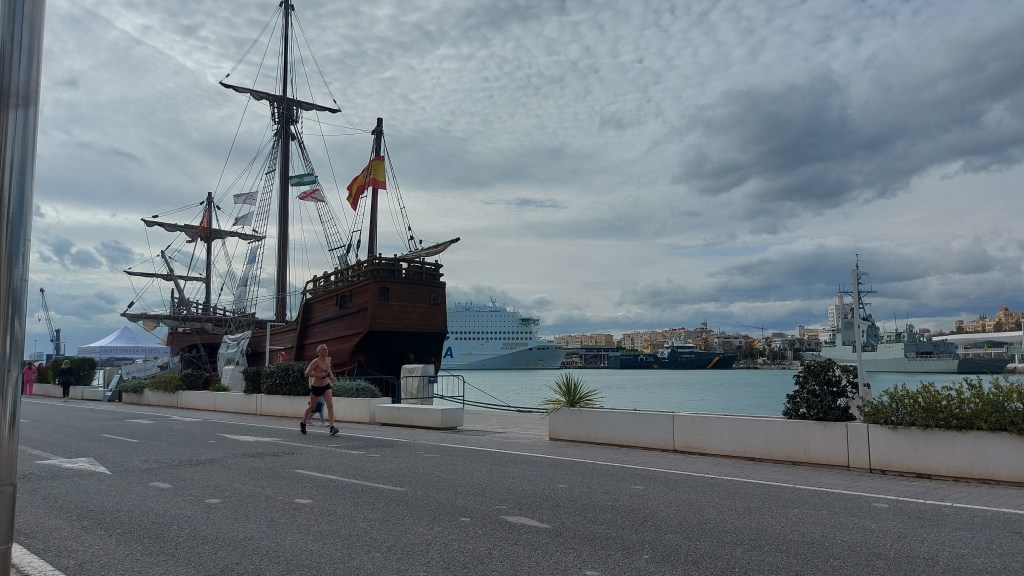
Antes de hablar de algunos de los suntuosos yates anclados temporalmente, con los que coincidí durante mi estancia, hablemos de Historia y un Museo flotante. Hablamos de la réplica a tamaño real de la nao Santa María que tuve la inmensa suerte de visitar durante su exposición temporal del 9 al 25 de enero de 2026. El buque fue construido entre 2017 y 2018 por la Fundación Nao Victoria de Huelva. Su visita permite conocer sus tres cubiertas y las condiciones de navegación y de la vida a bordo durante la primera travesía atlántica de la historia.
Before discussing some of the sumptuous yachts temporarily moored there, which I encountered during my stay, let’s talk about history and a floating museum. Specifically, the full-size replica of the Santa María, which I was incredibly fortunate to visit during its temporary exhibition from January 9th to 25th, 2026. The ship was built between 2017 and 2018 by the Nao Victoria Foundation of Huelva. A visit allows you to explore its three decks and experience the sailing conditions and life on board during the first transatlantic crossing in history.
La nao reproduce fielmente la Santa María original, con sus tres mástiles denominados palo mayor, de mesana y trinquete, más el bauprés de proa. El Palo mayor tiene casi veinticinco metros de altura desde la línea de flotación. El velamen es de cinco velas con superficie total de trescientos tres metros cuadrados; la jarcia firme suma más o menos tres kilómetros de cabos. El rigor histórico exterior combina necesariamente con los elementos técnicos que cumplen con la normativa de navegación de nuestro siglo para garantizar la habitabilidad a bordo, sala de máquinas, GPS, radio y radar, tanques de combustible y de agua potable.
The ship is a faithful replica of the original Santa María, with its three masts: mainmast, mizzenmast, and foremast, plus the bowsprit. The mainmast is almost 25 meters high from the waterline. The sails consist of five sails with a total area of 303 square meters; the standing rigging comprises approximately three kilometers of rope. The historical accuracy of the exterior is combined with modern technical features that comply with current navigation regulations to ensure habitability on board, including an engine room, GPS, radio and radar, and fuel and freshwater tanks.
La visita del navío se completa con paneles informativos sobre su papel en la historia de la navegación, así como recreación de espacios para comprender las duras condiciones en las que viajó la tripulación en aquella primera travesía oceánica de finales del siglo XV, extensible a las de todas las tripulaciones oceánicas.
The visit to the ship is complemented by information panels about its role in the history of navigation, as well as recreations of spaces to help visitors understand the harsh conditions under which the crew traveled on that first ocean voyage at the end of the 15th century, conditions applicable to all ocean-going crews.
Pero para nada era un cascarón de nuez como piensan algunos. Era el resultado de muchos siglos de historia de navegación, desde aquellos remotos fenicios fundadores de no pocas ciudades en la costa occidental mediterránea. Nada improvisado.
Qué inmensa suerte haber coincidido con la exposición temporal de la Santa María.
Yates que son palacios flotantes / Yachts that are floating palaces
Durante mi estancia en Málaga estuvieron anclados en el Muelle Uno dos super yates: El Arbema, antes Azteca, fue propiedad del mexicano Ricardo Salinas Pliego considerado como el tercer hombre más rico de México. Lo vendió en 2021 a un broker multimillonario británico que lo rebautizó con su nombre actual.
During my stay in Málaga, two superyachts were moored at Muelle Uno: the Arbema, formerly the Azteca, was owned by Mexican businessman Ricardo Salinas Pliego, considered the third richest man in Mexico. He sold it in 2021 to a British billionaire broker who renamed it with its current name.
El Arbema tiene setenta y dos metros de eslora, estructura de aluminio, capacidad para doce invitados, puede alcanzar doce nudos en velocidad de crucero. El superlujo es su principal característica desde su diseño hasta la decoración interior, con un valor estimado en ochenta millones de dólares.
The Arbema is 72 meters long, has an aluminum hull, can accommodate twelve guests, and can reach a cruising speed of 12 knots. Its defining characteristic is its design, from the interior to the decor, with an estimated value of 80 million dollars.
El millonario mexicano tiene actualmente el yate Lady Moura que también suele pasar temporadas anclado en el Muelle Uno del puerto malagueño. No coincidí con él.
The Mexican millionaire currently owns the yacht Lady Moura, which also frequently spends time moored at Muelle Uno in the port of Málaga. I didn’t run into him.
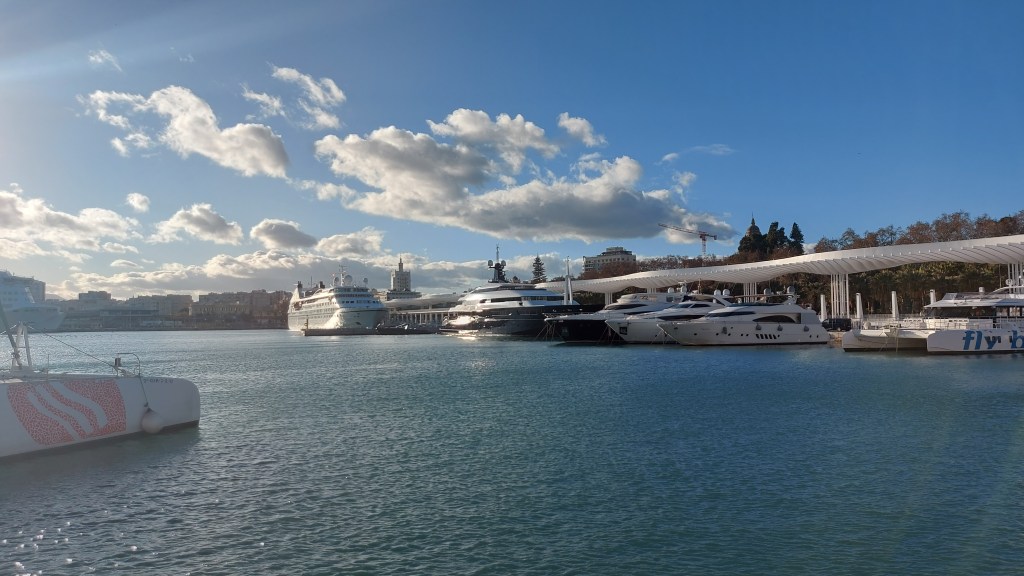
El mega yate Dynasty, con ciento un metros de eslora, valorado en unos doscientos veinte millones de euros, con capacidad para veintidós invitados y treinta y seis tripulantes. Tiene un diseño sofisticado, helipuerto, piscina y otros elementos acuáticos. Suele invernar en Málaga. Propietario un millonario de Kazajistán, Alijan Ibragimov. Impresionante.
The mega yacht Dynasty, 101 meters long and valued at around 220 million euros, can accommodate 22 guests and 36 crew members. It boasts a sophisticated design, a helipad, a swimming pool, and other aquatic features. It usually winters in Málaga. Its owner is a Kazakh millionaire, Alijan Ibragimov. Impressive.
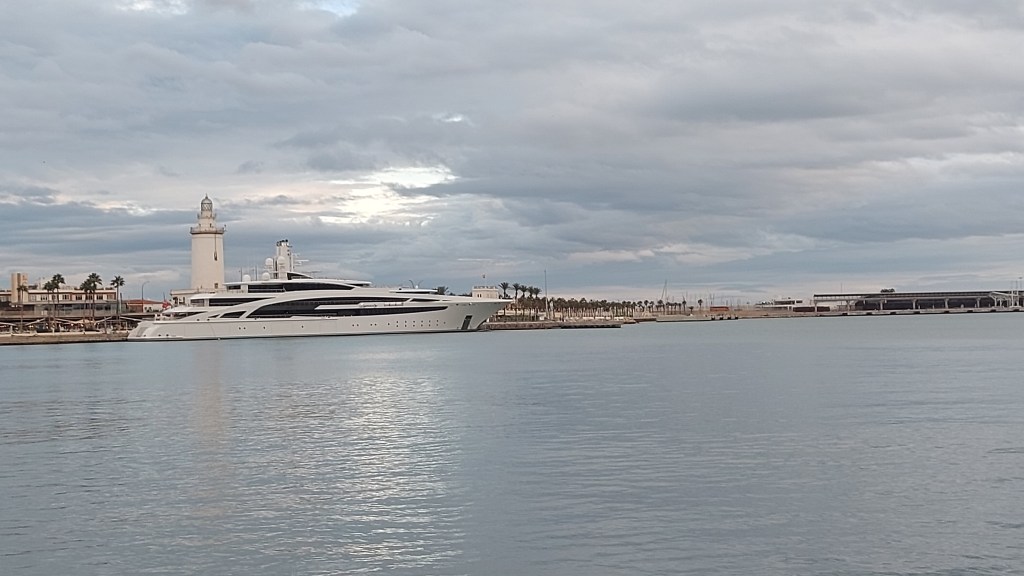
Yate Dynasty junto a la Farola
El Star Legend crucero de super lujo operado por Windstar Cruises. Llama la atención su diseño, su eslora de ciento treinta y cinco metros, ampliado en 2021, solo dispone de suites y sofisticados espacios comunes. Estuvo anclado junto al Arbema y se marchó antes que yo de Málaga.
The Star Legend, a super-luxury cruise ship operated by Windstar Cruises, is striking. Its design is remarkable, with a length of 135 meters, extended in 2021. It features only suites and sophisticated common areas. It was anchored next to the Arbema and left Málaga before I did.
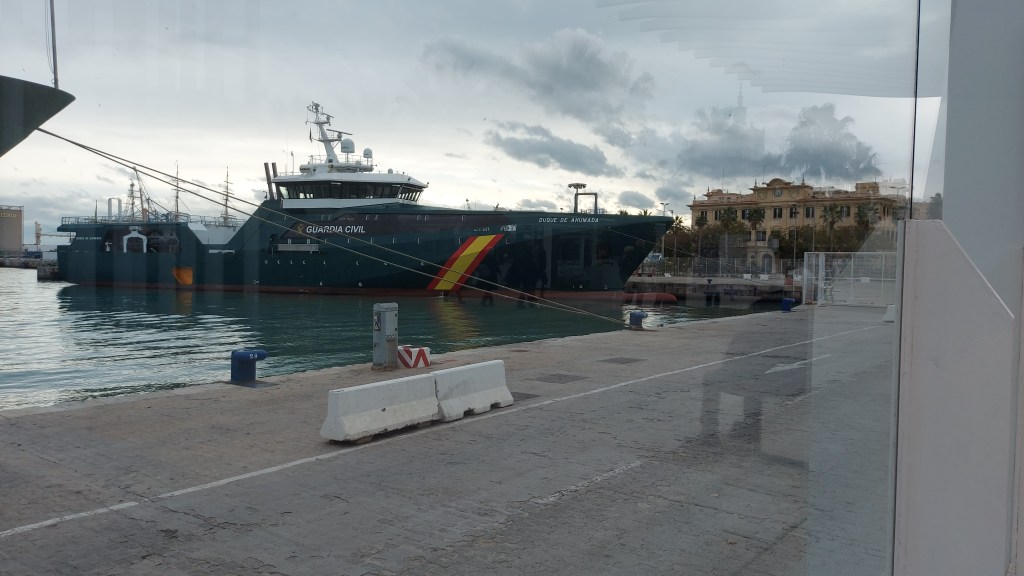
Aún alcancé a ver la fragata Duque de Ahumada, el mayor buque del servicio marítimo de la Guardia Civil, destinado a vigilancia marítima, labores de rescate en alta mar y lucha contra el crimen organizado. Incorporado a la Guardia Civil en septiembre de 2025 tras su construcción en astilleros de Vigo. Es lo más avanzado en tecnología de sistemas operativos y puede permanecer hasta un mes sin tocar puerto. Visto desde el exterior ya es impresionante.
I also caught a glimpse of the frigate Duque de Ahumada, the largest vessel in the Guardia Civil’s maritime service, dedicated to maritime surveillance, high-seas search and rescue operations, and combating organized crime. It was commissioned into the Guardia Civil in September 2025 after its construction in the Vigo shipyards. It’s the most advanced operating system technology and can stay afloat for up to a month without touching port. Even from the outside, it’s impressive.
También durante mi estancia en la capital de la Costa del Sol, fue instalada una exposición temporal con fotografías y narrativa en paneles de la historia del hundimiento del SMS Gneisenau de la marina alemana en 1900. Se hundió fuera del puerto a causa de un temporal, por no obedecer las órdenes de la Comandancia de Marina de Málaga de entrar en el puerto.
Also during my stay in the capital of the Costa del Sol, a temporary exhibition was set up with photographs and narrative panels about the sinking of the German navy’s SMS Gneisenau in 1900. It sank outside the port due to a storm, having disobeyed orders from the Málaga Naval Command to enter the harbor.
Observen mis lectores lo que da de sí el Muelle Uno del Puerto de Málaga. Es lo que le hace insólito y de visitas obligatorias por puro placer de gozar y aprender.
My readers, take note of what Muelle Uno in the Port of Málaga has to offer. It’s what makes it unique and a must-see, for the sheer pleasure of enjoying and learning.
Descubre más desde LA AGENCIA MUNDIAL DE PRENSA
Suscríbete y recibe las últimas entradas en tu correo electrónico.
