

ART ON THE NET: Emile Munier

COLUMNISTA
Para Edgar Awad V. y Arte en la Red de La Agencia Mundial de Prensa es una delicia hablar e investigar la vida y obras de maestros, pero en ocasiones son unos peritos que tocan con su arte los sentimientos, la ternura y el amor por los niños o hijos o nietos. Hoy es un deleite presentar a Emile Munier. Mostrar su obra es muy costosa pero es un pecado no mostrar al menos algunas de sus primorosas imágenes.
For Edgar Awad V. and Arte en la Red of the World Press Agency, it’s a delight to talk about and research the lives and works of masters, but sometimes they are experts who touch with their art the feelings, tenderness, and love for children, or children, or grandchildren. Today it’s a delight to present Emile Munier. Showcasing his work is very expensive, but it’s a sin not to show at least a few of his exquisite images.

Emile Munier nace en París un 2 de junio de 1840 viva con su familia en 66 rue des Fossés, St Marcel. Su padre Pierre Francois Munier, fue un artista en tapicería e la Manufacture Nationale des Gobelins y su madre Mane Louise Carpentier, de profesión pulidora en una fábrica de telas de cachemira.
Emile Munier was born in Paris on June 2, 1840, living with his family at 66 rue des Fossés, Saint-Marcel. His father, Pierre Francois Munier, was a tapestry artist at the Manufacture Nationale des Gobelins, and his mother, Marie Louise Carpentier, was a polisher in a cashmere factory.
El artista se especializo en pintar niños con gran expresividad, mostrando ternura y una sensibilidad especial en este género donde es uno de los grandes maestros realistas, dándole casi vida a sus obras y una expresividad característica de esté pintor, que enamora con sus estupendos trabajos, mostrando la ingenuidad y el amor de los niños.
The artist specialized in painting children with great expressiveness, showing tenderness and a special sensitivity in this genre where he is one of the great realist masters, giving almost life to his works and an expressiveness characteristic of this painter, who captivates with his wonderful works, showing the ingenuity and love of children.
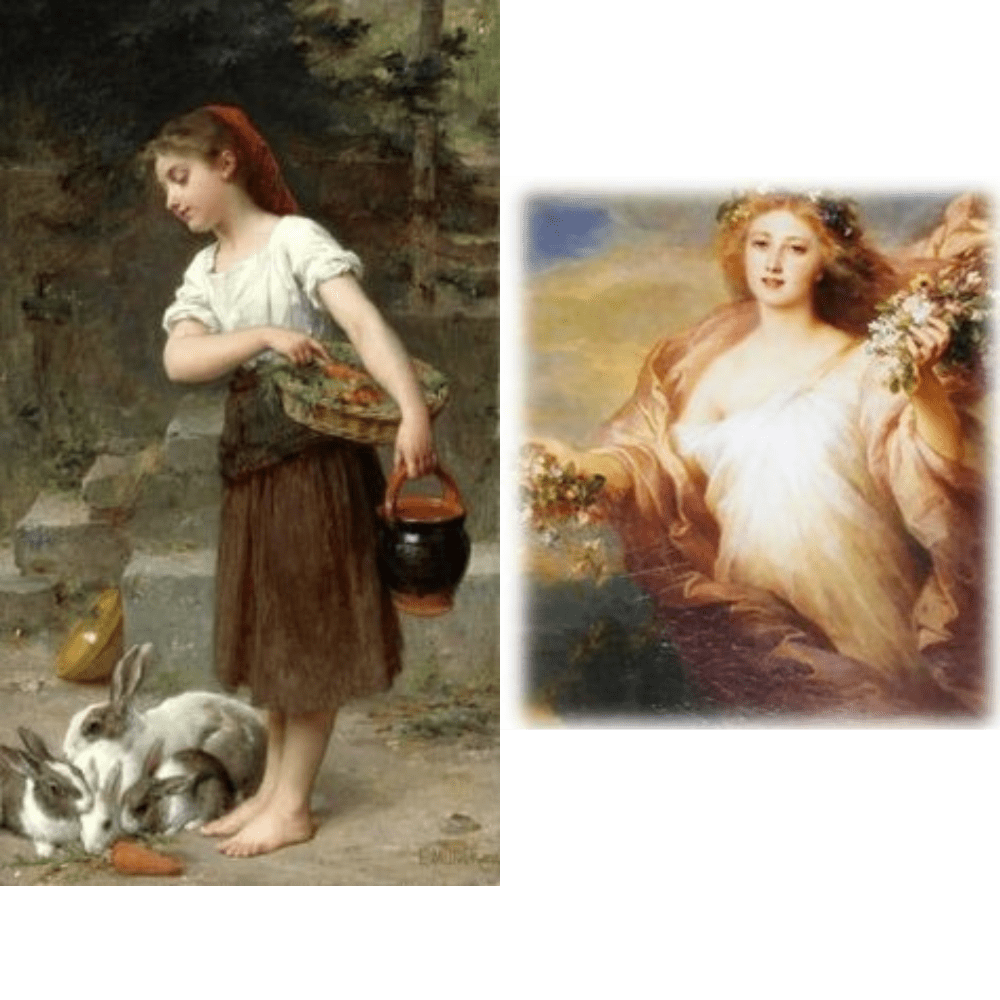
Munier con una capacidad especial muestra escenas con movimientos y expresiones de niños en ambientes rurales.
Munier, with a special ability, shows scenes with children’s movements and expressions in rural settings.
Para pintar o escribir hay que sentir circular la sangre caliente con el amor, el dolor y la felicidad para dejar el alma total en la obra, mostrar los detalles y enunciaciones que solo el que las vive las puede transmitir.
El amor es la fuerza vital que vence todo hasta la muerte e impulsa imprimir momentos en la poesía o novela o arte plástico.
To paint or write, you must feel the warm blood of love, pain, and happiness circulate to leave your whole soul in the work, showing the details and expressions that only those who experience them can convey. Love is the life force that conquers all, even death, and drives the imprinting of moments in poetry, novels, or fine art.

Con amor resucitas a tu amada con solo anotar su nombre para la eternidad al óleo o carboncillo o acuarela o escrito con el más tierno y puro amor. Es el secreto de este gran artista. Y otros grandes del arte. La fuerza más poderosa EL AMOR.
With love, you resurrect your beloved simply by writing her name for eternity in oil, charcoal, or watercolor, or by writing with the most tender and pure love. This is the secret of this great artist. And other great artists. The most powerful force: LOVE.
Emile y su hermano mayor Francois Joseph (nacido en 1839) estudiaron en la escuela comunal local. Él hermano menor Florimond Louis que nació un 11 de septiembre de 1851 le trajo mucha suerte a la familia, los tres allegados mostraron un talento temprano para el dibujo a la edad de 13 y 14 produjeron un auto retrato en colores pastel. Los tres niños entraron en los Gobelinos, sin embargo Francois se quedó y termino su carrera como jefe de gobierno como su padre.
Emile and his older brother, Francois Joseph (born in 1839), attended the local community school. Their younger brother, Florimond Louis, born on September 11, 1851, brought much luck to the family. The three close friends showed an early talent for drawing; at the age of 13, and 14, they produced a self-portrait in pastel. All three children entered the Gobelins, but Francois stayed on and completed his career as a government official like his father.
Emile Munier se preparó en clases de dibujo, pintura, anatomía, perspectiva y química, en relación con el teñido de lana para convertirse en un artista de tapicería. Abel Lucas supervisó los cursos de dibujo; El Sr. Chabale enseñó química y el Sr Decaux fue el ingeniero de arts et manufactures.
Emile Munier trained in drawing, painting, anatomy, perspective, and chemistry, in conjunction with wool dyeing, to become a tapestry artist. Abel Lucas supervised the drawing courses; Mr. Chabale taught chemistry; and Mr. Decaux was the engineer of arts and manufactures.
Con veintiún años se enamoró de Henriette Lucas, hija de Abel Lucas, Emile y Henriette se casaron en la capilla de los Gobelins. Vivian en Gobelins, El maestro de tapicería en la manufactura trabajaba junto a su suegro donde adquiere experiencia.
At the age of 21, he fell in love with Henriette Lucas, daughter of Abel Lucas. Emile and Henriette were married in the Gobelins Chapel. They lived in Gobelins. The master tapestry maker worked alongside his father-in-law at the factory, where he gained experience.
Estudio pintura, en la tradicional académica con Abel, también estudió obras de Boucher.
En los años de 1860, Emile Munier se ganó tres medallas en el Beaux-Arts y en 1869 expuso en el salón donde gano fama como defensor de los ideales académicos y gran admirador de Bouguereau. Ideas que inspirarían a Emile.
He studied painting in the traditional academic style with Abel, and also studied works by Boucher.
In the 1860s, Emile Munier won three medals at the Beaux-Arts and in 1869 exhibited at the Salon, where he gained fame as a defender of academic ideals and a great admirer of Bouguereau. These ideas would inspire Emile.
En agosto de 1867 Henriette trajo al mundo un hijo, Emile Henri. A las seis semanas del nacimiento contrajo un reumatismo severo, Henriette murió prematuramente. Sargine Augrand Campenon estudiante de Lucas, célebre retratista le gusto a Emile; se casaron en 1872 tuvieron dos hijos Marie y Louise nacida en 1872.
Juntos montaron un estudio en París, cercano al estudio de Fantin-Latour y Corot
In August 1867, Henriette gave birth to a son, Emile Henri. Six weeks after birth, Henriette contracted severe rheumatism, and died prematurely. Emile liked Sargine Augrand Campenon, a student of Lucas, a celebrated portraitist; they married in 1872 and had two children, Marie and Louise, born in 1872. Together, they set up a studio in Paris, near the studios of Fantin-Latour and Corot.
Munier abandonó su carrera en los Gobelins y se dedicó a pintar y dar clases tres noches en la semana.
Para 1873, Munir pintó Le Voleur de Pommes y la Lecon de tricot. En julio de 1873 Munier recibe a George A. Lucas, importante agente de arte estadunidense que vivía en París, lo contacta con importantes coleccionistas estadunidense quienes por varios años comprarían sus obras.
Munier abandoned his career at the Gobelins and devoted himself to painting and teaching three nights a week.
By 1873, Munier had painted The Pommes’s Fever and The Tricot’s Lecon. In July 1873, Munier received George A. Lucas, a prominent American art dealer living in Paris, and put him in touch with important American collectors who would buy his works for several years.
En 1874, Munier completó su trabajo titulado Gatito Favorito que pudo ser comprado por George Lucas por 400 Fs, el 5 de junio de 1875, fallece el padre de Emile, Pierre Francois.
In 1874, Munier completed his work entitled Favorite Kitten which could be bought by George Lucas for 400 Fs, on June 5, 1875, Emile’s father, Pierre Francois, died.
En 1876, de vacaciones de verano en la costa Normandía Muniers se inspiró pinto numerosas obras acuarelas donde mostro barcos, pescadores.
Sus hijos Emile, Henri y Marie Louise, fueron como una obstinación e inspiración a principios de los años 1880 y dedicara toda su vida a ese género hasta sus últimos días.
In 1876, while on a summer vacation on the Normandy coast, Muniers was inspired to paint numerous watercolors depicting boats and fishermen. His children, Emile, Henri, and Marie Louise, served as a driving force and inspiration in the early 1880s, and he devoted his entire life to the genre until his final days.
Marie-Louise es probablemente el tema de Naughty boy (1880), L´efant et pantin (1880) y La jeune file et la poupée (1882).
Para 1884 Marie Louise Carpentier, fallece. Ese año Emile expuso Trois Amis. En esta pitura se ve una niña gordita jugando en su cama con un gatito y un perro, gusto tanto que fue usado como cartel de publicidad Pears Soap. Esta obra que lo catapulta como el pintor por excelencia de niños y mascotas.
Marie-Louise is probably the subject of Naughty Boy (1880), The Elephant and the Pantin (1880), and The Young File and the Doll (1882). In 1884, Marie Louise Carpentier died. That year, Emile exhibited Trois Amis. This painting shows a chubby little girl playing on her bed with a kitten and a dog. It was so popular that it was used as an advertising poster for Pears Soap. This work catapulted him to the position of the quintessential painter of children and pets.
Munier le encanto pintar niños en las granjas con sus mascotas de allí se originaron: Le jeune chasseur (1889), la base-cour (1889), La paysanne a la fourche (1889), La journée des confitures (1891), La jeune fille et le panier de cerises (1891) y la fillette au tricot – La lettre d´amour.
Munier loved painting children on farms with their pets. From there, he created: The Young Hunter (1889), The Base-Cour (1889), The Peasant with a Fork (1889), The Journey of Sweets (1891), The Young Girl and the Cherry Basket (1891), and The Knitting Girl – The Love Letter.
Para 1886 retoma el tema de los querubines. Su obras Amor desarmado presentada en el salón de 1883, muestra la influencia de Bouguereau en Munier.
Munier pintò su retrato en 1889 y junto con gran parte de su recolección, ahora se encuentra en el Museo de Arte de Nueva Orleans.
By 1886, he returned to the theme of cherubs. His work, *Disarmed Love*, presented at the 1883 Salon, shows the influence of Bouguereau on Munier. Munier painted his portrait in 1889, and along with much of his collection, it now resides in the New Orleans Museum of Art.
En los años 1892, Munier se dedicó a temas mitológicos y religiosos: y continuo enseñando pintura en parís y aistiendo a LAtelelier de peinture de IEcle Polytechniique.
In the years 1892, Munier devoted himself to mythological and religious themes: and continued teaching painting in Paris and attending the L’étélier de peinture at the IEcle Polytechnique.
En 1893 Emile exhibió Lesprit de la chule deuau en el Salón de parís, es una ninfa desnuda que no es diferente a Naissance de Vénus de Bouguereau, y expone en iêxpositiòn International en chicago, donde recibió una medalla.
In 1893, Emile exhibited Lesprit de la chule deuau at the Paris Salon. It is a nude nymph not unlike Bouguereau’s Naissance de Venus. It was exhibited at the International Exhibition in Chicago, where it received a medal.
En 1894, produjo obras entre ellas cupidos con el título Un sauvetage, pinto otra obra diferente a su estilo un perro que se encuentra entre las florea en un expsiciòn canina, en Mont Dore produjo acuerela con paisajes circundantes en Auvernia.
In 1894, he produced works, including cupids entitled Un sauvetage. He painted another work distinctly his own, a dog standing among the flowers at a dog show. At Mont Dore, he produced watercolors featuring the surrounding landscapes in the Auvergne.
Muchas personas confunden las obras de Emile Munir con las de su profesor William Adolphe Bouguereau Pintor Académico francés, tiene mucha similitud.
Many people confuse the works of Emile Munir with those of his teacher William Adolphe Bouguereau, French Academic Painter, there is a lot of similarity.
Descubre más desde LA AGENCIA MUNDIAL DE PRENSA
Suscríbete y recibe las últimas entradas en tu correo electrónico.

