
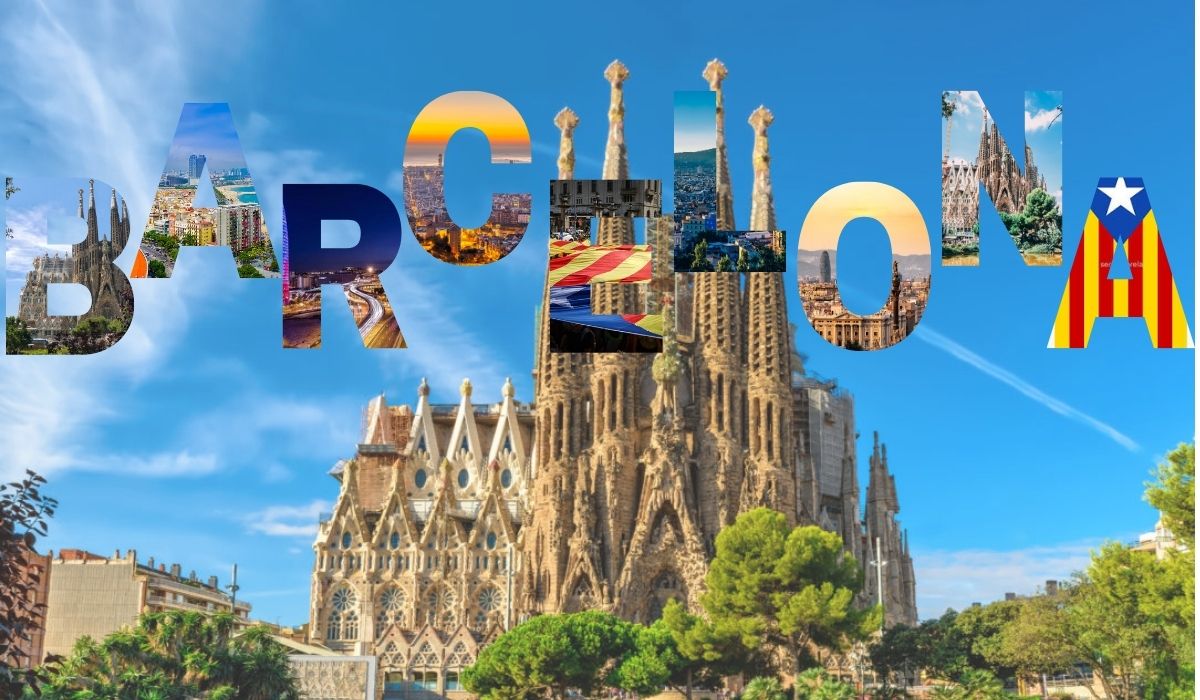
THE ORIGIN OF THE NAME «BARCELONA»

Prensa Especializada
Mucho se habla de Barcelona, pero poco del origen que se esconde su nombre… Barcelona, la vibrante capital de Cataluña, es una ciudad cargada de historia, un crisol de culturas que se remonta a tiempos inmemoriales. Entre sus calles empedradas y sus majestuosos edificios, se esconde una historia intrigante sobre el origen de su nombre, una historia que se teje entre leyenda y realidad, tan antigua como las piedras que conforman su milenaria estructura.
Much is said about Barcelona, but little is said about the origin behind its name… Barcelona, the vibrant capital of Catalonia, is a city steeped in history, a melting pot of cultures dating back to time immemorial. Between its cobbled streets and its majestic buildings, an intriguing story hides about the origin of its name, a story that is woven between legend and reality, as old as the stones that make up its ancient structure.
La primera referencia al nombre de Barcelona nos lleva al siglo III a.C., durante la época de los íberos, un pueblo que habitaba la Península Ibérica antes de la llegada de los romanos. Los íberos, según se cuenta, fundaron un asentamiento al que llamaron Barkeno, un nombre que, al parecer, tenía un origen relacionado con su lengua y que designaba una colina o un lugar elevado. Este primer núcleo urbano se estableció en lo que hoy conocemos como el Monte Táber, el corazón de la Barcelona actual.
The first reference to the name of Barcelona takes us to the 3rd century BC, during the time of the Iberians, a people who inhabited the Iberian Peninsula before the arrival of the Romans. The Iberians, it is said, founded a settlement that they called Barkeno, a name that, apparently, had an origin related to their language and that designated a hill or a high place. This first urban center was established in what we know today as Mount Táber, the heart of modern-day Barcelona.
Con la llegada de los romanos en el siglo I a.C., la ciudad fue rebautizada como Colonia Iulia Augusta Faventia Paterna Barcino. Este nuevo nombre era un homenaje al emperador Augusto, y su adición reflejaba el estatus privilegiado que los romanos otorgaron a esta colonia. Sin embargo, en el uso cotidiano, el nombre se simplificó, y la ciudad empezó a ser conocida simplemente como Barcino.
With the arrival of the Romans in the 1st century BC, the city was renamed Colonia Iulia Augusta Faventia Paterna Barcino. This new name was a tribute to Emperor Augustus, and its addition reflected the privileged status that the Romans granted to this colony. However, in everyday use, the name was simplified, and the city began to be known simply as Barcino.
La leyenda, siempre tan cercana a la historia en tierras mediterráneas, añade un componente mítico al origen del nombre de Barcelona. Según una antigua tradición, el nombre de la ciudad se debe a la expedición del héroe cartaginés Amílcar Barca, padre del célebre Aníbal, quien habría fundado la ciudad tras una tormenta que dispersó su flota. La ciudad, según esta leyenda, fue nombrada en honor a su linaje, los Barca, aunque esta versión carece de pruebas históricas.
The legend, always so close to history in Mediterranean lands, adds a mythical component to the origin of the name of Barcelona. According to an ancient tradition, the name of the city is due to the expedition of the Carthaginian hero Hamilcar Barca, father of the famous Hannibal, who founded the city after a storm that dispersed his fleet. The city, according to this legend, was named in honor of its lineage, the Barca, although this version lacks historical evidence.
Con el paso de los siglos y las transformaciones que la ciudad experimentó bajo los visigodos, musulmanes y, finalmente, los reinos cristianos, el nombre de Barcelona evolucionó. Durante la Edad Media, el nombre de la ciudad pasó de Barcino a Barchinona, y finalmente, a la Barcelona que hoy conocemos.
As the centuries passed and the transformations that the city experienced under the Visigoths, Muslims and, finally, the Christian kingdoms, the name of Barcelona evolved. During the Middle Ages, the name of the city changed from Barcino to Barchinona, and finally, to the Barcelona we know today.
El nombre de Barcelona, entonces, es un testimonio vivo de su rica y variada historia. Desde sus orígenes íberos hasta la moderna ciudad cosmopolita que es hoy, cada sílaba de su nombre resuena con el eco de siglos de evolución cultural y política. Una ciudad cuyo nombre, al igual que su alma, es fruto de la confluencia de múltiples culturas, tiempos y leyendas, convirtiéndola en el vibrante mosaico que todos conocemos.
The name of Barcelona, then, is a living testimony of its rich and varied history. From its Iberian origins to the modern cosmopolitan city it is today, each syllable of its name resonates with the echo of centuries of cultural and political evolution. A city whose name, like its soul, is the result of the confluence of multiple cultures, times and legends, turning it into the vibrant mosaic that we all know.
Descubre más desde LA AGENCIA MUNDIAL DE PRENSA
Suscríbete y recibe las últimas entradas en tu correo electrónico.

