
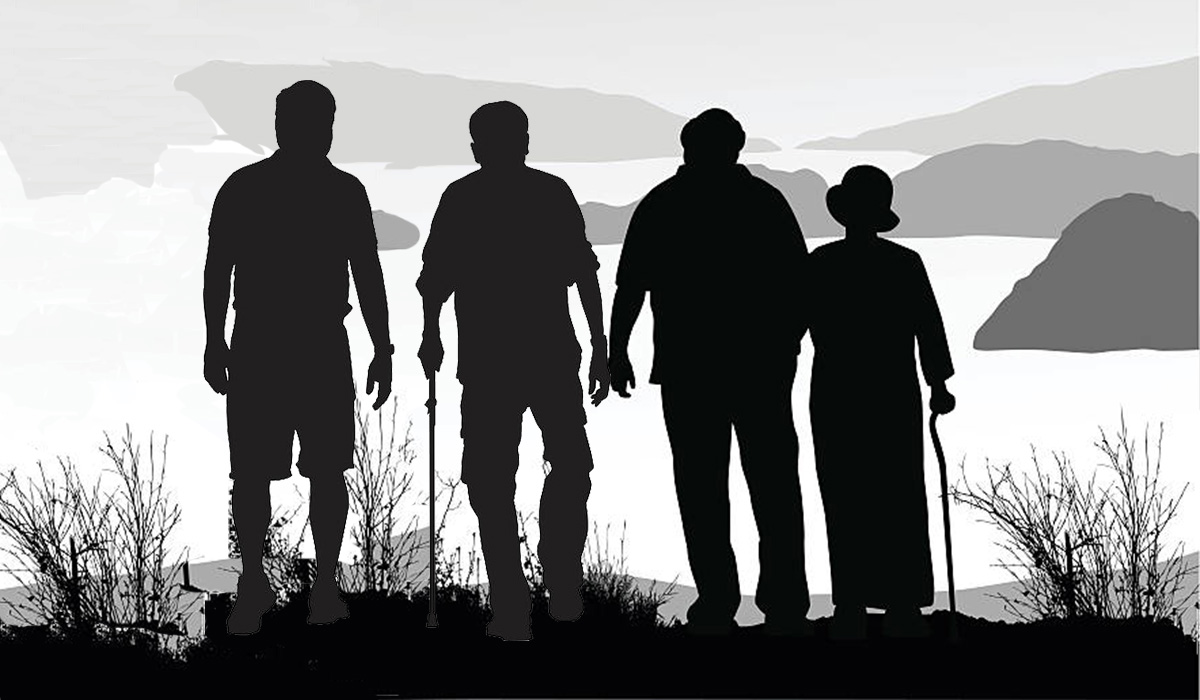
Communication with the elderly (YY.MM.)

Quiero empezar este primer artículo centrado en el adulto mayor (AA.MM.), hablando de uno de los temas -en mi opinión- más significativos. Me estoy refiriendo a nuestra comunicación con ellos.
I want to start this first article focused on the elderly (YA.MM.), talking about one of the – in my opinion – most significant topics. I am referring to our communication with them.
En toda mi trayectoria profesional centrada en la atención al mayor, recuerdo que cuando trabajábamos este apartado, siempre en el equipo, insistíamos en la importancia que tiene en el trato con nuestros mayores el Lenguaje no Verbal: nuestra forma de mover la cabeza como respuesta a la escucha, nuestra mirada, estar sonriente, y el contacto físico, acompañado del enfoque que nos proporciona la Programación Neurolingüística (PNL) como ayuda para modificar comportamientos, nueva forma de percepción y comunicación.
Throughout my professional career focused on elderly care, I remember that when we worked on this section, always as a team, we insisted on the importance of Non-Verbal Language in dealing with our elders: our way of moving our head in response to listening, our gaze, smiling, and physical contact, accompanied by the approach that Neurolinguistic Programming (NLP) provides us as help to modify behaviors, a new way of perception and communication.

Pero todo se nos trastocó en parte, cuando el Dr. Giacomo Rizzolatti, en 1996 descubrió lo que termino por denominarse Neuronas Espejo, y que, a tenor de su trascendencia, en reconocimiento a su aportación, en el año 2011 le fue concedido el Premio Príncipe de Asturias de Investigación Científica y Técnica.
Este neurobiólogo italiano, investigador en la Universidad de Parma, trabajando con macacos, comprobó al colocar electrodos en el prefrontal y lóbulo parietal de estos, cómo al ejecutar una acción el macaco alfa, el resto de simios estimulaba idénticas neuronas con solo mirar la acción que estaba llevando a cabo. Tanto el macaco que ejecutaba, como los que observaban estimulaban idénticas neuronas, lo que dio pie a que se empezará a hablar de neuronas espejo. El Dr. Vilanayur S. Ramachandran, de la Universidad de California (Los Ángeles) afirmó: “El descubrimiento de las neuronas espejo hará por la psicología lo que el ADN por la biología” (El País, Futuro, 19 de octubre de 2005).
But everything was partially disrupted for us, when Dr. Giacomo Rizzolatti, in 1996, discovered what came to be called Mirror Neurons, and, in light of its significance, in recognition of his contribution, in 2011 he was awarded the Prize. Prince of Asturias of Scientific and Technical Research. This Italian neurobiologist, https://www.youtube.com/watch?v=ZnjQi4bYklU, researcher at the University of Parma, working with macaques, verified by placing electrodes in their prefrontal and parietal lobes, how when the macaque executes an action alpha, the rest of the apes stimulated identical neurons just by looking at the action they were carrying out. Both the macaque that was executing and those that were observing stimulated identical neurons, which led to the beginning of talk of mirror neurons. Dr. Vilanayur S. Ramachandran, from the University of California (Los Angeles) stated: “The discovery of mirror neurons will do for psychology what DNA does for biology” (El País, Futuro, October 19, 2005) .
Replicando estos saberes en humanos, comprobó cómo un grupo de neuronas de nuestro cerebro se activan cuando, por ejemplo, en el momento en que observamos cómo un sujeto se da un golpe en la mano los que en ese momento están observando, sienten la misma experiencia. Este hallazgo permitió explicar el aprendizaje por imitación, la capacidad de “ponerse en lugar del otro”, deducir intenciones, llegando a dar sentido a frases como “ya veo lo que quieres decir”. Responsables no de leer la mente, pero sí de deducir intenciones y predecir comportamientos de los otros. Recuerdo que a todos los componentes del equipo nos hizo reflexionar esta realidad. Llegue a la conclusión de que si queremos colaborar con los AA.MM. no basta ser un magnífico experto con el más destacado expediente académico, tenemos que querer ayudarles, respetarles, sentir empatía por ellos. Nuestros pensamientos están condicionando la relación a seguir, repercutiendo en su salud, acercándoles en muchos a casos a la dependencia o prolongar su autonomía. Pero sigamos, llegó el año 2019, y el Premio Princesa de Asturias de las Artes fue concedido a Peter Stephen Paul Brook, gran renovador del teatro, además de director de cine. Quizás se preguntarán, ¿qué tiene que ver el teatro con los adultos mayores? Para el que esto escribe mucha, al aportar una nueva e inestimable información: si no hay una intención, no se activan las neuronas espejo. Cada acción que se desarrolla en la escena desencadena una resonancia física en el espectador. Esto ya lo sabíamos por el Dr. Rizzolatti, la novedad para mí, estribaba en que, si digo algo a un residente del centro geriátrico y no tengo intención de hacerlo, las neuronas no actúan en el mayor. Es decir, que, si decimos que vamos a hacer algo, pero en verdad no pensamos llevarlo a cabo, nuestras neuronas no se activan y como consecuencia tampoco en los que escuchan. Decir que llevar a cabo un ejercicio de coordinación visomotora es importante cuando no pensamos así, la resistencia a efectuarlo va a ser alta. No basta con realizar una manifestación al grupo; debemos estar convencido de que lo que decimos es cierto, y positivo para su salud. Entonces sí que transmitimos; entonces sí que excitamos las neuronas del otro. Entonces sí que conectamos.
Replicating this knowledge in humans, he verified how a group of neurons in our brain are activated when, for example, when we observe how a subject hits his hand, those who are observing at that moment feel the same experience. . This finding made it possible to explain learning by imitation, the ability to “put oneself in someone else’s place,” deduce intentions, and make sense of phrases like “I see what you mean.” Responsible not for reading minds, but for deducing intentions and predicting the behavior of others. I remember that this reality made all of us on the team reflect. I came to the conclusion that if we want to collaborate with the AA.MM. It is not enough to be a magnificent expert with the most outstanding academic record, we have to want to help them, respect them, feel empathy for them. Our thoughts are conditioning the relationship to continue, impacting their health, bringing them closer in many cases to dependency or prolonging their autonomy. But let’s continue, the year 2019 arrived, and the Princess of Asturias Award for the Arts was awarded to Peter Stephen Paul Brook, a great theater innovator, as well as a film director. You may wonder, what does theater have to do with older adults? For those who write this a lot, by providing new and invaluable information: if there is no intention, the mirror neurons are not activated. Each action that takes place in the scene triggers a physical resonance in the viewer. We already knew this from Dr. Rizzolatti, the novelty for me was that, if I say something to a resident of the geriatric center and I have no intention of doing it, the neurons do not act in the elderly person. That is to say, if we say that we are going to do something, but we do not really plan to carry it out, our neurons do not activate and as a consequence neither do those who listen. Saying that carrying out a visual-motor coordination exercise is important when we do not think that way, the resistance to doing it will be high. It is not enough to make a demonstration to the group; We must be convinced that what we say is true, and positive for your health. So we do transmit; then we do excite each other’s neurons. So we did connect.
Gracias a Paul Brook, podemos comprender la diferencia entre un buen/mal actor. Eso que llamamos implicarnos en el “papel”. Esos actores que manifiestan un sentimiento y nunca nos lo creemos, y terminamos por nunca querer volverlos a ver. Qué decimos que están interpretando porque es imposible creerles. O viceversa, que nos lo creemos tanto, tanto y tanto que hasta no nos importa ver la película una y otra vez.
Thanks to Paul Brook, we can understand the difference between a good/bad actor. What we call getting involved in the “role”. Those actors who express a feeling and we never believe it, and we end up never wanting to see them again. What do we say they are interpreting because it is impossible to believe them. Or vice versa, that we believe it so, so much and so much that we don’t even care to watch the movie over and over again.
La siguiente -de las muchas de este insigne director de cine y teatro- aportación de mi particular interés para alcanzar una buena comunicación con el trato al mayor fue que “si la comunicación es total, si concurre una total identificación del que escucha con el que habla, automáticamente se deja de razonar y todo lo que digamos es aceptado sin pasar por ningún filtro por el mayor. Si el mayor nos cree, nos considera honestos; las barreras no existen. Se convierte en un fiel seguidor. No necesita razonar”. Como anécdota les diré de una mayor en uno de los centros que coordino, que no había forma de dejarse arreglar por la peluquera. Cuando me llamaban, después de hablarle, siempre terminaba diciéndome: “porque me lo dice usted doctor”.
The next – of the many of this distinguished film and theater director – contribution of my particular interest to achieve good communication with the treatment of the elderly was that «if the communication is total, if there is a total identification of the listener with the one speaks, we automatically stop reasoning and everything we say is accepted without going through any filter by the elder. If the eldest believes us, he considers us honest; the barriers do not exist. He becomes a loyal follower. «You don’t need to reason.» As an anecdote I will tell you about an elderly woman in one of the centers that I coordinate, that there was no way to let the hairdresser groom her. When they called me, after speaking to him, he always ended up telling me: “because you told me so, doctor.”
Gracias a esta realidad quede totalmente convencido de la necesidad de ser coherente con lo que pensamos y decimos y no solamente con los mayores. No es cuestión de opinar, es la ciencia la que nos lo muestra. Nuestro pensamiento afecta a quien nos escucha. Si queremos ayudar a los adultos mayores: Tenemos que ser coherentes entre lo que decimos y pensamos, estar orientados a ellos, respetarles y por supuesto; aceptarlos tal cuales son.
Thanks to this reality, I was totally convinced of the need to be consistent with what we think and say and not only with the elderly. It is not a matter of opinion, it is science that shows us. Our thinking affects those who listen to us. If we want to help older adults: We have to be consistent between what we say and think, be oriented towards them, respect them and of course; accept them as they are.
Con lo dicho, en modo alguno quiero decir que el lenguaje no verbal y la programación neurolingüística pertenezcan a un segundo orden. Sus herramientas siguen siendo perfectamente validas, de hecho, será en el próximo articulo donde les comentaré sobre los beneficios de sonreír. Las investigaciones llevadas a cabo sobre esta herramienta para alcanzar el perdón, su poder de seducción, generador de riqueza, sonrisa y matrimonio y sonrisa y vejez, entre otros.
With what I have said, I in no way mean to say that non-verbal language and neurolinguistic programming belong to a second order. Their tools are still perfectly valid, in fact, it will be in the next article where I will tell you about the benefits of smiling. The research carried out on this tool to achieve forgiveness, its power of seduction, generator of wealth, smile and marriage and smile and old age, among others.
Ramón Morcillo López Ph.D.
Doctor en psicología
Colegiado CV.06004
Descubre más desde LA AGENCIA MUNDIAL DE PRENSA
Suscríbete y recibe las últimas entradas en tu correo electrónico.
