
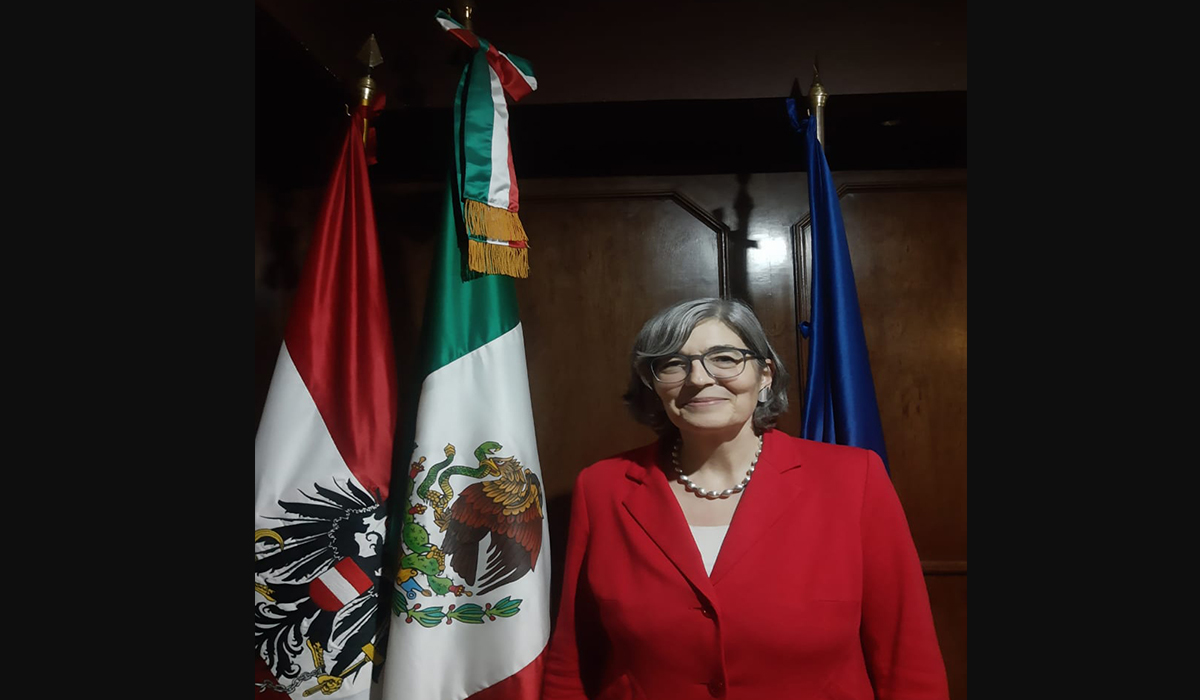
AUSTRIA y MÉXICO: DRA. E. KEHRER, ACADÉMICA HONORARIA DE LA ANHG-UNAM. Austria en proceso de cambio por la inmigración.

The Austrian ambassador to Mexico, Dr. Elisabeth Kehrer, presented at the headquarters of the National Academy of History and Geography (ANHG) of the UNAM, the conference: “Austria, a country in the center of Europe. Past, present and future”, welcoming her as an honorary academic.
La embajadora de Austria en México, Dra. Elisabeth Kehrer, presentó en la sede de la Academia Nacional de Historia y Geografía (ANHG) de la UNAM, la conferencia: “Austria, un país al centro de Europa. Pasado, presente y futuro”, dándole la bienvenida como académica honoraria.
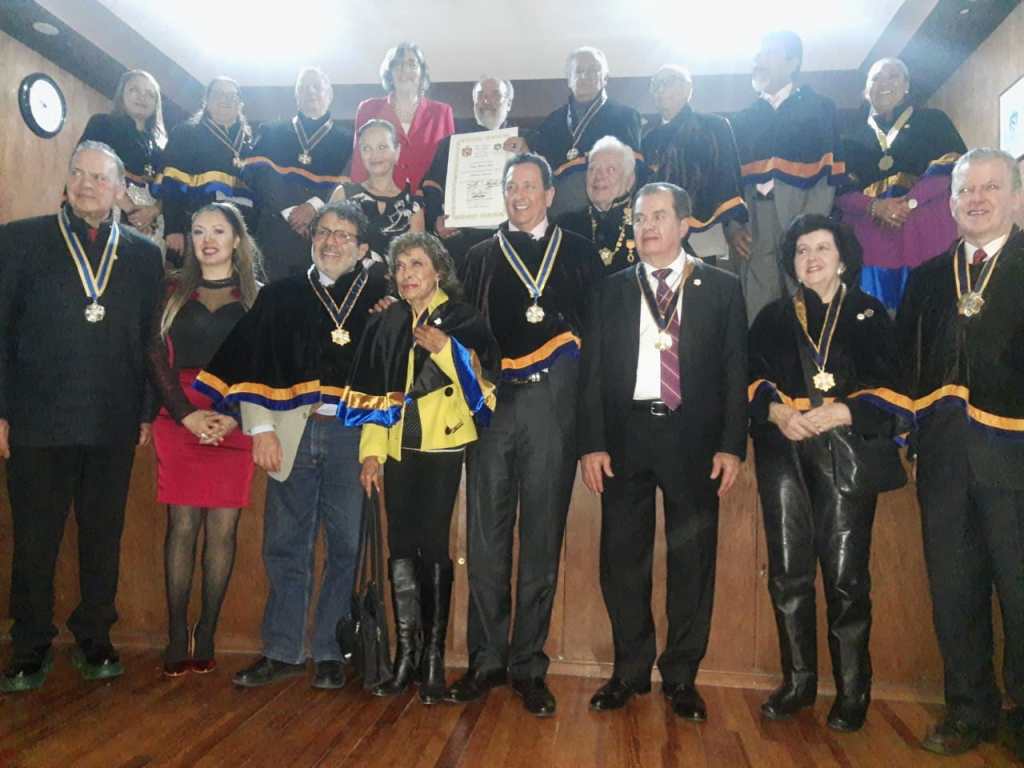
In the presence of Luis García y Erdrmann, head of the International Affairs Commission, Dr. Ulises Casab, president for life, and Dr. Alejandro Dosal Luce, vice president of the National Academy of History and Geography of the UNAM, before a full and enthusiastic auditorium, Dr. Kehrer, went back to the origin of Austria and over time to the Duchy of Salzburg, socialist Germany, the formation of the Second Republic of Austria in 1945, going through the history of 1955 and the peace treaty for the sovereignty of Austria. Thus he continued with the most important points that allow us to recognize a strong, young Austria with many challenges.
En presencia de Luis García y Erdrmann, titular de la Comisión de Asuntos Internacionales, el doctor Ulises Casab, presidente vitalicio y el doctor Alejandro Dosal Luce, vicepresidente de la Academia Nacional de Historia y Geografía de la UNAM, ante un auditorio lleno y entusiasta, la doctora Kehrer, se remontó al origen de Austria y con el tiempo al ducado de los Salzburgo, la Alemania socialista, la formación de la Segunda República de Austria 1945, atravesando la historia de 1955 y el tratado de paz para la soberanía de Austria. Así continuó con los puntos más importantes que nos permiten reconocer a una Austria fuerte, joven y con muchos retos.
“WE ARE A NEUTRAL COUNTRY” / “SOMOS UN PAÍS NEUTRAL”
“We are not members of the North Atlantic Treaty Organization (NATO). It is a contribution to peace and international law, we are a neutral country since the Cold War, we develop a very active role with the UN, it is something that we share with Mexico, we are one of the host countries of the UN.»
“No somos miembros de la Organización del Tratado del Atlántico Norte (OTAN). Es una contribución a la paz y al derecho internacional, somos un país neutral desde la guerra fría, desarrollamos un papel muy activo con la ONU, es algo que compartimos con México, somos uno de los países sedes de la ONU”.
“In 1995 we entered the European Union (EU), it was about reconciliation and integration. Austria is a young country, more so than Mexico, we have existed since 1955 of the last century, with the support of the United States we achieved financing and established ourselves as a prosperous country. We had years of a social-democratic government, which greatly modernized the country. . Today we are a stable state with a high level of education, with a health system like Denmark, we have very solid social programs like in Mexico, environmental protection is in the genes of Austrians.»
“En 1995 entramos en la Unión Europea (UE), se trató de una reconciliación e integración. Austria es un país joven, más que México, nosotros existimos desde 1955 del siglo pasado, logramos con el apoyo de Estados Unidos, un financiamiento y establecernos como un país próspero, tuvimos años de un gobierno social-demócrata, lo que modernizó mucho al país. Hoy en día somos un estado estable con un alto nivel educativo, con un sistema sanitario como Dinamarca, tenemos como en México programas sociales muy sólidos, la protección del medio ambiente está en los genes de los austriacos”.
“TRANSFORM OUR ECONOMY” / “TRANSFORMAR NUESTRA ECONOMÍA”
«Right now inflation is very high, energy prices are high, it is a difficult change, we do not know how to transform our economy into something more sustainable for the future, because we are going to see climate change, how to produce what is consume, we have important industrial sectors, machinery and metal structures, we have quite traditional chemical, electrical and paper industries; 99 percent of Austrian companies are SMEs and what they do is very good.”
“En este momento la inflación es muy alta, los precios de la energía son altos, es un cambio difícil, no sabemos cómo transformar nuestra economía en algo más sostenible para el futuro, porque vamos a ver el cambio climático, cómo producir lo que se consuma, tenemos sectores industriales importantes, maquinarias y estructuras metálicas, tenemos industrias químicas, eléctricas y papeleras bastante tradicionales; el 99 por ciento de las empresas austriacas son Pymes y lo que hacen es muy bueno”.
“WE HAVE A STRONG SOCIAL PEACE” / “TENEMOS UNA PAZ SOCIAL FUERTE”
«What distinguishes Austria from many European countries is that we have a strong social peace, it is perhaps an example for other countries including Mexico, it is a lesson from the civil war of ’34 and all the consequences, the ability to negotiate and seek compromises».
“Lo que distingue a Austria de muchos países europeos es que tenemos una paz social fuerte, es quizá un ejemplo para otros países incluido México, es una lección de la guerra civil del 34 y todas las consecuencias, la capacidad de negociar y buscar compromisos”.
“Public finances in Austria are not as good as in Mexico, we have a debt of 76.6%.”
“Las finanzas públicas en Austria no son tan buenas como en México, tenemos una deuda del 76.6 %”.
TOURIST COUNTRY / PAÍS TURÍSTICO
“In terms of tourism in 2021 we received 12.7 million people, so there are more visitors than Austrians (9.2 million), tourism is very special for us, we take care of our environment and landscapes, the culture, the magnificent buildings in Vienna, Salzburg, Graz, we are proud of our heritage.”
“En materia de turismo en 2021 recibimos 12.7 millones de personas, entonces hay más visitantes que austriacos (9.2 millones), el turismo es muy especial para nosotros, cuidamos nuestro medio ambiente y paisajes, la cultura, los edificios magníficos en Viena, Salzburgo, Graz, estamos orgullosos de nuestra herencia”.
A POPULATION THAT GROWS DUE TO IMMIGRATION / UNA POBLACIÓN QUE CRECE DEBIDO A LA INMIGRACIÓN
“Austria is a country with a new population that is changing, it happens with Austria as among the countries of the European Union. Europe changed in the 90’s with the fall of the Berlin Wall, with the end of the Cold War, and the reunification of Europe. In the last thirty years after this event, Austria went from 7 million for decades, to 9.2 million people, there was significant growth, it is exclusively due to immigration; We have a birth rate of 1.4 million, my city, Vienna, has been the most affected, it grew from 1.5 million to 2 million inhabitants, and if you grow so fast in one generation, in a few years, this brings a multitude of problems such as language, religion, culture, tradition, challenges for the state, accommodation for all these new inhabitants, education, the health system, social insurance, are challenges that create tension for social cohesion in the Austrian people.”
“Austria es un país con una nueva población que cambia, ocurre con Austria como entre los países de la Unión Europea. Europa cambió en los 90´con la caída del Muro de Berlín, con el fin de la guerra fría, la reunificación de Europa. En los últimos treinta años después de este evento, Austria pasó de 7 millones durante décadas, a 9.2 millones de personas, hubo un crecimiento significativo, se debe exclusivamente a la inmigración; tenemos una tasa de natalidad de 1.4 millones, mi ciudad, Viena, ha sido la más afectada, creció de 1.5 millones a 2 millones de habitantes, y si creces tan rápido en una generación, en pocos años, esto trae multitud de problemas como el idioma, religión, cultura, tradición, retos para el estado, el alojamiento para todos estos nuevos habitantes, la educación, el sistema de salud, el seguro social, son retos que crean tensión para la cohesión social en el pueblo austriaco”.
“At the moment we have more than 26 percent of inhabitants who were not born in Austria, either to one or both parents who are not natives of this country, this is more than a quarter of the population; In Vienna it is 40 percent, there are Germans, Romanians, Croatians, Hungarians, from the countries of the European Union, with them integration is easier, especially with the Germans.”
“En este momento tenemos más de un 26 por ciento de habitantes que no nacieron en Austria, ya sea de uno o ambos padres que no son nativos de este país, esto es más de una cuarta parte de la población; en Viena es el 40 por ciento, hay alemanes, rumanos, croatas, húngaros, de los países de la Unión Europea, con ellos la integración se hace más fácilmente, sobre todo con los alemanes”.
“In these groups there are also many Turks, Syriacs, Bosnians, they come from countries that are mostly Muslim, this makes an important change, again for social cohesion. Of the data on Muslims we only have an estimate of 9 percent, but in Vienna it is 15 percent, because in 2000 the Constitutional Court did not allow asking questions in the census that we do every ten years or in the mini-censes each year. . When talking about the conflict in the Middle East, this population, especially young Muslims, have a position perhaps a little more extreme or different from the Austrian government.”
“En estos grupos también hay muchos turcos, siriacos, bosniacos, provienen de países que en su mayoría son musulmanes, esto hace un cambio importante, otra vez para la cohesión social. De los datos sobre musulmanes solo tenemos una estimación del 9 por ciento, pero en Viena son el 15 por ciento, debido a que en el 2000 la Corte Constitucional no permitió preguntar en el censo que hacemos cada diez años o en los minicensos de cada año. Cuando se habla del conflicto en el medio oriente, esta población sobre todo los jóvenes musulmanes tienen una posición quizá un poco más extrema o diferente del gobierno austriaco”.
SYRIANS, AFGANS, IRAQIS, PAKISTANIS ARRIVE / LLEGAN SIRIOS, AFGANOS, IRAQUÍES, PAQUISTANÍES
“There is legal migration that is for work, we receive many refugees or asylum seekers, since 2015 we have received more than 400 thousand asylum applications in Austria; Last year we received more asylum applications than Mexico, this year fortunately the number went down because we were not able to handle so many applications, but the numbers are not going to go down much, this is going to continue, the largest groups are Syrians, Afghans, Iraqis, Pakistanis, The integration of these groups when they stay in Austria is not easy.”
“Hay migración legal que es de trabajo, recibimos muchos refugiados o solicitantes de asilo, desde 2015 hemos recibido más de 400 mil solicitudes de asilo en Austria; el año pasado recibimos más solicitudes de asilo que México, este año bajó afortunadamente la cifra porque no logramos manejar tantas solicitudes, pero los números no van a bajar mucho, esto va a continuar, los mayores grupos son sirios, afganos, iraquíes, paquistaníes, la integración de estos grupos cuando se quedan en Austria no es fácil”.
IN AUSTRIA THERE ARE 82 THOUSAND UKRAINIANS / EN AUSTRIA HAY 82 MIL UCRANIANOS
“We are the number two country (receiving migrants) in Europe after Cyprus, these figures do not include Ukrainians, they do not need to ask for asylum, they received it automatically, after the beginning of the Russian aggression, we have received 82 thousand Ukrainians so far , many women with children who want to integrate into the school system.”
“Somos el país número dos (que recibe migrantes) en Europa después de Chipre, estas cifras no incluyen a los ucranianos, ellos no necesitan pedir asilo lo recibieron automáticamente, después del principio de la agresión rusa, hemos recibido hasta ahora a 82 mil ucranianos, muchas mujeres con niños que quieren integrarse en el sistema escolar”.
UPCOMING ELECTIONS IN THE EUROPEAN PARLIAMENT / PRÓXIMAS ELECCIONES EN EL PARLAMENTO EUROPEO
“We are facing quite high challenges in a country with a conservative population, with a lot of tradition, with a long-term culture and this new mix of the population, we have some problems, this explains a little what is happening in the political sector, because there are a strong rise of the far-right party, it is not only in the case of Austria, it is in the Netherlands, in Italy, in other countries, and we have elections to the European Parliament in June, I unfortunately believe that the world is going to see that there is a reaction especially because of this strong immigration that is happening in Europe. The parties on the right and perhaps also on the extreme left are going to increase or rise and the traditional parties are going to go down a little.”
“Estamos afrontando retos bastante altos en un país con una población conservadora, con mucha tradición, con una cultura de largo plazo y esta mezcla nueva de la población, tenemos algunos problemas, esto explica un poco lo que pasa en el sector político, porque hay un ascenso fuerte del partido de la ultraderecha, no es solo en el caso de Austria, es en los países bajos, en Italia, en otros países, y tenemos elecciones al Parlamento Europeo en junio, creo lamentablemente que el mundo va a ver que hay una reacción sobre todo a causa de esta inmigración tan fuerte que está ocurriendo en Europa. Los partidos de la derecha y quizá también de la extrema izquierda van a aumentar o subir y los partidos tradicionales van a bajar un poco”.
“Austria has elections probably in September and I think we are going to see the same result. We have this immigration problem that not the entire population accepts easily.”
“Austria tiene elecciones probablemente en septiembre y creo que vamos a ver el mismo resultado. Tenemos este problema de la inmigración que no toda la población acepta fácilmente”.
“Austria is a wonderful, stable country, but it is in the process of change (due to immigration). If we achieve integration, it will give new energy and ideas, we are at this point, I hope the future is positive.”

“Austria es un país maravilloso, estable, pero está en proceso de cambio (por la inmigración). Si logramos la integración, dará nueva energía e ideas, estamos en este punto, espero que el futuro sea positivo”.
ON THE MEXICO-AUSTRIA RELATIONSHIP / SOBRE LA RELACIÓN MÉXICO-AUSTRIA
“We have a close economic relationship, we have around one hundred Austrian companies that have representation in Mexico.”
“Tenemos una relación económica estrecha, contamos con alrededor de cien empresas austriacas que tienen representación en México”.
“The construction of Cablebús number 1 and soon Cablebús number 3 by an Austrian company shows that we can offer something modern and new to Mexico, which is open to European companies.”
“La construcción del Cablebús número 1 y próximamente el Cablebús número 3 por una empresa austriaca, demuestra que podemos ofrecer algo moderno y nuevo a México, que está abierto para empresas europeas”.
“Between Austria and Mexico we have a friendly relationship, we work above all on international affairs within the framework of the United Nations, on disarmament, we are partners on this issue, human rights, the environment, we are a small country, Mexico It’s a big country».
“Entre Austria y México tenemos una relación amistosa, trabajamos sobre todo en asuntos internacionales en el marco de la Organización de las Naciones Unidas, sobre el desarme, somos socios en este tema, derechos humanos, medio ambiente, nosotros somos un pequeño país, México es un gran país”.
“Bilaterally we have had a very good relationship since 1938 when Mexico was the only country protesting against the annexation of Austria by Nazi Germany. We will never forget this. There is a square dedicated to Mexico in Vienna to commemorate this event; We have cultural exchanges, there are Mexican students who go to Austria, we reestablish ties after the pandemic that stopped everything and damaged international relations in the world.”
“En lo bilateral tenemos relación muy buena desde 1938 cuando México era el único país protestando contra anexión de Austria por la Alemania nazi, esto nunca lo vamos a olvidar, hay una plaza dedicada a México en Viena para conmemorar este evento; contamos con intercambios culturales, hay estudiantes mexicanos que van a Austria, reestablecemos los lazos después de la pandemia que paró todo y que dañó a las relaciones internacionales en el mundo”.
Descubre más desde LA AGENCIA MUNDIAL DE PRENSA
Suscríbete y recibe las últimas entradas en tu correo electrónico.
