
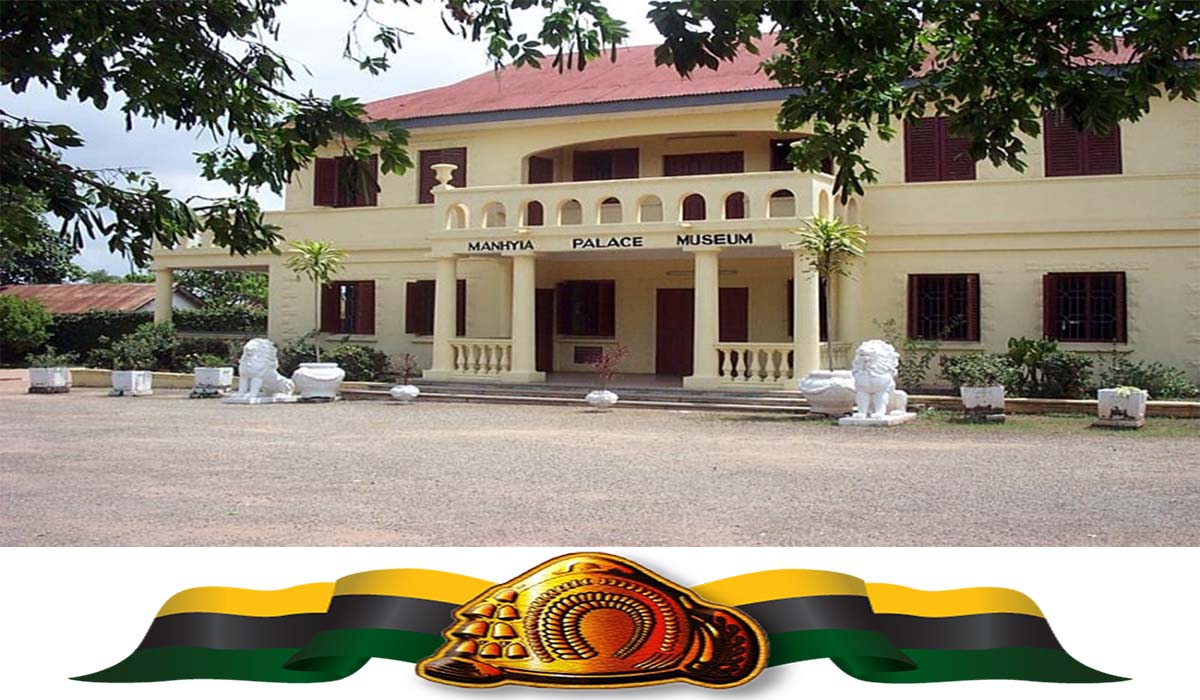
SITIOS TURÍSTICOS Y MONUMENTOS HISTÓRICOS EN GHANA «PALACIO MANHYIA»

Prensa Especializada
The Manhyia Palace Museum was created within the old residence of Otumfuo Agyeman Prempeh I and Otumfuo Sir Osei Agyeman Prempeh II, the thirteenth and fourteenth Kings of Asante respectively.
El Museo del Palacio Manhyia fue creado dentro de la antigua residencia de Otumfuo Agyeman Prempeh I y Otumfuo Sir Osei Agyeman Prempeh II, los reyes decimotercero y decimocuarto de Asante respectivamente.
This historic building was rehabilitated in 1995 at the cost of approximately twelve thousand Ghana cedis (GHc12,000) to serve as a Museum. The cost of rehabilitation was met by generous contributions in cash and in-kind by friends and well-wishers of Asanteman and the King.
Este edificio histórico fue rehabilitado en 1995 con un coste de aproximadamente doce mil cedis de Ghana (12.000 GHc) para servir como museo. El costo de la rehabilitación se cubrió con generosas contribuciones en efectivo y en especie de amigos y simpatizantes de Asanteman y el Rey.
The Museum is unique in West Africa for it has been created by a single people, the
Asante Nation, to commemorate their own leaders, and to communicate the riches of their
history and culture to future generations and to the ever-increasing numbers of visitors who come
to Ghana every year from all over the world.
El Museo es único en África Occidental porque ha sido creado por un solo pueblo, los Nación Asante, para conmemorar a sus propios líderes y comunicar las riquezas de sus historia y cultura para las generaciones futuras y para el número cada vez mayor de visitantes que vienen a Ghana cada año desde todo el mundo.
The Museum building is of great historical interest and importance. It not only houses the Museum’s exhibits; it is itself an exhibit of the Museum.
El edificio del Museo es de gran interés e importancia histórica. No sólo alberga las exhibiciones del Museo; es en sí mismo una exposición del museo.
It was built in 1925 for Asantehene Agyeman Prempeh I, by the British Colonial Government, as his private residence when he returned from Seychelles after twenty-eight years in exile. It was from this Palace that he ruled, for his people kept his Stool – the Asikadwa (the Gold Stool) – vacant during the twenty-eight years he was away in exile and welcomed him back as Asantehene. To the Asante, therefore, the period that he was away in exile (1896 to 1924) was not an interregnum and to remove any doubt as to his status or their relationship to him, they steadfastly refused to allow their King to accept the building as a gift from the British Colonial Government, or to occupy it until they had paid for it. The building, therefore, became, from the moment it was occupied by Asantehene Prempeh I, the AHENFIE -the Palace. It was the Palace of Nana Prempeh I, and his successor, Otumfuo Sir Osei Agyeman Prempeh II, who reigned from 1931 to 1970. The lower floor of the Museum has been preserved just as it was in the days of Otumfuo Agyeman Prempeh II and serves as a lasting memorial to his life and long service to the Asante Nation. Here can be seen photographs of many important events in Asante history, the first black & white Television to Asante Nation which dates back to 1965, the bronze head of Nana Prempeh II, books shelf containing a collection of books used by the Kings and a Sketch Map of Asante Empire.
Fue construido en 1925 para Asantehene Agyeman Prempeh I, por el gobierno colonial británico, como su residencia privada cuando regresó de Seychelles después de veintiocho años en el exilio. Fue desde este Palacio desde donde gobernó, porque su pueblo mantuvo su Taburete – el Asikadwa (el Taburete de Oro) – vacante durante los veintiocho años que estuvo en el exilio y lo recibió como Asantehene. Para el Asante, por lo tanto, el período que estuvo en el exilio (1896 a 1924) fue no es un intermedio y para eliminar cualquier duda sobre su estatus o su relación con él, Se negó rotundamente a permitir que su rey aceptara el edificio como un regalo de la colonia británica. Gobierno, o ocuparlo hasta que hubieran pagado por ello. El edificio, por tanto, se convirtió, desde el momento en que fue ocupado por Asantehene Prempeh I, en el AHENFIE, el Palacio. Era el Palacio de Nana Prempeh I, y su sucesor, Otumfuo Sir Osei Agyeman Prempeh II, que reinó de 1931 a 1970. La planta baja del Museo se ha conservado tal como estaba en la época de Otumfuo Agyeman Prempeh II y sirve como un monumento duradero a su vida y largo servicio a la Nación Asante. Aquí se pueden ver fotografías de muchos acontecimientos importantes de la historia de Asante, la primera televisión en blanco y negro de la Nación Asante que data de 1965, la cabeza de bronce de Nana Prempeh II, una estantería que contiene una colección de libros utilizados por los Reyes y un boceto. Mapa del Imperio Asante.
The exhibits within the Museum include life-sized effigies representing Otumfuo Agyeman Prempeh I (1888-19931), Otumfuo Sir Osei Agyeman Prempeh II (1931- 1970), Nana Ama Serwaa Nyarko (1945-1977), Otumfuo Opoku Ware II (1970-1999), Nana Afia Kobi Serwaa Ampem II (1977 to date), Nana Yaa Akyaa (1880-1917), Nana Yaa Asantewaa and Otumfuo Osei Tutu II (1999 to date), the reigning Asante King. Others include Regalia, photographs, medals, furniture, drums and palanquins which are over two hundred years, a battle dress which dates back to 1900 and many objects of historical significance.
Las exhibiciones dentro del Museo incluyen efigies de tamaño natural que representan a Otumfuo Agyeman Prempeh I (1888-19931), Otumfuo Sir Osei Agyeman Prempeh II (1931-1970), Nana Ama Serwaa Nyarko (1945-1977), Otumfuo Opoku Ware II (1970- 1999), Nana Afia Kobi Serwaa Ampem II (1977 hasta la fecha), Nana Yaa Akyaa (1880-1917), Nana Yaa Asantewaa y Otumfuo Osei Tutu II (1999 hasta la fecha), el Rey Asante reinante. Otros incluyen Regalia, fotografías, medallas, muebles, tambores y palanquines que tienen más de doscientos años, un traje de batalla que data de 1900 y muchos objetos de importancia histórica.
The Museum was officially opened on August 12, 1995, by Otumfuo Opoku Ware II, the 15th King of Asante, as part of activities marking the Silver Jubilee of his accession to Asikadwa (the Gold Stool). The Museum is a two-story building with open verandas as a yard. A small outhouse wasadded in 1995 for use as the Museum Shop.
El museo fue inaugurado oficialmente el 12 de agosto de 1995 por Otumfuo Opoku Ware II, el decimoquinto rey. de Asante, como parte de las actividades con motivo del Jubileo de Plata de su acceso a Asikadwa (el Taburete de Oro). El Museo es un edificio de dos plantas con terrazas abiertas a modo de patio. Una pequeña letrina estaba añadido en 1995 para su uso como tienda del museo.

Descubre más desde LA AGENCIA MUNDIAL DE PRENSA
Suscríbete y recibe las últimas entradas en tu correo electrónico.


Felicitaciones por el gran artículo periodístico dedicado a GHANA, país que sorprende por su gran organización como sociedad en desarrollo, su cultura, arte, recursos humanos, riqueza natural y mucho más. Felicitaciones. Saludos cordiales de America Santiago.
Me gustaMe gusta